


Where can I buy high-quality inner ring gears?
When looking for precise parts for planetary gearboxes or rotating systems, it's very important to find sources you can trust. You can get high-quality Inner Ring Gear parts from specialized gear makers that are good at making custom parts, well-known industrial dealers that have quality certifications that can be checked, and OEM partners that offer joint engineering support. Companies like YIZHI MACHINERY can make a wide range of products and have experience exporting them all over the world. They can also make solutions that are specifically designed for aircraft, mining, and industrial machinery uses. When you compare suppliers based on things like material certifications, precision grading adherence, and production scalability, you can be sure that the choices you make are in line with business efficiency and the value of a long-term relationship.
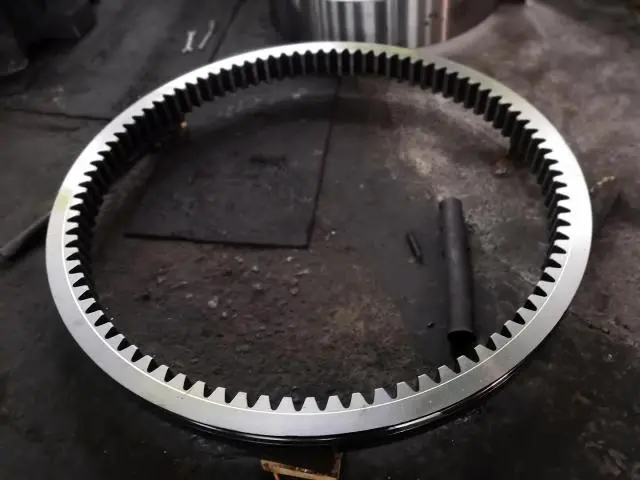
Understanding Inner Ring Gears: Design, Function, and Applications
What Defines an Inner Ring Gear?
An inner ring gear has teeth cut along the inside diameter of a cylinder ring. It serves as a stationary or rotating housing element in planetary systems, meshing with multiple planet gears simultaneously. Involute teeth cut inward create conformal contact with higher contact ratios than external setups. This reduces vibration, noise, and tooth failure risk.
Material Selection and Design Features
Inner ring gears use alloy steels like 18CrNiMo7, SAE4340, and 42CrMo selected for stress levels and environment. Heat treatments like carburizing or induction hardening achieve surface hardness of 58–62 HRC while maintaining flexible cores of 30–45 HRC. Manufacturing involves cutting, hobbing, milling, and grinding to ISO 6 standards with Ra below 0.8µm.
Industrial Applications Across Key Sectors
Inner ring gears serve in planetary reducers with speed reduction up to 1000:1 for winches and hoists. Internal meshing self-guards against contaminants, extending service life. Aerospace uses them in control systems and auxiliary power units. Mining equipment like conveyor drives and crusher gearboxes rely on their high load-bearing ability and shock resistance.
Comparing Inner Ring Gears: How to Choose the Right Gear for Your Needs?
Functional Comparisons with Other Gear Types
Sun gears drive systems by meshing externally with planet gears. Inner ring gears provide the boundary that engages planet gears on the outside. This spreads loads across multiple mesh points, lowering stress per tooth by three to five times. Slower sliding speeds at tooth contact minimize friction losses and heat generation during continuous operation.
Material Hardness and Steel Grade Considerations
Carburizing grades like 20CrMnTi suit high-impact mining applications requiring hard surfaces and tough cores. Through-hardening metals like 42CrMo work best for evenly distributed stress. Surface hardness of 58–62 HRC provides optimal protection against micropitting and spalling. Moderate hardness of 45–50 HRC suits low-speed, high-torque tasks where toughness matters more.
Gear Sizing and Load Capacity Matching
Determine required torque and speed to select pitch diameter, module, and face width. Larger modules increase tooth strength but may worsen vibration. Helix angles between 15° and 30° balance axial load generation with improved contact ratio. Three-planet designs spread loads better than two-planet configurations, enabling higher power density within the same envelope.
Where and How to Buy High-Quality Inner Ring Gears: Supplier and Procurement Guide
Evaluating Global Suppliers and Manufacturer Capabilities
Sourcing starts with proven manufacturers like Timken, NSK, SKF, and FAG for standard inner ring gears. Specialized makers like YIZHI MACHINERY offer customisation with advanced CNC gear machining centres and heat treatment lines. Suppliers use CMM and gear measurement centres to verify radial composite deviation and tooth-to-tooth composite deviation against specified tolerances.
Procurement Models and Customisation
Online industrial markets provide easy access to standard parts with transparent pricing but limited customisation. Direct OEM collaboration enables joint optimisation of designs, materials, and production processes. Customisation includes heat treatment profiles, surface coatings, and documentation packages. Low minimum order quantities eliminate inventory carrying costs while maintaining supply chain flexibility.
Lead Time and Pricing
Custom inner ring gears typically require 35 to 60 days for production depending on complexity and material sourcing. Raw material cycles, machining sequences, heat treatment windows, and finish grinding affect total completion timing. Transparent cost breakdowns enable value engineering discussions to optimise specifications without compromising functionality. Multiple transport options include sea, air, and rail freight.
Ensuring Quality and Reducing Procurement Risks in Inner Ring Gear Acquisition
Critical Quality Verification Protocols
For inner ring gear manufacturing, dimensional inspection is the most basic type of quality assurance. It checks that important factors like pitch diameter, tooth thickness, and runout traits are within the allowed ranges. Coordinate measuring tools can measure differences in dimensions down to the micron level, and specialized gear testers look at profile error and helix angle variation to make sure that edge loading conditions don't cause inner ring gear teeth to break early. Dimension over pins readings make sure that planetary systems have the right backlash fit and that there are enough gaps for thermal expansion and load movement.
Rockwell surface hardness testing at several levels confirms case hardening and core hardness profiles. Non-destructive testing procedures like magnetic particle examination discover hidden flaws. This prevents material issues from causing major issues. Surface roughness tests verify finishing and ensure lubrication and fatigue strength.
Material certificates and chemical composition tests ensure that steel meets buying specifications. They also check alloy composition to ensure mechanical properties and heat treatment response. Third-party inspection services provide impartial confirmation, which is useful for mission-critical apps where failed parts could affect safety or finances. Material test certificates, heat treatment records, and measurement reports provide traceability. These packages fulfill QMS requirements.
Supplier Vetting and Due Diligence Strategies
You must review the supplier's marketing materials, site audits, quality management system certifications, and tool functionality. ISO 9001 and AS9100 for aerospace usage demonstrate quality management standards and process control and documentation strictness.
Providers achieve shipment timelines without sacrificing quality under strong demand, according to manufacturing evaluations. We employ long-term connections with well-known mechanical engineering businesses to demonstrate our ability to satisfy rigorous client specifications. Request customer references from industry peers. Application-specific expertise greatly impacts tech support and problem-solving.
Checking a supplier's finances helps reduce supply chain breakdowns. This applies particularly to long-term providers or those promising further help. Credit reports, building control, and company longevity indicate dependability, which helps partner relationships endure.
Managing Lead Times and Inventory Strategies
Early communication regarding production schedules, material supplies, and bottlenecks helps everyone fix issues before they impede operations. Suppliers that provide real-time order monitoring with milestone alerts from receiving supplies to final inspection and shipment help satisfy client commitments and assembly plans.
Strategic Inner Ring Gear inventory placement balances inventory costs and supply chain response time. Keep key spare parts in stock and employ just-in-time purchasing for frequent replacements. Supplier consignment inventory agreements save money and provide fast access. This is useful for geographically dispersed operations or unforeseen application failures.
From plant loading to customs clearance to package delivery, visual tracking provides real-time information. Openness lets you manage errors, engage with consumers before they seek for support, and enhance processes, which improves delivery performance.
Final Recommendations for B2B Buyers: How to Make the Right Inner Ring Gear Purchase?
Defining Precise Technical Requirements
A successful inner ring gear procurement process starts with detailed blueprint development that includes all performance-critical factors and working environment characteristics. Material choice and design dimensions for the inner ring gear are based on torque rates, speed ranges, job cycles, and the environment. Lubrication system compatibility, mounting interface measurements, and assembly clearance requirements make sure that inner ring gear mechanical integration goes smoothly and that no expensive changes need to be made or compatibility problems are found during installation.
Get technical help early on in the specification process and use the application knowledge of the provider to make designs that are the best balance of performance, cost, and ease of manufacture. Before committing to production, suppliers who offer pre-sales technical advice and design drawing review services can find any problems that might arise. This way, customers can avoid costly redesign cycles or fails in the field that require guarantee replacements.
Requests for samples or reviews of datasheets confirm that specs are understood, ensuring that the supplier's version matches the buyer's intention. Before agreeing to production numbers, physical samples can be used to check the dimensions, the finish on the surface, and the functionality of a trial assembly.
Building Long-Term Strategic Partnerships
When buyers and sellers only care about getting the best price per unit, they often give up value-added services, tech support, and the stability of the supply chain. Strategic partnerships are good for both parties. They can share access to research and development (R&D), get priority schedule for output when capacity is limited, and get better guarantee terms that show a shared commitment to long-term success.
When suppliers invest in customer-specific tools, keep specialized Inner Ring Gear inventory buffers, or provide technical resident engineers, they show relationship dedication that goes beyond individual transactions. These connections allow for ongoing efforts to improve things, like making designs easier to make, finding ways to cut costs, and improving product performance through repeated tweaking.
After-sales support features like quick responses to quality issues, failure analysis in the field, and fast replacement parts provide operating insurance against unplanned interruptions. A one-year warranty with clear terms sets clear expectations for responsibility and shows that the seller trusts the quality of the product and the control of the manufacturing process.
Conclusion
To get high-quality inner ring gears, you need to carefully consider what the suppliers can do, follow strict quality control procedures, and make sure that the technical requirements and practical needs are aligned. For aerospace, mining, and industrial machinery uses, the best value comes from specialized makers with advanced manufacturing equipment, the ability to customize everything, and years of experience in the field. Building relationships with suppliers that show they have ISO-compliant quality systems, clear communication, and the ability to handle services from start to finish protects the supply chain for inner ring gears and supports long-term stability and competitive operational performance.
FAQ
1. What factors determine the pricing of custom internal gears?
Pricing considers base material, difficulty, grade, and order volume. Exotic alloy steels like SAE4340 and 18CrNiMo7 cost more than carbon steels due to their higher material costs and heat treatment requirements. Tight tolerances, precise cutting, and secondary operations like surface treatments increase prices due to complexity and time. Volume discounts usually apply to order amounts that reflect setup amortization and manufacturing efficiency improvements. Single-piece manufacture costs more than batch sales.
2. Can standard catalog gears suit customized gearbox assemblies effectively?
Standard standard parts are cheaper and simpler to locate, but they don't function as well in custom setups. Dimensional mismatches, material requirements, and precise grades that don't function together may cause hidden expenses like lower efficiency, shorter service life, and field failures. Custom-engineered systems for particular torque profiles, mounting configurations, and environmental exposures provide a reduced total cost of ownership while costing more initially. Particularly in challenging situations where dependability significantly impacts operational availability.
3. How can buyers verify gear quality before finalizing purchases?
Material approvals that list the chemicals and mechanical properties, measurement inspection reports that say the product fits within tolerances, and heat treatment records that show the processing parameters were followed can help determine a product's quality. Third-party inspection services provide independent verification for critical objectives. Supplier facility audits evaluate tools, process controls, and quality management systems. Customer references from relevant applications may reveal how effectively the product performs in the field, how fast technical support responds, and how dependable it is over time. Before building the full item, you may evaluate the measurements, surface polish, and trial assembly on a sample.
Partner with YIZHI MACHINERY for Your Annular Gear Requirements
YIZHI MACHINERY offers complete options for making Inner Ring Gears. Their high-tech production tools, ISO-compliant quality systems, and 15 years of experience making precision gears all back up their work. Our customization options cover module ranges from 0.5 to 50, and we accept low minimum order amounts, such as production of a single piece to help with prototype development and other unique uses. Contact us at sales@yizmachinery.com about your unique needs, get detailed technical advice, and get reasonable quotes from a reliable Inner Ring Gear provider that promises to deliver excellence within 35 to 60 days.
References
1. American Gear Manufacturers Association. (2019). "Fundamental Rating Factors and Calculation Methods for Involute Spur and Helical Gear Teeth." AGMA Standard 2001-D04.
2. International Organization for Standardization. (2013). "Gears - Cylindrical Involute Gears and Gear Pairs - Concepts and Geometry." ISO 21771:2007.
3. Dudley, Darle W. (2016). "Handbook of Practical Gear Design and Manufacture." CRC Press, Second Edition.
4. Deutsches Institut für Normung. (2012). "Cylindrical Gears for General Engineering and Heavy Engineering - Basic Rack." DIN 3990-1:1987.
5. Society of Automotive Engineers. (2018). "Selection and Application of Carburizing Steels for Gears." SAE Technical Paper J409.
6. British Standards Institution. (2015). "Calculation of Load Capacity of Spur and Helical Gears - Part 2: Calculation of Surface Durability." BS ISO 6336-2:2006.

USER EVALUATE
Here is the customer's evaluation of us