


How to Choose the Right Rotary Kiln Gear for Cement Plants
For cement companies to choose the right Rotary Kiln Gear, they need to carefully look at the working factors, material specs, and supplier capabilities. In Rotary Kiln Systems, the Kiln Gear is very important. It transfers power from the drive motors to the huge spinning Kiln Shell, which works slowly but under a lot of stress. When choosing the right Girth Gears, you have to think about things like the size of the kiln, the amount it can hold, the climate, the materials used, the way they are heated, and the exact grades. High-quality gears made from alloy steels like 42CrMo or 18CrNiMo7, which have a surface hardness of 58 to 62 HRC, will last in tough cement production settings where temperatures go over 1450°C and abrasive dust is always a problem.
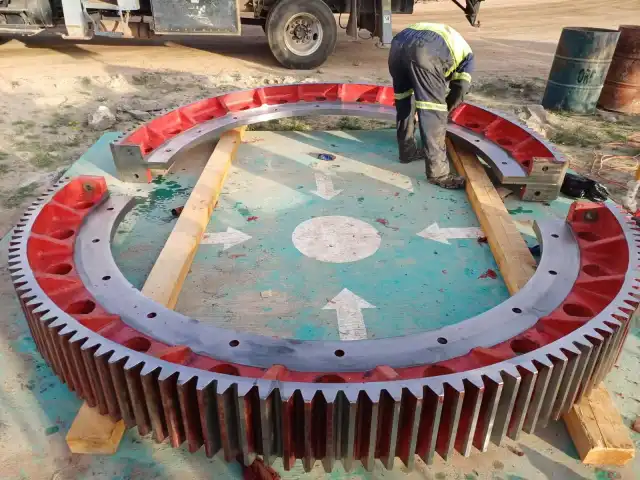
Understanding Rotary Kiln Gears and Their Functions
The Role of Girth Gears in Cement Production
Rotary Kiln Gears, which are also known as Girth Gears or Ring Gears, are important heavy-duty moving parts that are attached to the outside of Rotary Kilns. These big gears fit together with smaller Pinion Gears that are linked to electric motors by Reduction Gearboxes. The method allows the Kiln Shell to rotate under control at speeds usually between 0.5 and 5 RPM. This lets the raw materials spin and heat them up to turn them into cement clinker. The gear's main job is to turn the fast spinning of the motor into the huge power needed to turn kilns that weigh hundreds of tons and are full of material.
Load Transmission and Torque Conversion Mechanics
The way that loads are moved in kiln systems needs to be carefully figured out. Forces are spread out over many contact points at the same time as the Pinion engages with the Girth Gear teeth. This touch ratio has a direct effect on the amount of noise, shaking, and wear. Kiln Gears that are made well keep their tooth shapes even when heated from inside the kiln causes them to warp. The involute tooth shape that is often used in these situations makes sure that the teeth mesh smoothly and can handle the small misalignments that happen when big structures rotate. Module numbers between 10 and 50 give the teeth the strength they need to withstand bending forces that could cause the whole thing to break.
Material Properties and Manufacturing Standards
Complex metallurgical methods are needed to make rotating Kiln Gears. We only use high-quality materials, like 45# steel, 20CrMnTi, 40CrNiMo, SAE4340, and AISI4140 metals that were chosen for their specific mechanical qualities. Forging methods produce better grain structure than casting, which improves fatigue resistance, which is important for parts that are loaded and unloaded millions of times a year. Some ways to treat metal with heat, like carburizing, cooling and tempering, and induction hardening, make the surface harder while keeping the core tough. Surface finishing choices like blackening, phosphating, and hard chrome plating give more security against the corrosive conditions that are common in the cement production process. These gears are made with advanced techniques, such as hobbing, milling, and grinding, to achieve ISO 5-6 Grade perfection. This makes sure that the dimensions are correct, which is necessary for smooth operation.
Identifying Common Challenges and Maintenance Needs
Recognizing Wear Patterns and Damage Symptoms
Operators of cement plants have to deal with a lot of problems to keep the Kiln Gear in good shape. Wear patterns that can be seen on the sides of gear teeth show that they are slowly breaking down, which will cause a catastrophic failure if nothing is done. Pitting looks like small holes on the tooth surfaces because of wear and tear on the contact, while scuffing looks like scoring lines because the lubrication breaks down under a lot of pressure. Noise levels can be used as early warning signs. For example, grinding or hitting sounds that don't seem normal could mean that your teeth aren't aligned properly or are damaged. Visual checks done on a regular basis show cracks spreading from the roots of teeth, which is a major safety issue that needs to be fixed right away. Thermal imaging can find peaks that show areas of high stress or poor lubricant distribution.
Root Causes of Gear Failure in Cement Applications
Understanding how failures happen can help you avoid costly downtime. When the kiln is first turned on, too many loads are put on it because the buildup of materials inside makes the mass distribution uneven, causing shock loads that are higher than what was intended. During lubrication fails, cement dust can get into the lubricants, lubricants that are exposed to radiant heat can break down, or the spray doesn't cover enough of the gear sides. In cement plants, sharp particles, high temperatures, and contact to chemicals that break down metals all speed up the rate of wear. When the Girth Gear and Pinion aren't lined up right, which can happen because the base has settled or the shell has deformed, loads are concentrated on the few tooth contact areas, which quickly wears down both parts.
Preventive Maintenance Protocols
To make things last longer, you need to be disciplined about upkeep. Setting up regular check plans lets you find problems early on, before they find more trouble. When lubrication programs choose greases, they need to take high temperatures into account by adding ingredients that can withstand great pressure and stay stable at high temperatures. Methods of application should make sure that all active tooth sides are covered. Usually, this is done with automated spray systems that are set up to cover teeth as they hit the mesh zone. Laser measurement systems used for alignment checks find variations from the limits that were set. This lets the problems be fixed before they cause major damage. Taking regular measures of wear produces a baseline that can be used to help with predictive maintenance plans that figure out the best time to replace parts while balancing operating risk and component life.
Criteria and Factors for Choosing the Right Kiln Gear
Evaluating Operational Parameters
To choose the right Kiln Gear, you should first carefully look over the specs of your kiln system. The diameter and length of the kiln determine the diameter and face width of the gears that are needed to support the spinning mass. The speed at which the machine is running affects the choice of gear module; slower speeds let bigger modules with stronger teeth be used. Load estimates need to take into account the highest torque even when things aren't going as planned, not just when things are running normally. Extreme temperatures in the environment can change the materials that are used and the way they are heated. Duty cycle matters; operations that happen 24 hours a day, seven days a week need higher safety standards than those that happen on a sporadic basis. When engineers understand these factors, they can find configurations that work best for specific tasks instead of general answers.
Comparing Material Options and Heat Treatment
The choice of material has a big effect on how well and how long something works. Here are the core material considerations for Rotary Kiln applications:
- Alloy steels like 20CrMnTi and 40CrNiMo are very good at getting hard, which lets deep case depths be used during the carburizing process.
- SAE4340 and 42CrMo have stronger cores, which is important for keeping large-module gears from breaking.
- With the right heat treatment, materials like 18CrNiMo7 and 17CrNiMo6 have the best mix of surface hardness and core toughness.
- By keeping the Pinion 30 to 50 HB harder than the Girth Gear, the differential hardness approach saves the bigger, more expensive part by focusing wear on the Pinion, which is easy to replace.
These material benefits directly deal with the tough working conditions in cement plants, where changing temperatures, harsh contamination, and high contact pressures make it hard for parts to stay together. The total cost of ownership goes down because the right material standard stops failure modes from happening too soon and extends service intervals.
Determining Gear Size and Tooth Profile
Precise measurements make sure that they will work with current drive systems. The number of teeth changes the gear ratio, and the teeth must fit the Pinion's specs for the kiln to turn at the speed that was set. The choice of module strikes a balance between the strength of the teeth and the limitations of the manufacturing process. Larger modules can hold more weight, but they need special production tools. The way the load is distributed is affected by pressure angles of 14.5° or 20°. The 20° shape has a higher load capacity and is now the standard for heavy-duty uses. Surface hardness levels between 45 and 50 HRC are good for medium-duty installations. For demanding uses, 58 to 62 HRC, which can be achieved through advanced hardening methods, is better. Customization features let you change these factors to fit your specific operational needs instead of settling for off-the-shelf options that don't work well.
Procurement Tips and Selecting Reliable Suppliers
Essential Supplier Evaluation Criteria
A full evaluation of suppliers is necessary for successful buying of the Kiln Gear. Getting quality badges, like ISO compliance, shows that you are dedicated to following factory standards and keeping an eye on the whole process. Production skills are important, so providers should have high-tech tools like CNC gear machining centers, automated grinding machines, and precise inspection tools that can check for exact measurements and a smooth surface. Customization lets you change standard designs to fit specific needs, which helps you solve problems that only happen in your building. Technical support services, such as technical advice, design improvement, and help with fixing problems, are valuable in and of themselves. With global shipping logistics, you can be sure that your packages will arrive safely and without damage during travel.
Balancing Cost, Quality, and Lead Time
When making a procurement plan, you have to balance different objectives. The original purchase price is important, but the total cost of ownership is a better way to make a choice. Premium gears made from better materials and precise cutting last longer, which lowers the number of replacements needed and the costs of downtime. Custom designs usually have production wait times of 35 to 60 days, so you need to plan ahead to avoid having to buy something quickly at a high cost. Bulk buying deals may save you money, but you have to weigh the cost of keeping inventory against the bulk discounts. Building ties with capable suppliers who know what the cement business needs will pay off in the long run through steady quality, expert support, and quick service in times of crisis.
Repair Versus Replacement Decision Framework
Economic and practical studies are needed to decide whether to fix worn gears or buy new ones. Weld buildup and remachining are both cost-effective ways to fix gears when the damage is limited and the body structure is still sound. When wear affects more than one tooth, cracks spread to the gear rim, or dimensional distortion gets too bad to fix, replacement is needed. When deciding what to do, downtime plays a role. Replacing something during planned maintenance breaks has the least effect on production, while emergency repairs may briefly get things back up and running until the replacement is set. Keeping extra parts on hand lowers the risk of unexpected fails, but it costs a lot of money to do so. Working with sources that can speed up production for urgent needs is another way to lower your risk.
Case Studies and Practical Tips for Cement Plant Operators
Real-World Performance Improvements
A 5,000-ton-per-day cement plant in the Midwest had Kiln Gear problems that happened about once every 18 months, which cost the company more than $2 million a year in lost production. Analysis showed that their current gear didn't have enough surface hardness and wasn't heat treated properly. When precision-manufactured parts with 60 HRC carburized surfaces and made from 18CrNiMo7 metal were replaced, the service life was extended to more than four years while maintenance visits were cut down. The change gave a quick return on investment by getting rid of unexpected downtime and lowering the need for spare parts inventory.
Getting to the bottom of common gear problems
Quickly figuring out what the problem is keeps work from stopping. Strange noise patterns can help with diagnosis. For example, hitting sounds can mean localized tooth damage, while grinding sounds can mean general wear or misalignment. Using accelerometers on gear housings for vibration research can find problems before they become noticeable. Temperature tracking finds places where grease isn't working right or where friction is high and needs to be fixed right away. When alignment problems show up, laser measurement tools find out how far off from the specs something is, which helps with corrective shimming or foundation changes. Keeping thorough maintenance logs that record observations, measures, and repairs makes useful historical records that can be used to support predictive maintenance strategies.
Best Practices for Maximizing Gear Life
Operating with control greatly increases the life of parts. Using controlled start-up methods helps keep shock loads on drive systems to a minimum. By keeping the kiln's feed rates constant, you can stop material from building up and creating uneven loads during spinning. Environmental controls that lower the amount of dust in the air keep greasing systems safe from rough contamination. A uniform implementation of preventive maintenance routines is ensured by teaching maintenance staff the correct ways to check, measure, and apply lubrication. Working with gear suppliers during installation, commissioning, and regular reviews lets you take advantage of their specialized knowledge, which improves system performance and helps you find ways to make it better in your unique working conditions.
Conclusion
To choose the correct Rotary Kiln Gear, you need to carefully consider the operating needs, material requirements, production quality, and the supplier's abilities. To make smart purchasing choices, you need to know how these parts work in harsh cement plant situations like high temperatures, rough surfaces, and constant heavy loads. Regular checks, the right amount of lubrication, and keeping an eye on the balance are all examples of preventive maintenance that can extend the life of an asset and make it more reliable. Working with skilled manufacturers who offer customization, expert help, and quality guarantee is worth it in the long run, even after the initial buy. When you use strategic gear management to choose the right gear, keep it in good shape, and work with your suppliers, you can get long-lasting performance gains and lower total costs of ownership.
FAQ
1. How often should kiln gear alignment be checked?
Verification of alignment for the Kiln Gear should happen every three months during regular maintenance shutdowns. There should also be extra checks after major kiln shell repairs, base work, or long periods of shutdown. Continuous tracking devices that use proximity sensors give real-time alignment data, so problems can be fixed right away before they cause damage.
2. What is the typical service life of rotary kiln gears?
Service life depends a lot on how it's used, how well it's maintained, and the quality of the parts used. Gears made from high-quality materials and properly heated can usually last for 4 to 6 years in settings where cement is constantly being made. Facilities with strong regular maintenance plans and well-tuned working processes say that their equipment lasts longer than eight years.
3. When is it cheaper to buy a new gear than to fix an old one?
It makes financial sense to replace a gear when the cost of fixing it is more than 60% of the value of a new one, when several teeth are damaged and need a lot of welding, or when heat stress causes the gear to lose its shape and can't be fixed. Strategic replacement during planned repair times keeps costs for stopping production to a minimum, which are often much higher than the cost of the parts.
Partner with YIZHI MACHINERY for Superior Kiln Gear Solutions
With 15 years of experience, YIZHI MACHINERY makes precise Kiln Gear units for mines, cement plants, and industrial facilities all over the world. Our custom gearbox parts are made to meet ISO standards and are subject to strict quality control at every stage of production, from the forging and heat treatment stages to the final grinding and testing stages. We provide full technical support, including plan optimization, help choosing materials, and installation assistance that is tailored to your unique needs. With competitive wait times of 35 to 60 days, production can handle both big orders and unique fabrication of a single unit. As a reliable kiln gear provider, we offer visual tracking from start to finish of global logistics, customizable protective packing to make sure damage-free delivery, and quick, helpful after-sales support backed by a one-year guarantee. Contact us at sales@yizmachinery.com or visit yizhimachinery.com to talk about your kiln gear needs and find out how our precision making can improve the performance and stability of your cement plant.
References
1. American Gear Manufacturers Association. (2006). AGMA 6014-A06: Gear Power Rating for Cylindrical Shell and Trunnion Supported Equipment. Alexandria, VA: AGMA.
2. International Organization for Standardization. (2019). ISO 6336: Calculation of Load Capacity of Spur and Helical Gears. Geneva: ISO.
3. Cement Industry Technical Conference. (2021). Rotary Kiln Drive System Optimization and Maintenance Best Practices. IEEE/PCA Conference Record.
4. Budynas, R. G., & Nisbett, J. K. (2020). Shigley's Mechanical Engineering Design (11th ed.). New York: McGraw-Hill Education.
5. Davis, J. R. (Ed.). (2005). Gear Materials, Properties, and Manufacture. Materials Park, OH: ASM International.
6. Scheuer, A., & Spranger, M. (2018). Heavy-Duty Gearing for Rotary Kilns: Design Considerations and Failure Analysis. Cement Industry Technical Journal, 45(3), 112-128.

USER EVALUATE
Here is the customer's evaluation of us