


What Is Herringbone Helical Gear? Structure Explained
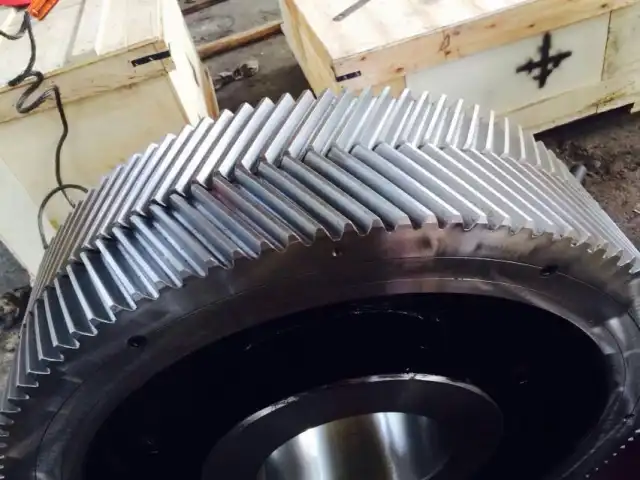
A Herringbone Helical Gear is a special kind of double helical gear that can be told apart from others by its constant V-shaped teeth. In normal double helical gears, there is a space in the middle between the opposite helix angles. But in a herringbone design, the left-hand and right-hand helical teeth meet at the middle point and don't separate. This one-of-a-kind structure gets rid of axial thrust forces inside the bearing, distributes loads more evenly across the tooth surfaces, and makes power transfer easier while reducing vibration. In industries like aircraft, mining, and industrial machinery, where accuracy, longevity, and quiet operation are key to success, the design is important. Knowing about this type of gear helps buyers choose parts that make equipment last longer and work better in tough conditions.
Understanding Herringbone Helical Gears
Structural Composition and Tooth Geometry
The tooth geometry has opposite helix angles that are usually between 5° and 45°. In heavy-duty uses, 20° to 30° is the most common range. The V-pattern's sides mirror each other, making forces that cancel out axial thrust that are equal on both sides. This self-centering motion lowers the load on the bearings and makes it easier to build the housing. Different torque needs can be met by modules ranging in size from 0.5 to 50, and precision grinding gets ISO 5-6 grade accuracy, which is necessary for high-speed processes.
Operational Mechanics and Load Distribution
Instead of hitting at the same time as spur gears do, teeth connect gradually as the gear turns. The spiral angle makes a pattern of overlapped contacts between the teeth, so at any given time, more than one tooth shares the load. This spread out stresses lessens the effects on individual tooth surfaces, which makes parts last longer when they're under a lot of stress. The continuous V-shape makes sure that power transfer never stops, which can happen with other types of gears. This keeps the torque supply steady during every spin cycle.
Key Design Principles for Industrial Applications
The choice of material has a direct effect on performance and durability. Alloy steels like 20CrMnTi, 42CrMo, and 18CrNiMo7 are strong and tough enough to work in harsh conditions. Using heat to treat metals, like carburizing, cooling and tempering, or induction hardening, makes the surface hard (58-62 HRC) while keeping the core tough. Because of these specs, Herringbone Helical Gears can handle shock loads in mine crushers and keep their accuracy in aircraft transmission systems. When you combine material science with geometric design, you can make parts that can handle huge changes in power while the Herringbone Helical Gear works at speeds over 10,000 RPM in turbine reducers.
Comparing Herringbone Helical Gears With Other Gear Types
Performance Advantages Over Spur Gears
Spur gears have straight teeth that are parallel to the shaft axis. This makes it possible for all of the tooth sides to contact at the same time. This makes contact forces that make noise and sound, especially when the speed is high. Because they are spiral, Herringbone Helical Gears can gradually contact their teeth, which gets around these problems. The overlapped contact design spreads loads over a larger surface area, which lowers stress by 30 to 40 percent compared to spur gears of the same size. Typical installations reduce noise by 10 to 15 decibels, which is very important in aircraft uses where strict noise standards apply. Herringbone systems can handle 50-70% more power than spur gears of the same size, so they can handle a lot more load.
Herringbone Versus Standard Helical Gears
Axial thrust forces are created by single helical gears, which need thrust bearings and stronger housings. Because they are balanced in a V shape, Herringbone Helical Gears take away all of this worry. The different helix angles create equal but opposite axial forces that cancel each other out inside the structure. This makes it easier to choose lighter bearings and set up the structure. This design benefit cuts the weight of the whole system by 15-20% and makes it more reliable by getting rid of the failure causes for thrust bearings. Getting rid of thrust bearings cuts down on a common maintenance point and increases the time between service intervals in mine uses where equipment works all the time in harsh circumstances.
Comparing Double Helical and Herringbone Designs
When you machine something normally, you need a central gap between the opposite helix parts of a double helical gear to allow for tool runout. Because Herringbone Helical Gears don't have this gap, they need special tools to be made, like Sykes gear makers. Herringbone patterns are more stable when loads change because the teeth are always engaged with each other. Compared to gapped double helical gears, dynamic load changes are about 25% smaller. Making things more complicated raises the cost of making them by 15 to 30 percent, but this investment pays off because parts last longer and require less upkeep. When making purchases, people should compare the original cost to the total cost of ownership. This is especially important for mission-critical applications where downtime costs a lot of money.
Manufacturing and Materials of Herringbone Helical Gears
Fabrication Methods and Precision Requirements
The first step in making a Herringbone Helical Gear is casting it. This aligns the material's grain structure with the stress patterns that will be encountered, which makes it more resistant to wear. To make the first tooth shapes for gear cutting processes, hobbing or milling is used. Because herringbone shape is so specific, it usually needs special tools that can cut in both helix ways without having to move the workpiece. Following rough cutting, grinding removes material in controlled steps to reach the final measurements. To get ISO 5-6 grade accuracy, you need places with controlled temperatures, advanced CNC programming, and machine centers with multiple axes. Surface finish standards usually say that Ra values on the sides of teeth must be less than 0.8 micrometers. This has a direct effect on how much noise is made and how quickly the teeth wear down during operation.
Material Selection Criteria for Demanding Environments
For different commercial uses, different types of materials are needed. When mining equipment comes into contact with rough materials and impact loads, it needs materials like SAE4340 or 40CrNiMo that are strong and tough at the same time. Aerospace gears try to keep strength while reducing weight, which makes materials like 20CrNi2Mo appealing because of their high strength-to-weight ratios. AISI4140 is good for compressor uses that go through changes in temperature because it is stable at high and low temperatures and has consistent mechanical qualities. The chemical makeup affects how hard something is, and the amount of chromium in it affects the case depth that can be reached during carburizing processes. Adding nickel makes the heart stronger, Herringbone Helical Gear, so it doesn't break easily when it's hit with shock loads. When making a purchase order, it's important to match the right material grade to the right working conditions. This means taking into account things like extreme temperatures, corrosive surroundings, and the way the load cycles in each application.
Heat Treatment Processes and Quality Assurance
By adding carbon to the top layers, carburizing makes cases that are hard and won't wear down over tough cores. Case depths between 1.5 and 3.00 mm offer the best combination of wear protection and impact strength. By quickly cooling parts, quenching changes the mechanical structure to reach the desired hardness levels. The next step is tempering, which lowers the internal stress and sets the hardness within certain ranges. Induction hardening can treat only certain areas of a tooth, making the sides harder while leaving other areas softer so they can be machined more easily during secondary operations. Some quality control measures are metallurgical analysis to check the depth of the case, hardness tests across all tooth profiles, and dimensional checking to make sure the teeth are still the right shape after treatment.
Procurement and Sourcing Guide for Herringbone Helical Gears
Verifying Supplier Certifications and Capabilities
ISO approval is a basic way to make sure that suppliers keep their quality control systems well-documented. Check to see if the makers have any industry-specific approvals that are important to your application. This is in addition to basic certification. Aerospace suppliers should show that they are in line with AS9100, and mining equipment providers can benefit from approvals that meet the needs of the heavy industry. Ask for proof of the plans for calibrating inspection tools and make sure they can be traced back to national standards. Inventory lists of production tools show what kinds of things can be made; CNC gear grinding centers show how precise things can be made; and heat treatment facilities show how much control there is over the process. Site checks are the most effective way to do an evaluation because they let you see directly how things are made, how quality is controlled, and how employees are trained.
Evaluating Custom Manufacturing Capabilities
Standard stock gears don't always perfectly fit the needs of a special application. Custom production services let you find the best module, helix angle, material grade, and heat treatment conditions for a given application. Check out a supplier's expert consultation tools to see how well they can help with design. Can the tech team figure out what your application needs and suggest the right specs? Design drawing services make the approval process faster and easier by giving you a visual check before production starts. YIZHI MACHINERY can customize everything, from talking about your needs to designing, making, inspecting for quality, packing, and shipping. This unified method works with different requirements and keeps production times between 35 and 60 days. When making experiments or serving low-volume equipment lines, minimum order flexibility is important.
Assessing Logistics and Supply Chain Reliability
It doesn't matter how good the parts are if the packages are broken or late. How the goods are packed has a direct effect on how safe they are during foreign travel. Soft tooth surfaces are kept safe from damage by shock-absorbing padding and custom-made wooden boards. When suppliers follow damage protection guidelines, shipping damage rates drop below 0.1%. This cuts down on the time and money needed for replacement shipments, which can be very expensive. Multiple travel channels give you the freedom to match the urgency of delivery with the budget of your project. Sea freight is the most cost-effective way to restock regularly, while air freight, despite its higher costs, meets critical needs. China-Europe freight trains are a middle-ground choice that balances speed and cost. Tracking tools that work in real time let you see your shipment from the time it is loaded at the plant until it is delivered
Trusted Brands and Manufacturers in the Herringbone Helical Gear Market
Criteria for Evaluating Manufacturer Reputation
Tenure in an industry shows that you have gained knowledge and are financially stable. Companies that have been in business for 15 to 20 years have been able to weather market changes, which shows that they are both technically and financially strong. Suppliers who work with a wide range of businesses show that they are flexible and have a lot of technical knowledge by showing a collection of clients. Long-term ties with well-known engineering firms are a sign of dependability, since smart buyers only do business with sellers who meet strict standards. When the number needs to change or grow, production scale becomes important. Manufacturers with more than one machining center and heat treatment line can handle changes in order volume without affecting delivery times. Certifications that go beyond basic ISO compliance show that you are committed to quality achievement. AS9100 certifications for aircraft, API certifications for oil and gas equipment, or approvals from the mining industry show that you are ready to meet the needs of that specific sector.
OEM Partnerships and Technical Support Services
Original Equipment Manufacturers (OEMs) often set up networks of chosen suppliers based on quality and delivery dependability. These connections prove that the manufacturing skills go beyond what the marketing says. To get OEM approval, you usually have to go through a lot of preparation steps, such as testing samples, facility checks, and trial production runs. Suppliers with multiple OEM approvals show that they can consistently meet the needs of a wide range of clients. Technical help services are useful for more than just fixing things. A pre-sales design meeting helps make sure that the specs are right before the production tools are made. During production, progress updates let you see how things are going and allow you to handle your plan more effectively. Support after delivery, such as warranty coverage and quick responses to quality concerns, saves the money spent on the purchase.
Building Long-Term Supplier Relationships
Strategic ties with suppliers go beyond simple transactions, forming partnerships where everyone works together to make things better all the time. When sellers make volume promises, they can buy specialized tools or stocking systems that meet your needs. Clear information about future needs lets planners figure out how much capacity to use, which keeps deliveries from getting backed up when demand is high. Regular performance reviews give people a chance to talk about problems and be praised for good work. These actions make both parties more invested in the success of the relationship. This turns sellers into strategic partners, Herringbone Helical Gear, who put your needs first and offer early answers to new problems.
Real-World Applications Across Key Industries
Industrial Machinery and Machine Tool Spindles
For precision machines, gear drives are needed to keep the setting accurate to the micron level while reducing vibrations that hurt the quality of the surface finish. Herringbone Helical Gears make it possible for CNC machining centers, cutting machines, and heavy-duty lathes to transfer power smoothly. The even spread of the load stops movement that would affect the accuracy of the workpiece. Low noise makes working settings better. This is especially important in places with a lot of machines that make a lot of noise, which can hurt output and worker comfort. Continuous torque delivery is good for compressor users because it lowers pressure pulses that stress equipment and pipes further downstream.
Mining Equipment and Heavy-Duty Gearboxes
In mining, there are a lot of tough conditions, like shock loads, abrasive contamination, and constant job cycles that last for thousands of hours without stopping for upkeep. In ball mills and rock crushers, Herringbone Helical Gears can handle contact forces that would quickly destroy other parts. Getting rid of axial thrust makes gearbox designs easier and makes them more reliable by getting rid of failure causes for thrust bearings. Large gears that send megawatts of power use herringbone patterns to make their designs small while still being able to handle huge amounts of force. In these situations, durability has a direct effect on operating efficiency, since unplanned downtime costs a lot more than the price of the parts.
Aerospace Transmission Systems
Aerospace component selection is based on weight limits and dependability criteria. Herringbone Helical Gears get the best strength-to-weight ratios while also making sure that they run smoothly, which is important for keeping airplane structures from vibrating. When turbine engine reduction gears work at speeds over 10,000 RPM, they need to be precise and balanced, which is what herringbone designs provide. The lack of axial push forces makes installation easier and lowers the load on the bearings, which helps the system weigh less overall. It is better for passengers in commercial aircraft when the operation is quiet, and it is better for military uses when the operation is quiet. In this industry, strict quality standards and paperwork for traceability are necessary, which makes choosing a seller even more important.
Conclusion
Herringbone Helical Gears are high-tech ways to transfer power that solve important problems in tough industrial settings. The constant V-shaped tooth design gets rid of axial thrust and makes the gear better at handling loads, quieter, and smoother than other types. The performance potential of parts is determined by the materials they are made of, how precisely they are manufactured, and how they are heated. A systematic review of suppliers that looks at certifications, production skills, and logistical dependability is important for successful procurement. YIZHI MACHINERY has 15 years of specialized knowledge, quality systems that are ISO-compliant, and full customization services. They help clients in the mining, aircraft, and industrial machinery sectors with precision-engineered solutions.
FAQ
1. What industries benefit most from herringbone helical gears?
Herringbone Helical Gears are very helpful for heavy businesses that need to transfer a lot of torque with little vibration. Their ability to withstand shock loads is important for mining tools like crushers and ball mills. Their good strength-to-weight ratios and smooth function are used in aerospace applications. Less noise and no axial power are good for industrial fans, machine tool spindles, and maritime propulsion systems. There are many uses for Herringbone Helical Gears, including situations with high speeds, big loads, or strict noise limits.
2. How do herringbone gears achieve noise reduction?
Because helical designs connect teeth gradually, they make overlapping contact, which spreads loads more evenly than the rapid hits that happen with spur gears. Having more than one tooth share loads at the same time lowers the dynamic forces that make noise. Axial driving forces don't cause shaking because the V-shape is balanced. When compared to spur gears, these factors lower practical noise by 10 to 15 decibels, making workplaces quieter and lowering acoustic profiles in applications that need to be quiet.
3. What should procurement teams verify when selecting herringbone gear suppliers?
Check the state of ISO certification and any industry-specific approvals that are important to your business. Check that the precise manufacturing tools you're looking at can do things like CNC gear grinding. Check the material tracking tools to make sure they are using the right alloy grades and heat treatment records. Check out the customization services that help with design improvement. Check out how well the packing and logistics can protect the parts during foreign shipping. Think about the expert support that is available for planning advice and help after the delivery. These factors, taken together, determine a supplier's dependability in ways other than price.
Partner With YIZHI MACHINERY for Precision Herringbone Helical Gear Solutions
Complex problems with power transfer need parts that Herringbone Helical Gear is made to very high standards. YIZHI MACHINERY makes high-quality Herringbone Helical Gears that are used in important ways in the mining, aircraft, and industrial machinery industries. Our production of ISO 5-6 grade steel meets the required surface hardness of 58-62 HRC by using modern heat treatment methods such as induction hardening, quenching and tempering, and carburizing. We only use the best materials, like 20CrMnTi, 42CrMo, 18CrNiMo7, and SAE4340, and we choose the types that are best for your unique needs. Communication of needs through design drawings, production handling, quality testing, packing, and shipping are all part of full customization services. As a Herringbone Helical Gear maker with 15 years of experience, we can handle tasks ranging from single prototypes to mass production, with delivery times of 35 to 60 days. Our customized packing and multi-channel transport choices protect the integrity of goods during global shipments, and real-time tracking gives you full insight across the entire supply chain. Talk to our expert team at sales@yizmachinery.com about how precision-ground Herringbone Helical Gears can help your tools work better and last longer.
References
1. Dudley, D.W. (1994). Handbook of Practical Gear Design and Manufacture. CRC Press, Boca Raton, Florida.
2. Radzevich, S.P. (2012). Dudley's Handbook of Practical Gear Design and Manufacture, Second Edition. CRC Press, Taylor & Francis Group.
3. Stadtfeld, H.J. (2014). Gleason Bevel Gear Technology: The Science of Gear Engineering and Modern Manufacturing Methods for Angular Transmissions. The Gleason Works, Rochester, New York.
4. ISO 1328-1:2013. Cylindrical Gears - ISO System of Flank Tolerance Classification - Part 1: Definitions and Allowable Values of Deviations Relevant to Flanks of Gear Teeth. International Organization for Standardization, Geneva.
5. Lynwander, P. (1983). Gear Drive Systems: Design and Application. Marcel Dekker, Inc., New York.
6. Maitra, G.M. (2012). Handbook of Gear Design, Second Edition. Tata McGraw-Hill Education, New Delhi, India.

USER EVALUATE
Here is the customer's evaluation of us