


What Is a Bevel Pinion and Crown Wheel and How Does It Work?
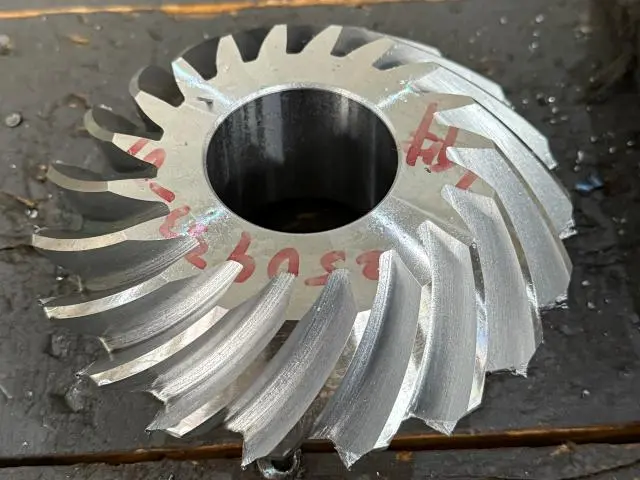
A Bevel Pinion and Crown Wheel is a special kind of matched gear set that is meant to transfer power between wheels that cross each other, usually at a 90-degree angle, while slowing them down and increasing their torque. The pinion, which has fewer teeth than the crown wheel, is the moving gear that sends rotating energy to the crown wheel. This part is what holds differentials, mining equipment drivetrains, and aircraft systems together. The complicated shape, which usually has spiral or hypoid tooth profiles, lets the teeth connect gradually, which makes the operation easier and allows for heavier loads to be carried in smaller spaces than with standard spur gears.
Understanding Bevel Pinion and Crown Wheel: Definitions and Basics
What Defines a Bevel Pinion and Crown Wheel?
These gears move and twist two shafts that cross each other by having teeth cut into cone-shaped surfaces that meet at a single point. The Bevel Pinion and Crown Wheel configuration involves a smaller gear that fits into the crown wheel, which is a bigger gear that looks like a ring. Unlike parallel-axis spur gears, this setup changes the direction of power flow and adjusts speed and torque based on the tooth ratio. The cylindrical shape makes sure that the teeth always touch, which allows for efficient power transfer in small spaces that need creative engineering solutions.
Key Design Features and Gear Types
There are three main ways that Bevel Pinion and Crown Wheel sets can be set up. Straight types have teeth that are lined up straight to the gear axis. They engage quickly, making more noise, but they are easier to make. Spiral types have curved teeth that connect slowly, which lowers noise and vibration while holding more weight. Zerol types have features of both types, so they offer average performance. To improve contact ratios, manufacturing standards like the Gleason or Klingelnberg cyclo-palloid systems describe tooth shapes. Spiral angles are usually around 35 degrees. Different types of materials are available, from 45# steel for lighter uses to high-tech metals like 20CrMnTi, 40CrNiMo, SAE4340, and 18CrNiMo7 for harsh industrial settings. Using heat processes like carburizing, cooling, and tempering to raise the surface hardness to between 45 and 62 HRC protects against wear problems like pitting and scuffing over time.
How Bevel Gears Mesh and Operate
The working concept depends on the teeth gradually engaging as the pinion turns. Each tooth comes into contact easily, so the force is spread out over several teeth at the same time instead of hitting hard at once. The gradual activation lowers the shock loads and the level of noise, vibration, and harshness. Because it is cylindrical, the rods can cross at different angles, though 90 degrees is still the most common. Precision alignment during installation is very important—even small differences put extra stress on the edges of the teeth, which speeds up wear and increases the chance of a catastrophic failure. When the mesh designs are right, they center the contact area and spread the loads out evenly as the gears bend under pressure.
Key Functions, Design Principles, and Applications
Essential Roles in Torque Transfer and Speed Variation
It is very good at turning high-speed, low-torque input into low-speed, high-torque output along two separate directions. This change is directly affected by the gear ratio, which is based on the difference in the number of teeth between the Bevel Pinion and Crown Wheel. A 4:1 ratio means that the pinion turns four times for every turn of the crown wheel. This increases power by about the same amount while slowing down the speed. In big machinery, this feature is very useful because engines work best at high RPM but driven parts need a lot of power at lower speeds. Mechanical efficiency is usually between 95 and 98%, which means that as little energy as possible is lost during transfer.
Critical Design Parameters Affecting Performance
Performance and lives are controlled by a number of factors. Backlash, or the space between teeth that fit together, needs to be carefully managed. Too much backlash leads to noise and bad placement, while not enough backlash causes heat and speeds up wear. For precise alignment processes, shims and flexible mountings are used to get the best tooth contact patterns. Module (the ratio of pitch diameter to tooth count) runs from 0.5 to 50 for special uses. Bigger modules can handle more weight. Pressure angles of 14.5 or 20 degrees change how strong teeth are and how they slide against each other. The Gleason profile type, which is commonly used in industry, makes the best use of these factors to ensure balanced power and smooth contact.
Lubrication strategies have a huge effect on how reliable a process is. During border lubrication situations, extreme-pressure additives in gear oils keep metals from touching each other. With the right density choice, film strength and pumping losses are balanced. Maintenance habits include checking the oil on a regular basis to find wear particles, keeping an eye on the temperature to see if the lubrication isn't good enough, and checking the vibrations to find problems early on. Manufacturers suggest changing the oil for the first time after 500 hours of use to get rid of break-in waste. After that, every 2,000 hours or as needed depending on the amount of pollution.
Industry Applications Across Demanding Sectors
Automotive differentials are the most well-known use and example. In this case, the gear set keeps the power going while letting the wheels turn at different speeds during turns. Heavy-duty trucks and cargo vehicles need hypoid designs that move the pinion below the axis of the crown wheel. This lowers the position of the driveshaft and makes the vehicle more stable. Cone crushers and ball mill drives in mines use these gears. When rocks are crushed, the high shock loads require deep case hardening and huge modules to keep the tooth roots from breaking. They are used in tractor gears and combine drive systems in farming equipment because they are durable and cost-effective. Their small size is useful in chopper tail rotor gearboxes and auxiliary power unit drives, where dependability and weight reduction are very important. Precision-ground versions are used in machine tool spindle drives to get tight tolerances and little runout, which lets you do exact welding.
Comparison and Decision Guide: Bevel Pinion and Crown Wheel vs Alternatives
Structural and Performance Differences
When comparing gear types, differences in structure determine how well they work. Standard Bevel Pinion and Crown Wheel sets have axes that cross each other, while hypoid gears have axes that are skewed and don't cross each other. Larger pinion sizes are possible with hypoid designs, which makes them stronger and smoother but means they need special extreme-pressure oils because they slide more. Worm gear sets have higher reduction ratios in single steps, but they are less efficient (50–90%) and can't be turned around easily because they self-lock. Helical gears on parallel shafts make operation smooth and quiet, but they can't change the flow of power between directions that are not parallel.
Torque Handling, Efficiency, and Noise Characteristics
Because they have more contact points, spiral designs can handle torque better than straight ones, which means they can hold 20–30% more loads. The slow interaction lowers the impact stresses, which makes the fatigue life longer. When looking at efficiency, Bevel Pinion and Crown Wheel sets are better than worm gears (95% to 98%), which means they use less energy and make less heat when they're running all the time. Noise levels depend a lot on how precisely the parts are made. ISO Grade 8-9 gears made by grinding are very quiet and can be used in small areas, while lower-grade gears make audible whining noises when they're loaded.
Selection Criteria Based on Operational Needs
What kind of material and heat treatment to use depends on the load. In mine crushers, shock loads need through-hardened alloys with a core hardness of more than 30 HRC. On the other hand, steady loads in conveyor drives can handle case-hardened steels like 20CrMnTi. Environmental factors are important. For example, marine use needs coatings or metals that don't rust, but normal steels work well in protected industrial gears. The total cost of ownership includes the cost of buying the item, the amount of energy it uses over its lifetime, and the cost of repairs. Higher-precision gears cost more, but they save energy and last longer between repair visits, which often makes the cost worth it in continuous-duty uses. Custom setups have production wait times of 35 to 60 days, so project timelines need to be planned ahead of time.
Procurement and Supplier Considerations for Bevel Pinion and Crown Wheel
Sourcing from Trustworthy Manufacturers
People who work in procurement have to judge sellers based on their production skills, quality systems, and past performance. The aftermarket for the Bevel Pinion and Crown Wheel is dominated by well-known names like SKF, Timken, and FAG, which have standardized products and global delivery networks. These businesses keep their ISO license, use materials that can be tracked, and follow strict testing procedures. Custom gear production is what specialized companies like YIZHI MACHINERY do best, making solutions that are perfect for each purpose. These providers have been around since 2016 and use CNC machining centers, clever heat treatment lines, and precise grinding tools to meet strict requirements. They have more freedom than catalog-only sellers because they can make prototypes of single items or large sales.
OEM Parts Versus Aftermarket Alternatives
Original equipment maker parts ensure that they will fit and work according to the original specs. This is very important for equipment that is under warranty or for uses that have to follow strict rules. Aftermarket choices can save you money—sometimes 30–50% below OEM prices—but they need to be carefully checked out first. Reliable aftermarket providers offer performance warranties, material certificates, and measurement reports. The choice depends on how much risk you are willing to take and how much money you have available. For example, mission-critical aircraft parts should pay more for OEM options, but new parts for farm equipment can use quality aftermarket options.
Cost Variables and Lead Time Planning
Prices change depending on the type of material chosen, the quality grade, the difficulty of the heat treatment, and the number of items ordered. For 50 to 100 units, a normal SAE4340 Bevel Pinion and Crown Wheel set with carburizing and ISO Grade 8 tolerance might cost $200 to $800 per set. On the other hand, aerospace-grade 18CrNiMo7 parts with cutting and ISO Grade 6 tolerance cost more than $2,000 per set. When you place a bulk order, you can get savings. At 100 units, the price is 10%, and at 500 units, it's 20%. Customization takes more time for engineers, but it doesn't mean sacrificing fit or speed. Lead times of 35 to 60 days allow for checking the plan, getting the materials, milling, heat treating, and inspecting. Rush orders shorten wait times by speeding up handling, but they cost an extra 25–40%. For cost savings, global logistics involves combining freight. While ocean shipping takes 20 to 40 days for foreign lines, air freight cuts the time it takes to 5 to 7 days but costs three times as much. Companies that offer multi-channel transport solutions—which include sea freight, air freight, and rail—adjust delivery speed and cost based on how quickly the order needs to be delivered.
Maintenance Tips and Troubleshooting for Optimal Performance
Essential Maintenance Protocols
Schedules for the Bevel Pinion and Crown Wheel lubrication are the basis of regular maintenance. During the initial break-in period, metal bits are created as the tooth surfaces become more uniform. After 500 hours, draining and replacing the oil gets rid of contaminants before they speed up wear. The next intervals depend on the job cycle: 2,000 hours for normal work, 1,000 hours for high temperatures or heavy shock loads. Use oils that meet GL-5 standards or are similar and have the right viscosity for the temperatures where they will be used. Synthetic oils increase the time between drains and make cold-starting work better in cold weather.
Backlash adjustment keeps the right gaps as parts age. Use dial markers to measure backlash; specs usually fall between 0.1 and 0.40 mm, but this depends on the module and the application. Not enough backlash leads to binding and burning, while too much backlash makes noises and makes it hard to keep the position. Deviations are fixed with shifts or changeable bearings. Checking for proper alignment requires using a marking substance to look at the tooth contact patterns. The contact patch should be centered on the tooth face, covering 50–70% of the tooth's length, and not touching any edges.
Common Failure Modes and Root Causes
Surface wear from repeated stress cycles causes pitting, which shows up on tooth surfaces as small holes. Not enough grease or too much stress speed up pitting. Scuffing is a type of sticky wear in which metal moves from one surface to another because the lubricant film breaks down. This can happen because of too much load, fast-moving speeds, or dirty oil. Tooth breakage can be caused by too much shock, bad heat treatment, or stress buildup from bad contact patterns. If a bearing fails, which can be seen by temperature spikes or mechanical sounds, the shaft can become misaligned, which destroys the gear mesh. Root causes are often caused by mistakes made during installation, lack of upkeep, or using the system beyond its designed limits.
Troubleshooting Noise and Vibration Issues
Whining sounds usually mean that there is backlash or that the bearings are worn out, which lets the shaft bend. Check the backlash and make sure it's within the limits. If the radial or axial play is too high, replace the bearings. Rumbling is a sign of damaged or contaminated bearings. Drain the oil, look for metal bits, and repair the bearings that are broken. If the load reversals clatter, it means that there is too much backlash. To fix this, lower the gap by shimming. Using accelerometers for vibration analysis finds resonance frequencies that match the frequency of the gear mesh. This helps find broken teeth or unbalance. By comparing vibration patterns to standard readings, degradation trends can be found before they lead to catastrophic failures.
A cost-benefit study is needed to decide whether to fix something or replace it. Minor cracking that affects less than 20% of the tooth surfaces can still be used as long as the load is lowered and lubrication is improved. Scuffing that isn't too bad should be replaced because it leads to failure quickly. When a tooth breaks, you should always repair the whole set, never just several parts. Compare the cost of replacement, which includes downtime, work, and parts, to the cost of a fix. When it comes to expensive equipment, it's cheaper to replace it before it breaks down than to fix it during production runs.
Conclusion
The Bevel Pinion and Crown Wheel gear sets reliably transfer power between shafts that cross each other in mining, aerospace, and industrial machines. Procurement managers and engineers can choose the best configurations if they know their design principles, material specs, and operating needs. Precision production to ISO Grade 8-9 standards, spiral tooth shapes, and the right heat treatment all work together to make sure that the gears can handle a lot of weight and run quietly. When you compare options like hypoid and worm gears, you can see how their performance differs. Different project needs can be met by buying from reliable sources who can make things to order and have strong logistics. Proactive care, like using the right oil, adjusting the backlash, and checking the alignment, can stretch the life of an item and keep it from breaking down, which can be very expensive. These insights help people make smart choices that balance performance, cost, and dependability in tough operating settings.
FAQ
1. What materials work best for high-load applications?
Case-hardening steels like SAE8620, 20CrMnTi, or 18CrNiMo7 are needed when there is a lot of load. The cores of these materials are tough and flexible enough to handle shock loads, and surface carburization makes them hard (58–62 HRC) with case depths of 0.8–1.5 mm. This mix doesn't allow cracking and scuffing to happen over time. For better core strength, 40CrNiMo or AISI4140 is often used in mining and heavy tools.
2. How does gear ratio affect machinery performance?
The tooth count link between the crown wheel and the pinion, or gear ratio, determines how much speed is lost and how much power is added. A 5:1 ratio lowers the output speed to one-fifth of the input speed and increases the power by about five times (after taking into account efficiency losses). Higher ratios work well for things like belt drives that need a lot of power at low speeds. Lower ratios keep output speeds high while increasing power slowly, making them good for machine tool wheels.
3. Can these gears be customized for specialized requirements?
Absolutely. There are different tooth numbers, modules ranging from 0.5 to 50, pressure angles of 14.5 or 20 degrees, and special materials that can be used with custom combinations. Manufacturers like YIZHI MACHINERY accept small orders, even samples of a single item. This lets them make solutions that are specifically designed for specific uses. The customization process includes talking about what the customer wants, making sure the design works with CAD models, using CNC machines for production, doing a thorough quality check, and packing the item safely for shipping around the world.
Partner with a Trusted Bevel Pinion and Crown Wheel Manufacturer
YIZHI MACHINERY specializes in making precision-engineered Bevel Pinion and Crown Wheel solutions tailored to industrial machinery, mining, and aerospace demands. Our ISO-compliant manufacturing processes combine advanced CNC machining centers, automated grinding systems, and intelligent heat treatment lines to produce gears meeting rigorous performance standards. We handle projects ranging from single prototypes to bulk orders, delivering custom tooth configurations, material selections, and heat treatments aligned with your specifications.
Our comprehensive service approach begins with pre-sales technical consultation and design support, ensuring optimal gear geometry for your application. During production, we provide synchronized progress updates, dimensional inspection reports, and real-time order tracking from factory loading through delivery. Customized packaging with shock-absorbing liners and wooden pallets reduces transport damage rates below 0.1%. Multi-channel logistics—sea freight, air freight, and China-Europe rail—match your timeline requirements with controllable lead times of 35-60 days. Post-delivery, our one-year warranty and rapid technical response resolve any concerns promptly.
Fifteen years of manufacturing experience underpin long-term partnerships with renowned mechanical engineering enterprises worldwide. Contact our team at sales@yizmachinery.com to discuss your requirements. Whether sourcing OEM components or exploring aftermarket alternatives, we deliver reliable quality, competitive pricing, and engineering expertise that drives your operational success.
References
1. Dudley, D.W. Handbook of Practical Gear Design and Manufacture. CRC Press, 2012.
2. Litvin, F.L. and Fuentes, A. Gear Geometry and Applied Theory. Cambridge University Press, 2004.
3. American Gear Manufacturers Association. AGMA 2005-D03: Design Manual for Bevel Gears. AGMA, 2003.
4. Stadtfeld, H.J. Gleason Bevel Gear Technology: The Science of Gear Engineering and Modern Manufacturing Methods for Angular Transmissions. Gleason Corporation, 2014.
5. ISO 23509:2016. Bevel and Hypoid Gear Geometry. International Organization for Standardization, 2016.
6. Townsend, D.P. Dudley's Gear Handbook: The Design, Manufacture, and Application of Gears. McGraw-Hill Education, 1991.

USER EVALUATE
Here is the customer's evaluation of us