


Choosing Reliable Spiral Bevel Gear Grinding Services for Industry
Picking the best Spiral Bevel Gear Grinding service provider can make or break your production goals, especially if you need accuracy and dependability. This finishing method is a mix of art and engineering. It turns heat-treated gear blanks into parts that make demanding machines like airplane transmissions, mining equipment, and industrial machinery work better. It's not just about picking a provider; it's also about finding a strategic partner who knows your tolerances, timelines, and the risks you're willing to take when a single micron can mean the difference between success and failure in high-torque settings.
Understanding Spiral Bevel Gear Grinding and Its Industrial Importance
What Makes This Process Essential
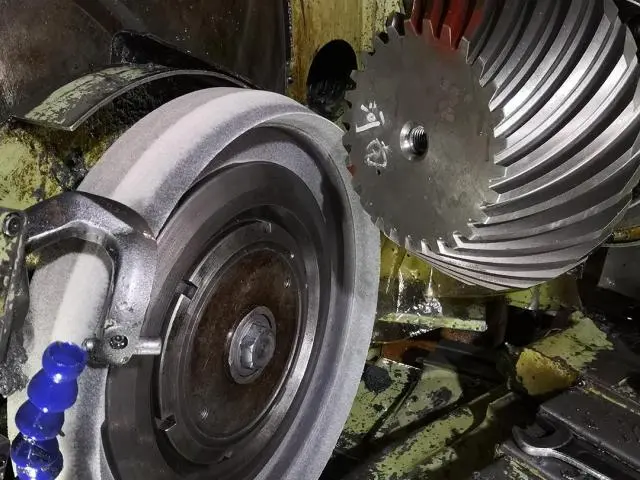
For the most part, Spiral Bevel Gear Grinding is the most precise way to make gears. When heat treatment strengthens gear teeth to 58–62 HRC, distortions like warping, dimensional changes, and surface flaws happen that lower the quality of the mesh. Grinding gets rid of these flaws by using Cubic Boron Nitride (CBN) wheels on 5-axis CNC machines to carefully remove material until the surface roughness is between 0.2µm and 0.4µm. This is more than just polishing; it's also mathematical correction that makes sure each tooth side meets the quality standards set by AGMA Q13 or DIN 4.
When you think about uses where failure isn't a choice, the economic importance becomes clear. Main rotor gears in helicopters need to have zero vibration gaps. The drives on mining excavators have to deal with shock loads that would break less durable parts. In these settings, gears need to be able to keep their contact patterns even when they are very out of line and work quietly. This can only be done with precise grinding that changes the flank terrain by controlling things like tip relief, end relief, and crowning.
How It Differs From Alternative Methods
Grinding is more accurate mathematically than lapping, which only achieves DIN 7-9 quality through mating methods that need paired gear sets. Each gear works on its own, which gives the supply chain freedom because parts don't have to be matched. Hobbing and grinding make soft gear teeth before they are heated, but they can't fix distortions that happen after the gears are hardened. Grinding is the only way to ensure kinematic precision on hardened surfaces. This makes it essential in fields where accuracy in dimensions directly affects safety and operating life.
Some of the materials that are often worked with are 20CrMnTi, 42CrMo, AISI4140, and SAE4340 steels. Carburizing, cooling, and tempering processes affect these steels in different ways. Knowing how these metal qualities affect grinding settings is what sets good service providers apart from great ones.
Key Factors to Consider When Choosing Spiral Bevel Gear Grinding Services
Technological Capabilities and Equipment Quality
The tools used for gear grinding services can tell you a lot about what might happen. Leading companies like Gleason, Klingelnberg, and Mitsubishi make tools that can reach ISO 8–9 grade accuracy, but owning one doesn't mean you'll get results. What counts is good care, like following regular routines for calibration, spindle runout checks, and wheel dressing that stop "ghost noise" from tooth surfaces that aren't smooth. These high-frequency vibrations, which are often caused by worm wheel frequency irregularities in machine kinematics, need to be analyzed using FFT and dynamic correction methods.
When comparing service companies, be sure to ask specific questions about the specs of their grinding wheels. Grinding burns can be avoided by using Vitrified Bond CBN wheels with improved water delivery systems that keep the steel's temperature below its tempering level. Care must be taken to keep the Specific Material Removal Rate (Q-prime) under tight control. For example, forceful grinding increases output but also risks thermal damage that cancels out the benefits of heat treatment. Expert sellers find the best balance between short cycle times and maintaining the integrity of the metal. They do this by changing the places of the nozzles and the speed at which the coolant flows to protect the tooth flanks' helpful leftover compressive stresses.
Quality Standards and Defect Prevention
International tolerance standards for Spiral Bevel Gear Grinding must be followed; they are not optional. Look for suppliers that can show they follow ISO standards by having written testing methods that cover things like surface finish, dimensional accuracy, and contact pattern analysis. Coordinate measuring tools (CMM) and gear testers are used by the best services to check factors like pitch accuracy, profile deviation, and lead deviation. These tests check to see if finished gears can handle certain loads without premature pitting or micropitting failures.
Defect discovery is what sets proactive partners apart from reactive sellers. Grinding burns show up on the sides of teeth as softened areas that make them less hard and less resistant to wear. Chatter lines show that the machine isn't stable or that the wheels aren't properly dressed. A trustworthy service provider finds these problems during in-process review, not after the batch is finished, and takes corrective actions that keep your production plan and budget safe.
Cost-Effectiveness and Lead Time Balance
There are real budget issues, but trying to get the cheapest quote usually doesn't work out. The truth of precision production is that it takes 35 to 60 days to make something. Rushing this process means sacrificing quality. On the other hand, providers with streamlined processes, automatic loading systems, and multiple grinding rooms can meet tight deadlines without lowering quality. Providers should explain how they balance order queues, divide up machine capacity, and handle requests that need to be handled quickly.
Think about the total cost of ownership instead of the price per piece. In the end, gears that need to be reworked or replaced early because of poor grinding quality cost more than expensive services that are done right the first time. Long-term relationships with suppliers that offer reasonable prices for repeat orders and volume promises help keep budgets stable while ensuring that quality is maintained across all production runs.
Comparison of Spiral Bevel Gear Grinding Solutions in the Market
Conventional Versus Advanced Grinding Technologies
Traditional mechanical grinding tools can do their job, but they don't have the flexibility and repeatability of current CNC systems. Profile grinding methods with a single indexing work best for big module gears (above 20mm), where stability and heat dissipation problems get worse. On the other hand, continuous generating grinding works better for intermediate module ranges of 0.5 to 50mm. The choice you make will depend on the shape of your gears and how many you need to make.
Closed-loop manufacturing correction is used in more advanced systems. This is when measurements taken after grinding are fed back into the machine settings for the next part. This method fixes itself when there is tool wear, temperature drift, or differences in the materials used, so tight tolerances are kept across whole production runs. Automation goes beyond just grinding. Integrated robotic filling, automatic wheel dressing stations, and in-machine inspection cells cut down on human work while increasing consistency in output.
Leading Equipment and Their Applications
When weight reduction and accuracy come together in aircraft, Gleason tools are the most common choice. Their Phoenix series grinds can get the surface finishes needed for transmission gears in helicopters that are constantly vibrating. Klingelnberg systems are great at making differentials for cars because they can handle high volumes of work with consistent quality that meets the NVH (noise, vibration, and harshness) standards that carmakers are asking for more and more. Mitsubishi equipment is strong enough to be used in heavy mines, where shock loads and dirty lubricant conditions test the limits of how long gear can last.
Figuring out which tools work best for your business helps you rate possible suppliers. A company that works with military clients and has Gleason equipment can do precision-critical tasks, while companies that use Klingelnberg cells can make a lot of things quickly and efficiently, which is good for bigger orders.
Automation Benefits and Limitations
Automated Spiral Bevel Gear Grinding cells get rid of human error by running lights-out shifts that make the best use of the equipment. Fixturing mistakes that lead to lost parts can be avoided with robotic loading systems that handle gears consistently. Automation, on the other hand, needs a lot of money to be put into it, so it's only practical for medium to high production rates. Custom, one-of-a-kind orders may get more attention from semi-automated processes where skilled techs use their experience to work with oddly shaped gears.
Case studies from companies that make differentials for cars show that automatic grinding lines can cut run times by 40% while also making quality more consistent. When Spiral Bevel Gear Grinding for excavator end drives is processed, mining equipment makers say they get similar gains. These real-life examples show how measured value can be created when your needs and the supplier's technology skills are a good match.
Procurement Best Practices for Spiral Bevel Gear Grinding Services
Defining Precise Specifications
Full technical paperwork is the first step to a successful purchase. In addition to basic details like module, pressure angle (14.5° or 20°), and tooth count, you should also list the required surface hardness (45–50 HRC for mild loads and 58–62 HRC for extreme conditions), the ranges of allowed surface roughness, and the expected contact pattern under load. It's easy for things to go wrong when the specs aren't clear. This leads to redoing and wasted time and money on projects.
Choosing the right material has a big effect on how well grinding works. Steels like 18CrNiMo7 and 17CrNiMo6 react reliably to carburising and cutting. For shock-load uses in mining, SAE4320 and AISI8620 grades offer great core toughness. When you talk about material choices with possible sellers during the quotation phase, you can find out how much they know about metals and how they can help you find the best combinations for your needs.
Custom service contracts should include language about protecting intellectual property, quality standards, shipping dates, and fixing parts that don't meet requirements. Clear terms keep disagreements from happening and set up systems of responsibility that look out for your best interests throughout the manufacturing partnership.
Vetting Suppliers Rigorously
Qualifying a supplier is more than just looking at papers and certificates. Plant visits are the best way to get a real sense of what the company can do. Look at the state of the machines, how clean the workplace is, and how engaged the employees are. Quality results are strongly linked to these factors. Ask for sample parts from current production runs instead of specially made show pieces, and then have them inspected by someone else to make sure the stated standards are accurate.
When choosing between international and local providers, there are trade-offs that should be carefully thought through. When it comes to site trips, domestic providers are closer, contact is faster, and arrangements are easier. International partners, especially those with specialized knowledge and reasonable prices, can be very helpful if you have strong quality agreements and payment terms that are tied to inspection goals. Location doesn't mean as much as competence, process control, and the ability to respond to contact.
Certifications are a good way to start building trust. For example, ISO 9001 quality management systems, AS9100 for aircraft uses, and API certifications for energy sector parts show that the process is well-defined and follows the rules. But certifications don't ensure performance on their own; you should also include documentary proof, real assessments of the production capabilities, and examples from similar apps that have shown performance in the past.
Securing Long-Term Supply Chain Stability
Strategic benefits come from forming ties instead of transactional ones. When you work with suppliers who know your gear designs, application needs, and quality standards, you get more consistent results with fewer engineering changes. Long-term contracts often give you access to better prices, earlier production schedules, and committed technical help that makes launching new products easier.
Availability of consumables and extra parts should be taken into account when choosing a seller. Grinding wheels, water systems, and other machine parts need to be replaced every so often. Suppliers who keep enough of these things in stock and have established supply lines reduce the chances of unplanned downtime that could cause your orders to be late. Making it clear who is responsible for managing consumables—whether they are supplied by the customer or managed by the supplier—avoids mistakes that could stop production, and expertise in Spiral Bevel Gear Grinding ensures consistent quality throughout.
Enhancing Spiral Bevel Gear Grinding Efficiency and Longevity
Preventative Maintenance and Performance Optimization
Product quality and running costs are strongly linked to how well a machine works. Regular maintenance plans that check the shaft bearings, ballscrew accuracy, and coolant system cleaning ensure that the grinding results stay the same. Vibration tracking systems find worn-out bearings before they fail completely, and regular thermographic inspections find problems with cooling systems that are causing temperatures to become unstable.
Systematic methods are needed to fix common problems. Surface burns are a sign of too much material removal or not enough water supply. To fix the problem, feed rates need to be slowed down, or valves need to be moved to get the best flow. Chatter marks mean that the machine isn't rigid enough or that the wheels aren't the right size. To fix this, you can either add more damping or switch to wheels with a finer grit. Experienced grinding service providers show they are good at diagnosis by quickly figuring out what's wrong and taking effective steps to fix it, which lowers the amount of scrap that is produced.
Process Optimization Techniques
Grinding parameter optimization tries to find the best mix between three goals: removing as much material as quickly as possible while keeping the surface's purity and accuracy in measurements. Depth of cut, feed rate, wheel speed, and coolant pressure all affect each other in complicated ways that can only be understood by hands-on experience and, more and more, modeling software that models temperature and mechanical effects. Topological changes, which are deliberate departures from the theoretical tooth geometry, make up for the fact that the housing bends when it's under load. This keeps the contact patterns in the middle instead of moving toward the edges, where catastrophic chipping starts.
New technology advances show that development will continue. Using porous CBN wheels in high-efficiency grinding (HEG) methods lets you remove stock quickly and easily without damaging it with heat. Adaptive control systems keep an eye on the grinding forces in real time and change the settings automatically to keep things running at their best, even if the hardness of the material changes. Dry grinding technologies don't use coolants, so they don't harm the environment. They also give similar surface finishes by using improved wheel formulas and high-pressure air cooling.
Emerging Industry Trends
Gear grinding processes can now connect to the internet and analyze data thanks to Industry 4.0. Performance data from machine monitors is sent to cloud platforms, where algorithms look for ways to make things more efficient and predict when repair will need to be done. Digital twin models let you try out grinding methods virtually before committing production time, which cuts down on the number of times you have to try and fail. Forward-thinking providers are adopting these new ideas more and more. For buying teams, this means faster quotes, shorter lead times, and more regular results.
Pressures to be sustainable push people to adopt eco-friendly behaviors. When compared to flood cooling, minimum quantity lubrication (MQL) systems use 90% less coolant. Designing machines that use less energy lowers running costs and helps companies meet their environmental goals. Suppliers that show they care about the environment through measured projects are in line with modern buying values that stress responsible manufacturing partnerships.
Conclusion
To find trustworthy gear finishing services, you need to look at their technology know-how, quality control systems, and how well they fit with your business's needs. To get regular results in hard finishing, partners must show that they are experts with their tools, know how to do the job, and communicate clearly, especially in specialized processes such as Spiral Bevel Gear Grinding. Whether your gears give torque to industrial machines, help mining excavators move through rough terrain, or allow precise angular transfer in aerospace systems, the quality of the grinding decides how well they work, how long they last, and ultimately, how competitive you are. Procurement teams can build manufacturing relationships that drive measured value across the lifecycles of products by carefully screening suppliers, setting clear requirements, and working together for a long time.
FAQ
1. Which Industries Benefit Most From Precision Gear Grinding?
Because safety is so important and weight is limited, aerospace uses need the best level of accuracy. Transmissions, extra power units, and control surface motors in helicopters depend on ground gears that produce low levels of vibration. When digger drives and crusher systems use ground components that resist shock loads and dirty lubrication, they last longer in mining operations. Precision grinding is needed for industrial gear like machine tool spindles, robotic joint drives, and automatic production equipment to work quietly and accurately. Heavy truck differentials and naval power systems are two more areas where this finishing process is very important.
2. How Do You Verify a Provider's Quality Capabilities?
Ask for thorough inspection records from recent production runs that show how the measured values compare to the specifications. Check the calibration papers for their measuring tools to make sure they can be traced back to national standards. Visit factories to see for yourself how they control the production process, how well their equipment is maintained, and how they handle quality issues. Ask for customer references from similar applications and get in touch with them to find out how well the part delivers, how quickly technical help responds, and how well it works in the long run. Check out their corrective action plans for products that don't meet standards; good quality systems use organized problem-solving instead of haphazard rushing.
3. What Distinguishes Grinding From Other Finishing Methods?
Grinding takes away material from gear teeth that have been strengthened. This fixes problems caused by heat treatment that other methods can't fix. Lapping needs matched pairs and produces lower quality grades. Honing, on the other hand, mostly fixes geometry mistakes but improves surface finish. Mathematical consistency is achieved through grinding, which means that each gear meets standards on its own, rather than only working when paired with a certain mate. This adaptability makes managing stockpiles and replacing parts in the field easier, which has benefits for operations beyond the manufacturing process.
Partner With YIZHI MACHINERY for Your Precision Grinding Needs
To be the best at making gear, you need more than just the right tools. You also need knowledge, dedication, and a track record of success. With 15 years of experience, YIZHI MACHINERY has been making precise parts for industries like mining, aircraft, and industrial machines. Our high-tech CNC cutting centers and automatic heat treatment lines work with materials ranging from 45# steel to SAE4340. We can make modules from 0.5 mm to 50 mm that meet ISO quality standards. We understand that every project carries unique challenges, and Spiral Bevel Gear Grinding expertise ensures optimal performance and precision, which is why our engineering team provides comprehensive design consultation, progress tracking, and one-year warranty protection, ensuring your investment delivers lasting value. Our customized packing solutions and multi-channel transportation ensure on-time delivery with damage rates below 0.1%, no matter how many samples you need or how many you need to make. Contact us at sales@yizmachinery.com to talk about how our skills as a reliable Spiral Bevel Gear Grinding source can help you with your next project with accuracy, dependability, and low prices that make you more competitive.
References
1. American Gear Manufacturers Association. (2019). ANSI/AGMA 2009-C16: Bevel Gear Classification, Tolerances, and Measuring Methods. Alexandria, VA: AGMA Publications.
2. Klingelnberg GmbH. (2020). Bevel Gear Technology: Design, Manufacturing and Inspection. Hückeswagen, Germany: Klingelnberg Technical Press.
3. Stadtfeld, H.J. (2021). Precision Grinding of Spiral Bevel and Hypoid Gears: Processes, Equipment and Quality. Rochester, NY: The Gleason Works Technical Institute.
4. Litvin, F.L., & Fuentes, A. (2018). Gear Geometry and Applied Theory (3rd ed.). Cambridge, UK: Cambridge University Press.
5. International Organization for Standardization. (2013). ISO 1328-1:2013: Cylindrical Gears — ISO System of Flank Tolerance Classification. Geneva, Switzerland: ISO Standards.
6. Society of Automotive Engineers. (2017). SAE J1938: Precision Manufacturing of Spiral Bevel and Hypoid Gears for Automotive Applications. Warrendale, PA: SAE International.

USER EVALUATE
Here is the customer's evaluation of us