


The Importance of Precision in Bevel Gear Cutting
Modern industrial power transfer systems are characterized by Precision Bevel Gear Manufacturing. Precision in bevel gear cutting means handling limits measured in microns. These are the differences between machines that work well and reliably and machines that break down often and cost a lot to fix. Accuracy during the cutting process has a direct effect on working efficiency, noise levels, equipment lifespan, and, in the end, your bottom line. This is true in industries from aircraft to mining. It's not enough to know why accuracy is important; you also need to have strategic information to protect your buying investments.
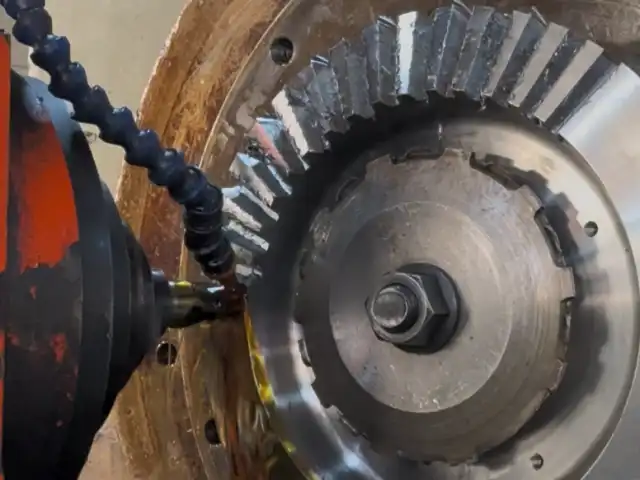
Understanding Precision Bevel Gears
What Defines a Precision Bevel Gear
Precision Bevel Gears differ from market gears owing to manufacturing limits and geometrical precision. Normal bevel gears work for most tasks, but precision ones must meet ISO 8-9 or AGMA 10-12 standards. These parts properly transmit power and motion between 90-degree rods. Their control over tooth shape, surface polish (Ra 0.4μm or higher), and size stability distinguishes them between production runs. Proper gear teeth designs are mathematically modelled for optimal contact patterns. Gear teeth linking and releasing effect load distribution, vibrations, and wear. Stress areas hasten failure and make noise when tooth shapes stray even little from their design.
Common Types and Their Industrial Applications
Three basic bevel gear designs are utilised in industry, each serving various practical needs:
1. Directly Bevel Gears: Used below 1000 RPM, they feature teeth that line up directly to the gear shaft. Hobbing and grinding straight bevel gears is inexpensive and simple. This component is found in occasional-use agriculture and light industrial equipment.
2. Spiral Bevel Gears: The bent teeth allow the gears to join gradually, dispersing the strain over multiple teeth. This configuration reduces noise and shaking while transmitting more torque at high speeds. Spiral bevel gears are excellent for machine tool shaft drives and compact mechanical gearbox systems, where smooth operation affects job quality.
3. Hypoid Bevel Gears: Offset shafts allow hypoid gears to bear greater weight and operate quieter than spiral gears. Mesh rolling requires high-pressure chemicals. Automotive differentials and heavy-duty steering systems employ hypoid forms.
YIZHI MACHINERY uses industry-standard Gleason profile specifications for all three kinds of bevel gears. Your purchase may be customised from module 0.5 to module 50 for precision robots or large-scale mining equipment.
Material Selection and Its Impact
Precision Bevel Gears' performance depends on their materials. Quality alloy steels like 18CrNiMo7, 20CrMnTi, and SAE4340 provide durability. Carburising hardens the exterior (58–62 HRC) and makes the inner robust and flexible to absorb shock loads. Material choice impacts application-specific stress patterns. Through-hardened 42CrMo or AISI4140 delivers teeth even power, making it ideal for mining equipment that handles heavy loads. However, aviation actuation systems make the surface hard to avoid wear and the core robust for quick load cycling.
The Critical Role of Precision in Bevel Gear Cutting
Why Cutting Accuracy Determines Performance
Precision Bevel Gears must be cut accurately for power transfer. Cut tooth shape, surface roughness, and dimensional accuracy affect gear performance when loaded. Rough cutting induces KTE. Servo-driven systems lose position, and mechanical structures vibrate. Noise, vibration, and roughness depend on cutting quality. Without optimal tooth profiles, mesh transitions induce impact forces that cause machine noise and vibrations. Vibration from small faults may destroy bearings and housings over 3000 RPM. Backlash, the space between teeth that fit, must be controlled during manufacturing. Motion is lost in reverse applications with too much backlash, lowering CNC placement accuracy. Unresponsiveness creates binding, which warms and wears. For optimal backlash (0.05-0.10 mm for precision classes), cutting must be micron-accurate.
Key Precision Parameters in Manufacturing
Precision bevel gear quality depends on many variables, each requiring its own measurement and control method:
1. Tooth geometry accuracy comprises profile error, lead error, and pitch difference. The profile error shows how closely the real tooth curve fits the assumed involute or circular arc. Lead error measures tooth alignment across the face. Pitch variance quantifies tooth spacing. Together, these parameters determine load distribution and contact pattern quality.
2. Surface Finish Quality: Precision grinding can get the surface roughness below 0.8µm after being heated. A better surface finish lowers friction, keeps the working temperature low, and keeps the oil film intact for longer. The grinding process also fixes any flaws that happened during the heat treatment, which makes the measurements accurate again.
3. Alignment and Mounting Specifications: Bevel gears function in pairs, therefore mounting distance and shaft angle must be precise. The mounting distance—the horizontal location of each gear relative to the tip—affects tooth contact patterns. Small contact zone variations of 0.05 mm might cause edge loading and accelerate pitting failure.
Advanced Manufacturing Techniques We Employ
YIZHI MACHINERY ensures ISO 8-9 quality with numerous steps. Hobbing or grinding rough forms teeth. Fine grinding fixes thermal damage from carburising, quenching and tempering, or induction hardening. Our CNC gear grinding equipment can reach 0.001mm tolerances for precision applications. CAM systems improve tool paths to guarantee all output runs remove the same material and have the same surface quality. This technical framework lets us construct several prototypes with quality. The whole manufacturing process is quality controlled. CMMs measure tooth shape during manufacturing. Before delivery, contact pattern testing checks meshing. Magnetic particles inspect every Precision Bevel Gear before it leaves our factory for faults that might shorten its lifetime.
Measurable Benefits of Precision Cutting
Actual manufacturing investment was substantiated by performance data. Precision-grade bevel gears outlasted market ones 40% in a mining tool worker experiment. Better tooth contact delayed pitting and spalling by reducing stress. Energy economy gains matter. Precision Bevel Gears increased gearbox efficiency by 2%–3% in industrial gear testing. This little change may save a lot of energy in continually running equipment. Polished surfaces and shape decrease transfer power loss. Zero downtime may be the greatest business case. Unexpected key equipment failures affect other corporate departments. Precision parts deteriorate predictably, so you can plan maintenance rather than just fixing problems. The dependability transforms maintenance from crisis management to planned optimisation.
How to Choose the Right Precision Bevel Gear for Your Application
Assessing Industry-Specific Requirements
Know your product's functioning envelope before choosing bevel gears. Different industries have issues with material, grade, and geometry. Small designs with great power density are needed for aeroplanes to minimise weight. From -50°C to 150°C, they require materials with consistent thermal expansion rates and heat treatment procedures to maintain dimensions. Aerospace-grade Precision Bevel Gear requirements may need 100% raw material testing and certification. Mines are filthy, and lubrication systems include abrasive parts. harsh surface treatments and higher-viscosity lubricants provide extended service intervals in harsh conditions. Mining equipment has consistent high power and shock loads from striking unexpected things while loaded. Core stiffness and surface hardness matter when selecting materials. Distinct industrial equipment performs distinct duties. High-speed machine tool spindles need minimum runout, whereas rolling mills require low-speed, high-torque utilisation. Operating speed requires more accuracy. To reduce noise and vibration, higher RPM systems require tighter tolerances.
Essential Evaluation Metrics
Several quantifiable elements assist you choose a provider and their gear:
1. Torque Capacity: Service factors for load, shock loading, and task cycle trends should be included in the rated torque. Verify that capacity figures are based on AGMA 2003 or ISO 6336 math standards. These criteria shown to predict gear strength and durability.
2. Backlash Tolerance: Application requirements determine backlash levels. Servo-driven positioning systems require minimum backlash to maintain precision. This may need split-gear or fixed installations. To avoid sticking, usage with high temperature expansion may require extra spacing between pieces.
3. Sound Emission Levels: If your equipment operates in a loud environment or near people, acoustics are crucial. Spiral bevel gears naturally sound softer. Precision-grade components reduce noise with better tooth contact patterns and gearbox error.
4. Transmission Efficiency: Transmission efficiency influences system cost and thermal control. Well-made spiral bevel gears work 98% or more at each reduction level. Heat generation from efficiency losses may need active cooling in high-power settings.
Comparing Suppliers and Their Specialties
Every worldwide precision gear firm has its unique strengths. Understanding these skills lets you match vendor abilities to needs. Gleason Corporation builds spiral and hypoid vehicles and devised many bevel gear manufacturing methods. Modern equipment and approaches are used. Timken provides heavy industry bearing and gear solutions. They create sturdy mining and construction gear. SKF makes engine systems with integrated bearings. With 15 years of expertise, YIZHI MACHINERY can customise anything. We provide customised solutions for all types of enterprises, unlike catalogue sellers. Our professionals help clients optimise gear specifications for each application during planning. OEM customers that develop tools benefit from this. Our manufacture can handle big and small quantities. Most precision gear manufacturers have large minimum order quantities, making prototypes and other speciality work challenging. Purchase one item to test ideas before bulk buying.
Balancing Cost, Quality, and Lead Times
Buying takes several considerations. Knowing how these parts operate aids project-related choices. Customisation greatly impacts cost and lead time. Standard catalogue gear may arrive promptly but not function. Planning, toolmaking, and quality control take 35–60 days for custom designs. Long-term value is higher for more efficient and durable custom gears. Volume greatly impacts unit pricing. Setup slows gear manufacturing economies of scale. Over samples, modest orders (10–50 items) may save 15–25%. Talking to businesses about your annual needs earns you big discounts and committed items. Industry-specific certification and quality documentation requirements exist. Aircraft materials need documentation and approval. This costs more but tracks. Industrial applications may use COCs, reducing paperwork. Avoid uncertainty and delays by clarifying quality documentation standards.
Precision Bevel Gear Manufacturing and Maintenance Essentials
Design and Material Optimization
Long before cutting metal, Precision Bevel Gears existed. You may assess tooth shape, load distribution, and stress concentration while utilising CAD models. Designers use FEA to predict failure and make longer-lasting changes. Material choice depends on manufacture and use. We customise material qualities to operational needs with our wide range of 45# steel, 20CrMnTi, 40CrNiMo, SAE4340, and AISI8620. End gear performance relies on carbon, alloying elements, and heat treatment. Heat alters an item's essential properties. Cooled carburising steel hardens to 58–62 HRC. The core is strong at 30–40 HRC and the surface wear-resistant. Induction hardening stiffens a small area and reduces warping for bigger gears. Smaller gear teeth are consistently through-hardened by quenching and tempering.
Manufacturing Process Overview
The process of making a gear goes through a series of steps, each of which adds to the end accuracy. Knowing this process helps you set reasonable goals and have more helpful provider technical talks.
1. Initial Cutting: Hobbing, milling, or cutting yields rough-toothed annealed flats. Material removal rates balance productivity, tool life, and measurement accuracy. With CNC, every batch is identical.
2. Heat Treatment: Heat strengthens teeth and relieves stress. Carbon enters the upper layers during carburising at 900–950°C in carbon-rich settings. The material hardens when the high-temperature crystal structure solidifies after cooling. Tempering softens while retaining strength.
3. Precision Grinding: Grinding after heat treatment corrects thermal warping and assures dimensions. Profile grinding forms teeth, surface grinding smooths sidewalls. This phase needs advanced equipment and trained workers to maintain micron standards.
4. Finishing and Inspection: Deborring reduces tension-causing sharp edges. Final dimensional verification employs coordinate measuring equipment to confirm conformance. Checking contact patterns verifies meshing. Only gears that pass all tests are packed and rust-protected.
This rigorous approach ensures that every Precision Bevel Gear satisfies criteria, regardless of quantity. Our standard method ensures quality whether we're manufacturing one or many prototypes.
Maintenance Best Practices for Extended Service Life
Even gears that are made with great care need to be properly maintained in order to last as long as possible. Several actions have a big effect on how long a process lasts:
1. Lubrication Management: Bevel gears mesh, thus they require high-quality lubricants with exceptional pressure additives to hold hydraulic films. Lubricant viscosity should match machine temperature and load. Regular oil analysis reveals early wear, enabling maintenance planning.
2. Alignment Verification: Loads are focused on the teeth edges instead of the face width when the shaft is misaligned. Regularly checking alignment with dial markers ensures that fixing lengths remain within limitations. Thermal expansion may misalign a large gearbox.
3. Vibration Monitoring: Condition monitoring systems measure vibration patterns and identify issues before they become too large to address. Changes in vibration frequency or severity indicate new issues such worn bearings, fractured teeth, or insufficient lubrication. Trending analysis allows you schedule maintenance during breaks instead of repairing problems immediately.
4. Regular Inspection: Maintenance checks reveal visible damage including pitting, spalling, and scoring. Borescope research allows internal viewing without disassembly. Writing down wear patterns helps designers determine when to maintain and validates their predictions.
These repair basics will help you get the most out of your fine parts. When combined with good manufacturing, regular repair usually gives industrial equipment 10 to 15 years of solid service.
Procurement Strategies for Precision Bevel Gear
Understanding Sourcing Channels
Procurement personnel have many sourcing options, each with advantages. B2B platforms link customers and sellers to various suppliers and display pricing. These websites let users identify new suppliers and compare pricing. Technically complex precision gear requirements need direct interaction that platform interfaces may not be able to manage. Working directly with a maker lets you make more specific modifications and customise work. Working with production teams enables you discuss design enhancements, material replacements, and manufacturing processes. Long-term relationships with suppliers make them more inclined to stock up and prioritise your orders when demand is low. We welcome platform-based and direct agreement queries at YIZHI MACHINERY. Our technical staff reviews program requirements and recommends specifications before sales. This strategy helps you avoid costly specification errors and save money.
Pricing Structures and Cost Drivers
Knowing how much fine gear costs lets you make reasonable budgets and have productive conversations with suppliers. Several things have a big effect on costs:
1. Customization Difficulty: Standard stock gears keep engineering and tooling costs low. For custom tooth numbers, modules, or mounting arrangements, you may need to do some planning work and get special cutting tools. Optimized special specs, on the other hand, often make up for extra costs through better performance.
2. Material Choice: Using rare metals and special finishes can raise the cost of materials, but they may be worth it in the long run if they mean less downtime and longer service life. It is easier to understand economic differences when you look at lifetime costs instead of unit prices.
3. Volume and Lead Time: Due to problems with production schedules, rush orders and small numbers cost more. The best prices can be found by planning purchases around normal wait times, which are 35 to 60 days for custom precision gears. With volume agreements, tiered pricing systems can be used.
4. Quality paperwork: It costs more to run a business when there are a lot of material permits, dimensional records, and process paperwork. By specifying only the paperwork that is needed, costs can be kept low while quality verification is maintained.
Supplier Evaluation Criteria
To choose the best Precision Bevel Gear provider, you need to look at more than just price quotes. Several factors should be carefully considered:
1. Manufacturing Capabilities: Does the seller have the right tools for production, like CNC gear makers, heat treatment facilities, and high-precision testing tools? The capabilities of the equipment directly limit the exact grades that can be made and the quantity that can be made.
2. Quality Systems: ISO 9001 approval is a basic way to make sure that quality management is done right. Industry-specific certifications, like AS9100 for aircraft and IATF 16949 for cars, show that a company has the right skills. Ask for parts of quality manuals and inspection reports from projects that are similar to yours.
3. Technical Support: Check how quick and knowledgeable the supplier's support team is. Can they help you with design, suggest materials, and analyze your application? Working together on technology is often just as useful as being able to make things.
4. Logistics and Communication: Shipping prices and lead times are affected by where you live. Timezone differences make it harder to communicate effectively. Check out the supplier's experience with export paperwork and freight handling. YIZHI MACHINERY offers visual tracking from start to finish and custom packing with damage protection guarantees. This lowers the rate of shipping damage to less than 0.1%.
5. Flexibility and Responsiveness: How does the provider deal with changes to specifications, rush orders, and quality issues? References from current customers give you more information about how things really work than marketing materials.
Preparing Effective Inquiries
Requests for quotes that are well-structured get answers from suppliers faster and are more accurate. When you ask for bids, include these things:
1. Description of the application: working conditions, job cycle, speed ranges, and power needs
2. Specifications for sizes: number of teeth, module, pressure angle, face width, and fitting style
3. Material and Heat Treatment Needs: Choose the materials or let the seller suggest ones based on the job.
4. Precision Grade: Use well-known standards (ISO, AGMA, DIN) instead of vague quality goals.
5. Needs for Quantity and Delivery: Annual Volumes, Initial Order Quantity, and Needed Delivery Schedule
6. Needs for Quality Documentation: List the test results, inspection records, and material certifications that are needed.
7. Asking a lot of questions helps get accurate quotes and shows that the buying professional. When suppliers get clear requirements, they answer more fully and are more likely to stick to the standards.
Conclusion
Being precise when cutting bevel gears isn't just about being perfect in the manufacturing process; it also has real-world practical benefits that affect the reliability, efficiency, and lifetime costs of your equipment. Advanced cutting, grinding, and quality control methods allow for errors of only a few microns. This means that the machine runs more quietly, needs less maintenance, and always does its best under tough circumstances. Whether you're making bevel gears for airplane control systems, mining equipment powertrains, or precision machine tools, the quality of the manufacturing process is what makes them work. If you make strategic purchasing choices that put accuracy ahead of original cost, you will always get better long-term value through less downtime, lower energy use, and longer equipment lifespan.
FAQ
1. What advantages do precision bevel gears offer compared to standard grades?
Precision Bevel Gears function better due to tighter manufacturing restrictions and mathematical precision. Better tooth contact patterns reduce stress loads, extending service life 30–40% above commercial-grade choices. A superior surface polish reduces operating temperatures and friction, increasing gearbox efficiency by 2–3%. Fewer communication errors imply less noise and vibration, which is critical when the gadget has to be near to people or accurate. These benefits, such cheaper maintenance and longer service intervals, justify the higher expense.
2. How does precision cutting contribute to long-term gear performance?
As the gear is cut, essential mathematical parameters are determined that influence its lifetime performance. With correct tooth shapes, the load is dispersed over the face width rather than on the edges. Mesh changes are less noisy with the same pitch gap. Good surface polish helps heavy grease coatings keep metals apart. Well-cut gears retain their performance characteristics as they are utilised more hours, whereas poorly cut parts wear out quicker.
3. Can you accommodate small-batch custom orders for prototyping?
YIZHI MACHINERY accepts custom orders of any size, even one piece for testing or other purposes. We can cooperate on development projects without the expensive minimum order quantities of larger firms due to our open manufacturing methodology. This helps when testing new designs, altering existing parts, or giving specialised usage. Before developing production tools, our engineering staff provides design ideas to improve requirements.
Partner with YIZHI MACHINERY for Superior Precision Bevel Gear Solutions
It has been 15 years since YIZHI MACHINERY specialized in making custom gears. They offer Precision Bevel Gear solutions that meet the strict needs of mining, aircraft, and industrial machines. We have been making Precision Bevel Gears for a long time and have quality systems that are in line with ISO standards. We also use modern CNC machining centers, precision grinding tools, and full testing facilities to make sure that ISO 8-9 grade standards are always met. From the first concept to the final delivery, our engineering team works closely with clients to make sure that the tooth geometry, material choice, and heat treatment processes are all optimized to meet your unique working needs. We can make modules from 0.5 to 50 and have a lot of material choices, such as SAE4340, AISI4140, and 18CrNiMo7. This means that we can build solutions instead of pushing apps to fit into standard catalog limits. Delivery times of 35 to 60 days combine the need for accurate manufacturing with project deadlines. Visual tracking and damage-prevention packaging help keep quality high through global logistics networks. Contact our team at sales@yizmachinery.com to talk about your Precision Bevel Gear needs, get technical specs, or set up a free review. We're dedicated to providing transmission parts that improve the performance and dependability of your equipment.
References
1. American Gear Manufacturers Association. (2018). AGMA 2005-D03: Design Manual for Bevel Gears. Alexandria: AGMA Publications.
2. Stadtfeld, H.J. (2014). Gleason Bevel Gear Technology: Manufacturing, Inspection and Optimization. Rochester: The Gleason Works Technical Publications.
3. International Organization for Standardization. (2017). ISO 17485: Bevel Gears — ISO System of Accuracy. Geneva: ISO Standards Catalogue.
4. Dudley, D.W. (2012). Handbook of Practical Gear Design and Manufacture, Second Edition. Boca Raton: CRC Press.
5. Klingelnberg GmbH. (2016). Bevel Gear Technology: Design, Manufacturing and Application of Bevel and Hypoid Gears. Zurich: Klingelnberg Technical Institute.
6. Litvin, F.L. & Fuentes, A. (2004). Gear Geometry and Applied Theory, Second Edition. Cambridge: Cambridge University Press.

USER EVALUATE
Here is the customer's evaluation of us