


How to Choose a Gleason Spiral Bevel Gears Manufacturer
Your industrial gear, mining equipment, or aerospace systems will either work perfectly or have to deal with costly downtime if you don't choose the right maker for Gleason Spiral Bevel Gears. I know how hard it is to make the right buying choice because I've worked with procurement teams in a number of high-stakes businesses. This guide shows you the important things you need to think about, like choosing the right materials, making sure the products are made accurately, and getting help after the sale, to make sure you work with a provider that meets your power transfer needs with dependability, technical excellence, and long-term value.
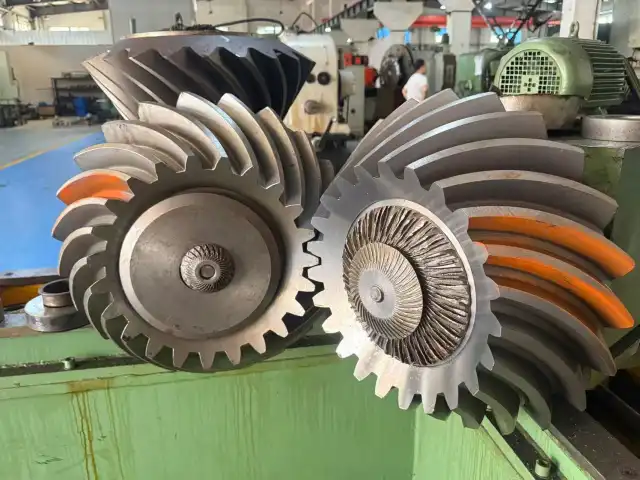
Understanding Gleason Spiral Bevel Gears and Their Manufacturing Landscape
Using the Gleason method to make Gleason Spiral Bevel Gears is a big step forward in engineering for transmitting power between crossing shafts. These gears have bent teeth made through special face milling or face hobbing methods, which is different from straight bevel gears that have teeth that hit quickly. The spiral angle, which is usually between 30° and 40°, makes the teeth connect gradually, which lowers noise and shaking by up to 30% compared to straight bevel options.
Design Advantages Over Alternative Gear Types
When you compare spiral bevel gears to straight bevel or hypoid designs, the spiral design works better in more ways than one. Because the teeth are bent, the contact ratio goes above 1.25, which spreads the Hertzian contact stress over a bigger surface area. This design solves a major problem in high-torque situations where gears breaking down too soon costs companies a lot of money in lost time and money.
One of the best things about the Gleason profile is that it can fix small shaft misalignments by carefully capping teeth. This tolerance is especially helpful in mining and aircraft applications because it means that movement under load or changes in the assembly won't cause catastrophic edge loading failures.
Material Selection and Performance Impact
The choice of material has a direct effect on how long a gear lasts and how well it works. High-quality alloy steels like 20CrMnTi, SAE4340, 18CrNiMo7, and AISI8620 are used to make spiral bevel gears that work well. To get a top hardness of between 58 and 62 HRC and a tough, shock-resistant core, these materials go through complex heat treatments like carburising and induction hardening.
How well gears work in heavy-duty gearboxes with cyclic stress depends on their metallurgical structure. When mining equipment sends power through cone crushers, the surfaces need to be case-hardened so they don't get contaminated by sharp particles and the drive needs to stay continuous even when huge shock loads are applied. Materials that work perfectly at speeds over 10,000 RPM are needed for aerospace rotor gears. There is no room for failure.
Critical Industrial Sectors and Application Demands
In fields where dependability is important, Gleason Spiral Bevel Gears are the main way that power is transmitted. Profile-ground gears with very little transmission error are used in aerospace main rotor systems to keep the body from vibrating. To keep heat to a minimum in underwater, protected settings with limited lubrication, marine propulsion Z-drives need tight backlash control and a high-quality surface finish.
These precise parts are used in turning systems, machine tool spindle drives, construction machinery, and farm equipment. When procurement teams understand this environment, they can see why it's important to choose a manufacturer with proven experience in your unique application.
Defining Your Procurement Needs: Criteria for Selecting a Manufacturer
To start shopping successfully, you need to make a list of your project's technical needs and the suppliers' skills. When looking for parts for OEM production lines, aftermarket distribution, or custom-engineered solutions, it's important to be clear on the evaluation measures so that standards and given products don't clash, which can cost a lot of money. The sourcing of Gleason Spiral Bevel Gears requires a focus on precision and verified manufacturing standards.
Quality Certifications and Manufacturing Standards
ISO approval is the minimum, but smart buyers look further. Look for companies that follow the accuracy standards set by AGMA 2005-D03 or ISO 17485. For ground gear sets, the precision classes range from AGMA Q9 to Q13. These specs have a direct effect on how well gears work in high-speed or precision-critical situations.
Certification doesn't always mean quality. Ask for proof that there are regular checks by a third party and inquire about the company's internal quality control procedures. When manufacturers use Coordinate Measuring Machines (CMM) with Gleason G-AGE software, they show that they are serious about checking theoretical design grids for pitch accuracy, runout limits, and side form deviations.
Manufacturing Technologies and Process Capabilities
Smart heat treatment production lines, fully automatic gear grinding machines, and advanced CNC gear machining centers set capable makers apart from basic fabricators. Cutting, hobbing, milling, and grinding must all be done with ISO 8–9 Grade accuracy throughout all production runs.
The skills of heat treatment should be looked at closely. The control of carburizing depth, the regularity of quenching, and the accuracy of tempering all have a direct effect on the core stiffness and the consistency of the surface hardness. Manufacturers should show that they know how to stop grinding burn, a flaw in the surface hardening process that makes finished gears last much less long when they are worn down.
Cost Structures and Total Ownership Value
The unit price gets people's attention at first, but the total cost of ownership shows the real story. Compare prices based on the accuracy grade, material approvals, and testing records that are included. It's often cheaper to pay a little more per unit from a maker that guarantees quality and gives full inspection reports than to replace broken gears and pay for production to be stopped.
Think about the minimum order numbers in relation to the amount of goods you need to buy. Some makers can make just one item as a prototype or repair part, which gives them more options than suppliers who can only make large quantities.
Delivery Logistics and Lead Time Management
Precision spiral bevel gears usually take between 35 and 60 days to make, but this depends on how complicated they are, how big the modules are, and what heat treatment steps need to be taken. When it comes to shipping, manufacturers that offer choices like sea freight, air freight, and rail freight give you the freedom to meet tight dates or stay within your budget.
Look for providers that let you track your order in real time and get updates at key points from the time it's loaded at the plant until it's delivered. This openness makes it easier to organize installation times and keep track of supplies.
Comparing Gleason Spiral Bevel Gear Manufacturers and Alternatives
There are a lot of gear makers on the market, but when you look more closely, you can see where their strengths and weaknesses lie. When you compare suppliers based on quality consistency, expert help depth, customization freedom, and shipping reliability, you can see which ones can really meet your operational needs for Gleason Spiral Bevel Gears.
Quality and Performance Benchmarking
Leading makers set themselves apart by using thorough Tooth Contact Analysis (TCA). When joined gear sets are run under light load, this test called "blueing" checks to see if the contact patterns are centered properly at 50–60% of the tooth length. If the patterns run off the heel or toe when the load is applied, it means that the gear will break early in real life.
Ask for proof of the results of single-side roll tests that measure transmission error. This number has a direct relationship with how well your end system handles noise, vibration, and harshness (NVH). Suppliers who skip this confirmation step can't work with aerospace or high-precision machinery.
Verification of material quality is what separates professional makers from fabricators who are just looking for a quick buck. Barkhausen noise analysis and nital etching can find grinding burns that can't be seen with the naked eye. Magnetic particle inspection (MPI) finds cracks that were made below the surface during heat treatment. These quality control steps keep your tools from breaking down in terrible ways.
Functional Advantages in Specific Applications
In a heavy mining situation, comparing Gleason Spiral Bevel Gears to straight bevel options shows how to make a good choice. Straight bevels work well below 1000 RPM, but at higher speeds, they make too much contact noise and shaking. The slow engagement of spiral bevels' teeth lowers decibel levels and increases bearing life by making load changes easier.
Engineers can make gearboxes that use less room because spiral bevel setups are small and can be installed in a variety of ways. This benefit is useful for mobile equipment where weight and space limitations affect how much fuel it uses and how much it can carry.
Identifying Authorized Partners and Distributors
Working with verified sellers makes sure that the products you buy are real and that you can get help from expert support networks. Companies that are authorized to make Gleason profiles keep records that show they can do it and follow special manufacturing rules.
Ask for proof of your license or partnership status, as well as customer references from people who work in the same field as you. Manufacturers with a history of making machines that have been used in military, mining, or industrial settings bring useful application engineering skills that go beyond just making products.
Practical Steps to Source Gleason Spiral Bevel Gears Efficiently
Moving from review to real purchase needs organized communication and clear recording of the specifications. Using tried-and-true methods for finding speeds up the quote process and makes sure that makers understand your exact needs regarding Gleason Spiral Bevel Gears.
Preparing Detailed RFQs and Technical Specifications
Request for Quotation (RFQ) papers should be very detailed, including the module range (0.5 to 50), the number of teeth, the pressure angle (14.5° or 20°), the needed surface hardness (45 to 50 HRC or 58 to 62 HRC), and the material grade that is preferred. Include information about the product, like the working speeds, torque loads, and weather conditions.
For custom uses, you should list the required shaft angle, the maximum mounting configuration, and any special inspection or paperwork needs. When you have clear requirements, there is no room for confusion, which can lead to quotes that aren't right or revision processes that push back project deadlines.
Negotiating Bulk Orders and Volume Discounts
Manufacturers usually offer different prices depending on how much you buy, but you can negotiate more than just bulk savings. Annual deal models keep prices stable for OEMs' ongoing production needs and make sure that the seller always has a steady flow of orders.
Talk about how to pay, how much it will cost to make tools for special profiles, and any design-for-manufacturability improvements that could lower unit costs without lowering performance. Manufacturers with a lot of experience will often suggest small changes to the specifications that will make output much more efficient.
Understanding Lead Times and Expedite Options
Normal planning spans are covered by standard production rounds of 35 to 60 days, but emergencies do happen from time to time. Make it clear what expediting can do and how much it will cost during the first talks. Some makers keep a smart inventory of materials or give established customers with tight dates priority scheduling.
For global sources, it's important to coordinate international transportation. Transit damage rates drop below 0.1% for manufacturers who offer end-to-end visibility and customized packing, such as shock-absorbing liners and protective wooden crates. This careful attention to packing detail keeps orders from getting delayed, which costs a lot of money and time.
OEM and Aftermarket Service Capabilities
Check to see if makers offer continued expert support, extra parts programs, and failure analysis services in addition to the initial supply of products. Gear experts can offer changes during the engineering phase as part of collaborative design optimization, which is good for OEM partnerships.
When unexpected problems happen, production lines can keep running thanks to aftermarket help, such as quick supply of replacement parts. Manufacturers who keep detailed records of their production can make special gears years after the first orders, so old parts don't have to be reverse-engineered.
Ensuring Long-Term Value: After-Sales Support and Maintenance
To get the most out of your gear's service life, you need to follow proactive repair plans and get help from the maker when problems arise. Your relationship with the company that delivers your gear shouldn't end when the package arrives. Instead, it should turn into a partnership that improves the working efficiency of your Gleason Spiral Bevel Gears.
Routine Maintenance and Inspection Protocols
Setting up regular inspection plans keeps small wear and tear from turning into major failures. Watch the patterns of tooth contact, listen for changes in noise or shaking that don't seem normal, and make sure the bearings are properly oiled with oils that are free of contaminants and meet the manufacturer's requirements.
Keeping an eye on the temperature during operation can spot issues before they show up visually. When bearing temperatures rise near gear meshes, it's usually because the gears aren't lined up right, aren't oiled enough, or are under too much load. This needs instant attention.
Warranty Terms and Certification Standards
Manufacturers you can trust back up their goods with full warranties that usually last for one year from the date of installation. The warranty terms should make it clear what is covered, how to file a claim, and when you will hear back.
In addition to warranties, you should ask the maker about their quality assurance certifications and whether they keep records that connect finished gears to the heat lots and processing factors of the raw materials. This ability to track back is very helpful when looking into failures or when regulatory compliance paperwork is needed.
Building Strategic Supplier Relationships
The best procurement results come from open, cooperative relationships where makers understand the problems your business is facing and offer answers before you even ask them to. Talking about output estimates, changes to designs, and performance comments on a regular basis makes everyone invested in the long-term success.
Manufacturers who give application engineering consults, process optimization suggestions, and facility trips show that they care about their customers in more ways than just making sales. These relationships give businesses a competitive edge by solving problems faster, giving them special care when capacity is limited, and giving them access to new technologies as they come out.
Conclusion
When picking a Gleason Spiral Bevel Gears manufacturer, you need to think about their expert know-how, quality control, ability to make changes, and long-term assistance. The best sourcing choices put an emphasis on makers who show they have a deep understanding of the application, strict quality control procedures, and open communication. Procurement teams can be sure they're choosing partners who will provide operational reliability and measurable value throughout the gear's service life by comparing suppliers based on the criteria outlined in this guide. These criteria cover everything from material selection and heat treatment capabilities to after-sales support and delivery logistics.
FAQ
1. What are typical lead times for custom Gleason Spiral Bevel Gears?
Production times are usually between 35 and 60 days, but they depend on how complicated the gear is, how big the module is, what materials are needed, and how they need to be heated. Tooling needs for custom tooth profiles, CMM testing schedules, and finishing processes like precision grinding are some of the things that affect the length of time. Manufacturers who already have set production schedules and stock of materials may be able to meet urgent requests, but they will usually have to charge extra. Planning purchases around normal wait times helps you get the best prices and gives you enough time to check the quality thoroughly for Gleason Spiral Bevel Gears.
2. How can I be sure that a manufacturer is allowed to produce Gleason profile gears?
Manufacturers who are serious about their business should show proof that they can make Gleason tooth shapes using licensed software, their own cutting tools, or technical partnerships that have been in place for a while. Ask for customer references from people who work in the same business as you and ask for examples of similar projects that they have finished. Additional proof comes from third-party certifications that meet AGMA or ISO standards for gear accuracy. Claimed skills can be directly checked by visiting the facility or taking a virtual tour of it, which will show Gleason-compatible machining machines and inspection equipment.
3. Are customization options available for specialized industrial applications?
Manufacturers with a good reputation usually can meet unusual requests, such as non-standard modules, special material grades, specific heat treatment needs, and changes to the geometry that are needed for a certain purpose. Usually, the customization process starts with talking about what needs to be done, then moves on to making design drawings, and finally ends with production and regular reports on progress. Manufacturers who accept low minimum order amounts or even production of a single item show flexibility, which is helpful for making prototypes or finding new parts. During the quote phase, clear technical communication makes sure that the goods provided exactly meet your business needs.
Partner with YIZHI MACHINERY for Superior Spiral Bevel Gear Solutions
YIZHI MACHINERY has been making custom Gleason Spiral Bevel Gears for 15 years and has worked with demanding users in the mining, aircraft, and industrial machinery sectors. Our ISO-certified factory has high-tech CNC gear machining centers and precise grinding tools that can make parts with a surface hardness of up to 58–62 HRC and a module range of 0.5 to 50. We can work on projects of any size, from a single replacement gear to a high-volume OEM production. Standard shipping takes 35 to 60 days, and we offer real-time tracking and damage-prevention packing to ensure that less than 0.1% of the items we ship are lost in transit. We offer customized transmission solutions that improve your business efficiency. These solutions come with full expert support before the sale, synchronized production updates, and a one-year guarantee. Contact us at sales@yizmachinery.com to talk about your needs with a reliable manufacturer that wants you to succeed.
References
1. American Gear Manufacturers Association. (2019). AGMA 2005-D03: Design Manual for Bevel Gears. Alexandria, VA: AGMA Publications.
2. Stadtfeld, H.J. (2014). Gleason Bevel Gear Technology: Manufacturing, Inspection and Optimization. Rochester, NY: The Gleason Works Technical Publishing.
3. Davis, J.R. (Ed.). (2005). Gear Materials, Properties, and Manufacture (ASM International Handbook Series). Materials Park, OH: ASM International.
4. International Organization for Standardization. (2017). ISO 17485: Bevel Gears — ISO System of Accuracy. Geneva, Switzerland: ISO Standards Publishing.
5. Townsend, D.P. (1991). Dudley's Gear Handbook: The Design, Manufacture, and Application of Gears (2nd ed.). New York: McGraw-Hill Professional.
6. Klingelnberg GmbH. (2016). Bevel Gear Technology and Gear Inspection: Comparative Analysis of Manufacturing Systems. Zurich, Switzerland: Klingelnberg Technical Documentation.

USER EVALUATE
Here is the customer's evaluation of us