


What Is a Spiral Miter Gear and Where Is It Used
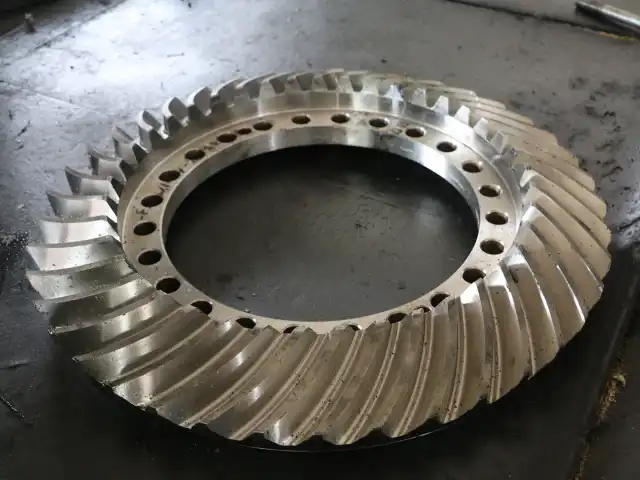
A Spiral Miter Gear is a specialized type of bevel gear designed to transmit power efficiently between two intersecting shafts, typically at a 90-degree angle, with a 1:1 gear ratio. Unlike straight-toothed alternatives, these gears feature curved teeth arranged in a helical pattern, which engage gradually during rotation. This design enables smoother operation, significantly reduces noise levels, and enhances load-bearing capacity—critical attributes for industrial machinery, mining operations, and aerospace applications. Their ability to handle high-speed rotations while maintaining quiet operation makes them indispensable in compact mechanical transmission systems where space efficiency meets performance demands.
Introduction
In contemporary manufacturing, power movement is crucial to corporate success. Because they smoothly and consistently transmit power between shafts that cross, spiral mitre gears are crucial mechanical parts in many applications. OEMs, procurement managers, and design engineers must discover parts that balance performance, reliability, cost, and supply chain stability.
The technical features, materials, and settings where these gears are employed affect their performance and long-term profitability. This advice is helpful for mining, military, and industrial equipment business-to-business customers. This guide helps you find the right gear and strengthen your vendor connections, whether you're searching for CNC machine tool spindle drive parts or mine conveyor system dealers.
Understanding Spiral Miter Gears: Definition and Working Principles
Core Design Characteristics
A Spiral Miter Gear is distinguished by the shape of its teeth. Straight bevel gears have teeth that are lined up parallel to the gear axis. Spiral designs, on the other hand, have a helix angle (usually 35 degrees) that makes the contact pattern angled. This slow engagement of the teeth starts at one end and moves across the width of the face, creating several touch points at the same time. When the contact ratio goes up, the power is transferred more smoothly, and there are fewer shock loads during operation.
One right-hand (RH) and one left-hand (LH) spiral gear with the same module and tooth count are needed for these gears to work together. The module range goes from 0.5 to 50, so it can be used for everything from high-precision tools to big mining machines. Industry standards call for pressure angles of 14.5 degrees and 20 degrees. The 20-degree angle has a higher load capacity for heavy industrial machines.
Mechanical Operating Principles
When spinning starts, the curved teeth connect gradually instead of all at once. When compared to straight teeth, this moving contact pattern spreads forces over a bigger surface area. The result is a 20–30% increase in torque capacity for gear sizes that are the same. This is supported by testing guidelines set out in ISO gear specs. When properly oiled, efficiency usually runs between 95 and 98%, which is close to the performance of high-grade cylinder gears.
But when it works, the helical tooth design creates axial pushing forces. Because of this, you need to choose strong bearings. Tapered roller bearings or angular contact ball bearings can handle these loads well. Not meeting this standard can cause bearings to fail early and alignment problems that threaten the security of the system.
Material Science and Heat Treatment Impact
The choice of material has a big impact on how long a gear lasts under working stress. Because they can be hardened more easily and are tougher in the middle, alloy steels like 20CrMnTi, AISI 8620, and 40CrNiMo are used most often in high-performance uses. After machining operations like hobbing, milling, and grinding, the features of the material are changed by heat treatment methods. Carburizing makes the outside tough and resistant to wear (58–62 HRC), while the inside stays tough and able to absorb shock. When you quench and temper metal, you get the best mix of hardness and flexibility. Induction hardening, on the other hand, strengthens the surface in specific wear areas.
At YIZHI MACHINERY, we strictly follow ISO 8-9 precision grades for Spiral Miter Gears with the help of cutting-edge CNC gear machining centers and fully automatic grinding machines. For general uses, our heat treatment production lines keep the surface hardness between 45 and 50 HRC. For heavy-duty industrial and aircraft parts, they keep it between 58 and 62 HRC. This managed metalworking method makes sure that the dimensions stay the same and the performance stays the same even when the temperature changes and the load changes.
Key Advantages and Applications of Spiral Miter Gears
Superior Performance Attributes
The technical benefits of Spiral Miter Gears get around some of the problems that come with straight bevel options. Traditional right-angle drives have problems with noise and shaking, especially at speeds above 1500 RPM. These problems are greatly reduced by the slow contact pattern of curved teeth, which makes spiral designs ideal for noise-sensitive places like food processing plants and drug factories.
More surface contact area between teeth leads to better load capacity. When there is a lot of pressure on a straight bevel gear, it might break. But a spiral gear of the same size spreads stress out more widely, which stops cracks from starting in one place. In mine use, where shock loads from rock crushers and conveyor belt jams happen all the time, this feature is very useful.
In challenging manufacturing settings, these parts offer the following main benefits:
- Enhanced Operational Smoothness: The progressive tooth contact pretty much gets rid of the impact forces that cause vibration-induced wear in straight bevel systems. This makes the bearings last 30 to 40 percent longer in most setups.
- Acoustic Performance: These gears meet strict safety rules in tight production settings because they reduce noise by 6 to 10 decibels compared to straight teeth.
- Compact Installation Footprint: Being able to easily transfer high torque at right angles lets designers save space in robotic arm joints and machine tool headstocks that have to fit very tightly together.
- High-Speed Capability: It can work steadily at speeds higher than 3000 RPM, which makes it ideal for current CNC machines and aircraft actuator systems that need to respond quickly.
These performance traits work together to solve long-standing engineering problems in situations where regular gear types don't work well. The slightly higher cost of production compared to straight bevel options is justified by the balanced mix of load capacity, economy, and operating refinement.
Industrial Application Contexts
These gears move power from vertical steering columns to horizontal rack-and-pinion assemblies. They are used in off-road cars and farm equipment for turning. The smooth operation stops the turning wheel from kickback, which makes workers tired after long shifts. Machine tool spindle drives use spiral miter designs to send motor power from vertical positions to horizontal cutting spindles. This keeps the stiffness even when heavy milling loads would bend less rigid gear types.
In aerospace applications, methods that are small are needed because of weight restrictions. Small spiral gears made to aerospace-grade standards are used in actuator systems that control where the flaps are and how the landing gear is deployed. Because these systems are so important for safety, they need suppliers with tried-and-true quality control systems and traceability processes. YIZHI MACHINERY has these skills thanks to 15 years of experience making precision parts.
Surfaces that are strengthened and don't wear down easily are good for mining conveyors that work in rough coal dust settings. Light industrial equipment, like packaging machines and automatic assembly lines, use the quiet operation to keep the workplace warm and get cycle times that are measured in fractions of seconds.
Maintenance Considerations for Extended Service Life
Regular checkups should look for pitting, cutting, or strange wear patterns on the tooth surface that could mean the teeth aren't in the right place. Vibration research finds worn-out bearings before they fail in a big way. Depending on the working temperature and the amount of contamination, lubrication times vary. Synthetic gear oils offer better film strength when boundary lubrication conditions are present, which is common in high-load situations.
How to Choose the Right Spiral Miter Gear for Your Business Needs
Application-Specific Selection Criteria
To choose the right Spiral Miter Gear, you must first carefully look at the working factors. Specification limits are set by the required torque, rotational speed, job cycle, and environmental conditions. A conveyor system that runs at a low speed all the time needs different material qualities than a cyclic-duty machine tool that cuts with heavy loads.
Extreme temperatures affect the choices of materials. For example, mining equipment that is used in the desert needs different cooling requirements than aircraft parts that are used in temperatures below zero. In food processing and marine uses, corrosion resistance is very important. Stainless steel types explain their higher cost by needing to be replaced less often.
Material Selection Guidelines
For moderate-load uses where a surface hardness of 45 to 50 HRC is enough, carbon steel types like 45# steel are cost-effective options. When hobbing or milling, the material is very easy to work with, which lowers production costs and ensures solid performance in farm tools and light industry equipment.
Alloy steels like SAE4340, 42CrMo, and AISI4140 are used in high-performance applications that need to hold the most weight. When these materials are carburized, they develop case thicknesses of 0.8 to 1.5 mm that keep them from wearing out when they are loaded heavily for a long time. Because their cores are stronger, they don't break under shock loads that would break lower-grade options.
Specialized metals, such as 18CrNiMo7 and 17CrNiMo6, work best in aircraft and precision machinery, where they need to be stable in size and not wear down easily, which is why they cost more. These materials keep their mechanical features even at very high and very low temperatures, so they work the same way in the Arctic as they do in the desert.
Customization Capabilities and OEM Partnerships
Standard stock gears are useful in many cases, but unique solutions solve engineering difficulties better. Module sizes ranging from 0.5 to 50 can fit a wide range of devices, from small instrument drives to huge mine gears. Custom tooth numbers improve speed ratios, while pressure angles balance load capacity and manufacturing complexity.
To assist in developing concepts and replacing worn parts, YIZHI MACHINERY offers low minimum order quantities and one-item manufacturing runs. Our engineering team creates detailed designs to ensure specifications before manufacturing begins during requirement communication. Consultative methods reduce expensive specification errors and speed up new equipment design to market.
Certifications and safety checks tell the difference between trustworthy providers and dishonest ones. ISO-compliant production ensures product size consistency. Quality checks using CMM and gear analysers ensure tooth profiles meet ISO 8-9 grade criteria. This allows component swapping and dependable functioning.
Procurement Process and Buying Guide for Spiral Miter Gears
Sourcing Channels and Vendor Evaluation
When you buy from a direct maker, you can get better pricing, faster responses to customization requests, and more thorough technical help. Spiral Miter Gear makers that have been around for a while still have engineers on staff who can help with application research and material choice. Authorized distributors give local customers access to local goods and faster shipping for standard setups, but there aren't many ways to make them your own.
Online business-to-business (B2B) sites make it easier to compare vendors and get in touch with them, but it's still important to do your research. Check the skills of the production tools. For example, high-precision CNC gear grinding machines show that they can meet tight tolerances. Ask about heat treatment facilities because handling that is outsourced can affect quality and cause lead times to grow.
Lead Times and Order Considerations
Custom gears usually take between 35 and 60 days to make, which includes getting the materials, making them, heat treating them, and checking the quality. While rush orders may shorten wait times, they also run the risk of lowering the quality of the final product. Scheduling purchases around maintenance windows for tools or project goals keeps you from having to make choices that aren't the best for the project.
Minimum order amounts depend on the maker and the level of difficulty. Standard modules with common tooth numbers might need lower minimums than unusual specs that need custom tools. You can order as little as one piece to help test a prototype, or you can place large orders to meet ongoing production needs. YIZHI MACHINERY can handle all project sizes.
Logistics and Protection Protocols
Impacts can damage the sides of gear teeth while they are being moved. Critical areas are protected by custom packing that uses shock-absorbing cushioning layers and wooden pallets. At YIZHI MACHINERY, our packaging systems keep the fine cutting that makes sure things work smoothly and last longer so that transport damage rates stay below 0.1%.
Cost and speed can be balanced with multichannel shipping choices. For big orders where longer travel times are okay, sea freight is best, while air freight speeds up the delivery of important replacement parts. China-Europe freight trains are a good middle ground because they are affordable and run on time. Real-time tracking systems let you see shipments from the time they are loaded at the factory until they are delivered to the customer. This lets you fix problems before they happen.
Accurate documentation makes it easier to get through customs and helps meet the needs for traceability in businesses that are controlled. Standard paperwork packages that speed up foreign shipping include commercial bills, packing lists, material certifications, and inspection reports.
Enhancing Spiral Miter Gear Performance and Longevity
Precision Manufacturing Techniques
Grinding processes smooth out tooth profiles to within a few microns of accuracy. This reduces backlash, which can lead to positional mistakes in high-precision machinery. The quality of the surface finish affects the formation of a lubrication film. Smoother surfaces support hydrodynamic lubrication regimes that separate joining surfaces, which slows down the wear processes that cause adhesives to stick.
Modern finishes make things last longer in harsh conditions. Nitrogen is spread into the top layers during nitriding processes. This makes the material very hard and resistant to wear from contaminated oils. Physical vapor deposition (PVD) layers make surfaces with low friction, which lowers power loss and heat buildup when running at high speeds.
Maintenance Strategies and Troubleshooting
Condition tracking tools can find problems before they get too bad by setting standard vibration patterns during commissioning. Trending analysis finds slow degradation before functional failure happens. This lets maintenance happen during planned breaks instead of having to shut down in an emergency, which stops production.
Oil research tools check the number and types of wear particles. More ferrous particles mean that active wear processes need to be looked into. Changing particle size distributions show that regular wear has turned into serious conditions that need quick attention. With these monitoring tools, upkeep goes from being reactive to being proactive, which lowers the total cost of ownership.
If the teeth of the Spiral Miter Gear are properly aligned during fitting, edge loading won't happen, which would put stress on the ends of the teeth. Laser alignment devices check that the shafts are aligned and that their angles are correct, making sure that the load distribution matches what was planned in the design. Thermal expansion limits keep things from sticking together when temperatures change, which happens every day as equipment is used in different ranges.
Performance Optimization Case Studies
A company that makes mining equipment worked with YIZHI MACHINERY to rethink conveyor drive gears that were breaking down too soon. By switching from normal carbon steel to 20CrMnTi material and using the right heat treatment, the average time between failures was increased by 18%. The custom approach worked with existing mounting patterns, so installations could be done in the past without having to change the structure.
A company that makes aircraft actuators needed small gears that had to meet strict weight requirements without sacrificing safety. Our engineers chose 17CrNiMo6 material that had been precisely carburized several times, reaching a surface hardness of 58–62 HRC and tight control over the case depth. Strict inspection procedures proved that the tooth profile was accurate to ISO 9 grade, meeting the standards for airworthiness certification.
Conclusion
Spiral Miter Gears are high-tech engineering solutions that solve difficult power transfer problems in mining equipment, military systems, and industrial gear. When compared to straight bevel options, their curved tooth shapes offer measured benefits in noise reduction, load capacity, and smooth operation. To be good at buying, you need to know about the specific needs of the application, the basics of material science, and the supplier's skills that make sure the reliability of the parts.
Partnering with experienced makers that offer customization help, quality approvals, and full support services lowers technical risks and raises the total cost of ownership. YIZHI MACHINERY has been making precision parts for 15 years and uses cutting-edge production tools and standardized OEM methods to make parts that meet high-performance standards in a wide range of industrial settings.
FAQ
1. What makes a Spiral Miter Gear different from a straight bevel?
The main difference is in the shape of the teeth. Straight bevel gears have teeth that are lined up straight to the gear axis. This makes full-width contact right away when the gears are engaged. Helical angles are used in spiral patterns to create gradual, increasing engagement that spreads loads over bigger surface areas. This makes them 20–30% more powerful, makes a lot less noise, and makes operation smoother at high speeds. These benefits make them suitable for use in precise machinery and places where noise is a problem.
2. How do I choose the right things for my project?
The choice of material is based on the type of load, the speed, the climate, and the service life that is needed. Different types of carbon steel are good for moderate-load tasks that need to be cost-effective. Alloy steels like 20CrMnTi, AISI 8620, and 40CrNiMo are used in high-performance settings because they can be hardened more easily and are tougher in the middle. Specialized aircraft metals are very reliable in situations where safety is very important. During the consultation phase, YIZHI MACHINERY's scientific team helps with material design by matching compositions to practical needs.
3. How long will it take to get a custom order?
Standard production times are 35 to 60 days, which include getting the materials, precision machining through hobbing and grinding, heat treatment processes like carburizing or induction hardening, a full quality check, and safe packing. Schedules may be a little longer if the geometry is complicated or the materials are rare. Planning purchases around project goals keeps schedules from getting squished, which could lead to quality issues.
Partner with YIZHI MACHINERY for Premium Spiral Miter Gear Solutions
YIZHI MACHINERY designs and builds custom Spiral Miter Gear solutions for tough industrial tools, mining, and aircraft needs. With 15 years of experience making precise parts, we are a manufacturer that uses advanced CNC machining centers, automatic grinding equipment, and smart heat treatment lines to make parts that meet ISO 8-9 grade standards. Our customization options cover module ranges from 0.5 to 50, so we can work with samples as small as one piece and large as production numbers. We also offer consistent delivery windows of 35 to 60 days. Our full range of services includes design advice before the sale, regular reports on production, thorough quality checks, and tracking of goods during transit, all backed by custom packing systems that keep damage rates below 0.1%. Contact us at sales@yizmachinery.com to talk about your specific needs, get technical sketches, and get fair quotes that will help you save time and money on your purchase while still making sure that the parts work properly.
References
1. Dudley, D. W. (1994). Handbook of Practical Gear Design and Manufacture. CRC Press.
2. Stadtfeld, H. J. (2014). Gleason Bevel Gear Technology: Manufacturing, Inspection and Optimization. The Gleason Works.
3. ISO 1328-1:2013. Cylindrical Gears – ISO System of Flank Tolerance Classification – Part 1: Definitions and Allowable Values of Deviations Relevant to Flanks of Gear Teeth. International Organization for Standardization.
4. AGMA 2009-B01. Bevel Gear Classification, Tolerances, and Measuring Methods. American Gear Manufacturers Association.
5. Litvin, F. L., & Fuentes, A. (2004). Gear Geometry and Applied Theory. Cambridge University Press.
6. Townsend, D. P. (1991). Dudley's Gear Handbook: The Design, Manufacture, and Application of Gears. McGraw-Hill Professional.

USER EVALUATE
Here is the customer's evaluation of us