


Precision Bevel Gear Principles and Their Application Scope Explained
Precision Bevel Gears are an important type of mechanical transmission part designed to transfer motion and force between gears that cross each other, usually at 90-degree angles. Precision Bevel Gears, on the other hand, follow strict tolerance classes like ISO 8-9 Grade. This means that they don't have as many kinematic transmission mistakes that cause noise, vibration, and early wear. These gears are made using advanced techniques like Gleason profile cutting, grinding, and special heat treatments. They provide the highest torque density and positional accuracy, which are necessary for aerospace actuation systems, CNC machine tool spindles, and robotic joint modules that must be reliable under stress.
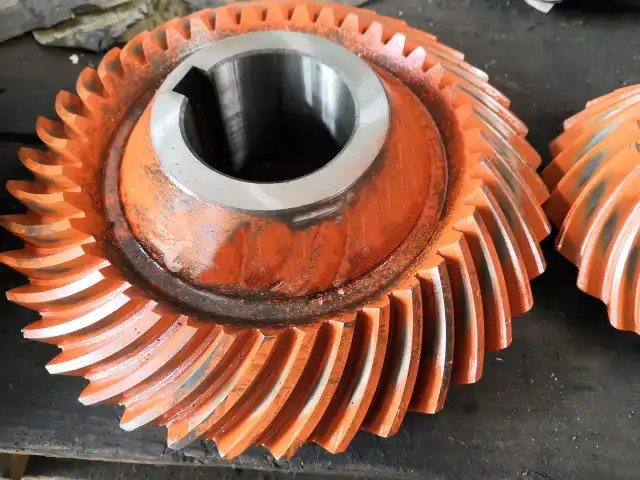
Understanding Precision Bevel Gears: Principles and Functions
How Precision Bevel Gears Transmit Power
At the heart of every Precision Bevel Gear system is the ability to quickly change the direction of movement between shafts that are at different angles. When a driving pinion meshes with a driven gear, the teeth make contact with each other and roll and slide, converting input torque into output torque while changing angular speed based on the gear ratio. This ability to transmit angles solves problems with planning in small machines where parallel shaft setups are not practical.
The tooth shape is based on strict mathematical formulas, usually the Gleason system, which makes sure that the engagement is smooth and continuous. In mesh, the teeth don't crash into each other all at once, but rather slowly touch. This spreads the load over a larger surface area. This gradual engagement lowers shock loads and increases service life, which is especially important in high-cycle uses like steering systems and farm equipment.
Key Types and Their Distinctive Characteristics
Distinct Precision Bevel Gear configurations perform distinct jobs. Straight Precision Bevel Gears have teeth aligned with the gear centre. Simple and affordable, they operate well for moderate-speed jobs with different duty cycles. They are ideal for light industrial equipment because of their simple cutting methods.
Spiral Precision Bevel Gears feature bent teeth that connect more as you travel between ends. This form is quieter and may bear more weight than straight variants. The spiral form allows several teeth to distribute stresses, making the construction stronger and quieter at high speeds. Machine tool spindle drives and aviation control systems benefit from this.
In hypoid precision bevel gears, the shaft axis is not parallel to the gear axis. This shift lowers the pinion and increases torque in confined spaces. Hypoid systems are optimal for maximising power in tiny spaces; therefore heavy industrial and mining equipment uses them.
Operating Principles That Define Performance
Precision Bevel Gears operate properly because tooth contact patterns are planned. Engineers form tooth flanks using crowning. These tiny adjustments are intentional to focus contact in the middle tooth region. This topper solves load-induced shaft deflections. This prevents edge loading, which accelerates surface wear and cracking.
Current designs have a pressure angle of 20°, which impacts load distribution and structural strength. A higher pressure angle thickens the tooth base, making it stronger when bent but harder to separate bearings. Manufacturers balance these parameters depending on application power profiles and space constraints.
Design Principles and Material Selection for Precision Bevel Gears
Engineering Tooth Geometry for Optimal Load Distribution
To get an accurate tooth shape, you need to start with complex mathematical models. The Gleason profile system describes exact tooth flank surfaces that guarantee conjugate action. This is a basic condition for connecting Precision Bevel Gears to keep their velocity ratios fixed during their mesh cycle. Transmission mistakes show up as vibrations and sounds when conjugacy is not followed exactly.
The Precision Bevel Gear's size and strength depend on the module. The program figures out the tooth size based on the pitch width and ranges from 0.5 to 50 in terms of what we can make. Larger parts retain more weight but are larger. Engineers must balance strength, space, and weight to find the ideal modules.
The surface finish greatly affects its performance and durability. Reducing surface hardness to less than 0.4μm by grinding minimises friction and working temperatures. This mirror-like polish reduces wear particles, preventing tooth edge grinding during lengthy use.
Material Properties That Ensure Durability
Choosing the correct materials is the first step to a dependable Precision Bevel Gear. High-quality alloy steels like 20CrMnTi, 42CrMo, and SAE4340 offer the greatest exterior stiffness and strength. Carburising hardens the surfaces (58–62 HRC) and keeps the cores flexible so they can withstand stress loads.
At high temperatures, the carburising process spreads carbon into the top layer. Quenching changes the richer zone into hard martensite. This two-hardness structure meets the needs of both long-lasting surfaces and resistance to impacts. Quenching and tempering improve grain quality, optimising mechanical properties for each load profile.
Different heat treatments serve different purposes. For Precision Bevel Gears that need to selectively harden their teeth while leaving the hub portions pliable for simple placement, induction hardening hardens just a tiny portion of the surface. This chosen hardening reduces damage and processing costs compared to through-hardening.
Quality Standards Guiding Procurement Decisions
Following international standards ensures global supply chain excellence. ISO 1328 sets Precision Bevel Gear accuracy tolerances. ISO 8-9 Grade precision is excellent for industrial application. These standards specify pitch, profile, helix, and runout adjustments. These directly impact gearbox smoothness and noise.
AGMA standards provide essential information for North American markets. AGMA 2005-D03 describes Precision Bevel Gear construction, and quality standards describe inspection. Buyers should request inspection documents that compare measured values to permissible ranges to ensure vendors meet these guidelines.
Dimensional checking uses micron-accurate coordinate measurement equipment and gear analysers. Online single-flank testing may detect minor shape changes that static measurements overlook when checking gearbox faults. This rigorous quality inspection ensures Precision Bevel Gears satisfy performance specifications.
Application Scope and Industry Use Cases of Precision Bevel Gears
Critical Roles in Aerospace and Defence Systems
The strictest performance standards are needed for aerospace uses. Precision Bevel Gears are what turn rotary motor outputs into linear actuator motion that controls flaps, slats, and rudders in flight control actuators. These systems work in temperatures ranging from -50°C at high altitude to 150°C close to engines. The materials and oils used must be able to keep their properties even when they are heated and cooled many times.
Also vital in the military are helicopter tail rotor drives. The gearbox must direct engine power at 90 degrees while handling vibration, shock loads, and high-cycle fatigue. Magnetic particle examination finds faults or impurities below the surface that might cause catastrophic failures.
Aircraft Precision Bevel Gears were designed to save weight. Every gram removed from moving components reduces fuel usage and increases carrying capacity. Topology optimisation helps engineers save weight by removing unnecessary material while strengthening stressed places.
Enhancing Industrial Machinery Performance
CNC machine tool wheels must be exact for size-accurate cutting. Spindle direction heads with Precision Bevel Gears reroute power at exact angles with small backlash for multi-axis cutting. Split-gear designs or precision shimming during assembly are essential for zero-backlash settings to be accurate to microns.
Cutting fluids and coolants make Precision Bevel Gear systems perform poorly in corrosive situations. Stainless alloys and protective coatings prolong life in severe conditions. Sealing bearings prevents water from contaminating lubricants and accelerating wear.
Right-angle power transfer maximises space in tiny mechanical gearbox systems. Due to space constraints in automated assembly equipment and material handling robots, Precision Bevel Gear solutions are preferable to belt drives or chain systems, which need more installation and maintenance.
Mining and Heavy Equipment Applications
Mining equipment operates under difficult conditions with heavy shock loads, abrasive pollutants, and frequent task cycles. Precision Bevel Gears must be dependable in rock crusher and conveyor systems. Optimised tooth contact patterns disperse pressures across the biggest surface regions, reducing contact loads below material fatigue. This improves load-bearing flexibility.
Mining materials should be tougher than strong. 40CrNiMo alloys have strong impact strength. They resist Precision Bevel Gear tooth chipping and breakage from uneven rock crushing shock pressures. Wear resistance and bendability are achieved with surface hardness between 45 and 50 HRC.
Management of contamination is always tough. Magnetic drain plugs capture ferrous wear particles before they enter bearings and mesh zones. Filtration systems remove mineral particles and silica dust that grind Precision Bevel Gear surfaces and accelerate wear.
Comparative Analysis: Choosing the Right Precision Bevel Gear
Performance Trade-offs Between Gear Types
Cost and performance must be considered when selecting straight or curved teeth. Straight Precision Bevel Gears are suitable for low-speed, intermittent purposes since they are straightforward to build and inexpensive. Their quick tooth contact produces more noise and slows them down than spiral patterns.
Hard to build and requiring specific cutting and grinding equipment, Spiral Precision Bevel Gears are pricey. This investment boosts load capacity by 30–40%, reduces noise, and improves high-speed performance. Continuous high-speed spinning makes the additional expense worthwhile when the product lasts longer and requires less maintenance.
Hypoid Precision Bevel Gears enhance functionality via axis shift. This offset positions the pinion below the gear axis, lowering the equipment's center of gravity and stabilising the automobile. The shift enables high-speed reduction ratios in tiny packaging. Hypoid designs roll more and need high-performance synthetic lubricants with severe pressure additives.
Material Selection Aligned with Performance Needs
Cost-effective 45# carbon steel through-hardened to 45–50 HRC surface hardness. This inexpensive material lasts in moderate-load, well-managed environments. This material is common in agricultural and light industrial equipment because of its performance and price.
High-stress Precision Bevel Gear requires 18CrNiMo7 or AISI8620 alloy steels. Carburising these materials hardens the casing 58–62 HRC over stiff cores 30–35 HRC. The hardness difference makes it wear-resistant and break-tough. Materials must improve for aeroplanes and precision robotics, where failure would be catastrophic.
Materials from exotic places meet needs. Chemicals and maritime conditions don't rust stainless types. Bronze or composite materials reduce weight or allow dry runs without greasing in aeroplanes. Material choice depends on Precision Bevel Gear load range, operating environment, and criticality.
Evaluating Supplier Capabilities and Reliability
When choosing a Precision Bevel Gear provider, check beyond the published requirements for their manufacturing capabilities. Newer manufacturing equipment boosts quality. CNC gear grinding and automated heat treatment companies seek accuracy and consistency. To maintain this commitment, coordinate measuring equipment and gear testers use defined methods.
Production lead times demonstrate a factory's capacity planning efficiency. Customise 35–60-day manufacturing cycles to meet Precision Bevel Gear needs without sacrificing quality. Fast work enables you to change production schedules and have enough capacity. Purchase from fast, high-quality providers if your equipment breaks down abruptly.
Offering Precision Bevel Gear customisation helps differentiate businesses in competitive marketplaces. Single-item production and low minimum order numbers enable prototyping and other specialist operations without inventory. This versatility helps when creating new tools since design changes are frequent.
Maintenance, Procurement, and Noise Reduction Strategies
Preventive Maintenance Practices Extending Service Life
Systematic lubrication is one of the most important parts of maintaining Precision Bevel Gears. Extreme pressure ingredients in high-performance synthetic oils keep protective films in place that keep metals from touching each other during mesh interaction. Changes in lubrication intervals depend on how the machine is being used. For example, in ongoing high-load situations, oil changes may need to be done every 2,000 hours, but in intermittent service situations, they can be done every 5,000 hours.
Oil research techniques identify new issues before they become major. Spectrometric measuring of wear metal demonstrates that Precision Bevel Gear surfaces wear quicker. Counting particles reveals contamination; therefore, replace the seal. Viscosity testing verifies lubricant safety and indicates oxidation or heat breakdown and fluid replacement.
Monitoring Precision Bevel Gear vibrations alerts you to potential issues. Baseline vibration patterns are established during setup. These guide continued condition monitoring. Increased gear mesh frequency amplitude indicates wear or alignment displacement. Frequency spectrum analysis helps repair professionals distinguish gear and bearing issues.
Advanced Noise Reduction Techniques
Most Precision Bevel Gear mesh noise stems from gearbox faults, which deviate from perfect conjugate action. Manufacturing with stricter standards produces less noise. ISO 8-9 Grade grinding procedures maintain gearbox errors below noise-causing levels.
Dental tip relief and lead capping reduce the impact of Precision Bevel Gear teeth entering and leaving the mesh. These minor form changes prevent edges from loading and enable deflections, eliminating noise. CAD tools model how teeth contact under stress, so adjustments may be made that function best.
The form of a home impacts sound transmission. Ribs and dampers reduce Precision Bevel Gear noise-causing panel vibrations. The isolation bolts prevent transmissions from buildings to neighbouring equipment. When noise laws are severe, acoustic barriers limit noise even more.
Strategic Procurement Roadmap for B2B Buyers
Detailed needs are the first step to a successful acquisition. Give the Precision Bevel Gear's speed, power, task cycle, and environmental conditions. Establish quality standards and inspection methods to ensure the items fulfil application demands. Clear specifications reduce uncertainty and provide objective acceptance requirements.
Qualification checks should include production, quality, and financial stability for Precision Bevel Gear suppliers. ISO accreditation indicates planned quality management, while customer examples illustrate the company's real-world performance.
Negotiating Precision Bevel Gears' total cost of ownership is best done without unit pricing. Production strategies are guided by lead time commitments. Warranty conditions specify who is accountable for early failures. Payment arrangements that balance cash flow and source security improve transactions. Volume agreements may lower pricing and allow you to adjust supply by spreading delivery out.
Conclusion
Precision Bevel Gears are important parts that make power transfer work well in many industrial settings, from mining tools to aerospace actuators. Procurement professionals can make smart sourcing choices when they know how they work, what materials they need, and how to build them for a specific purpose. Picking the right tooth shape, material grade, and heat treatment has a direct effect on how well it works and how much it costs to run. In competitive markets, manufacturers who follow ISO and AGMA norms and allow for customisation have a strategic edge. Long-term operating success is guaranteed by systematic maintenance methods and relationships with suppliers based on quality dedication.
FAQ
1. What distinguishes precision bevel gears from standard commercial grades?
Precision Bevel Gears follow strict tolerance levels, like ISO 8-9 Grade, and have better control over tooth shape, pitch accuracy, and surface finish compared to industrial grades. This level of accuracy cuts down on communication mistakes that cause noise and vibration. In manufacturing, advanced grinding methods are used to get surface roughness below Ra 0.4μm. This is different from normal gears, which have finishes that are Ra 1.6μm or rougher when hobbing is the only process used. Heat treatment methods make case-hardened surfaces that stay the same size even when they are heated and cooled many times.
2. How does mounting distance adjustment control backlash in assembled gearboxes?
Backlash, or the space between Precision Bevel Gear teeth that mesh, can be managed by carefully changing the mounting distance by moving the pinion or gear axially. Precision shims are used by technicians to get certain gaps, which are usually between 0.05- 0.10 mm for precision uses. Too much backlash leads to inaccurate placement and impact loading, while not enough space can cause binding and faster wear. For proper adjustment, you need to measure the dial indicator while it's being put together and make sure that the gaps meet the design requirements for all full spin cycles.
3. Can precision bevel gears operate effectively in contaminated environments?
When there is contamination, there are big problems that need to be fixed for Precision Bevel Gears. Abrasive particles can't get into gear mesh zones because of sealed bearing arrangements and labyrinth seals. Synthetic oils with strong filter systems stop contaminants from moving through important areas. In mining situations where it's not possible to completely keep out contaminants, bigger modules and harder surfaces make repair times longer. Regular checks and oil changes keep things safe even when the weather is bad.
Partner with YIZHI MACHINERY for Your Precision Bevel Gear Requirements
YIZHI MACHINERY has been making custom gears for 15 years and can provide Precision Bevel Gear solutions that meet the strict needs of the mining, aircraft, and industrial machinery sectors. Our production methods are in line with ISO standards. We use cutting-edge CNC grinding tools and smart heat treatment systems to get ISO 8–9 Grade accuracy and surface hardness levels between 45 and 62 HRC. We make bevel gears out of high-quality alloy steels like 20CrMnTi, SAE4340, and 18CrNiMo7. The tooth numbers can be changed completely, and the modules can be anywhere from 0.5 to 50. In addition to reasonable prices, we have low minimum order amounts that allow for production of as few as one unit. This is made possible by end-to-end visual tracking and damage-prevention packaging that keeps transport losses below 0.1%. Our expert team offers full design advice, from analysing your needs to providing help after the product is delivered. They back this up with a one-year warranty and quick problem resolution. Contact us at sales@yizmachinery.com to talk to our Precision Bevel Gear manufacturer team about your unique transmission needs. Within 24 hours, you will receive full technical offers.
References
1. Dudley, Darle W. Handbook of Practical Gear Design and Manufacture, CRC Press, 2nd Edition, 2002.
2. American Gear Manufacturers Association. AGMA 2005-D03: Design Manual for Bevel Gears, Alexandria, Virginia, 2003.
3. International Organisation for Standardisation. ISO 1328-1:2013 Cylindrical Gears — ISO System of Flank Tolerance Classification, Geneva, Switzerland, 2013.
4. Stadtfeld, Hermann J. Gleason Bevel Gear Technology: Manufacturing, Inspection and Optimisation, The Gleason Works, 2014.
5. Litvin, Faydor L. y Fuentes, Alfonso. Gear Geometry and Applied Theory, Cambridge University Press, 2nd Edition, 2004.
6. Townsend, Dennis P. Dudley's Gear Handbook: The Design, Manufacture, and Application of Gears, McGraw-Hill Professional, 2nd Edition, 1991.

USER EVALUATE
Here is the customer's evaluation of us