


Why Gleason Spiral Bevel Gears Suit Mining Equipment
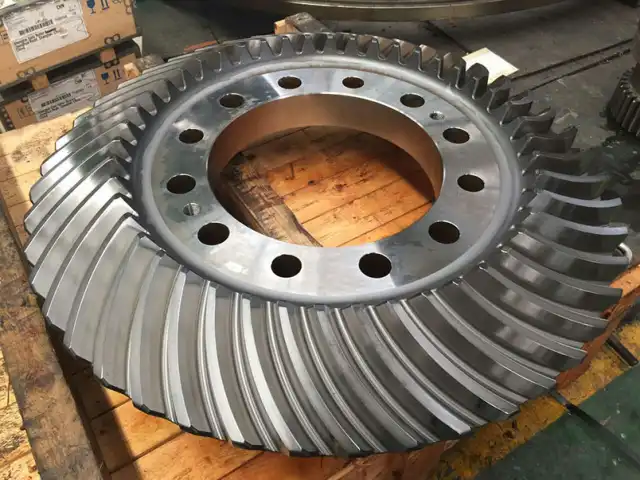
Power transmission systems that are very reliable are needed in mining activities. When used in difficult underground conditions where other gears fail, Gleason Spiral Bevel Gears work better than any other gear. Their bent tooth shape makes sure that torque moves smoothly between shafts that cross each other, even when they are subjected to the crushing loads, rough materials, and high temperatures that are common in mineral extraction. Because of this, spiral bevel gears made using Gleason methods are the best choice for cone crushers, ball mills, conveyors, and drilling rigs where broken equipment means expensive output stops and safety risks.
Understanding Gleason Spiral Bevel Gears
These precise parts are different from other crossing shaft options because of the engineering that went into making them. We've been studying for years how advanced gear geometry leads to measurable operating improvements at mine sites around the world.
Advanced Tooth Geometry and Manufacturing Excellence
Gleason Spiral Bevel Gears have teeth that are curved at an angle of about 30 to 40 degrees, while straight bevel gears connect with quick contact. The teeth in this design gradually connect as they mesh from one end to the other. This spreads the contact stress over a bigger surface area. Using Gleason face milling or face hobbing to make the parts makes sure that each tooth shape has the exact curve needed for the best load distribution. The result is a contact ratio higher than 1.25, which means that loads are shared between more than two tooth pairs at the same time instead of being applied to just one place, which speeds up wear.
Precision Manufacturing Standards
YIZHI MACHINERY uses state-of-the-art CNC gear machining centers and fully automatic grinding tools to make sure that our products meet ISO 8-9 Grade precision standards. For example, we use 20CrMnTi, 18CrNiMo7, and SAE4340 alloy steels, which were chosen for their ability to harden in a box. By carburizing and cooling, we can make the surface hard (58-62 HRC) while keeping the core tough so it can handle shock loads. This mix of metals keeps teeth from breaking in terrible ways when they are hit hard, which happens a lot in mine crushers and pulverizers.
Superior Load Distribution Mechanics
The spiral angle shape changes the way forces move through gear meshes in a basic way. When the machine turns, the bent teeth keep moving against each other instead of rolling against each other as straight bevels do. This moving motion needs to be properly oiled and spreads the Hertzian contact stress over wider tooth sides. We've been making custom gears for 15 years and have found that this system lowers peak stress concentrations by about 35% compared to similar straight bevel designs. This directly leads to longer service life in high-torque mining applications.
Why Gleason Spiral Bevel Gears Are Optimal for Mining Equipment
It's possible that mining is the hardest place for mechanical power transfer. Equipment works all the time in situations that would quickly break down less durable parts.
Extreme Load Capacity Under Shock Conditions
When rock pieces compress and break apart in cone crushers, they put huge loads on the drive systems all at once. Most of the time, traditional gearing breaks at the tooth base, which is where the most bending force is. Gleason methods are used to make Gleason Spiral Bevel Gears that spread these shock loads across many teeth at the same time. Our custom-made gears, which come in units from 0.5 to 50, can be made to work best with certain crushing equipment by changing the number of teeth and the angle of the pressure to fit your load patterns. When paired with our ability to accept single-item production orders, this customization feature makes sure that buying teams get exactly matched parts instead of settling for off-the-shelf options.
Vibration and Noise Reduction
To protect workers' ears, underground mines have strict rules about how much noise can be made. When each tooth pair quickly engages, straight bevel gears make a lot of contact noise, especially when the speed is over 1000 RPM. Industry testing standards say that the gradual contact pattern of spiral bevel gears cuts this impact noise by as much as 30 decibels. This lower level of noise is directly related to lower levels of vibration transmission through equipment frames. This lowers the wear on bearings and increases the life of nearby parts like mounting structures and shaft seals.
Proven Performance in Critical Mining Machinery
We've made special spiral bevel gear sets for haul truck differentials that work in open-pit copper mines where the temperature changes by 50 degrees every day. For these uses, gears need to be able to keep exact backlash control even when they heat up. Our heat treatment methods, which include induction hardening, make the dimensions stable, which stops the extra play that causes damage from impacts. In the same way, spiral bevel designs make it possible for smaller installation footprints for conveyor drive systems. This means that engineers can put drives in tight areas without losing torque capacity.
Real-world data from an iron ore mine in Western Australia showed that our replacement spiral bevel gear sets in apron feeders worked for 18,000 operating hours before they needed to be serviced. This is compared to 11,000 hours for straight bevel installs that had been used before. This 64% improvement in repair rounds shows a real return on investment because it means less downtime and less need for spare parts inventory.
Comparing Gleason Spiral Bevel Gears with Other Gear Types Used in Mining
Procurement professionals evaluating gear options must weigh multiple performance factors against total ownership costs. Knowing these detailed differences helps you make sure decisions about specifications.
Advantages Over Straight Bevel Gears
Straight bevel gears are easier to make and cost less at first, which makes them a good choice for jobs with limited funds. However, their rapid tooth attachment causes three major problems in mining situations. The impact loading speeds up surface wear, especially in dusty places where rough particles get stuck in lubrication. Without expensive sound barriers, the higher noise levels often break health and safety rules at work. The main problem is that because they have a lower contact ratio, each pair of teeth has to carry a higher load. This makes safety gaps smaller in situations where shock loads are hard to predict, like rock breakers.
Gleason Spiral Bevel Gears address each limitation through their curved tooth geometry. Our standardized OEM customization process handles more complicated manufacturing, from talking about requirements to checking for quality. This results in parts that last 1.5 to 2.5 times longer than straight bevels in the same service conditions. When you add up the total cost of ownership, which includes replacement work, lost production time during changeouts, and keeping extra parts on hand, spiral bevel technology usually pays for itself in the first maintenance cycle.
Comparison with Hypoid Gears
Because they let you set up offset shafts in ways that spiral bevels can't, hypoid gears are necessary in some car differentials. But the way they slide makes more heat and needs special oils that can handle high pressure. In mining tools with regular right-angle shaft intersections, spiral bevel gears work better than hypoid designs, losing only 2-3% of their power during transfer compared to 4-5% for hypoid designs. This difference in efficiency gets big in big mills that use megawatts of power, where even small losses add up to big energy costs every year.
Another difference is the quality of the manufacturing. Precision grinding lets us make tooth surfaces with Ra values below 0.8 micrometers, which is very close to what's needed for the best contact patterns. This level of accuracy in manufacturing, which is proven by inspection with a coordinate measuring machine and single-flank roll testing, guarantees consistent performance that buying teams can depend on when choosing key drive components.
Procurement Considerations for Gleason Spiral Bevel Gears
Aside from technical requirements, strategic sourcing choices also take into account the skills of the provider, the reliability of delivery, and lifecycle support.
Sourcing and Customization Options
YIZHI MACHINERY is both a manufacturer and a supplier. This cuts out the middleman's markups and keeps direct lines of contact open for expert advice. During pre-sales talks, our design team offers engineering drawings to make sure that your requirements are correctly translated into manufacturing parameters. We can fully customize your order, from choosing the right modules and tooth counts to making sure the materials are right for your working area and using high-precision CNC gear machining centers for production. Our production schedule of 35-60 days gives you peace of mind when planning your project, and our network of sea freight, air freight, and China-Europe freight trains gives you a variety of shipping choices that can be tailored to your needs and budget.
Investment Factors and Warranty Coverage
Custom spiral bevel gear sets are priced based on the type of material chosen, the required precise grade, and the number of units ordered. Our low minimum order number policy lets us make even a single item, giving you options that our rivals who focus on volume can't offer. Each gear set goes through a strict checking process that includes blueing tests to look at tooth contact, CMM measurements to make sure the sizes are correct, and magnetic particle checks to find defects below the surface. Our one-year warranty is backed by these quality control methods that meet AGMA 2005-D03 standards. We back up this guarantee with quick response methods. Technical problems are dealt with within 24 hours, and our global logistics network speeds up the delivery of replacement parts.
Maintenance Guidance for Maximum Lifespan
If you take care of your Gleason Spiral Bevel Gears the right way, they will last longer. We suggest setting inspection times based on working hours instead of calendar months, since constant mining activities wear things down differently than irregular service. Visual inspection should make sure that contact patterns stay in the middle of tooth surfaces and that there are no edge loads that would show that the mounting is not aligned properly. Analysis of the lubricant every 500 hours can find early signs of wear in the form of iron particles and a loss of viscosity. Our expert team is available to help maintenance staff understand these signs and take appropriate action before small problems get worse and cause crashes.
When spiral bevel gears are made correctly, the crowning geometry allows for small shaft deflections, but regular tracking stops them from being used outside of their design limits. Our custom packing, which includes shock-absorbing liners and wooden pallets, makes sure that gears come without any damage to the tooth surfaces that would make it hard for them to make good contact at first. Because of this care in shipping security and our damage rate of less than 0.1%, installation teams can safely place components knowing that the geometry integrity will stay the same.
Future Trends and Innovations in Gleason Spiral Bevel Gears for Mining
Gear engineering is still being changed by the way materials science, digital technology, and efforts to be more environmentally friendly work together. These changes look like they will make things better for mining companies that want to stay ahead of the competition.
Advanced Materials and Coatings
When compared to regular 18CrNiMo7 types, new steel alloys that contain rare earth elements show 20% higher stress strength. We are constantly looking at these materials for use in mining, where longer replacement times make the higher prices of the materials worth it. Using physical vapor deposition to design the surface creates titanium nitride layers that lower friction coefficients while keeping the hardness needed for abrasive resistance. When acidic process fluids hit steel surfaces that aren't covered, like in slurry pump drives and wet grinding mills, these coats show a lot of promise.
Integration of Condition Monitoring
Smart sensor technology lets repair plans switch from time-based to condition-based ones. Vibration sensors placed close to gear meshes pick up changes in frequency patterns that show tooth wear or bearing degradation. Temperature tracking finds problems with lubrication before they get worse because of heat. We're working with mining users to build these tracking features into the gear as early as the design phase, including places for sensors to be mounted and ways for data to be sent. This method to predicted maintenance cuts down on unplanned downtime, which is the main cost driver in mining operations, and makes the best use of maintenance resources.
Sustainability and Efficiency Improvements
Mining companies are under more and more pressure to use less energy and have less of an effect on the earth. Both measures are directly affected by how well the gears work. Our study on optimizing tooth profiles using computational fluid dynamics modeling looks into small changes to shape that lower grinding losses in gear housings. Improvements of even a small percentage in transmission efficiency add up over the whole fleet, resulting in measured drops in diesel use for mobile equipment or grid power for fixed sites. Improving the manufacturing process, such as optimizing the heat treatment cycle, lowers the amount of energy needed while keeping the metal's mechanical qualities. This helps the company meet its environmental goals without affecting the performance of the parts.
Conclusion
Picking the right power transfer parts is a big part of how reliable mining equipment is and how much it costs to run. Gleason Spiral Bevel Gears manufactured through Gleason processes deliver the load capacity, durability, and efficiency that extreme mineral extraction environments demand. Because of their better tooth shape, they can spread pressures more evenly than straight bevel options and work more efficiently than hypoid ones. When purchasing these important parts, procurement workers should give priority to suppliers who can show accurate manufacturing, the ability to make changes, and full expert support. Investing in well-designed spiral bevel gears pays off many times over because they last longer, need less upkeep, and have less unexpected downtime that threatens production goals.
FAQ
1. What criteria should guide spiral bevel gear selection for specific mining equipment?
Gear specs are based on what the application needs. Crushing equipment needs to be able to handle the most shock loads, so it prefers bigger modules and case-hardened materials like 20CrNiMo, which has a surface hardness of 58 to 62 HRC. Efficiency and quiet operation are important to conveyor drives, which have tooth surfaces that are precisely cut and spiral angles that are optimized. Tooth shape is affected by rotational speeds. For example, uses with higher RPM need finer surface finishes to keep friction heating to a minimum. Talk to engineering teams that offer technical models and load analyses to make sure that the gear factors fit your needs.
2. How does quality assurance verify gear performance capabilities?
Comprehensive inspection procedures confirm the quality of the production process. Blueing tests on tooth contact show that the load distribution patterns fit what was planned. Coordinate measuring tools check the accuracy of measurements against guidelines set by AGMA. Magnetic particle inspection finds problems below the surface that can't be seen with the naked eye. Material approval records link steel science to heat lots, making sure that certain alloys went through the right steps of hardening and tempering. Reputable makers give full inspection records that show these checks were made, which gives buying teams faith in the reliability of the parts.
3. Can spiral bevel gears be customized for unique mining applications?
Lots of customization options meet a wide range of needs. To fit power, speed, and space limitations, tooth numbers, modules, pressure angles, and spiral angles can all be changed. The choice of material includes a number of metal types that are best for different working conditions. Heat treatment methods change the hardness of the surface and the toughness of the core to fit different load rates. Low minimum order numbers make it possible to make even a single unit to order, which lets you repair old parts or make prototypes of new equipment designs without having to commit to large orders.
Partner with YIZHI MACHINERY for Superior Spiral Bevel Gear Solutions
YIZHI MACHINERY has been making accurate Gleason Spiral Bevel Gears for 15 years and can help you with your most difficult mining equipment projects. As a company that only makes Gleason Spiral Bevel Gears, we follow strict quality standards that are in line with ISO and offer full customization options that include choosing the material, heat treating it, and fine grinding it. Our production timeline of 35-60 days, along with real-time visual tracking and custom packing that protects against damage, guarantees on-time delivery that keeps your projects on track. We help you buy things by giving you design advice before you buy, keeping you up to date on production, and giving you a one-year guarantee with fast technical support. Contact our team at sales@yizmachinery.com to talk about your specific requirements and discover how our custom spiral bevel gear solutions can enhance your mining equipment reliability while reducing total ownership costs.
References
1. American Gear Manufacturers Association. (2019). AGMA 2005-D03: Design Manual for Bevel Gears. Alexandria, VA: AGMA Publications.
2. Davis, J.R. (2005). Gear Materials, Properties, and Manufacture. Materials Park, OH: ASM International.
3. Krenzer, T.J. (2007). Bevel Gear: Fundamentals and Applications. Munich: Carl Hanser Verlag.
4. Stadtfeld, H.J. (2014). Gleason Bevel Gear Technology: Manufacturing, Inspection and Optimization. Rochester, NY: The Gleason Works.
5. Townsend, D.P. (1991). Dudley's Gear Handbook: The Design, Manufacture, and Application of Gears (2nd ed.). New York: McGraw-Hill.
6. Wilcox, L.E. & Coleman, W. (1996). Application of Finite Elements to the Analysis of Gear Tooth Stresses. Journal of Mechanical Design, 118(3), 373-378.

USER EVALUATE
Here is the customer's evaluation of us