


Machining Spline on Shaft for High-Precision Gear Reducer Applications
Machining Spline on Shaft is an advanced subtractive manufacturing method that makes longitudinal ridges or teeth on power transmission shafts. This lets high-precision gear reducers reliably transfer torque. Splined shafts are different from traditional keyway connections because they spread loads across many teeth instead of just one. This greatly reduces stress concentration while keeping the exact angle alignment. This feature is very important in precise gears, robotic joints, and servo motor systems that need to work reliably all the time.
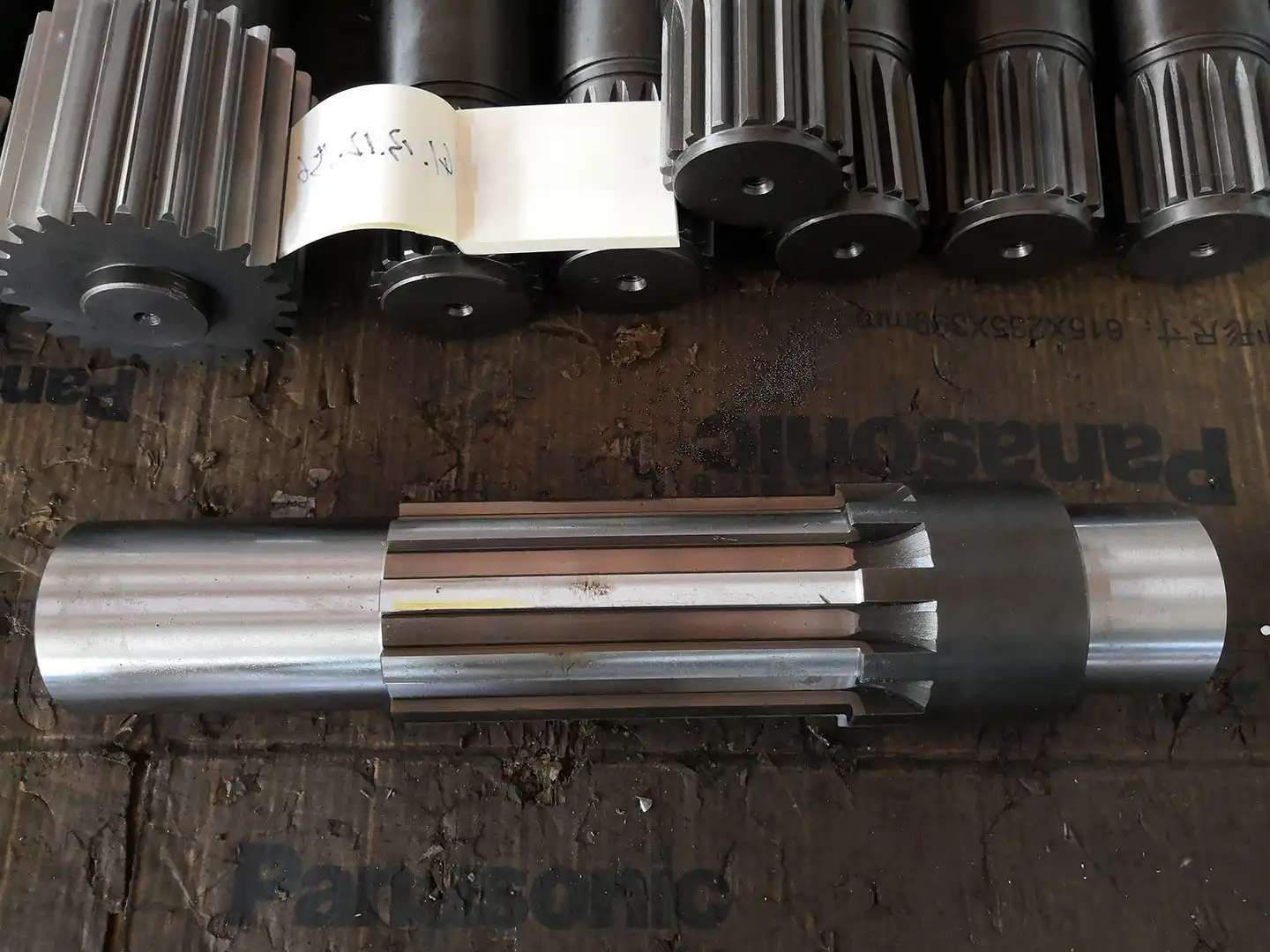
Understanding Spline Shafts and Their Role in Gear Reducers
Defining Spline Shaft Geometry and Classification
Spline shafts are important parts that connect other parts in gear reducer systems. They do this by sending rotational force through carefully machined teeth that fit together with other parts. There are three main types of splines used in industry: involute splines have curved tooth profiles that make them self-centering and less sensitive to radial misalignment; straight-sided splines are easier to make but need tighter assembly tolerances; and serrated splines provide the strongest holding power in stationary connections. Each configuration solves a different technical problem that precise gearbox makers face.
Industry Standards Governing Spline Design
Following established standards makes sure that goods can be used interchangeably and that performance is consistent across supply chains. In North America, ANSI B92.1 is the most popular standard. It describes the pitch lengths and pressure angles for involute splines, which are widely used in hydraulic systems and car drivelines. European makers can use DIN 5480 to get full involute spline specs for modules ranging from 0.5 to 10. ISO 4156 sets worldwide standards that make buying things around the world easier. Referring to the right standard when choosing spline shafts for servo motor gearboxes or industrial robot joints avoids expensive compatibility problems during assembly.
Spline Versus Keyway: Performance Comparison
The choice between splined and locked links has a big effect on how well a gear reducer works. Keyed shafts put most of the stress on the keyway, which makes failure places when the load changes, which often happens in mining equipment or big machinery. Splined connections spread force over more than one contact area, which makes them 300–400% more load-bearing than keyed designs of the same type. The circumferential tooth engagement gets rid of backlash, which is a very important benefit for CNC machine tool spindles and precision positioning systems. We've seen that spline shafts keep their concentricity better than keyed ones, which lowers vibration in high-speed situations going over 10,000 RPM.
Common Machining Defects and Quality Implications
Any flaws in the manufacturing process directly affect the service life and dependability of operations. After hobbing or broaching, burrs that are left behind cause stress lifters that start fatigue cracks when the structure is loaded and unloaded over and over again. Even small differences in tooth spacing can cause uneven load distribution, which speeds up the wear on each tooth. Roughness on the surface greater than 1.6µm makes oscillating links in aircraft actuation systems more likely to corrode through fretting. Precision instrument gearbox systems make noise and shaking when runout is more than 0.015mm. Our quality control procedures fix these problems by inspecting each spline shaft several times to make sure it meets the ISO 6 Grade accuracy standards before it is shipped.
The Machining Process for High-Precision Spline Shafts
Raw Material Selection and Preparation
The choice of material has a big impact on how well a Machining Spline on Shaft spline shaft works under operational stress. For moderate-duty gear reducers, 45# steel is easy to machine and has a good hardness after being heated and induction hardened to a surface hardness of 45–50 HRC. For heavy-duty uses in mining equipment or car driveshafts, alloy steels like 20CrMnTi or AISI 8620 are needed. These steels have very hard cases (58 to 62 HRC) because they are carburised, but they also have tough cores that can handle shock loads. 40CrNiMo or SAE 4340 is a good choice for high-performance servo motor gears that work in hot environments because it is stable at high temperatures and has excellent wear resistance.
The process of machining starts with forging, which lines up the grain structure along load paths. This makes the fatigue strength much better than with machined-from-bar options. After rough turning, the outer diameters, end faces, and bore sizes are set to within 0.5 mm of the final specifications. This leaves enough room for finishing operations. Heat treatment is done on purpose—either after rough cutting to keep the measurements stable before finishing, or as the last step in hardening before hard grinding on parts that need the toughest surface.
Advanced CNC Machining Techniques
Modern spline shaft manufacturing relies on CNC processes such as hobbing, broaching, and grinding. Hobbing offers flexibility for complex geometries (3–8 min cycles), while broaching enables high-volume production with cycle times under 60 seconds but limited flexibility. Grinding delivers highest precision (<0.005 mm tolerance, Ra <0.4 µm) for hardened parts, essential for low-backlash applications, using controlled cooling to prevent thermal damage.
Dimensional Control and Surface Quality Standards
To get ISO 6 Grade accuracy, production must be closely monitored for tolerances. To make sure the teeth fit together properly and the load is spread out evenly, major diameter tolerances should be kept to within ±0.015mm, and tooth thickness variations should be kept to less than 0.02mm. For gear reducers that work faster than 5000 RPM, the form accuracy measured by the involute profile variation should not be more than 0.008mm. Different types of applications need different levels of surface finish. For example, machine tool wheels need finishes of Ra 0.8µm or better to keep friction and wear to a minimum, while industrial robot joints can work safely with finishes of Ra 1.6µm as long as they are properly oiled.
CNC Versus Manual Machining: Capability Analysis
The way things are made has clearly changed toward CNC automation. Computer-controlled machines make it possible to repeat things in a way that isn't possible with manual methods. The differences in size between parts stay within 0.003mm across production runs. CNC's multi-axis coordination is needed to accurately carry out complex geometries like crowned splines, which can handle angular misalignment. Programming freedom lets you quickly switch between different spline specs without having to retool the machine. This cuts the time it takes to set up from hours to minutes.
Manual machining is only used to make prototypes or fix things quickly when CNC setting takes longer than the real cutting time. During the research phase, skilled machinists can help solve problems in useful ways, but in production settings, CNCs are better at accuracy and speed. Our facility keeps both of these skills up to date and uses each method where it gives the most benefit.
Selecting the Right Machining Solution for Your Gear Reducer Needs
Cutting Tool Technologies and Brand Selection
The quality of the tools has a direct effect on both the ability of the process and the cost of production. Gear and spline manufacturing is mostly done with Gleason cutting tools, which have special coatings that make them last 40–60% longer than regular HSS cutters. Their accuracy in the involute form leads to better quality finished parts, which means less need for secondary grinding. Klingelnberg has solutions that combine cutting tools with accurate measuring systems. These solutions allow for closed-loop process control that keeps tolerances even as tools wear down over time. Sandvik has carbide grades that are perfect for hard hobbing. These grades allow Machining Spline on Shaft on pre-hardened shafts up to 48 HRC, which means that you don't have to worry about heat treat distortion.
Comparing Broaching, Hobbing, and Grinding Methods
Broaching is the fastest method (30–90 seconds per part) and best for high-volume production above 10,000 units, delivering good surface finish (Ra 1.2–2.0 µm) but limited flexibility. Hobbing offers versatility for varying modules, tooth counts, and both internal/external splines, suitable for small to medium batches (≥25 units). Grinding provides the highest precision (<Ra 0.6 µm) and corrects heat-treatment distortion but is slower and cost-effective only for high-accuracy applications.
Material Properties Impact on Machinability
The makeup of an alloy has a big impact on how it is machined and how fast tools wear out. Standard HSS shears can easily cut through low-carbon steels like 20CrNiMo, and can reach cutting speeds of 80 to 120 meters per minute. Medium-carbon grades like AISI 4140 need setups that are rigid and speed reductions of 20 to 30 percent to stop chatter. High-nickel metals like 18CrNiMo7 produce a lot of cutting heat, so you need carbide tools and high-pressure coolant to keep the tools in good shape.
Material Properties Impact on Machinability
The properties of the material also determine the order of heat treatments. Case-hardening steels, like 20CrMnTi, go through rough and finish spline cutting before carburising to keep the dimensions accurate. Through-hardening grades, like 42CrMo, go through cooling and tempering before final grinding. We help our customers choose the right materials by looking at their load needs, the environment, and their production volume limits to find the best alloys for them.
Custom Versus Standard Solutions: Decision Factors
When designs meet ANSI or DIN standards, standard spline setups cut lead times to 35 to 45 days and keep tooling costs low. Catalogue sizes are good for a lot of different precision gear reducer uses, especially when they're paired with gears or couplings that are already on the market. Custom solutions are needed when space limitations mean that non-standard sizes have to be used, when load analysis shows that different tooth counts are the best way to distribute stress, or when secret designs are needed to keep a competitive edge.
We are still flexible enough to work with either approach. Our engineering team gives design advice to figure out if standard dimensions meet performance goals or if customisation adds enough value to support longer lead times and the cost of new tools. Customers can try out unique designs before committing to mass production thanks to low minimum order amounts that include the ability to make a single piece.
Procurement Considerations for High-Precision Spline Shafts
Supplier Qualification and Technical Capabilities
Thoroughly evaluating suppliers is the first step to building good sourcing relationships. While ISO 9001 certification shows that quality management systems are in place, gear-specific certifications like ISO 6 Grade capability give even more proof that a company is good at making precise parts. Buyers should make sure that possible providers have high-tech inspection tools like coordinate measuring machines (CMM), involute checkers, and surface roughness testers that can confirm important measurements and surface conditions.
The collection of production tools shows how much can be made and how advanced the technology is. Suppliers who use automatic heat treatment lines and high-precision CNC gear grinding tools show that they care about quality and regularity. Gleason gear hobbing machines are one of the well-known brands in our facility. They help us keep tolerances across production runs. Part quality is affected by how well and how old the equipment is kept. For example, precise tools that are 10 years old and well maintained often work better than newer equipment that hasn't been taken care of.
Transactional suppliers and real manufacturing partners are different in terms of their technical help skills. More than just quoting sketches, engineering teams that can analyse tolerances, help with material selection, and improve designs add a lot of value. Before production starts, we offer pre-sales design consultation, which means we look over the customer's specifications to find any problems that might come up with production or ways to cut costs.
Lead Time Management and Cost Drivers
Machining Spline on Shaft Spline shaft lead time is typically 35–60 days, covering material procurement, machining, heat treatment, finishing, inspection, and shipping, with specialty alloys often causing delays. Forging increases lead time but improves fatigue strength. Heat treatment varies from 2–3 days for through-hardening to 5–7 days for carburizing. Costs are driven by material (25–35%), machining complexity (up to +80%), finishing, and volume, with 15–25% discounts at over 500 units annually.
Balancing Quality and Economic Constraints
Trying to save money should never mean sacrificing how well something works. We've seen that trying to get the cheapest price per piece often leads to failures in the field, unplanned downtime, and repair costs that are much higher than the initial savings. To make procurement work well, there are a few things that need to be balanced. For example, material specifications should match the loads of the application without over-engineering. Tolerance callouts should reflect functional requirements instead of tight tolerances on non-critical features. And surface finish requirements should match expectations for wear and lubrication strategies.
Strategic suppliers give feedback on design for manufacturing that cuts costs without lowering performance. If you change the number of teeth from 37 to 36, you might be able to use standard tools, which would cut lead time by two weeks and costs by 12%. If load analysis shows that the new material is as good as the old one, switching from an unusual metal to a more common grade could save 20 to 30 percent. Our engineering team actively involves customers in these conversations, using their 15 years of experience making gears to find ways to make things better.
Evaluating Purchasing Channels and Support Services
Direct manufacturer relationships are preferred over distributor networks for precision spline shafts, enabling faster problem-solving, better customization, and real-time production tracking across all stages from raw materials to final inspection. Strong after-sales support, including warranties and responsive technical assistance, reduces risk and ensures ongoing performance guidance. Continuous collaboration helps address installation issues and wear problems, building long-term partnerships beyond single transactions.
Ensuring Long-Term Performance and Reliability
Preventative Maintenance Protocols
Spline shaft life depends on regular inspection and proper lubrication. Quarterly go/no-go gauge checks detect early wear, while runout measurements identify bearing or mounting issues. Surface inspection reveals pitting, scoring, or discoloration indicating contamination or lubricant failure. Lubrication is critical for fretting-prone applications, using MoS₂ or PTFE greases. Maintenance intervals vary from 2000–3000 hours in clean systems to monthly servicing in harsh environments like mining.
Troubleshooting Common Field Issues
Premature spline wear in Machining Spline on Shaft is typically caused by misalignment, poor lubrication, or material incompatibility. Localized wear indicates angular misalignment, requiring shaft realignment or bearing replacement, while uniform wear suggests lubricant or contamination issues. Noise and vibration often result from manufacturing deviations or excessive backlash, especially at high speeds. Fretting fatigue appears as oxidation dust and can be mitigated through interference fits, surface coatings, or modified tooth crowning.
Conclusion
To make precision spline shafts, you need to have strong technical skills, strict quality control, and a lot of application knowledge. This is so you can make parts that keep gear reducers reliable in harsh industrial settings. The type of material used, the way it is machined, how it is heated, and how it is finished all need to be compatible with the load conditions, speed needs, and weather exposures. A successful procurement process includes more than just comparing prices. It also includes the technical knowledge of the suppliers, the flexibility of their production, quality assurance systems, and their ability to provide ongoing support. Precision gearbox manufacturers, robotic system integrators, and gearbox component suppliers can improve performance and lower supply chain risk by working with experienced manufacturers who have modern production equipment, the ability to make any changes needed, and quick engineering support.
FAQ
1.What distinguishes rolled splines from hobbed splines in performance terms?
Cold working in a rolled spline shape compresses the material instead of cutting it away. This creates good grain flow that makes the fatigue strength 20–35% higher than with cut teeth. The process works well for high-volume automotive uses where more than 500 pieces are made every day. Hobbed splines give you more options for sizes, can handle bigger diameters than rolling equipment can, and let you make internal spline configurations that rolling can't. When used correctly in the right situations, both ways produce good results.
2.How do you prevent heat treatment distortion in precision splines?
During cooling, press quenching uses mechanical restraint to keep the length and width from changing too much, keeping the straightness within 0.05 mm per 100 mm. Instead, you can leave 0.1 to 0.2 mm of grinding stock on the sides of the teeth so that they can be fixed after they have hardened. Precision is restored by spline grinding or skiving after heat treatment. Final standards of ±0.008mm can be reached even if parts bend while hardening. How the processes are ordered depends on how much is being made and what the tolerances are.
3.Can you machine splines on fully hardened shafts?
Above 45 HRC, standard hobbing methods are no longer useful. Using carbide skiving cutters for hard hobbing can cut through materials up to 62 HRC, but the cost of the tools goes up a lot and the cutting speed goes down by 70–80%. Grinding is still the most common way to finish fully hardened parts because it gives them a smooth surface and high accuracy, even though it removes material more slowly. The right method is chosen based on the needs of the application.
Partner With YIZHI MACHINERY for Your Spline Shaft Manufacturing Needs
YIZHI MACHINERY, a Machining Spline on Shaft supplier, offers complete spline shaft solutions backed by 15 years of experience making precision gears and quality systems that are in line with ISO standards. Our high-tech CNC lathes, automated heat treatment lines, and precision grinding tools make parts that meet ISO 6 Grade standards for modules ranging from 0.5 to 50. We offer a range of order sizes, from single pieces to large quantities, so we can meet the needs of both research projects and large-scale production needs. Using custom packaging that protects against shocks keeps goods safe in global transport networks. Contact us at sales@yizmachinery.com to talk about your high-precision gear reducer needs with a reputable spline shaft maker that is dedicated to providing excellent technical service.
References
1. American Gear Manufacturers Association. (2019). "ANSI/AGMA 2002-C16: Tooth Thickness Specification and Measurement." Alexandria, VA: AGMA Publications.
2. Davis, J.R. (2005). "Gear Materials, Properties, and Manufacture." Materials Park, OH: ASM International.
3. Deutsches Institut für Normung. (2006). "DIN 5480-1: Involute Splines Based on Reference Diameters – Part 1: Generalities." Berlin: Beuth Verlag.
4. Klingelnberg GmbH. (2016). "Precision Grinding Technology for Gear and Spline Manufacturing." Hückeswagen: Klingelnberg Technical Publications.
5. Radzevich, S.P. (2012). "Dudley's Handbook of Practical Gear Design and Manufacture, Second Edition." Boca Raton, FL: CRC Press.
6. Society of Automotive Engineers. (2018). "SAE J499: Parallel Side Splines for Soft Broached Holes in Fittings." Warrendale, PA: SAE International Standards.

USER EVALUATE
Here is the customer's evaluation of us