


How do I select a double enveloping worm gear for a heavy load application?
It takes a lot of technical know-how and careful research to choose the right power transmission option for heavy load uses. The Double Enveloping Worm is an important part when your mine hoist has to lift thousands of tonnes every day or when your industrial rolling mill needs to be very precise all the time. In this special gear system, there is an hourglass-shaped worm that surrounds the gear and is surrounded by it, making area contact instead of line contact. Because of its unique shape, this geometry lets anywhere from 3 to 11 teeth engage at the same time, spreading huge loads over a much larger surface area. As a result? Heavy equipment makers need a small gearbox system that can handle high torque, absorb shock loads, and keep precise positions. This is exactly what mine hoists, port cranes, tunnel boring machines, and military-grade gearbox systems need.
Introduction
Failure of a gearbox system in a heavy industrial setting directly leads to catastrophic downtime and safety risks. We've seen mining companies lose hundreds of thousands of dollars when bad gear systems break down under heavy load. This guide gives procurement managers, R&D directors, and chief equipment engineers the technical framework they need to specify and find Double Enveloping Worm gear systems that work reliably in the toughest situations.
There is a lot more to the choosing process than just meeting basic requirements. Your gearbox system is the mechanical heart of your vehicle, and it can't break down. Understanding the subtle benefits of Double Enveloping Worm technology over other options will determine operational success for decades, whether you're designing a new port crane that can lift 80-ton containers or improving the gearbox systems in underground mining equipment.
This complete buying guide covers every step of the decision-making process, from basic mechanics and performance traits to buying strategies and criteria for judging suppliers. We made this material with technical decision-makers at top heavy equipment companies in mind. These are the people who have to deal with high technological hurdles and big budgets for purchases, and the choices they make about which parts to use have a direct effect on their company's competitive position.
Understanding Double Enveloping Worm Gears
The Fundamental Mechanics That Change Everything
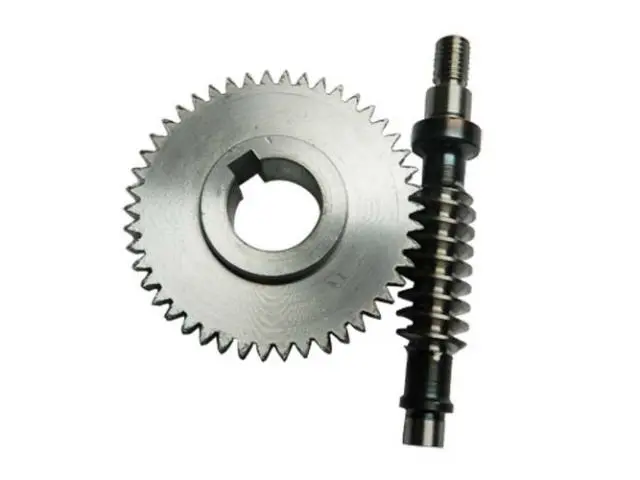
Compared to regular cylindrical worm gears, the Double Enveloping Worm is a big step forward. Think of two curved surfaces that are wrapping around each other. The worm curves to wrap around the gear, and the gear curves to wrap around the worm. This two-enveloping shape makes what engineers call "area contact" instead of "line contact" that happens in single-enveloping designs.
This area contact means that a lot more tooth surface is carrying the load at the same time when power flows through the system. Standard cylindrical worm gears only connect one to two teeth at a time, putting most of the stress on the fewest possible contact points. The Double Enveloping Worm shape keeps 3–11 teeth in a continuous mesh, spreading Hertzian stress over a surface area that is about 300% bigger than similar cylindrical shapes.
Geometry and Meshing Principles
The enveloping worm form has a globoidal shape, which is like an hourglass shape and makes the most touch area at the pitch width. This shape makes the worm threads and gear teeth fit together perfectly, making a hydrodynamic oil wedge even when the speed of rotation is low. The fluid film that forms reduces the touch between metals, which greatly lowers the rate of wear in heavy-duty riding.
Choosing the right materials is also very important for performance. We make Double Enveloping Worm parts at YIZHI MACHINERY out of high-quality alloy steels like 40CrNiMo, SAE4340, and 18CrNiMo7. The worm goes through a carburising heat process that makes the surface hard (58–62 HRC) while keeping the body tough so it can handle shock loads. The matching gear wheel is usually made of tin-bronze or aluminum-bronze (CuSn12Ni2) that is centrifugally cast. This gives it the flexibility to fit the worm profile and keep it from wearing out.
Precision cutting, hobbing, milling, and final grinding are all used in processing to get an ISO 8–9 grade of accuracy. This accuracy makes sure that the contact pattern lines up correctly on the gear teeth when they are loaded, which is a very important quality control factor that we check every time we make something by blueing it.
Why Choose Double Enveloping Worm Gears for Heavy Load Applications?
Performance Advantages That Justify Investment
Heavy equipment makers always have to deal with the same problem: how to get the most torque out of a space that isn't too big. When you use traditional gear solutions, you have to make tough choices, like using bigger housings, more complicated multi-stage setups, or putting up with shorter service lives.
When it comes to difficult tasks, Double Enveloping Worm methods are the best choice because of these main benefits:
1. Superior Load Capacity: The multiple teeth spread the force over a much bigger contact area, which lets these gear sets handle loads that are 200–300% greater than those that cylindrical worm gear setups of the same size. When your port crane faces sudden wind shear or your mining hoist has to deal with shock loads from uneven cable tension, this distributed loading keeps the teeth from breaking in a way that would stop normal systems in their tracks.
2. Exceptional Shock Absorption: Heavy machinery faces unpredictable resistance, like when rock crushers hit embedded rebar, tunnel boring machines hit geological transitions or ship gearbox systems handle torque spikes caused by waves. The flexible bronze gear wheel can handle these short-term overloads (often up to 300% of nominal torque), keeping upstream parts safe and stopping failures that spread through your drive train.
3. Compact High-Ratio Design: Getting reduction ratios from 5:1 to 100:1 in a single step makes the system architecture simpler. Your equipment's size and weight go down, and since there are fewer gear steps, there are fewer places where it could go wrong. In mobile mining tools and aircraft uses where every kilogram counts, this structural efficiency is very useful.
4. Self-Locking Capability: When the worm stops, the geometry automatically locks it in place, so you don't need different stopping systems in many situations. This silent safety feature keeps things in place without using power all the time, which is very helpful for lift traction tools and lifting equipment.
All of these benefits take care of the problems that keep engineering directors up at night: failures that happen too soon, maintenance intervals that are too long, and not enough safety margins.
Real-World Applications Proving Performance
We've sold Double Enveloping Worm gear sets to companies in a wide range of important heavy businesses. Our drives keep the pointing accuracy of solar tracking systems for concentrated solar power plants even when desert wind shear affects huge panel arrays. The zero-backlash placement (usually less than 3 arc minutes for precision series) makes sure that the receiver tubes' focal points are lined up, which has a direct effect on how well they collect energy.
Heavy mining companies use our gear sets in apron feeders and main crushers. Because they can handle shock loads without tooth shearing, the parts last 40 to 60 percent longer than with older helical gear setups. One long-term client who runs copper mines in Arizona said that they no longer had to do unplanned repair after upgrading their conveyor drive systems to Double Enveloping Worm technology.
Key Selection Criteria for Double Enveloping Worm Gears
Calculating Load Requirements With Precision
A correct load analysis is the first step in making a specification. Not only do you need to know the average working torque, but also the highest transient loads that your system will face. Shock factors of 2.5 to 3.0 times nominal load are common in mining applications. When emergency reversals happen, auxiliary drives in metallurgical rolling mills might be overloaded for a long time. Use the formula Required Torque Rating = (Operating Torque × Service Factor × Shock Factor) / Safety Margin to find out how much torque you need. We suggest that safety margins of at least 1.5 times the peak load be used for mission-critical uses like port crane slewing drives or tunnel boring machine power.
Material Selection Matching Application Demands
Different working conditions call for different properties of materials. Marine gearbox systems need metals that don't rust, like 20CrNi2Mo or AISI8620. Underground mining equipment, on the other hand, needs materials that are tough against pressure, like 42CrMo or AISI4140. Our engineering team helps clients choose the right alloy steel from our range of options, which includes 45# steel, 20CrMnTi, 40CrNiMo, SAE4340, 18CrNiMo7, 17CrNiMo6, and SAE4320, based on the expected service life, temperature conditions, and contamination exposure. Heat cleaning methods have a big effect on how well Double Enveloping Worm systems work. Carburising makes the surface harder and less likely to wear down while keeping the core flexible. Strength-to-toughness rates are best when they are quenched and tempered.
Efficiency and Lubrication Considerations
The sliding speed, lead angle, and how well the gears are oiled all have a big impact on how well they work. The surrounding shape naturally makes a better lubrication film than spherical shapes, but choosing the right oil is still very important. For heavy-duty uses, you usually need extreme pressure (EP) chemicals and viscosity types that work with the temperature range you need to work in. When you calculate efficiency, you have to take into account the moving contact that comes with worm gears. Even though Double Enveloping Worm gearing is more efficient than single-enveloping gearing, it is still less efficient than parallel-axis gearing.
System Compatibility and Integration Factors
With Double Enveloping Worm gear shape, shaft alignment errors get a lot tighter. In worm gear systems, misalignment that is okay for helical gear sets will cause edge loading and failure before its time. Your fixing design has to keep the balance within certain limits even when the temperature changes and the structure is loaded. When choosing a speed ratio, you have to weigh the need for reduction against the need for efficiency and heat production. When the ratio is above 40:1, more power is lost in the gear mesh, so better cooling methods are needed. Continuous-duty uses like conveyor drives need careful temperature analysis to keep oil from breaking down.
Comparing Double Enveloping Worm Gears with Alternative Gear Solutions
Performance Benchmarking Against Other Technologies
To know when Double Enveloping Worm technology really helps and when other options are better, you need to compare their performance honestly. Single encircling worm gears are easier to make and cost less, but they lose about 40% of their load capacity to stay the same size. While spur and helical gears are more efficient (often 94–98%), they can't self-lock, which is important for lifting applications. Bevel gear systems are great at changing the direction of a shaft at angles other than 90 degrees, but they need much bigger envelopes to get high reduction ratios. Planetary gear arrangements work well for high-ratio reduction, but they are much more expensive and can't lock themselves.
When Double Enveloping Technology Wins Decisively
Because of how they are used, Double Enveloping Worm methods are clearly the best option. Self-locking is a must for lifting equipment that needs to be held securely even when there is no power. When shock loads are applied to heavy machinery on a regular basis, the distributed tooth contact that absorbs transient overloads is very helpful. Precision positioning systems that need low backlash and high stiffness—for example, positioning satellite antennas, radar systems, and precision indexing tables—depend on being able to adjust to zero clearance when the enveloping geometry is made correctly.
Procuring Double Enveloping Worm Gears: What B2B Clients Need to Know
Identifying Manufacturers With Genuine Capability
The technological problems that come up when making Double Enveloping Worm components make a natural quality filter. Not every company that makes gears has the specialised tools, metalworking knowledge, and ability to do precise inspections that this technology needs. Look for suppliers that have certain skills, such as CNC gear machining centers that can make complex enveloping profiles, specialised grinding equipment for finishing hardened surfaces to the right level of accuracy, and quality control procedures that include checking the contact pattern. Certification to ISO standards is a good start, but you should also look more closely at the manufacturing process, heat treatment, and inspection steps like blueing tests.
Customization Capabilities and Engineering Support
Manufacturers of heavy tools rarely find ready-made options that meet all of their needs. It is necessary to be able to change the number of teeth, the size of the module, the shape of the shaft, and the material specifications. This philosophy guides YIZHI MACHINERY's work—we've built our whole business around making custom gear, and we accept low minimum order quantities and even single-item production when customers need to make prototypes or replace parts for old machines. Our standard OEM customisation workflow walks clients through the whole process, from load analysis to precision production using cutting-edge CNC equipment and protective packaging.
Evaluating Lead Times and Logistics Reliability
Schedules for delivering parts have a direct effect on how you plan your production and keep your promises to customers. Standard lead times for making a custom Double Enveloping Worm are between 35 and 60 days, reflecting the sequential nature of precision manufacturing. Rushing these steps compromises quality, leading to improper heat treatment or dimensional inaccuracies. Communication and sticking to realistic deadlines are the building blocks of trust for long-term partnerships. Logistics coordination is very important, including custom packaging with shock-absorbing liners and flexible shipping options like sea, air, or China-Europe freight trains to balance price and speed.
After-Sales Support Determining Long-Term Value
The relationship doesn't end when the delivery is made. When equipment is used in harsh environments, it needs to be maintained, have potential failure analyses done, and be replaced every so often. Manufacturers that offer full after-sales support, such as one-year guarantees, quick response troubleshooting, and expert advice on optimisation, have a much higher total ownership value. Because we offer support throughout the whole lifecycle of a product, we've built long-lasting relationships with companies that make mining equipment, metallurgical rolling mills, and cranes, using our expertise to suggest changes or speed up development when capacity needs expansion.
Conclusion
To choose the best Double Enveloping Worm gear system for heavy loads, you have to think about a lot of different technical, operational, and financial factors. This technology is the best choice for mining hoists, metallurgical rolling mills, port cranes, tunnel boring machines and military gearbox systems that need to be reliable. Its unique mechanical benefits include being able to distribute load, absorb shock, have a compact high-ratio design and lock itself. To do a good job of procurement, you need to work with makers who can show they have real technical skills, offer full customisation services, and promise long-term support.
FAQ
1.What maintenance practices extend Double Enveloping Worm gear lifespan?
Regular testing of lubrication oil to find contamination or wear and tear lets you replace it before it does any damage. Keeping an eye on working temperatures can reveal problems with inadequate cooling or excessive friction. By measuring backlash on a regular basis, you can see how wear is progressing and replace the parts before they lose too much accuracy. Keeping things in the right place stops edge loading, which speeds up failure.
2.How do I figure out the exact load size I need for my situation?
Start by writing down the maximum torque needs and any shock factors that are unique to your industry (for example, 2.5 to 3.0× for mining and 1.5 to 2.0× for conveyors). Use service factors that take into account the duty cycle and the environment. Check the technical data provided by the maker for particular gear set values. Make sure that the demand you figure stays below the rated capacity by a sufficient amount to ensure safety (usually at least 1.5 for critical applications).
3.Are double enveloping worm gears suitable for high-speed applications?
When speed is low to moderate and torque is great, Double Enveloping Worm methods work really well. Worm gear meshing creates heat that is related to speed because of the moving contact that is built in. For input speeds above 1,000 RPM, applications need to carefully look at the temperature and may need forced cooling. High-efficiency parallel-axis gearing works best for high-speed needs, while Double Enveloping Worm technology is the clear winner in heavy-load, controlled-speed situations.
Partner With YIZHI MACHINERY for Your Custom Double Enveloping Worm Solutions
Because YIZHI MACHINERY has been making fine gears for 15 years, you can trust them to be your best Double Enveloping Worm source for mission-critical heavy equipment uses. Our production facility is ISO-compliant and has cutting-edge CNC gear machining centers, automated grinding equipment, and smart heat treatment lines that can give your demanding applications the precision and metallurgical quality they need. Mining equipment makers, rolling mill providers, and crane OEMs trust us because our quality is always the same, we can make any changes that are needed, and we offer technical support throughout the lifecycle of the product. Contact our technical team at sales@yizmachinery.com to talk about your specific needs.
References
1. Dudley, D.W. (1984). Handbook of Practical Gear Design and Manufacture. Lancaster: Technomic Publishing Company.
2. Buckingham, E. (1988). Analytical Mechanics of Gears. New York: Dover Publications.
3. American Gear Manufacturers Association (AGMA). (2004). AGMA 6034-B92: Practice for Enclosed Cylindrical Wormgear Speed Reducers and Gearmotors. Alexandria: AGMA.
4. Radzevich, S.P. (2012). Dudley's Handbook of Practical Gear Design and Manufacture (2nd Edition). Boca Raton: CRC Press.
5. Colbourne, J.R. (1987). The Geometry of Involute Gears. New York: Springer-Verlag.
6. Litvin, F.L. and Fuentes, A. (2004). Gear Geometry and Applied Theory (2nd Edition). Cambridge: Cambridge University Press.

USER EVALUATE
Here is the customer's evaluation of us