


How to Master Internal Gear Cutting: Techniques and Innovations
To become good at Internal Gear Cutting, you need to know how to use special cutting techniques to make gear teeth on the inside circle of cylinder- or ring-shaped pieces of work. In contrast to external gear making, this method has its own physical limitations and needs precise tooling strategies. Gear Shaping, Power Skiving, broaching, and grinding are some of the methods used in this process to get to the very tight limits needed for planetary gear systems, aircraft actuators, and mining equipment transmissions. To be successful, you need to choose the right cutting settings, keep an eye on tool movement in thin-walled parts, and use advanced CNC controls to get the best cycle times while keeping ISO-grade accuracy in measurements across a wide range of materials.
Understanding Internal Gear Cutting: Fundamentals and Challenges
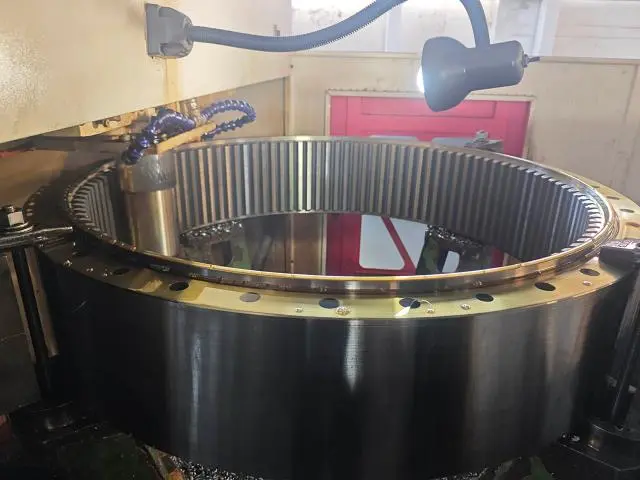
Internal Gear Cutting is a specialized area of gear making that is concerned with creating tooth patterns on the inside sides of ring gears and annular parts. Because of physical limitations that make standard hobbing methods useless for this process, it is very different from making gears for outside use.
Defining the Process and Core Differences
Internal gear cutting differs from external as tools engage within cylindrical bores, requiring precise radial clearance. Trochoidal interference must be avoided through careful tooth ratio calculations. Concave-convex contact in internal-external meshes distributes loads and reduces noise, ideal for planetary reducers. Specialized tools and methods are essential for limited-access areas.
Manufacturing Obstacles
Thin-walled ring gears distort under cutting forces, needing hydraulic arbors and flexible clamping. Hardened steels like 20CrMnTi cause tool wear from thermal shock; TiAlN coatings extend life. Burr formation requires optimized CNC exits to reduce deburring costs. Accurate workholding and ISO 1328-compliant measurement ensure feature alignment. Deflection and wear demand vigilant process control.
Design for Manufacturability
Relief cuts at bore bottoms allow safe tool retraction during shaping. Material choice balances machinability and performance: AISI4140 for tempering, 18CrNiMo7 for case-hardening to 62 HRC. Specify ISO Grade 5-6 only when necessary; overly tight tolerances raise costs. Early collaboration between engineers and procurement sets realistic specs, avoiding delays and excessive pricing.
Techniques and Processes for High-Precision Internal Gear Cutting
There are several tried-and-true ways to make internal gears, and each has its own benefits based on production rate, exact needs, and the shape of the part. When procurement workers understand these methods, they can better match the capabilities of a process with the needs of an application.
Gear Shaping Technology
In internal gear cutting, shaping remains the most flexible method, handling blind bores and small face widths via reciprocating motion. CNC-controlled shapers achieve ISO 8-9 accuracy for planetary reducers. Modules from 0.5 to 50 suit fine-pitch to heavy mining gears. Heat-treated parts up to 50 HRC are machinable, though forces increase. Best for low-to-medium volumes and custom forms.
Power Skiving Advancement
Skiving combines shaping flexibility with hobbing productivity using crossed-axis continuous cutting. Rates increase 3-5 times over shaping for EV and automotive ring gears. Modern CNC maintains micron accuracy across runs. Hard skiving post-heat treatment corrects distortion and achieves 58-62 HRC. Ideal for high-volume production needing speed without sacrificing dimensional precision.
Broaching and Grinding Methods
Broaching offers fast single-stroke cutting for simple internal forms in automotive gearboxes, but limits helical shapes. Grinding achieves ISO Grade 5-6 accuracy, correcting heat-treat warp and surface finishes below Ra 0.8 micrometres. Advanced machines from KAPP include thermal compensation for stability. Grinding is essential for tight tolerances but adds cost and cycle time.
CNC Programming and Parameter Optimization
Optimized cutting speeds from 50 to 120 metres per minute and feed rates balance output and tool life. CAM software simulates processes to detect collisions and refine rough-to-finish transitions. Adaptive control monitors forces, adjusting parameters in real time to maintain consistency. Efficient indexing and approach paths reduce non-cutting time, enhancing overall productivity and dimensional stability.
Comparing Internal Gear Cutting Solutions: Choosing the Right Method and Equipment
When choosing the right Internal Gear Cutting technology, you need to think about a lot of things, such as the expected output rate, the level of accuracy needed, the shape of the parts, and the total cost of ownership. Strategic investments in equipment match the manufacturing skills with the needs of the market while keeping the operating freedom.
Process Selection Criteria
Production volume guides method choice: skiving or broaching for over 10,000 units per year, shaping for low-medium or varied jobs. Precision needs above ISO Grade 6 require grinding; ISO 8-9 accepts shaping or skiving. Blind bores favour shaping; through-bores suit skiving or broaching. Helical angles from 5 to 45 degrees need generating methods, excluding broaching.
Equipment Evaluation Framework
KAPP excels in precision grinding for hardened parts with in-process gauging. Liebherr offers robust machines for large ring gears in mining and wind turbines. Gleason provides advanced skiving and training support. EMAG integrates cutting with heat treatment for automotive cells. Mitsubishi delivers reliable, cost-effective shapers for contract shops. Total cost includes tooling, maintenance, and flexibility.
Procurement Insights: Sourcing Internal Gear Cutting Machines and Tools
To strategically buy Internal Gear Cutting equipment and precision tools, you need to make sure that the technical requirements match your budget and work with sellers who can provide full support throughout the lifecycle of the equipment. Making smart choices about where to get materials helps businesses make more and be more competitive.
Defining Production Requirements
Assess annual volume, gear sizes, materials, and accuracy grades to set vendor criteria. Hardened steels like 20CrMnTi need rigid frames and high-performance tools. Medium-carbon steels allow focus on cycle efficiency. Custom-engineered parts demand more machine flexibility than catalog items. Baseline requirements guide supplier negotiations and ensure appropriate equipment investment.
Evaluating Supplier Capabilities
Look beyond machines to application engineering, training, and long-term support. Visit reference sites to observe real performance and user feedback. Check warranty, preventive maintenance, and spare parts availability to avoid unexpected costs. Reputable suppliers offer process optimization during quoting, reducing application risks and accelerating new product introduction.
Tooling and Consumables Considerations
Carbide inserts from Walter and Sandvik with advanced coatings optimize internal gear cutting. Tool life modelling under specific conditions informs cost projections. Shaping cutters must match module specs; skiving tools require specialised regrinding services. Invest in metrology, including CMMs and gear analysers, for ISO-compliant inspection. Balance inventory needs with capital constraints for efficient tool management.
Troubleshooting and Optimizing Internal Gear Cutting Performance
To keep the quality of the internal gears the same over long production cycles, process deviations must be proactively found and fixed. Using regular troubleshooting methods along with continuous improvement techniques makes tools work better while lowering the number of defects.
Identifying Common Defects
Dimensional variations show up in many ways, such as wrong tooth thickness, profile mistakes, and lead deviations that lower the quality of the gear mesh. Most of the time, the root causes are heat expansion during cutting, poor clamping of the workpiece, or increasing tool wear that changes the cutting geometry. Setting up measurement methods with the right sampling rates lets you find problems early on, before they cause a lot of scrap to build up.
Surface surface flaws like chatter marks or too much roughness hurt contact patterns and speed up wear during service. These flaws usually happen when the cutting settings aren't right, the machine isn't stiff enough, or the coolant isn't used correctly. Many surface quality problems can be fixed by changing feed rates, depth of cut sequences, or switching to higher-quality cutting tools while keeping cycle times the same.
When burrs form along the edges of teeth, they need extra work that costs more and is harder to handle. By improving CNC programming to make the best use of tool exit methods, the burr height can be cut down by a large amount, often removing the need for manual deburring. When machining factors alone aren't enough to keep the edge in good shape, using special deburring tools or vibratory finishing methods is the only way to be sure.
Implementing Corrective Actions
Preventing quality loss over time by replacing tools at regular intervals based on total production counts stops tool wear before it gets worse. Monitoring changes in cutting force through machine control systems lets you know about increased wear patterns early on, so you can fix the problem before the standards for dimensions go beyond what was specified. Working with tooling makers to look at wear trends and find the best cutting settings can increase the life of tools while keeping the quality of the finish.
In internal gear cutting, thin-wall warping problems are common in making ring gears, but they can be fixed by making fixturing systems better. Hydraulic expansion mandrels spread clamping forces evenly around internal sizes, keeping stress clusters that deform parts to a minimum. Temperature-controlled fixturing accounts for heat expansion during long machining processes, keeping dimensional accuracy even when the environment changes.
Process safety is improved by new machine control technologies, such as adaptive feed rate regulation and sound damping systems. These features change the cutting settings automatically based on real-time sensor feedback, keeping the best conditions even if the material properties or tool conditions change. Buying machines with these features lowers the reliance on operator skill while increasing the total usefulness of the equipment.
Sustaining Long-Term Efficiency
Regular inspections check the physical accuracy of machines by calibrating them on a regular basis in line with what the maker suggests. Laser interferometry devices check the accuracy and regularity of positioning across all working areas. This finds problems early on, before they affect the quality of the part. Preventive repair plans that cover things like lubrication, coolant management, and the health of the electrical system help keep production schedules from getting thrown off by unexpected breaks.
Continuous training for the workforce makes sure that workers and writers stay up to date on new technologies and changing best practices. Manufacturer-sponsored training programs teach how to operate machines, do routine upkeep, and use advanced programming methods to get the most out of their use. Cross-training programs make operations more flexible by letting employees be moved around when demand changes or when equipment needs to be serviced.
When you use lean production principles, you can streamline the flow of materials and cut down on activities that don't add value to gear cutting processes. Using kanban systems to keep track of tools and workpieces cuts down on the cost of keeping inventory and makes sure that materials are always available. Value stream mapping helps find slow spots and plan specific process changes that make the whole manufacturing system work better.
Conclusion
Achieving success in Internal Gear Cutting requires a deep understanding of complex manufacturing processes, the smart choice of tools, and strict operating procedures. To be successful, you need to find a balance between the powers of technology and the facts of the economy, all while keeping a sharp eye on accuracy in measurements and surface quality. The methods talked about in this article can be used as guides to compare different ways of making things and put in place the best solutions for each application. Power Skiving and advanced grinding technologies are always getting better, which gives companies that use them a competitive edge by making their products more precise and productive. Partnering with experienced sellers that offer full technical help speeds up the development of capabilities and lowers the risks of implementation. Long-term competitiveness in manufacturing is ensured by a strong dedication to ongoing growth and worker development in the mining, aircraft, and industrial machinery sectors.
FAQ
1. Why choose Power Skiving over Gear Shaping for internal gear production?
Compared to traditional shaping, Power Skiving cuts cycle times by 3x to 5x, which makes it more cost-effective for high-volume uses like car ring gears. When making small amounts, blind holes with little space between them, or custom tooth profiles, where tooling freedom is more important than output, shaping is still a good idea.
2. How do manufacturers handle interference in blind internal gears?
For blind hole configurations to work, the bottoms of the holes need relief cuts that make room for the cutter to slow down and retreat. For shaping tasks, you need about 0.5 to 1 mm of space, but for Power Skiving, you need a lot more horizontal space because the cutting angles are crossed. The right relief design keeps tools from colliding with each other and keeps the surrounding material's structure intact.
3. Can internal gear cutting be performed on hardened components?
After heat treatment, parts were carburized using advanced methods like hard skiving and the internal gear grinding process. This fixed any thermal damage and met the requirements for surface hardness of 58 to 62 HRC. For these methods to work, the machine bases must be stable, and the tools must be able to handle the high cutting forces that are common when working with hard materials.
Partner with YIZHI MACHINERY for Superior Internal Gear Cutting Solutions
YIZHI MACHINERY has been making high-precision internal gears for 15 years, and they work with companies all over the world in the mining, aircraft, and industrial machinery fields. As a reliable Internal Gear Cutting seller, we make custom parts from high-quality materials like 20CrMnTi, SAE4340, and AISI8620. Our cutting, hobbing, milling, and grinding methods achieve ISO 8–9 grade accuracy. Our planetary gears have a very high load-bearing capacity, a small structure, and an adjustable gear ratio design that makes them useful for a wide range of uses, from machine tool feed mechanisms to winches. We can handle low minimum order amounts and even production of a single item. We also offer full technology support and real-time production updates. Contact us at sales@yizmachinery.com about your unique needs and get quotes within 24 hours.
References
1. Stadtfeld, H.J. (2014). Advanced Bevel Gear Technology: Effect of Setting Variations on Bevel Gear Performance. Gleason Works Publication.
2. Klocke, F., & Brecher, C. (2016). Gear Manufacturing Technology: Processes, Machines, and Tooling. Society of Manufacturing Engineers.
3. Radzevich, S.P. (2018). Theory of Gearing: Kinematics, Geometry, and Synthesis. CRC Press.
4. ISO 1328-1:2013. Cylindrical Gears – ISO System of Flank Tolerance Classification – Part 1: Definitions and Allowable Values of Deviations Relevant to Flanks of Gear Teeth. International Organisation for Standardisation.
5. Bausch, T. (2020). Innovative Zahnradfertigung: Verfahren, Maschinen und Werkzeuge zur kostengünstigen Herstellung von Stirnrädern. Expert Verlag.
6. AGMA 2000-A88. Gear Classification and Inspection Handbook – Tolerances and Measuring Methods for Unassembled Spur and Helical Gears. American Gear Manufacturers Association.

USER EVALUATE
Here is the customer's evaluation of us