


How to Choose a Reliable Bevel Pinion and Crown Wheel Manufacturer
Finding the cheapest Bevel Pinion and Crown Wheel from a reputable maker isn't enough; you also need to make sure you get precision-engineered parts that will work well even in tough situations. Finding the right manufacturing partner is important whether you're looking for mining equipment, aerospace uses, or heavy industrial gear. If you don't, you could end up with costly downtime instead of smooth operations. This detailed guide shows you the most important things you need to think about when comparing makers and sellers and buying things that will protect your investment and meet high performance standards.
Understanding Bevel Pinion and Crown Wheel: Key Components and Functions
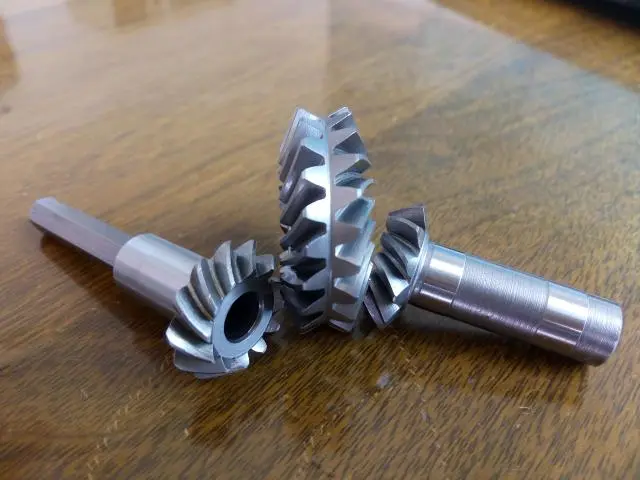
Bevel Pinion and Crown Wheel units are the most important parts of power transmission systems where shafts that cross each other need to reroute torque, usually at 90-degree angles. The unique shape of these gear sets makes them very different from regular spur or helical gears. Their conical shape makes it possible for shafts to connect smoothly, which would not be possible with complex mechanical middle-pieces.
The Engineering Behind Intersecting Shaft Transmission
The pinion moves with fewer teeth. The larger crown wheel slows and gains power with it. This setup is crucial in industrial gears that power conveyors, crushers, and material handling equipment, as well as automotive differentials that send engine power to the drive wheels. Modern spiral tooth profiles, like the Gleason system, enable teeth to touch progressively and reduce noise, vibration, and harshness compared to straight bevel installations.
Making these pieces needs precision. To distribute load equally over the contact patch, tooth shape must preserve margins within microns. How well, how much heat, and how long a bevel gear set operates depends on how the teeth contact. Stress develops in regions where teeth don't line up or contact, speeding wear and even causing catastrophic failure at peak loads.
Material Selection and Heat Treatment Fundamentals
Case-hardening steels like 20CrMnTi, SAE4340, or 18CrNiMo7 are often used in high-performance Bevel Pinion and Crown Wheel sets. These metals have a tough, flexible center that can handle shock loads, and they can be treated on the outside to make very hard layers. After the carbon is pushed into the surface by carburizing, it is quenched to get a surface hardness number between 58 and 62 HRC. This mix gives great resistance to wear against scuffing and pitting while keeping core hardness that stops brittle fracture.
Knowing these technical basics helps procurement workers set reasonable goals for performance and set up repair plans. When used in dirty places, like when mine crushers handle rough ore, gear sets need greater case levels and maybe even more alloy content than when used in clean industrial settings. Extreme temperatures in aircraft use need materials that keep their properties over a wide range of temperatures. This usually means using heat treatment methods other than normal carburizing.
Core Criteria for Choosing a Reliable Manufacturer
Setting clear technical requirements and judging possible suppliers against objective factors that predict long-term performance and dependability are the first steps in finding the right manufacturing partner.
Manufacturing Capabilities and Equipment
The quality level for a manufacturer's goods is directly related to how well they can machine them. Advanced factories have CNC gear hobbing machines, gear grinding machines, and coordinate measuring machines (CMM) that can check the shape of the teeth to ISO 8-9 precise grades. If a company has its own heat treatment furnaces with atmosphere control systems, it means it can do regular rounds of hardening and carburizing, which is necessary to make sure that the qualities of each batch of materials are the same.
When evaluating a supplier, you should ask about specific kinds of tools and what they can do. Manufacturers who have Gleason or Klingelnberg gear cutting systems have invested in the best spiral bevel technology on the market. For tasks that need a surface hardness higher than 60 HRC, grinding after heat treatment is the only way to get accurate end dimensions on hardened gears. This makes grinding capacity very important for the production of a Bevel Pinion and Crown Wheel.
Quality Assurance and Certification Standards
Tough quality systems tell the difference between great producers and average ones. For a basic guarantee of documented processes and frameworks for ongoing improvement, ISO 9001 certification is enough. But for more important uses, specialized certifications are more important. Suppliers to the aerospace industry usually keep up with AS9100 approval, while automakers usually need IATF 16949 compliance.
In addition to credentials, look at how the maker tests their products. Full quality assurance includes the following:
- Dimensional verification using a CMM to make sure that the tooth shape, pitch accuracy, and runout are all within the allowed ranges
- Hardness testing at multiple depths to confirm that the case depth and core hardness meet the requirements
- Magnetic particle or ultrasonic inspection to find flaws below the surface that could spread when the load is applied and removed repeatedly
- Gear rolling testing that mimics real meshing situations to find problems with the contact pattern
Ask for inspection records from past production runs as examples. Manufacturing companies that are honest are happy to share proof that they can regularly meet requirements. If someone doesn't want to give you specific quality records, you should be worried about process control and tracking right away.
Customization Capabilities and Engineering Support
Standard stock gears aren't always suitable for certain activities. Precision machine tool drives need different tooth designs and materials than high-shock mining equipment. Engineering teams at manufacturers that enable you to customise their equipment may transform practical demands into optimal gear designs.
Check tech help during first meetings. Experienced manufacturers ask several questions concerning the machine's load cycles, speed ranges, greasing systems, and weather conditions. Instead of offering basic items, they should provide customised solutions. Help with design should go beyond form optimisation. It should also provide material options, heat treatment specifics, and fitting directions.
Production flexibility matters too. Some manufacturers have large minimum order quantities, making prototypes and limited runs excessively costly. Suppliers that are willing to deal with tiny numbers or single units demonstrate customer attention, which is crucial when developing a new product or repairing equipment parts.
Comparing Leading Bevel Pinion and Crown Wheel Brands and Suppliers
On the global market, there are both well-known multinational names and niche firms that offer competitive options. Knowing what's out there helps people who work in buying make smart decisions regarding Bevel Pinion and Crown Wheel procurement.
Established International Brands
Big companies that make bearings and power transmission parts, like SKF, Timken, and NSK, add bevel gear goods to their lines by using their large delivery networks and well-known brands. These sellers are better because their products are available right away through area distributors and they have a lot of detailed information. Their goods are mostly used in standard situations where tried-and-true patterns and easy-to-find replacements are more important than the need for customization.
The prices from these sources usually include name premiums and dealer margins. Standard goods can have very short lead times—often just a few days or weeks—but calls to make changes may have to wait a long time or be turned down completely. After-sales help usually goes through networks of distributors, which can make it harder to talk to engineering teams directly about technology issues.
Specialized Manufacturing Partners
Dedicated gear manufacturers exclusively create custom orders; therefore, they know more than generalists. Since they create and check everything in-house, companies like YIZHI MACHINERY are ideal examples. Specialized makers, which have been around since 2016 and have over 15 years of experience between them, learn a lot about the cutting, hobbing, milling, and grinding tasks that are needed to make bevel gears.
These partners excel in bespoke application solutions. Their engineers deal with 45# steel, 40CrNiMo, and SAE4340. For each purpose, they choose the best specs. Surface hardness may be regulated between 45 and 50 HRC for light-duty and 58–62 HRC for heavy-duty. Each spectrum receives the correct thermal treatment.
Special orders take 35–60 days to make due to the attention involved in precision items. Despite being lengthier than off-the-shelf solutions, this timeline works for constructing new equipment or repairing components for regular maintenance. Specialists may accept lesser minimum order quantities and even single units for technological reasons.
Evaluation Framework for Supplier Comparison
When evaluating possible sellers, base your decision on these important factors:
- Technical Capability: Look over the specs, such as the module ranges (0.5 to 50 for full coverage), pressure angle choices (14.5° and 20° for freedom in use), and the biggest part sizes that can be used. Ask for capability statements that list the systems, methods, and tools that can be used.
- Material and Treatment Options: Make sure the provider has materials that will work in your area. Materials with a higher alloy content, like 20CrNiMo or AISI8620, work better in mining and heavy building, but cheaper choices may be fine for general industry uses.
- Production Flexibility: Look at the minimum order quantities, the desire to make changes, and the ability to predict wait times. When manufacturers stick to standard routines from talking about requirements to design, production, inspection, packing, and shipping, they show that their processes are mature, which means that deliveries are reliable.
- Financial Stability and References: Ask for client references, preferably from people who work in the same field as you. Talking to present customers can give you information about how responsive you are to conversation, how you solve problems, and the general quality of your partnership that formal paperwork can't.
Procurement Strategies: Where and How to Buy Your Bevel Pinion and Crown Wheel
Strategic procurement is more than just finding qualified makers. It also includes finding the best ways to source goods, negotiate, and handle relationships so that the total cost of ownership is as low as possible for each Bevel Pinion and Crown Wheel set.
Direct Manufacturer Sourcing Advantages
When you buy directly from makers, you skip the middlemen and can work together more closely on specs. Direct relationships make it easier to talk about technical issues with engineers who know what can and can't be done in production. This helps create designs that are both high-performing and easy to make.
When you make straight plans, the cost structures are easier to see. When you discuss prices, you use real production costs instead of multiple markups. This could cut costs by 20 to 40 percent compared to distributor channels. When you deal directly with makers, especially if you are a repeat customer or have a big order, they are more likely to be flexible with payment terms.
The speed of communication goes up a lot. You don't have to go through distributor sales reps who might not know a lot about the product to get answers to your technical questions; instead, you talk directly to engineers. For example, this is very helpful when making specifications, fixing problems, or making important changes.
Negotiation Strategies and Order Structuring
Know what you need, how much you want, and when you need it before discussing rates.
Volume promises may earn you better pricing, but be cautious when setting up agreements. Include means to adjust specifications or quantities to adapt to changing demands.
Payment conditions greatly impact purchasing cost. Standard 30% deposit, balance on delivery protects both parties; however, established connections may enable extended payment windows. Some producers provide slight discounts for prepayment, which may aid cash-rich purchasers.
Delivery plans should be fair. Custom bevel gears need precise processes that can't be hurried without compromising quality. Manufacturers are honest when they say 35–60 days for customised work.
Logistics and Transportation Considerations
When buying from different nations, shipping becomes more difficult, affecting cost and reliability. Experienced manufacturers provide more than freight scheduling as transportation assistance. YIZHI MACHINERY's best practices include special hardwood crates and shock-absorbing cushioning to protect gear during transit and reduce damage to 0.1%.
When time or money is scarce, employ flexible transportation. Sea freight is inexpensive for non-urgent shipments, but air freight satisfies crucial demands at higher expenses. China-Europe goods trains provide a balance between cost and speed in specific regions.
Real-time shipping monitoring eliminates travel worries. Modern manufacturers update their status from loading the vehicle in the facility to delivering the finished product. This transparency allows accurate production planning and reduces inventory buffers.
Case Studies: Successful Procurement and Application of Bevel Pinion and Crown Wheel Sets
Real-life examples show how choosing the right maker can help solve problems in a wide range of workplace settings regarding the application of Bevel Pinion and Crown Wheel assemblies.
Mining Equipment Durability Enhancement
A major mining equipment manufacturer encountered issues with crown wheel portions in cone crushers that broke down hard rock ore. The original components' teeth broke after 6 to 8 months, substantially less than the 24-month service duration. Too many replacements hindered productivity and increased maintenance expenses.
The buying team collaborated with a specialised manufacturer to improve the gear set appearance. An engineering investigation found that conventional material requirements couldn't manage the enormous shock stresses from crushing rocks. SAE4340 steel was deep carburised to 1.2 mm, up from 0.8 mm on the original parts, to remedy the issue. Changes in tooth form disperse contact loads more equally throughout the face.
Real-world testing of prototypes showed the benefits. The revised pieces performed continuously for almost 30 months without substantial wear, five times longer than the original components. Even though each unit cost 35% more, the overall cost of ownership dropped by a considerable amount due to how frequently they needed to be replaced and how much productivity was lost during changeouts.
Aerospace Actuator Precision Achievement
For flight control devices, an aviation system manufacturer required compact bevel gear sets. These needed reliability, efficiency, and lightness. Standard industrial-grade parts failed flight testing in hostile conditions, material tracing, and measurement accuracy.
After AS9100 certification, the selected manufacturer demonstrated aviation material standards expertise. All 17CrNiMo6 steel manufacturing ingredients may be traced to the plant. This ensured reliable chemistry and grain structure. ISO 5 accuracy was achieved during grinding, which is tighter than ISO 8–9 for industrial gears. The gears have to perform smoothly and effectively at high rotating speeds for actuators.
The product performed well from -65°F to +160°F in several tests. The testing also showed that the material's characteristics and proportions were consistent throughout the operating range. 98.5% mechanically efficient and nearly silent, the gear sets were vital for aviation. The manufacturer's quality system offered complete traceability for aircraft clearance and warranty compliance.
Conclusion
To find a trustworthy Bevel Pinion and Crown Wheel maker, you need to carefully look at their professional skills, quality control systems, ability to make changes, and willingness to work with you. The best procurement plans look at more than just the original price. They also look at the total value, which includes things like tech support, reliable output, and great logistics. For the best long-term results, manufacturers should show clear methods, complete quality assurance, and a real desire to solve customer problems. Whether you're looking for mining equipment, aerospace systems, or industrial machinery, taking the time to carefully evaluate suppliers pays off in the form of more reliable equipment, lower total cost of ownership, and the knowledge that your most important transmission parts will work when it matters the most.
FAQ
1. What lifespan should I expect from quality bevel pinion and crown wheel sets?
Service life depends a lot on how hard the job is, how well it is oiled, and how often it is maintained. When used in industrial settings and properly oiled, Bevel Pinion and Crown Wheel sets that are properly described usually last between 20,000 and 50,000 hours. Heavy building and mining sites with a lot of shock loads may see 10,000 to 15,000 hours, but controlled settings with precise machinery can see more than 100,000 hours. Material quality, the depth of the heat treatment, and optimizing the tooth shape all have a big effect on how long something lasts.
2. How can I verify manufacturer quality claims?
Ask for specific proof of your abilities, such as lists of all the tools you need, quality assurances, and inspection reports from recent production runs. When you can, go to factories to see how things are made firsthand. Talk to current customers in related fields to get honest comments on how to keep quality high and solve problems. Manufacturers with a good reputation are happy to be questioned and make their quality systems easy to see.
3. Can manufacturers accommodate custom specifications for unique applications?
Custom makers with a history of success regularly create custom solutions for unique needs. Give full information about the working conditions, such as load cycles, speed ranges, environmental factors, and room limitations. These factors are used by experienced engineering teams to come up with the best designs. They suggest materials, heat treatments, and geometries that balance efficiency with cost-effectiveness. Lead times for engineering and first-article review are usually extended by one to two weeks because of customization timelines.
Partner with YIZHI MACHINERY for Precision-Engineered Bevel Pinion and Crown Wheel Solutions
With 15 years of specialized experience and quality systems that are in line with ISO standards, YIZHI MACHINERY makes all kinds of custom gear. Here at our facility, we have high-tech CNC lathes, precise grinding tools, and smart heat treatment lines that can make Bevel Pinion and Crown Wheel assemblies from module 0.5 to 50, with surface hardness ranges from 45 HRC to 62 HRC depending on your needs.
We know that uses in industrial machinery, mining, and aircraft can't stand it when parts aren't reliable. Our engineering team works closely with you from the first meeting to talk about your needs to the final production, strict quality control, and safe delivery. We offer trust along with components by custom packing that lowers shipping damage to less than 0.1% and real-time package tracking.
Our flexible method can handle projects of any size, with wait times ranging from 35 to 60 days. This is true whether you need a single prototype or regular production numbers. Contact us at sales@yizmachinery.com to talk about your bevel gear needs with skilled engineers who are ready to come up with solutions that will work best for your unique business problems.
References
1. Dudley, Darle W. Handbook of Practical Gear Design and Manufacture. CRC Press, 2012.
2. Stadtfeld, Hermann J. Gleason Bevel Gear Technology: Manufacturing, Inspection and Optimization. The Gleason Works, 2014.
3. American Gear Manufacturers Association. AGMA 2005-D03: Design Manual for Bevel Gears. American Gear Manufacturers Association, 2003.
4. Litvin, Faydor L. y Alfonso Fuentes. Gear Geometry and Applied Theory. Cambridge University Press, 2004.
5. International Organization for Standardization. ISO 1328-1:2013 Cylindrical Gears — ISO System of Flank Tolerance Classification. ISO, 2013.
6. Radzevich, Stephen P. Theory of Gearing: Kinematics, Geometry, and Synthesis. CRC Press, 2018.

USER EVALUATE
Here is the customer's evaluation of us