


How to choose the right internal teeth gear for heavy equipment
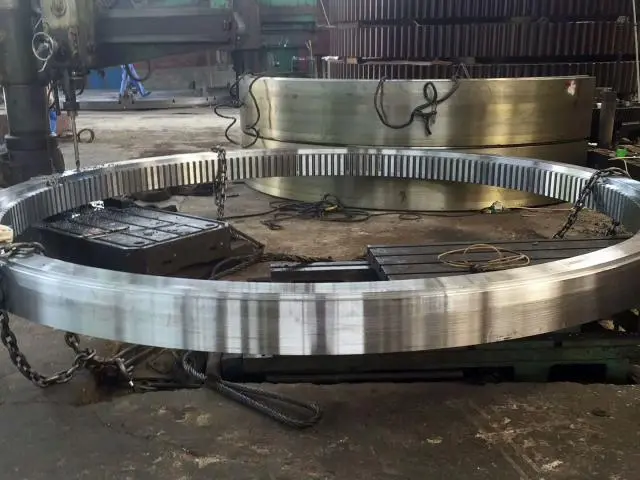
Picking the correct Internal Teeth Gear for big machinery is a significant choice that has a direct effect on how well it works, how long it lasts, and how much it costs to maintain. Unlike exterior gears, internal gears have teeth machined into the inside circle. This allows for small planetary designs that have a high torque density. When choosing an Internal Teeth Gear, you need to think about the load requirements, the material requirements, the manufacturing precision, and the qualifications of the provider. This guide walks you through the most important technical and purchasing factors. It is meant to help procurement managers, engineers, and original equipment manufacturers (OEMs) make smart choices that improve equipment performance and reduce downtime.
Introduction
Heavy machinery works in harsh conditions, like breaking rocks in mines, lifting huge loads on building sites, and running factories around the clock. Another important part that is often overlooked but is very important in these tough situations is the Internal Teeth Gear. This special kind of gear has teeth cut into the inside of a ring. This makes it possible for small, high-torque transmission systems that work better in tight spaces than regular external gear setups.
It's not enough to just check off the right Internal Teeth Gear box. It changes how reliable big gear is, how efficiently it works, and how much it costs to own overall. If you don't choose the right gear, it can wear out quickly, cause unexpected downtime, and cost a lot to fix. On the other hand, a well-matched gear improves total machine productivity, extends service life, and makes power transmission more efficient.
This detailed buying guide is made for global B2B customers like procurement managers, mechanical engineers, original equipment manufacturers (OEMs), and wholesalers who need to know more about technical requirements, material choices, manufacturing standards, and evaluating suppliers. On this lesson, we will talk about the basics of internal gears, including how it is made, how it should be bought, and how it is used in real life. By the end, you'll know how to confidently choose and get internal gears that meet your business and performance needs.
Understanding Internal Teeth Gears: Fundamentals and Key Characteristics
What Makes Internal Gears Unique?
An Internal Teeth Gear is very different from an external gear because it has teeth cut into the inside of a cylinder or cone-shaped ring. The gear can connect with an outside pinion because of this design. Both parts can turn in the same direction. This arrangement is the main part of planetary (epicyclic) gear systems, which are highly valued for their ability to provide high reduction ratios in a very small space.
Because of how they are made, internal gears have a conformal contact surface, which means that the curved shape of the internal gear wraps around the convex shaft. This makes the contact area bigger, which lowers the Hertzian contact stress and makes the load distribution better. The result is better resistance to shock loads and longer gear life, which are very important in heavy-duty machines like mine excavators, winches, and machine tool feed systems.
Key Types and Configurations
Ring gears and rotary gears are the two main types of internal gears that you will often find. In planetary devices, ring gears hold the outer part still, while planet gears spin around a center sun gear. This setup creates several load lines, which spreads power out evenly and lowers the stress on each part. Planetary gear reducers are very reliable and have a high torque density, so they are used in a lot of moving equipment, building equipment, and transmission systems.
Materials and Manufacturing Standards
High-strength steel alloys like 42CrMo, AISI 4140, 20CrMnTi, and AISI 8620 are often used to make internal gears because they can handle big loads and tough conditions. To get a hard surface (usually 58–62 HRC) and a tough core, these materials go through a lot of tough heat treatments, such as carburizing, cooling and tempering, and induction hardening. Following foreign standards like ISO 1328 and AGMA 2000 makes sure that products are the same size, can be swapped out, and work the same way all over the world's supply chains.
Core Decision Criteria When Selecting Internal Teeth Gears for Heavy Equipment
Load Capacity and Torque Requirements
It is very important that an Internal Teeth Gear can handle a lot of weight. A lot of the time, heavy equipment has to deal with shock loads, high torque transfer, and constant operation. The gear has to be made so that it can take heavy loads without breaking or deforming. The torque rate, safety factor, and job cycle of your product will help you choose the right material grade and tooth geometry.
Rotational Speed and Dynamic Performance
The speed of rotation has a direct effect on how much noise, heat, and gear wear there is. For high-speed uses, precise tooth shapes and high-quality surface finishes are needed to keep vibrations to a minimum and make sure the machine runs smoothly. Planetary gearboxes use internal gears that often work at speeds higher than 1,500 RPM. This requires very precise manufacturing methods like precision cutting to keep the errors very small.
Space Constraints and Compactness
One of the best things about internal gears is that it can fit a lot of reduction ratios into a small area. Planetary systems are great for mobile equipment and small gears because they have a small size because they are arranged coaxially. When room is limited, internal gears are the only way to go. External gear trains can't even come close.
Material Selection and Durability
The choice of material affects not only how much weight the gear can hold, but also how well it holds up against wear, rust, and heat stress. Alloy steels, such as 20CrNiMo and SAE 4340, are great for heavy-duty uses because they are tough and hard at the same time. Surface processes like carburizing and nitriding make the gear more resistant to wear, which extends its useful life and lowers the number of times it needs to be serviced.
Precision and Tolerance Classes
The ISO and AGMA tolerance classes have a direct effect on how well gears work. Higher accuracy grades (ISO 5-6) make sure that the teeth are spaced correctly, that the mesh is smooth, and that there is less backlash. These are all very important for uses that need precise motion control. For less demanding uses, lower tolerance classes might be fine, but they can hurt performance and durability.
Internal Teeth Gear Design and Manufacturing Process Essentials
Tooth Profile and Geometry Calculations
Precise tooth shape estimates are the first step in designing the best gear. Standard profiles have involute shapes with pressure angles of 20° or 25°. These shapes evenly distribute load and reduce slide friction. When designing an Internal Teeth Gear, unlike designing an external gear, you have to think about certain types of interference. One of these is trochoidal interference, which happens when the pinion tip digs into the root of the internal gear. To avoid this problem, you must keep a sufficient gap in tooth numbers, which is usually between 8 and 12 teeth.
Manufacturing Processes and Quality Control
To get the accuracy and surface finish needed when making internal gears, you need to use special methods. Power skiving has become the best way to make a lot of internal gears with a high level of accuracy. This way of making gears is faster than the old way of broaching and more flexible, especially for gears that have shoulder limits. Hobbing and milling are also used, especially for bigger parts. However, precise grinding is needed to get very tight tolerances and a very hard surface.
Quality control is very important. Coordinate measuring machines (CMM) and gear testers are examples of high-tech checking tools that check for errors in dimensions, tooth spacing, and surface roughness. Companies that have ISO 9001 approval show that they are dedicated to maintaining quality and process control, which is very important for B2B buyers who want regular, reliable performance.
Heat Treatment and Surface Hardening
Heat treatment changes the mechanical features of gear materials, making them harder and less likely to wear down. Adding carbon to the surface through carburizing and then cooling makes the outside hard (58–62 HRC) and the inside tough. Induction hardening hardens only certain areas, making it good for gears that need specific surface treatment. For internal gears, press quenching is especially important to keep the shape from distorting because the thin-walled ring structure can become oval when it cools quickly.
Procurement Considerations: How to Buy the Right Internal Teeth Gears?
Evaluating Supplier Credentials and Capabilities
Picking a supplier is an important part of the buying process. Look for companies that have been certified by organizations like ISO 9001 to show that they know how to make internal gears. It's just as important for a supplier to be able to offer custom solutions, expert advice, and creative help. We at YIZHI MACHINERY have been making custom gears for 15 years for the mining, aircraft, and industrial machinery industries. Our high-tech manufacturing tools include CNC gear machining centers, automatic grinding machines, and smart heat treatment lines that make sure every Internal Teeth Gear meets strict quality standards.
Customization Flexibility and Technical Support
Applications for heavy tools are very different, and they often need specs that aren't standard. A good provider should let you change the number of teeth, the module (from 0.5 to 50), the helix angle, and the sharpness of the surface. Design consultations before the sale, thorough technical drawings, and reports on the progress of production all help build trust and transparency during the order process.
Pricing, Lead Times, and Minimum Order Quantities
The cost of internal gears depends on the type of material used, how complicated they are, and how many are made. Alloy steels and high-precision grinding cost more, but they last longer and work better. Depending on how complicated the order is and how much customization is needed, lead times are usually between 35 and 60 days. Yizhi Machinery has flexible minimum order numbers and can make a single item to meet concept development and low-volume needs.
After-Sales Support and Warranty Services
Full help after the sale is a sign of a trustworthy seller. Look for companies that give expert support, quick problem-solving, and warranty services. YIZHI MACHINERY backs up all of its internal gears with a one-year guarantee, helpful customer service, and real-time tracking of its operations. This promise makes sure that choices about purchases are in line with long-term business goals and keep supply chain risks to a minimum.
Logistics and Packaging Excellence
To keep them from breaking while being shipped, fine gears need special packing. YIZHI MACHINERY uses handmade wooden pallets and shock-absorbing cushioning layers to protect tooth surfaces and keep the machine's dimensions. Multiple modes of transportation, such as sea freight, air freight, and freight trains between China and Europe, give you choices and let you control lead times. Real-time tracking updates let you see what's going on at every step, from putting in the plant to delivering to the customer. This cuts down on damage to less than 0.1%.
Real-World Applications and Case Studies: Choosing the Right Gear in Action
Planetary Gearboxes in Mining Equipment
Planetary gears are the end drive system for mining excavators and track loaders. The Internal Teeth Gear is the fixed ring gear and can handle the huge torque loads and shock waves that come with moving earth. Because it is sealed, mud, grit, and other rough substances can't get into the mesh. This makes it last longer in harsh settings. Case studies from mining operations show that when internal gears are properly defined, they cut down on downtime by 30% and repair costs by 25%. This directly increases the profitability of the operation.
Winches and Lifting Equipment
When winches are used in building or underwater, they need gears that can handle a wide range of loads and have high safety factors. Planetary winch drives work reliably and efficiently because they have internal gears that multiply the power. The small size of the structure lets strong winch systems work in places with limited room, like on mobile cranes and platform hoists.
Machine Tool Feed Mechanisms
Internal gears are what make precision machine tools work so well for controlling feed and setting. Precision-ground internal gears with high transmission stability and low backlash make sure that CNC machining centers and grinding tools are always accurate. To keep standards tight, this application shows how important ISO 5–6 grade accuracy and thorough quality checks are.
Common Challenges and Solutions
In internal gear uses, noise, wear, and alignment problems are typical problems. Noise can be reduced by fine-tuning the tooth shape and finishing the surface. Choosing the right materials and heat processes can help with wear, but alignment problems need careful assembly and regular maintenance. Tools for predictive maintenance, like oil debris analysis and sound tracking, help find problems before they cause expensive downtime.
Conclusion
When choosing the right Internal Teeth Gear for heavy machinery, you have to think about a lot of things, such as technical performance, material sturdiness, manufacturing precision, and source dependability. Procurement pros and engineers can make the best gear choices to improve machine efficiency and lower the total cost of ownership by learning about the basics of internal gearing, reviewing key decision criteria, and working with experienced makers. You can get help from YIZHI MACHINERY when you need to buy gear. They offer unique solutions, modern manufacturing, and excellent customer service. For long-term organizational success, make choices today that are based on good information.
FAQ
1. What is the main difference between internal and external gears?
Internal Teeth Gears have teeth cut into the inside of a ring that connect with an outside pinion that turns in the same way. When compared to external gear trains, this design lets smaller planetary systems have higher torque densities and better load distribution.
2. How do you prevent interference in internal gear design?
Keeping the tooth numbers of the pinion and the internal gear far enough apart, usually between 8 and 12 teeth, stops interference. During the planning process, it is very important to carefully calculate tooth profiles and stay away from trochoidal interference.
3. Why is heat treatment distortion more critical for internal gears?
Internal gears are rings with thin walls that can become oval when they are quenched quickly. Professional makers use press quenching or die quenching to keep the gear in place physically, which keeps the dimensions accurate and reduces distortion.
Partner with YIZHI MACHINERY for Reliable Internal Teeth Gear Solutions
Trusted Internal Teeth Gear manufacturer YIZHI MACHINERY has been making unique gear solutions for the mining, aircraft, and industrial machinery industries around the world for 15 years. Our advanced CNC machine centers, precision cutting, and ISO-compliant production methods make sure that every gear meets the highest quality and performance standards. We offer easy customization, low minimum orders, and full expert support, from help with creation to service after the sale. Our global shipping network lets you watch your gear in real time and makes sure it gets to you without any damage, so your gear arrives on time and in perfect shape. Contact us at sales@yizmachinery.com to get a price, talk about your unique needs, or look through our complete catalog of products. Let YIZHI MACHINERY be your strategic partner for buying Internal Teeth Gears. We can give your big equipment the dependability and performance it needs.
References
1. American Gear Manufacturers Association (AGMA). AGMA 2000-A88: Gear Classification and Inspection Handbook. Alexandria, VA: AGMA, 1988.
2. International Organization for Standardization. ISO 1328-1:2013 Cylindrical Gears – ISO System of Flank Tolerance Classification. Geneva: ISO, 2013.
3. Dudley, Darle W. Handbook of Practical Gear Design and Manufacture. 2nd ed. Boca Raton, FL: CRC Press, 2012.
4. Townsend, Dennis P. Dudley's Gear Handbook: The Design, Manufacture, and Application of Gears. 2nd ed. New York: McGraw-Hill, 1992.
5. Stadtfeld, Hermann J. Advanced Bevel Gear Technology: Manufacturing and Application. Rochester, NY: The Gleason Works, 2000.
6. Jelaska, Damir. Gears and Gear Drives. Chichester, UK: John Wiley & Sons, 2012.

USER EVALUATE
Here is the customer's evaluation of us