


Where can I buy high-quality precision internal gears?
Finding high-quality Precision Internal Gear parts means carefully choosing specialty sources who have a history of making things. From what we've seen with gear transmission systems, buyers should look for makers whose products are ISO-certified, use advanced grinding methods, and allow for easy modification. Established sources like YIZHI MACHINERY offer full solutions that include design advice and global shipping. They also have 15 years of experience in production. When looking for planetary gear reducers, mining equipment, or aerospace uses, it's best to work with manufacturers who can back up their claims of quality control and expert support. This will ensure that their products work at their best in tough industrial settings. Let's talk about how to find and rate the best source for your precision gear needs.
Understanding Precision Internal Gears
What Are Precision Internal Gears?
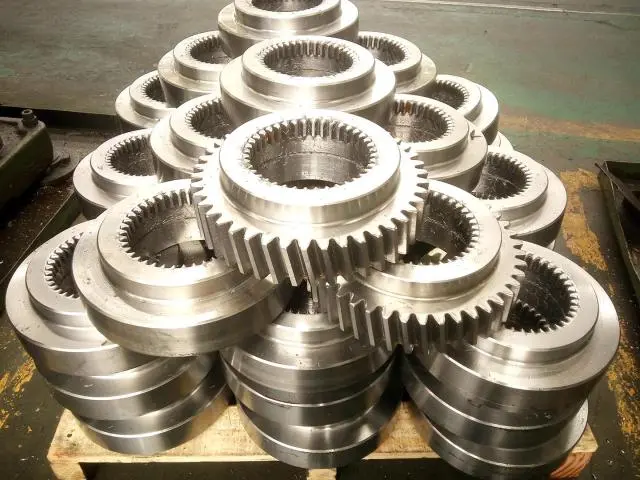
Precision Internal Gears have teeth carved on the inside of a cylinder- or ring-shaped case. This makes a curved tooth design that fits with an outside pinion. Internal gears are different from external gears because they can handle more power while taking up less space. This is why they are essential in planetary gear sets and high-reduction transmission systems. The word "precision" means that the product was made to very tight standards, usually ISO Grade 6 or higher. This makes sure that there is very little slack and that the meshing is very accurate. Because of room limitations in current machinery design, this geometry cuts down on the center distance needed while keeping the load capacity the same.
Core Operating Principles
The internal tooth arrangement makes several contact points at the same time during meshing, spreading the load over more teeth than similar exterior gear pairs. This trait lowers the Hertzian contact stress and slide speed, which directly enhances noise efficiency and wear resistance. Modern production methods like hobbing, Precision Internal Gear grinding, and profile modification make the shape of the involute tooth better, which stops interference and keeps the power transfer smooth. Some heat treatments, like carburizing, make the surface hard (between 58 and 62 HRC) while keeping the core flexible. This balances longevity with shock resistance in uses with changing loads.
Industry Applications and Critical Roles
Precision Internal Gears are used in a wide range of machines and systems, including those in mining and aircraft. They allow backlash below 3 arcminutes in planetary reducers for robotic motors, which is important for precise placement. Mining winches depend on their high load-bearing ability to handle shock loads and run continuously in difficult conditions. For aerospace propulsion systems, lightweight alloys that meet tight weight-to-strength ratios are used. For micron-level positioning precision, machine tool feed systems need the tight tolerances that these gears offer. When buying something, it helps to know which suppliers can meet the strict technical standards that are specific to the purpose.
Key Factors to Consider When Buying Precision Internal Gears
Material Selection and Manufacturing Processes
The choice of material has a big impact on how well and how long something works. High-quality alloy steels like 42CrMo, 20CrMnTi, and SAE4340 have the best tensile strength, wear resistance, and ability to be machined. Advanced suppliers like YIZHI MACHINERY work with 12 different types of steel to match different working situations. These range from standard 45# steel for light loads to 18CrNiMo7 for heavy-duty uses. The tight limits needed for smooth, quiet operation are reached through manufacturing methods that move from cutting and hobbing to precision grinding. To check, here are the main production skills:
- Precision Grinding: After heat treatment, grinding the teeth evens out distortions and gets ISO Grade 6 accuracy, which is necessary for high-speed or low-noise uses.
- Heat Treatment Expertise: The methods of carburizing, quenching-and-tempering, and induction hardening make wear areas harder while keeping the core tough.
- Advanced Machining Centers: CNC gear cutting centers make sure that the tooth shape stays the same from one production run to the next, which is important for interchangeability in assembly lines.
These manufacturing skills have a direct effect on how well the gears work. For example, precise grinding lowers transmission error, and the right heat treatment keeps teeth from prematurely cracking and breaking.
Tolerance Standards and Quality Benchmarks
Quality marks that control pitch precision, profile deviation, and helix error are set by ISO 1328 and DIN 3962 standards. The standard for demanding uses, Grade 6 precision, keeps the total pitch error to a few micrometers. This makes sure that the meshing is smooth and that the transmission ratios are reliable. People who want to buy something should ask for inspection records that show the total overall pitch error, radial runout, and tooth-to-tooth composite deviation. Surface integrity testing, such as a Nitrate etch inspection, finds grinding burns that weaken teeth, and magnetic particle inspection finds cracks below the surface. Checking the effective case depth and surface hardness curves shows that the heat treatment met the requirements, which is directly related to how well the case resists wear and how much weight it can hold in service.
Load Capacity and Maintenance Considerations
Load capacity is based on the area where teeth touch, the qualities of the material, and how the surfaces are treated. Precision Internal Gears work better under heavy loads because they have more teeth in touch with each other and less breaking stress than external gears. To make the right specification, you need to compare the manufacturer's rates for application power, speed, and duty cycle. Higher precise grades require less maintenance because tighter standards cut down on vibration and wear particle production. The module range, from 0.5 to 50, can handle a wide range of load needs. The bigger modules can send more torque. You can change the tooth count, helix angle (5°–45°), and surface hardness (45–62 HRC) to make it work best in your unique situations. This balances the cost at first with the performance over time.
Comparison of Precision Internal Gears and Alternative Gear Types
Advantages Over External Gears
Precision Internal Gears are clearly better in small systems that need high reduction ratios. Their upside-down shape lets planetary configurations reach ratios higher than 10:1 in single steps, which is not possible with external gear trains in the same amount of room. The concave-convex meshing design makes sliding speeds slower than external pairs, which lowers heat production and friction losses. Spreading the load across more tooth contacts at the same time makes shock resistance better, which is useful in mines and heavy machines. However, internal gears are more expensive to make because they need special tools and inspections. This is why they are best used in situations where their performance and space benefits make the extra cost worth it.
Performance Comparison with Planetary and Harmonic Drives
When Precision Internal Gears are used as ring gears in planetary systems, they achieve high torque density and efficiency (usually 94–97% per stage). They last longer and can handle more shock loads than harmonic drives, but they can't match the zero-backlash performance or single-stage ratios of more than 100:1 that harmonic drives can offer. Cycloidal drives are about as small as linear drives, but they are more resistant to shocks and make more shaking. Precision Internal Gears set up in planetary arrangements are the best way to balance weight and dependability for aircraft uses. Compared to harmonic or cycloidal options, which are more fragile, mining equipment benefits from their strong construction. The choice relies on whether accuracy, shock protection, speed ratio, or cost-effectiveness are the most important factors in the application.
How to Choose the Right Supplier for Precision Internal Gears?
Evaluating Quality Certifications and Capabilities
Reliable sources have ISO 9001 certification as a minimum standard for quality management. Top makers also have certifications relevant to their industries, such as AS9100 for aircraft uses. Production should include all in-house steps, from processing materials to final review. Steps that are handled and could affect quality control should not be included. Precision CNC machining centers, automatic grinding equipment, intelligent heat treatment lines, and coordinate measuring tools that make sure measurements are correct are just a few of the many things that YIZHI MACHINERY can do. Ask for site audits or thorough process paperwork that includes records of equipment specs and calibration. When suppliers offer design advice, they change the buying process from a transactional one to a creative one, where they work with you to find the best gear specifications for your needs instead of just meeting orders.
Customization Options and Order Flexibility
For complex apps, customization needs to go beyond what is available in a store. Suppliers who are good at what they do help engineers turn application needs into the best gear specifications, such as custom tooth numbers, changed pressure angles, and special finishes. YIZHI MACHINERY's process includes analyzing customer needs, making design drawings, making prototypes, and making small changes over and over again until the final product meets all practical requirements. Low minimum order numbers are very important for companies that make specialized tools or work on prototypes, and the ability to make just one unit shows how flexible manufacturing can be. Check to see if suppliers are ready to work with non-standard specifications and how well they can use manufacturing data to suggest design changes.
Lead Times and Delivery Considerations
Precision Internal Gears usually have lead times between 35 and 60 days, but this depends on how complicated they are and how much they can be customized. When suppliers have merged production, the delays that come with coordinating with multiple vendors are cut down. The shipping system at YIZHI MACHINERY uses a mix of different types of transportation, such as sea freight for large shipments, air freight for urgent orders, and China-Europe rail for choices that balance cost and speed. Their custom packing, which includes shock-absorbing liners and wooden boxes, keeps damage during shipping to less than 0.1%, which is very important because gears can damage their tooth surfaces. Supply chain management is no longer unclear thanks to real-time tracking systems that send changes from the factory loading to the delivery signature. Look at both the wait times providers give you and how often they've delivered similar orders on time in the past.
Where to Buy Precision Internal Gears: Online Platforms and Local Suppliers
B2B E-Commerce Platforms
Online business-to-business (B2B) markets like Alibaba, ThomasNet, and specialized machinery platforms let you connect with sellers from around the world who offer a range of goods and services at different prices. These sites make it easier to find new suppliers, compare specifications, and talk to them first. But buyers must be careful to make sure that the claimed skills are real by asking for inspection records, material certifications, and customer references. It is still important to order samples before buying in bulk, because actual samples show things about machining quality, surface finish, and measurement accuracy that specs alone can't. Reliable providers are happy to give samples along with full inspection records, which shows that they are confident in the quality of their products. Online tools work well for standard needs, but they might not have the engineering help needed for unique solutions.
Direct Manufacturer Relationships
Direct partnerships with experienced manufacturers like YIZHI MACHINERY eliminate distributor markups, provide engineering expertise for design optimisation, enable faster specification communication, and allow quality verification through site visits. Long-term relationships reduce lead times through buffer stock and support continuous improvement for critical applications.
Negotiating Custom Orders and Wholesale Pricing
Volume commitments secure better pricing, though YIZHI MACHINERY accepts single-unit orders. Effective negotiation requires clear specifications including CAD models, tolerance standards, and material choices. Blanket orders with scheduled releases stabilise pricing and reduce inventory costs. Payment terms affect total cost—longer terms aid cash flow, shorter may yield discounts. Transparent discussions about target pricing enable value engineering without compromising performance for Precision Internal Gear solutions.
Conclusion
To get high-quality Precision Internal Gears, you need to carefully look at the supplier's production skills, quality processes, and ability to respond to your needs. The best partner has high-tech production tools, a wide range of materials, and technical help to turn your application needs into the best gear solutions. If you need transmission parts for industrial gear, mining operations, or aerospace systems, you should look for providers with ISO-grade accuracy that can be checked, open customization, and strong logistics. This will make sure that the parts work reliably for long periods of time. This type of provider is YIZHI MACHINERY, which combines 15 years of production experience with full services from design to delivery, all backed by quality certifications and a global transportation network that helps customers all over North America and beyond.
FAQ
1. What distinguishes precision internal gears from standard grades?
Precision Internal Gears produced to ISO Grade 6 or above have tighter pitch precision, tooth form, and helix deviation restrictions than commercial components. Robotic actuators and machine tool positioning systems benefit from this accuracy's quick reduction in backlash (typically less than 5 arcminutes), transmission error, and operation. Standard gears work well for less demanding applications, whereas precision grades provide better noise performance and positioning accuracy. Precision grinding and stringent inspection are costly, but they're worth it when performance affects product quality or efficiency.
2. How can I verify gear quality from new suppliers?
Request complete inspection records with total cumulative pitch error, radial runout, tooth profile correctness, and surface hardness confirmation. Make that the sample has coordinate-measured full-dimensional inspection data. Third-party inspection services may verify vendor claims before major purchases. Verify steel grades and heat treatment processes using material certifications. Virtual or in-person manufacturing facility audits demonstrate tools and quality control. YIZHI MACHINERY records inspections and allows site visits. This displays their product quality confidence and builds trust with new consumers.
3. Can internal gears be customized for specific applications?
Customization is one of specialist manufacturers' finest features. Change teeth, module ranges, helix angles, and surface treatments to meet power, speed, and space demands. YIZHI MACHINERY engineers provide custom specifications such non-standard pressure angles, noise-reducing profile adjustments, and corrosion-resistant coatings. Single-unit manufacture is feasible for unique needs, and design iteration ensures the optimal performance before mass production. Complete customisation converts off-the-shelf elements into business-specific solutions. Extra engineering improves performance and service life.
Partner With a Trusted Precision Internal Gear Manufacturer
YIZHI MACHINERY offers designed transmission systems that combine ISO-certified production quality with a wide range of customization options. We make Precision Internal Gears using 15 years of experience in the mining, aircraft, and industrial machinery industries. We use advanced CNC machining centers, automated grinding systems, and strict inspection processes to back up our work. Whether you need a single prototype or a lot of them, our streamlined process from design advice to global shipping makes sure that your requirements are met by making reliable, high-performance parts. Our customized packing and multi-modal operations keep damage rates below 0.1% and allow us to control lead times between 35 and 60 days. Contact us at sales@yizmachinery.com to talk about your application needs, get technical sketches, or get detailed quotes on Precision Internal Gear solutions that are made to fit your exact business needs.
References
1. American Gear Manufacturers Association. (2019). AGMA 2001-D04: Fundamental Rating Factors and Calculation Methods for Involute Spur and Helical Gear Teeth. Alexandria, VA: AGMA Publications.
2. Dudley, D. W. (1994). Handbook of Practical Gear Design and Manufacture. Boca Raton, FL: CRC Press.
3. International Organization for Standardization. (2013). ISO 1328-1:2013 Cylindrical Gears – ISO System of Flank Tolerance Classification. Geneva: ISO Standards.
4. Litvin, F. L., & Fuentes, A. (2004). Gear Geometry and Applied Theory (2nd ed.). Cambridge: Cambridge University Press.
5. Radzevich, S. P. (2012). Dudley's Handbook of Practical Gear Design and Manufacture (2nd ed.). Boca Raton, FL: CRC Press.
6. Society of Automotive Engineers. (2015). SAE J1141: Gear Nomenclature, Definition of Terms with Symbols. Warrendale, PA: SAE International Standards.

USER EVALUATE
Here is the customer's evaluation of us