


Worm gear reducer or bevel gear reducer? A complete guide to choosing
When the success of your production line rests on it, choosing between a worm gear reducer and a Bevel Gear Reducer can feel overwhelming. The best choice relies on the needs of your application, such as how efficient it needs to be, how much space it has, how much torque it needs, and how much upkeep it needs. Bevel Gear Reducers work really well in right-angle power transmission tasks that need to be high-efficiency and save a lot of energy. These tasks are common in aircraft, mining, and industrial machines. Procurement workers can make confident, cost-effective choices that support organizational goals when they understand the technical principles, performance differences, and use scenarios.
Understanding Worm Gear Reducers and Bevel Gear Reducers
The Mechanical Foundation of Worm Gear Reducers
Worm gear reducers work with a simple but effective system: a threaded worm shaft connects with a worm wheel, making a large reduction ratio in a small space. This sliding contact design makes action smooth and quiet, making it perfect for lifts, packaging machines, and conveyors where noise reduction is important. Back-driving is not possible because of the self-locking feature, which makes lifting safer. To keep friction and wear under control, materials usually have brass worm wheels matched with hardened steel worms. But this sliding action makes a lot of heat and lowers mechanical efficiency to about 60–80%. This means that long-term uses that use the machine more often will cost more to run.
How Bevel Gear Reducers Achieve Angular Transmission?
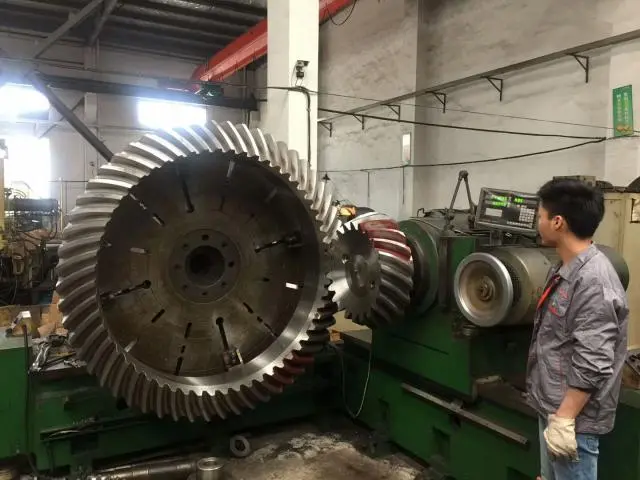
Bevel Gear Reducers use conical gear shapes to send rotating power between shafts that cross each other, usually at 90-degree angles. The mechanical efficiency of these units is between 95 and 98%, which is higher than that of worm configurations because they use rolling contact instead of sliding friction. Continuous tooth contact in the spiral bevel design lets it handle higher shock loads and power demands while running more quietly than straight bevel options. Carburizing heat treatment makes the surfaces of premium units made from alloy steels like 20CrMnTi very hard (58–62 HRC), which makes them very resistant to wear. Because they are both efficient and long-lasting, they are essential in mining equipment, auto turning systems, and machine tool spindle drives that need to be reliable in difficult conditions.
Material Selection and Performance Implications
The materials used directly affect how long a reducer lasts and how well it works. Bronze alloys are often used for the wheel part of worm gear systems so that the steel worm doesn't rub against them too much. However, this softer material goes out faster when big loads are put on it. High-quality alloy steels, such as 40CrNiMo, SAE4340, and AISI4140, are used to make Bevel Gear Reducer units that can hold more weight and last longer. Modern heat treatment methods, like cooling and tempering, make the core tougher while keeping the tooth surfaces hard. When manufacturers use precise grinding methods and Gleason gear profile standards, they can reach ISO 8–9 grade accuracy, which guarantees smooth meshing and a longer service life. When choosing tools for tough aircraft or heavy industrial uses where downtime costs thousands of dollars an hour, these technical specs matter.
Comparative Analysis: Worm Gear Reducer vs Bevel Gear Reducer
Efficiency and Energy Consumption
The differences in how efficient these types of reducers are have a big effect on working costs, especially in places where multiple units are running all the time. 20–40% of the power that goes into worm gear reducers is lost to friction, which turns it into waste heat instead of useful work. Because of this inefficiency, bigger motors are needed and more energy is used, which is an important thing to think about for buying strategies that focus on sustainability. Bevel Gear Reducers keep 95–98% of the power that goes into them by minimizing energy loss through rolling contact physics. The higher efficiency of a reducer can save enough energy over its 10 to 15-year service life to cover its original cost. This is especially true in high-duty uses like continuous mining operations or systems for moving materials.
Torque Capacity and Load Handling
When looking at their ability to hold loads, Bevel Gear Reducers clearly shine in situations with a lot of force. In spiral bevel designs, the multiple-tooth contact pattern spreads forces across several teeth at the same time. This lowers stress concentration and stops teeth from breaking too soon. Because of this, they can be used on crushers, rolling mills, and other big machinery that is likely to be hit by something. Worm gear systems are great at reducing ratios to 60:1 or higher in a single stage, but their sliding contact limits the power they can produce and makes too much heat when big loads are applied for a long time. Engineers have to weigh these features against the needs of the application. For example, worm units work well for pointing systems that only need to do light work sometimes, while bevel setups work better for heavy-duty industrial processes that run all the time.
Noise Levels and Operational Considerations
Spiral bevel reducers operate below 70-75 dB(A) with smooth low-frequency sounds at normal speeds. Worm units are quiet at low speeds but produce grinding noises as speeds rise, especially with oil degradation. Worm systems require frequent oil changes and temperature checks due to friction; bevel units need less maintenance. Bevel gears enable back-driving and regenerative braking—impossible with self-locking worm designs. These operational factors affect long-term upkeep planning and total cost of ownership calculations.
Choosing the Right Gear Reducer: Criteria and Use Cases
Performance-Driven Selection Framework
To choose the best reducer, you need to carefully look at both the technical needs and the operating situations. We suggest that you use these main criteria:
- Efficiency Requirements: Bevel Gear Reducer technology is useful for situations that need to save energy and control temperature. High-efficiency designs should be the first choice for industrial sites that want to get green approvals or lower their carbon footprints.
- Spatial Constraints: Worm reducers are small options for situations where space limits are more important than efficiency. Bevel Gear Reducer units can be mounted in a variety of ways and can transmit angles spatially and angularly. They can be used in complicated machine layouts where shaft angles change.
- Load Characteristics: Continuous high-torque applications with shock loads are common in mining and industrial equipment. These applications need Bevel Gear Reducer systems to be able to handle a lot of weight. Worm reducers are easy to use and can be used for intermittent-duty setting or small industrial equipment.
- Reversibility Needs: Bevel Gear Reducer designs are needed for back-driving applications, like regenerative conveyor systems or car turning, because worm shapes lock themselves.
Industry-Specific Application Scenarios
Aerospace uses ultra-low backlash (below 3 arc-minutes) compact Bevel Gear Reducers for flight control and landing gear—failure risks lives. Mining operations require taconite seals and labyrinth systems keeping contaminants out; bevel reducers handle rock crusher demands in compact mobile rig footprints. Construction equipment benefits from balanced 95%+ transfer efficiency—distribution center cross-belt sorters handle rapid start-stop cycles without heat failure, essential for high-throughput shipping operations.
Customization and Supplier Capabilities
Leading providers enable full customization—tooth counts, module ranges 0.5-50, pressure angles 14.5° or 20°. Single-piece availability supports prototyping without high MOQs. Advanced processing (hobbing, milling, grinding) with precise heat treatment creates application-specific solutions catalog products can't match. Material choices range from 45# steel for general use to 20CrNi2Mo for heavy-duty conditions. Customization aligns performance exactly with operational requirements.
Maintenance and Troubleshooting of Bevel and Worm Gear Reducers
Preventive Maintenance Protocols
To make reducers last longer, they need to be maintained in a way that is specific to their technology. These regular steps are good for bevel gear units:
- Lubrication Management: Synthetic gear oils with the right viscosity grades keep the protection film thickness between the teeth. Oil study every 2,000 to 3,000 hours of use finds contamination or wear and tear before it causes damage. When you lubricate gears properly, you stop the pitting stress that wears them down.
- Alignment Verification: Misalignment leads to uneven load distribution and early failure of bearings. Laser alignment tools make sure that the concentricity of the shafts is within the manufacturer's requirements, which are usually 0.05 mm or better. Using prussian blue substance and looking at bearing patterns under light pressure for the tooth contact pattern test shows how well the alignment is done. On the side, the right shapes should cover 50 to 60% of the tooth's surface.
- Thermal Monitoring: Even though Bevel Gear Reducers don't make as much heat as worm units, keeping an eye on the working temperatures can help find problems before they get too bad. Using thermal imaging while the machine is running can find hot spots that mean the bearings or grease isn't working right, preventing a catastrophic failure.
Common Issues and Troubleshooting Steps
Increased backlash manifests through unusual noises or vibrations—regular measurement tracks decline trends; replacement needed when exceeding manufacturer limits. Overheating typically results from insufficient lubrication, overload, or inadequate airflow—check oil levels, verify load ratings, increase cooling air circulation. Low-frequency rolling sounds indicate bearing failure; spectral analysis identifies damaged bearings before complete failure damages gears and housings. Early intervention prevents costly downtime and component damage.
Installation Best Practices
Precise setup requires trained personnel using calibrated torque wrenches, dial indicators for alignment verification, and clean assembly procedures. Professional installation services lower risk and validate warranty coverage. Modern Bevel Gear Reducers offer compact sizes and multiple mounting options for easy integration. Proper installation prevents early failure and costly downtime—skimping on setup undermines equipment reliability and performance.
Market Overview and Procurement Insights
Leading Manufacturers and Quality Benchmarks
There are well-known names in the global gear reducer market that are known for their excellent engineering and reliable products. Siemens, Nord, and SEW Eurodrive have been setting quality standards for decades by constantly improving technology and strict quality control. Modern CNC gear machining centers, fully automatic gear grinding equipment, and smart heat treatment production lines are used by these companies to make sure that the accuracy is always the same. Most of their goods meet or go beyond ISO standards. Using modern Gleason or Klingelnberg grinding technologies, they can make gears that are accurate to DIN 5 or DIN 6 grades.
For projects that need non-standard specs, specialized makers that focus on custom solutions can give you a competitive edge. Suppliers that can do everything in-house, from engineering consulting to production, quality testing, and global logistics, make the buying process easier and less complicated. Companies that have long-term relationships with big mechanical engineering firms have shown that they are reliable and skilled, which lowers the risk of hiring.
Pricing Dynamics and Value Optimization
Prices for Bevel Gear Reducers vary a lot depending on their features, materials, level of accuracy, and level of customization. Standard stock units for small industrial sizes start at a few hundred dollars. Large special high-precision reducers for aircraft uses can cost over tens of thousands of dollars. Bulk purchases often come with savings of 10–20%, which makes combined buying strategies a good financial choice for businesses with more than one location.
The terms of the warranty have a big effect on the total cost of ownership. Premium makers that offer full one-year warranties with fast response times give customers peace of mind, which makes the slightly higher starting costs worth it. Under normal working conditions, the guarantee should cover flaws in the way the product was made, failed materials, and early wear. When buying something, it's often cheaper to negotiate for longer guarantee terms or preventative maintenance packages than to sign a service contract after the fact.
Global Logistics and Installation Support
Custom packaging with shock-absorbing cushioning and wooden pallets keeps shipping damage below 0.1%. Multiple transport modes (sea, air, rail) provide schedule flexibility; real-time tracking enables just-in-time inventory integration. Installation support ensures correct setup, operational verification, and warranty activation. Comprehensive logistics and installation assistance lowers procurement risk, accelerates project timelines, and supports tight production launch schedules for new equipment integration.
Conclusion
Choosing between worm and Bevel Gear Reducers comes down to the unique performance needs of the product, the operational setting, and the long-term cost. For demanding industrial, mining, and aerospace uses where energy use and dependability directly affect profits, bevel gear technology offers better efficiency, load capacity, and longevity. The bigger original investment usually pays off because the equipment lasts longer, uses less energy, and needs less maintenance, so it makes the investment worthwhile. This guide explains the technical differences, maintenance needs, and buying strategies so that engineering and purchasing teams can make smart choices that meet both current project needs and long-term operations goals.
FAQ
1. Which reducer type offers better energy efficiency?
Bevel Gear Reducers are much more efficient than worm gear units, which are only 60–80% efficient because of sliding friction. They achieve 95–98% mechanical efficiency through rolling contact mechanics. This difference in efficiency of 15 to 35 percent directly means lower energy costs, which is very important for uses that run continuously for thousands of hours a year. The less heat that is made also means that less cooling is needed, and the oil lasts longer.
2. How do load capacities compare between these technologies?
Bevel Gear Reducer designs can handle higher torque loads and shock forces because they have multiple tooth contact patterns that spread stress over many teeth at the same time. They are perfect for big machines like crushers and mills because of this. Worm gear systems are great for high reduction ratios in small packages, but they can't handle as much force because they only have one tooth that slides against another tooth. Material choice and heat treatment have a big effect on load rates. For example, properly hardened Bevel Gear Reducers can handle harsh conditions that would wear down softer worm wheel bronzes very quickly.
3. What factors determine correct reducer sizing?
To get the right size, you need to look at the input power, the needed output torque, the duty cycle, the speed reduction ratio, and the service factors, all while taking into account changes in the load. Extreme temperatures, amounts of pollution, and vibrations in the application area can change the material and sealing requirements. Talking to experienced providers during the selection process makes sure that all factors are taken into account correctly, avoiding undersizing that leads to early failure or oversizing that wastes money and installation space.
Partner With YIZHI MACHINERY for Precision Bevel Gear Reducer Solutions
YIZHI MACHINERY has been making custom gears for 15 years and provides precision-engineered solutions to the mining, aircraft, and industrial machinery industries. Our Bevel Gear Reducers are made from high-quality alloy steels like 20CrMnTi and 40CrNiMo. They go through strict heat treatment steps to reach a surface hardness of 58 to 62 HRC, which makes them very durable. Advanced CNC machining centers and automatic grinding tools help us keep quality standards that are in line with ISO standards. Gleason gear profiles ensure ISO 8–9 grade precision.
One thing that makes us stand out as a reliable Bevel Gear Reducer seller is that we can customize everything, from single prototypes to mass production, and we don't have any minimum order amounts. Our engineering team offers design advice and technical help before the sale, synchronized production updates while the product is being made, and a one-year guarantee with quick response after the sale. Customized packing with guarantees against harm, multi-channel logistics with real-time tracking, and adjustable delivery plans of 35 to 60 days all work together to help you meet your project deadlines.
Our team creates custom solutions that balance performance, cost-effectiveness, and dependability, whether you're upgrading old equipment or creating new machines that need right-angle power transfer. Get in touch with our experts at sales@yizmachinery.com to talk about your unique needs and find out how our precision Bevel Gear Reducers can help you run your business more efficiently.
References
1. Dudley, D.W. (1994). Handbook of Practical Gear Design and Manufacture. CRC Press, Boca Raton, Florida.
2. American Gear Manufacturers Association (2015). AGMA 2005-D03: Design Manual for Bevel Gears. Alexandria, Virginia.
3. Radzevich, S.P. (2016). Dudley's Handbook of Practical Gear Design and Manufacture (Third Edition). CRC Press, Boca Raton, Florida.
4. International Organization for Standardization (2013). ISO 1328-1:2013 Cylindrical Gears — ISO System of Flank Tolerance Classification. Geneva, Switzerland.
5. Stadtfeld, H.J. (2014). Gleason Bevel Gear Technology: Manufacturing, Inspection and Optimization. The Gleason Works, Rochester, New York.
6. Machinery's Handbook (2020). Gears and Gearing (31st Edition). Industrial Press, New York, New York.

USER EVALUATE
Here is the customer's evaluation of us