


How to Choose a Reliable Inner Ring Gear Manufacturer for Custom Solutions
To find a reliable maker for custom-engineered circular gears, you need to look closely at their technical skills, quality systems, and service promises. An Inner Ring Gear is the main housing part of planetary gear systems. Teeth machined on the inside circle mesh with multiple planet gears to provide a small, high-torque transmission. To choose the right supplier, you need to look at their precise manufacturing methods, knowledge of the materials, ability to make changes, and years of experience in the field. Reliable partners use cutting edge machining techniques and strict quality control to make gears with ISO 6 Grade perfection or better. These gears work perfectly in tough situations in mining equipment, military systems, and industrial machinery.
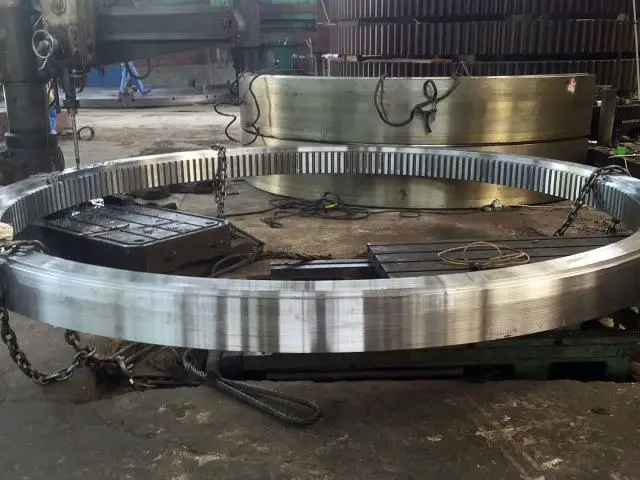
Understanding Inner Ring Gears and Their Customization Needs
Due to their concave tooth shapes and coaxial form, internal gearing systems are very different from exterior spur or helical gears. These parts allow planetary gear reducers to accomplish significant speed reduction and torque multiplication in incredibly small spaces, which is something that standard parallel-shaft gearboxes can't do. The system can handle higher shock loads while reducing tooth bending stress compared to single-mesh designs because the load is spread across multiple planet gears that engage the circular component at the same time.
Core Functions and Operational Mechanics
An annular gear has teeth cut into the inside of a hollow ring that meshes with outside pinions to move two rotating shafts. Both parts rotate in the same direction because the teeth face inward, and the involute curves make sure that the power transfer is smooth and continuous. The design provides a higher contact ratio than external gear systems, which greatly lowers the risk of shaking, noise, and separation. These parts are great for high-torque uses like winches, machine tool feed mechanisms, and lifting equipment transmission systems because they are more stable and can hold more weight.
Material Selection and Engineering Specifications
Customization starts with choosing materials that meet the needs of the business. Premium manufacturers use low-carbon alloy steels like 20CrMnTi, 42CrMo, SAE 8620, and AISI 8620. These steels are heated in special ways, usually by carburizing or induction hardening, to make the surface hard (58–62 HRC) while keeping the core soft (30–45 HRC) so it can absorb impact energy. Module sizes range from 0.5 to 50, and helix angles can be changed from 5° to 45° to meet individual transmission needs. Precision grades that follow ISO 1328 guidelines make sure that the dimensions are correct, which is very important for planetary systems.
Industry-Specific Application Requirements
Performance limits are different in each area. Materials that are strong for their weight and don't rust are needed for aerospace uses that need to be light. Parts of mining tools need to be strong enough to handle rough conditions and high shock loads. Industrial equipment usually focuses on small forms that make as little noise as possible. Knowing these sector-specific needs helps procurement professionals tell makers exactly what they need and check to see if suppliers have experience in the businesses they're trying to reach.
Core Criteria to Evaluate When Selecting an Inner Ring Gear Manufacturer
To find a reliable production partner, you need to look at many aspects of their manufacturing skills and organizational growth. Long-term partnerships with suppliers are built on quality certifications, a strong technological framework, and the ability to make changes as needed.
Quality Assurance and Certification Standards
ISO certification gives people basic trust in tools for process control and paperwork. Manufacturers must show that they follow ISO 9001 guidelines and have quality protocols for inner ring gears that include using Coordinate Measuring Machines for dimensional inspection, specialized gear testers for tooth profile analysis, and non-destructive testing methods like Magnetic Particle Inspection to find micro-cracks. For Elastohydrodynamic Lubrication to work properly in high-speed situations, surface roughness readings for inner ring gears must show Ra values below 0.8 micrometres. Suppliers you can trust give you test results that show the total radial composite deviation and tooth-to-tooth composite deviation for each batch of inner ring gears.
Advanced Manufacturing Technologies and Equipment
The ability to produce goods is what sets good sellers apart from great partners. Leading companies use high-precision CNC gear machining centers, fully automatic gear grinding tools, and smart production lines for heat treatment. These facilities allow complex processes like hobbing, milling, cutting, and grinding, which are then followed by induction hardening, cooling, and carburizing. For ISO 6 Grade accuracy and better surface finishing, the ability to grind teeth is especially important. Companies that have a wide range of checking tools, like gear measurement centers and CMM systems, make sure that the dimensions are correct throughout the whole production process.
Customization Flexibility and Batch Volume Handling
For custom solutions to work, providers must be able to meet a wide range of needs without setting unreasonable minimum order amounts. During the product creation process, it's important to be able to make prototypes of a single item or small amounts. It's important for manufacturers to show that they know how to deal with unique tooth numbers, module ranges, and helix angles. Flexibility includes changing the materials used, the way the surface is treated, and the sizes so that they fit the needs of the business. Suppliers who give design advice services add a lot of value by suggesting the best solutions based on the unique loading conditions and space constraints of the application for the Inner Ring Gear.
Comparing Inner Ring Gear Types and Manufacturing Solutions
Knowing the differences between annular gear types and how they are made helps you make smart purchasing choices that are in line with your business goals.
Internal Versus External Gear Configurations
External gears have teeth on the outside and rotate in different directions when meshing. Internal gearing systems, on the other hand, rotate in the same direction and protect themselves. The internal mesh better guards contact areas from outside dirt and grime than open exterior gearing, which increases the gear's useful life in harsh conditions. When compared to regular gear trains, planetary setups with annular components have higher torque density and lower system inertia. This makes them better for uses that value efficiency and simplicity.
Material Trade-Offs: Metal Versus Alternative Materials
Plastic gears are better for low-noise settings and places where rusting doesn't happen, but metal gears can handle more weight, stay the same size even when heated and cooled, and last longer before they wear out. High-quality alloy steels like 40CrNiMo, SAE 4340, and 18CrNiMo7 keep their strength well and don't bend easily, which is important for heavy-duty industry and mining equipment. Surface hardness ranges of 45–50 HRC are good for modest loading, while 58–62 HRC ranges are better for aircraft and high-performance uses that need to handle extreme stress.
Evaluating Supplier Product Range and Specialization
When you look through the brochures of well-known makers, you can see how many things they can do and how specialized they are. Module sizes from 0.5 to 50 show that suppliers are flexible enough to work with both micro-precision tools and heavy machinery parts. You can change the helix angle from 5° to 45°, which shows that the design is flexible enough to reduce noise and make the load spread work best. Companies that do both small special orders and large production runs have scalable manufacturing systems that are good for long-term partnerships that cover everything from making prototypes to mass production.
Procurement Considerations for B2B Clients
Strategic buying includes more than just technical specs. It also includes business terms, transportation options, and support structures after the sale.
Lead Times and Production Scheduling
Knowing realistic production times for inner ring gears keeps projects from running late and makes it easier to make accurate schedules. Custom inner ring gears usually take 35 to 60 days to deliver from the time the order is confirmed, based on how complicated they are, where the materials come from, and how they need to be heated. Manufacturers who use standard processes for everything from communicating requirements to making design plans to machining parts for production, inspecting quality, packing, and shipping goods have more stable delivery dates for inner ring gears. Clear updates on output that are in sync with customer systems allow for strategic planning and control of inventory.
Pricing Models and Total Cost of Ownership
Clear price systems help you stick to your budget and compare vendors. Aside from unit prices, procurement workers should also look at the total cost of ownership, which includes things like tooling fees, inspection paperwork, investments in packaging, and transportation costs. For repeat sales, volume discounts become useful, and longer production processes may be balanced out by more flexible payment terms. Low minimum order amounts are helpful for prototyping, but sellers who can make a single item show a lot of freedom that is useful during development iterations.
Logistics Infrastructure and Global Reach
For foreign purchasing, it's important to have reliable shipping networks. Customized packaging with shock-absorbing bags and wooden boxes from manufacturers protects delicate tooth surfaces during shipping, lowering the damage rate to less than 0.1%. Multi-channel transport choices, such as sea freight, air freight, and freight trains running between China and Europe, make it possible to match capacity to order volumes and arrival times with great flexibility. Real-time tracking systems that show visual changes from the time a shipment leaves the plant until it arrives at the customer's door improve transparency and allow for early problem resolution.
Warranty Coverage and Technical Support
Comprehensive guarantee programs, which usually last for one year, show that the maker trusts the product to last and lower operating risk. Long-term happiness is greatly increased by technical support teams that are quick to respond and can handle installation issues, compatibility issues, and speed improvement. Before the sale, services like design advice and expert advisory support help make sure that the specifications are correct. After the sale, help makes sure that the product works well with other systems.
Making the Final Decision: A Step-by-Step Approach
Structured evaluation methods make the selection process easier and boost trust in seller relationships.
Define Precise Custom Solution Requirements
First, write down all the exact technical details for the inner ring gear, such as the module, tooth count, helix angle, material requirements, surface hardness needs, and precision grade standards. Make it clear what the application conditions are for the inner ring gear, like the working temperatures, load profiles, speed ranges, and the surroundings the machine will be exposed to. Set clear business goals for wait times, budgets, minimum order amounts, and support services that are needed for inner ring gear production. A clear description of the requirements makes it possible to compare vendors accurately and gets rid of any confusion during the quote process.
Screen Suppliers Against Core Performance Metrics
Check to see if potential makers have quality certifications, advanced production equipment, experience with customization, a history of on-time delivery, and customer references. Ask for tours or virtual reviews of the building to get a feel for the work setting and quality control systems. Look over case studies that show related industry knowledge, preferably in the mining, aerospace, or industrial machinery sectors. Suppliers who have been in business for 15 years have a lot of knowledge that can help you solve difficult design problems.
Verify Credentials Through Sample Evaluations
Request samples of parts that will be made according to your specs so that you can check the sizes and look at the materials. Do separate exams to check important factors like surface hardness, total radial composite deviation, and measurement over pins. Do metallurgy tests to make sure the right heat treatment and case depth characteristics were used. Samples give real proof of a company's skills beyond what they say on the marketing materials and help people make smart choices.
Establish Collaborative Partnership Frameworks
For long-term relationships to work, there must be clear lines of communication, deals that protect intellectual property, and business rules that are good for both parties. Set up clear rules for asking for engineering changes, dealing with quality problems, and promoting ongoing growth. Talk about scalability so that you can handle future rises in sales or product lines. Suppliers will understand your business needs better and offer ways to make things better as you work together, which will give you more benefits.
Conclusion
To find a trustworthy inner ring gear maker, you need to look at their technical skills, quality systems, ability to make changes, and service promises. Give more weight to suppliers who can show that they have ISO-compliant quality assurance, modern production technologies, and experience working in the field you want to enter. Check out their knowledge of the materials for inner ring gears, their ability to grind them precisely, and their ability to handle batches in a variety of ways, from single samples to large quantities. Think about the total cost of ownership for inner ring gears, which includes shipping infrastructure, warranty coverage, and how quickly expert support can help you. Structured seller screening, including credential checks, sample evaluations, and reference verification, lowers procurement risks and builds partnerships that support long-term operating goals in mining, aerospace, and industrial machinery.
FAQ
1. What materials deliver optimal performance for heavy-duty applications?
Low-carbon alloy steels like 20CrMnTi, 42CrMo, SAE 8620, and AISI 4140 have great mixes of toughness and strength on the outside. These materials get a surface hardness of 58–62 HRC after being carburized or induction hardening. They still have ductile cores that can handle shock loads, which makes them perfect for mining equipment and industrial gear that is under a lot of stress.
2. How long does custom manufacturing typically require?
Custom circular gears usually take 35 to 60 days to make, but this depends on how complicated the design is, how long it takes to get the materials, and how they need to be heated. Manufacturers with uniform processes and enough capacity may be able to speed up delivery for urgent projects, but quality control may not be as thorough if production is rushed.
3. Which factors most significantly influence pricing?
Costs vary depending on the material chosen, the exact grade needed, the batch size, and the level of personalization. Unit costs go up when materials have more alloy content, standards are tighter and need a lot of grinding, orders are small and need special tools to be set up, and heat processes are done in a certain way. Long-term relationships often lead to big savings and faster amortization of tools over time through repeat sales.
Partner With YIZHI MACHINERY for Precision-Engineered Annular Gear Solutions
YIZHI MACHINERY has been making custom gears for 15 years, providing ISO-compliant precise parts to the mining, aircraft, and industrial machinery industries. Our high-tech CNC lathes and automatic grinding systems make circular gears that meet ISO 6 Grade standards in module ranges from 0.5 to 50. You can choose the exact tooth counts and helix angles that you need. We buy high-quality materials like 20CrMnTi, 42CrMo, and SAE 8620. These are put through complex heat treatment processes that make the surface hardness 58–62 HRC. Full logistics support, including custom packing, multiple shipping choices, and real-time tracking, makes sure that the package arrives undamaged within 35 to 60 days. Our one-year guarantee and helpful technical support team give you peace of mind throughout the lifecycle of your product. Contact us about your specific needs by emailing sales@yizmachinery.com. You can also ask for full technical catalogs or get a price from a reliable Inner Ring Gear manufacturer.
References
1. American Gear Manufacturers Association. (2019). AGMA 2015-1-A01: Accuracy Classification System - Tangential Measurements for Cylindrical Gears. Alexandria, VA: AGMA Publications.
2. Budynas, R. G., & Nisbett, J. K. (2020). Shigley's Mechanical Engineering Design (11th ed.). New York, NY: McGraw-Hill Education.
3. Davis, J. R. (Ed.). (2005). Gear Materials, Properties, and Manufacture. Materials Park, OH: ASM International.
4. International Organization for Standardization. (2013). ISO 1328-1:2013 Cylindrical Gears - ISO System of Flank Tolerance Classification. Geneva, Switzerland: ISO Publications.
5. Radzevich, S. P. (2018). Dudley's Handbook of Practical Gear Design and Manufacture (3rd ed.). Boca Raton, FL: CRC Press.
6. Townsend, D. P. (1991). Dudley's Gear Handbook: The Design, Manufacture, and Application of Gears (2nd ed.). New York, NY: McGraw-Hill Professional.

USER EVALUATE
Here is the customer's evaluation of us