


Gear Cutting Methods, Accuracy, and Uses
Gear Teeth Cutting is an important part of making precise power transmissions. It uses special subtractive methods to make exact involute tooth shapes on cylinder or cone-shaped blocks. Unlike rough methods of shaping like casting, Gear Teeth Cutting provides the micro-geometry accuracy needed to lower transmission error, improve noise, vibration, and roughness, and increase load-carrying capacity in tough industrial settings. This precise machining solves important problems like pitch errors that lead to erratic motion transfer, surface flaws that produce unwanted noise, and uneven load distribution that causes parts to break down too soon.
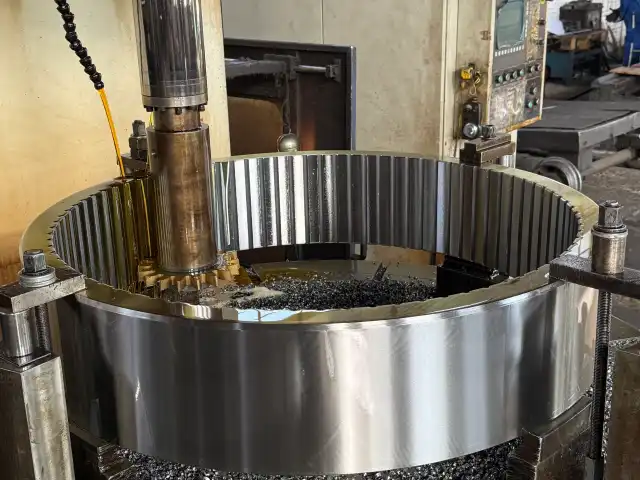
Understanding Gear Cutting Methods
Choosing the right cutting strategy has a coordinate impact on how rapidly and precisely parts are made and how solid they are over time. Each strategy has its possess benefits that make it superior for certain sorts of making.
Hobbing: The Workhorse of High-Volume Production
Because it keeps making gears, hobbing is the most common way to make outside gears. As it moves over the equip clear, the helix cutting device turns, making numerous tooth regions at the same time. This strategy is incredible for making goad and helical gears with modules that run from 0.5mm to 50mm. This makes it culminate for mechanical clutches and transmissions for cars. The exactness of present day CNC hob machines is ISO 5–6 review, and they can keep up astonishing throughput rates. The prepare works reliably with distinctive materials, such as 42CrMo, AISI4140, and 20CrMnTi. Hobbing is extraordinary for mass generation since the setup time is spread out over numerous parts, which brings down the fetched per unit by a expansive amount.
Shaping: Precision for Complex Geometries
A revolving cutter is used for gear shape to make it look like a real gear meshing. For internal gears, cluster gears, and parts with shoulder limits where hobbing tools can't get around the object, this intermittent cutting method is a must. Shaping tools make exact tooth profiles by rotating the cutter and blank at the same time. Pressure angles between 14.5° and 20° can be handled by this method. These angles are common in artificial joints and systems that transmit precise instruments. Even though it takes longer than hobbing, shaping is the most accurate way to make teeth for specific tasks that need custom shapes through specialized Gear Teeth Cutting.
Milling: Flexibility for Prototyping and Low Volumes
Shaped cutters that coordinate the perfect tooth space measurement are utilized in frame processing. Since each tooth spot needs to be machined independently, this strategy is exceptionally adaptable but takes a parcel of work. Processing is great for making models, settling things, and making little clumps of things when you do not require to spend a parcel of cash on devices. The handle works well with huge modules, like those found in mining gear and overwhelming industry adapt. Be that as it may, processing more often than not doesn't create as exact comes about as creating strategies; it's difficult to get ISO 7-8 grades without extra wrapping up steps.
Grinding: Ultimate Precision for Hardened Components
Gear crushing takes absent fabric from parts that have been warmed and settled any imperfections that happened amid the cooling and hardening or carburizing forms. This wrapping up step meets the necessities for surface hardness of 58–62 HRC whereas keeping the level of exactness at ISO 5–6. Pounding is critical for engines in airplanes and wheels in machine apparatuses where transmission mistake needs to be kept underneath 5 arc-seconds. The handle makes surfaces with Ra values between 0.2 and 0.4µm, which incredibly brings down the chance of grinding and micropitting. Profile crushing and creating pounding can work with distinctive adapt shapes and give the highest level of precision required for critical control exchange tasks.Which of these ways to utilize depends on the sum of work to be done, the level of precision required, the shape of the portion, and the properties of the fabric. When buying parts or contributing to mechanical devices, acquirement supervisors who have to adjust cost-effectiveness with quality benchmarks ought to be mindful of these trade-offs.
Achieving Accuracy in Gear Teeth Cutting
For precision production to work, many factors that affect the accuracy of measurements and the stability of the surface must be carefully monitored and controlled. Ways to get accurate Gear Teeth Cutting require rigorous control over multiple variables that influence dimensional conformity and surface integrity.
Critical Factors Influencing Cutting Precision
Accurate Equip Teeth Cutting requires high-quality cutting apparatuses, steady machining parameters, and exact machine calibration. Apparatuses made from carbide, ceramic, or high-speed steel keep up sharp cutting edges beneath requesting conditions, but standard assessment is vital to avoid profile mistakes caused by wear. Cutting speed, bolster rate, and cutting profundity must coordinate the fabric properties of steels like SAE4340 or 40CrNiMo. CNC equip cutting centers moreover require schedule calibration of axle runout, hub arrangement, and table situating to keep up dimensional consistency and maintain a strategic distance from pitch or profile inaccuracies.
Addressing Common Manufacturing Defects
Manufacturing abandons in Equip Teeth Cutting diminish equip execution, increment clamor, and abbreviate benefit life if not redressed rapidly. Burr arrangement along tooth edges frequently comes about from inappropriate cutting ways or insufficient device passage and exit conditions. Profile deviation happens when the genuine tooth shape contrasts from the perfect involute geometry due to machine avoidance, inaccurate tooling, or intemperate cutting strengths. Surface unpleasantness too influences stack conveyance and wear resistance. Pounding and sharpening forms make strides surface quality, whereas carefully chosen combinations offer assistance keep up dimensional steadiness amid machining and warm treatment operations.
Quality Control and Inspection Protocols
Comprehensive inspection systems are essential for maintaining Gear Teeth Cutting quality and production consistency. Coordinate measuring machines and specialized gear measuring centers analyze profile accuracy, pitch uniformity, lead angle, and surface finish according to ISO standards. Magnetic particle inspection identifies cracks beneath the surface that may weaken structural integrity under heavy loads. Rolling contact tests simulate real meshing conditions to evaluate load distribution across tooth faces. Transmission error testing measures motion irregularities that can generate vibration and noise. These combined inspection procedures reduce defects, improve reliability, and strengthen long-term product performance.
Applications and Uses of Gear Teeth Cutting
Precision gear making serves many different businesses, and each one has its own performance needs that affect the choice of materials, accuracy standards, and production methods.
Industrial Machinery: Reliability Under Continuous Operation
Industrial machinery relies on durable Gear Teeth Cutting to support continuous operation under heavy power transmission loads. Equipment such as crushers, conveyor drives, and rolling mills commonly use gears manufactured from 45# steel or 42CrMo with modules ranging from 6 mm to 25 mm. Hobbing followed by profile grinding produces gears capable of transmitting large amounts of power while maintaining long-term operational stability. Surface treatments such as blackening improve corrosion resistance in difficult environments. Production flexibility is important because manufacturers often handle both customized low-volume orders and large-scale gearbox production requirements.
Mining: Durability in Extreme Conditions
Mining applications require Gear Teeth Cutting solutions capable of surviving shock loads, abrasive contamination, and severe operating temperatures. Materials such as SAE4340 and AISI8620 are commonly selected because they provide high toughness and wear resistance after heat treatment. Forging, hobbing, and induction hardening processes create strong gear surfaces while maintaining ductile cores that resist impact damage. Heavy-duty mining gears often use modules larger than 20 mm, requiring powerful machining equipment for efficient material removal. Quality control focuses heavily on crack detection, structural integrity, and long-term durability under demanding extraction and processing conditions.
Aerospace: Zero-Tolerance Performance Requirements
Aerospace systems demand Gear Teeth Cutting with extremely high precision, reliability, and material quality. Flight control systems and auxiliary power units often use carburized materials such as 20CrNiMo and SAE4320 with surface hardness between 58 and 62 HRC. Tooth geometry must maintain ISO 5 accuracy across changing operating temperatures while minimizing transmission error and vibration. Complete material traceability and strict inspection standards are required throughout production. Small production quantities support prototype development and specialized aerospace applications, where even minor dimensional errors can create serious safety and operational risks during flight conditions.
Robotic Systems: Precision Enabling Advanced Automation
Modern robotic systems rely on high-precision Gear Teeth Cutting to achieve accurate positioning and smooth motion control. Industrial robots and collaborative automation equipment require compact planetary and harmonic drive gears with extremely low backlash to maintain arc-second positioning accuracy. Modules may be as small as 0.5 mm, requiring advanced profile grinding and precision assembly techniques. As automation expands across manufacturing industries, demand for miniature high-accuracy gear systems continues increasing rapidly. Suppliers offering customization, tight tolerances, and advanced machining capabilities gain competitive advantages in the growing robotics and automation market.
Choosing Gear Teeth Cutting Equipment and Services
Before investing in manufacturing tools or forming a relationship with a seller, it's important to carefully consider the technical skills, cost structures, and long-term support. What to look for in Gear Teeth Cutting services and equipment requires careful evaluation of technical capabilities and cost structures.
Evaluating Manufacturing Equipment
Choosing the right Gear Teeth Cutting equipment requires balancing precision capability, production efficiency, and long-term operating cost. CNC gear cutting machines provide higher accuracy and repeatability than manual systems while reducing dependence on operator skill. Throughput capacity must match production targets without excessive overtime or additional equipment investment. Maintenance support, spare part availability, and technical service response times directly influence equipment reliability and downtime costs. Manual machines remain useful for small production batches and flexible operations, while CNC systems are preferred for medium and high-volume manufacturing requiring stable dimensional consistency and efficient automated operation.
Cutting Tool Materials and Performance
Cutting tool materials strongly influence Gear Teeth Cutting quality, machining efficiency, and operating cost. High-speed steel tools provide economical solutions for lighter machining applications and general-purpose work. Carbide tools offer longer service life and higher cutting speeds when machining hardened alloy steels in mass production environments. Ceramic and cubic boron nitride tools support hard machining after heat treatment, reducing the need for additional grinding operations. Reliable tooling suppliers provide recommended cutting parameters, expected tool life data, and troubleshooting support. Real-time monitoring software also helps track cutting forces and dimensional stability during production processes.
Sourcing Custom Gear Cutting Services
Working with specialized Gear Teeth Cutting suppliers provides access to advanced machining, heat treatment, and inspection capabilities without requiring major in-house investment. Professional manufacturers often offer forging, hobbing, milling, grinding, carburizing, induction hardening, and surface finishing services for customized gear production. Equipment fleets capable of machining modules from 0.5 mm to 50 mm support a wide range of industrial applications. Buyers should prioritize suppliers with ISO-certified quality systems, coordinate measuring machine inspection capabilities, and transparent production scheduling. Accurate lead time communication is also essential for maintaining stable project planning and delivery schedules.
Enhancing Gear Cutting Performance and Future Trends
New technologies and programs for continuous growth help producers become more efficient while keeping or raising quality standards. Fine-tuning the settings of a machine for Gear Teeth Cutting immediately improves its performance.
Optimizing Current Operations
Improving Gear Teeth Cutting performance often begins with optimizing existing machining operations and maintenance practices. Controlled testing of cutting speeds, feed rates, and cutting depths helps identify the most efficient machining parameters for balancing cycle time, tool life, and surface quality. Preventive maintenance programs reduce unplanned downtime by replacing worn components before failures occur. Simulation software allows manufacturers to test machining strategies virtually and avoid collisions or inefficient tool paths. Operator training and statistical process control systems also improve production consistency by identifying trends before dimensional deviations exceed specification limits.
Emerging Manufacturing Technologies
Innovations in automation, monitoring, and machining are changing Gear Teeth Cutting. Robotic loading systems eliminate production manual handling and maximise machine utilisation. IoT-based monitoring systems give real-time equipment status data for predictive maintenance and failure prevention. Titanium aluminium nitride and diamond-like carbon coatings increase cutting tool durability and machining speed. Industry 4.0 integration lets clients track production, inspection, and delivery timelines online. Additive manufacturing speeds prototype development and process flexibility by producing tooling and fixtures quickly.
Strategic Recommendations for Competitive Advantage
Gear Teeth companies seeking longevity Cutting should emphasise flexibility, supplier engagement, and process improvement. Rapidly adapting manufacturing systems decrease capital investment and boost production efficiency. Delivery dependability and technical support increase with suppliers that invest in new technology and clear communication. Instead of just price, purchasing choices should evaluate overall ownership cost, including process consistency, defect reduction, maintenance efficiency, and sustainability. In competitive industrial marketplaces, long-term trust and creative collaborations provide an edge.
Conclusion
For efficient power transfer in industrial tools, mining equipment, and aerospace systems, precision Gear Teeth Cutting is an important part of the manufacturing process. Knowing the unique benefits of hobbing, shaping, milling, and grinding helps procurement workers choose the best manufacturing strategies that meet the needs for accuracy, production numbers, and budget limits. To get regular accuracy, you need to keep a close eye on the quality of the tools, the settings of the machining process, and the testing procedures that check for conformity in dimensions and surface integrity. Strategic supplier relationships let you choose the right materials, heat treat them, and finish the surface, all while lowering the cost of capital and shortening wait times. Automation, IoT integration, and improved coatings are some of the new technologies that promise to keep making things better. The first companies to adopt these technologies will have a competitive edge in quality and efficiency.
FAQ
1. What distinguishes generating processes from form cutting in gear manufacturing?
During hobbing and shaping processes, tooth shapes are made by the cutting tool and material moving together in sync, which is similar to how gears naturally mesh. This method makes correct involute shapes across the whole width of the face. Shaped blades that match the tooth space are used for form cutting. Each tooth space is machined separately. For external gears, generating methods usually give better accuracy and speed, while form cutting gives you more options for developing and making shapes that aren't standard.
2. How does heat treatment affect gear cutting accuracy?
Through metallurgical changes and temperature expansion-contraction processes, heat treatment causes changes in the size of things. Both quenching and carburizing can deform things by bending, changing size, and changing the shape of the object. After heat treatment, these distortions can be fixed by grinding or hard machining, which also keeps the improved mechanical qualities. Fixturing things correctly during heat treatment and stress-relieving steps reduces the amount of warping, which means less material needs to be removed during finishing.
3. What factors determine whether to manufacture gears internally or outsource production?
Capital investment, output rate, technical complexity, and core skill are all taken into account in the choice. Internal manufacturing works best for businesses that need to make a lot of things on a regular basis and can afford to buy new tools and build new processes. When numbers change, expert skills aren't needed very often, or other investments are more important than outsourcing, the latter is the better choice. Specialized gear providers have a wide range of services, such as advanced heat treatments and testing tools that would be too expensive for casual use.
Partner with YIZHI MACHINERY for Your Precision Gear Manufacturing Needs
YIZHI MACHINERY has been making machines for 15 years and offers a wide range of Gear Teeth Cutting services. Our building has high-precision CNC gear machining centers, fully automatic grinding equipment, and smart heat treatment lines that can work with 42CrMo, AISI4140, 20CrMnTi, and SAE4340 materials. We can work with modules ranging from 0.5 mm to 50 mm and have ISO 5-6 grade accuracy. Our unique solutions serve the mining, aircraft, and industrial machinery sectors. Production times range from 35 to 60 days, and there is no minimum order size, so even one-item orders can be filled. Our normal process includes discussing your needs, making a design drawing, producing the item, checking for quality issues, custom packing with guarantees against damage, and visual tracking of all the steps in the logistics process. Contact our team at sales@yizmachinery.com to discuss your project requirements with an experienced gear teeth cutting supplier committed to delivering exceptional quality and responsive service.
References
1. Dudley, D.W. (1994). Handbook of Practical Gear Design and Manufacture. CRC Press.
2. Radzevich, S.P. (2016). Dudley's Handbook of Practical Gear Design and Manufacture. CRC Press, Third Edition.
3. Klocke, f. (2014). Manufacturing Processes 4: Forming. Springer-Verlag Berlin Heidelberg.
4. Townsend, D.P. (1991). Dudley's Gear Handbook: The Design, Manufacture, and Application of Gears. McGraw-Hill Professional.
5. Litvin, F.L. and Fuentes, A. (2004). Gear Geometry and Applied Theory. Cambridge University Press, Second Edition.
6. ISO 1328-1:2013. Cylindrical gears — ISO system of flank tolerance classification — Part 1: Definitions and allowable values of deviations relevant to flanks of gear teeth. International Organization for Standardization.

USER EVALUATE
Here is the customer's evaluation of us