


How to solve the faults of a Girth Gear on a rotary kiln?
To fix problems in a Rotary Kiln Girth Gear, you need to follow a methodical process that includes early discovery, accurate analysis, and smart action. When drive pinions turn kilns that process cement clinker, lime, or metals, the bull gear has to deal with heavy loads and high temperatures. Some common solutions are to fix the alignment precisely to stop wear caused by misalignment, use EP (extreme pressure) greases in cleaning systems that work well in hot places, and use vibration sensors to plan preventative maintenance. When the tooth surface hardness drops below 45 HRC or when tooth wear goes over 15% of the original shape, replacement is needed. To make sure they last, the gears must be made from AISI 4140 or 42CrMo steel that has been induction hardened.
Introduction
Any revolving kiln's drive framework rests on its size adapt, which is the enormous ring equip that goes around the oven shell and turns pinion turning into the moderate, controlled development that's required for calcination. Issues with this vital portion have impacts that go distant past basic mechanical disappointment. Impromptu shutdowns in cement plants can lose more than $50,000 a day in generation, and disastrous equip disappointment puts individuals working close these tall mechanical fires in awesome danger.
Procurement directors and support engineers in the mining, mechanical apparatus, and indeed aviation component fabricating segments all have to bargain with the same issues: how to spot unused equip flaws some time recently they get more regrettable, what repairs deliver the best return on speculation, and which providers offer genuinely solid replacement parts. This direct appears you how to settle all sorts of issues, from figuring out why circumference gears break to choosing creators who can make arrangements that are impeccably built. These tips will offer assistance you make shrewd choices that will diminish downtime and increment the life of your hardware, whether you are in charge of a 5,000-ton-per-day cement line or a metallic pelletizing kiln.
Understanding Common Faults of Rotary Kiln Girth Gears
The Critical Role of Girth Gears in Kiln Operation
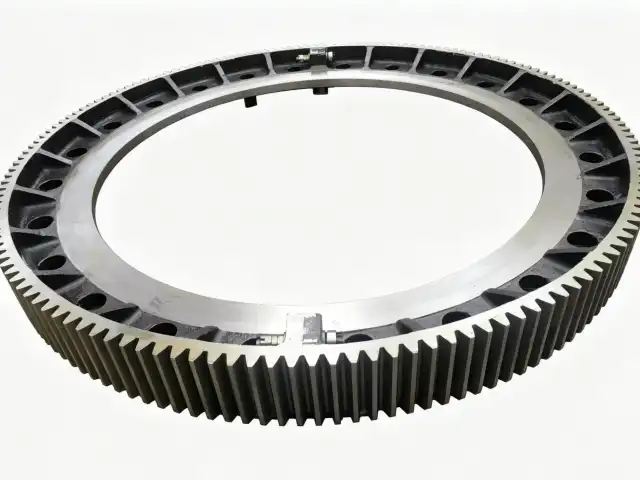
The Rotary Kiln Girth Gear is the center transmission component interfacing the drive engine to the turning furnace shell. Not at all like encased mechanical gears, it works beneath troublesome conditions counting shell misshapening, grating tidy defilement, warm development, and rotational speeds between 0.5 and 5 rpm beneath torque loads surpassing 500 kN·m. The interaction between the size adapt and pinion guarantees smooth oven revolution and steady fabric handling. Any disturbance in equip coinciding influences operational effectiveness, item quality, hardware security, and the long-term unwavering quality of the whole rotational furnace system.
Identifying Common Fault Manifestations
Tooth wear is one of the most common Rotary Kiln Girth Gear problems, appearing as pitting, scoring, chipping, or gradual profile deterioration. Operators often notice increased vibration during startup cycles and rhythmic metallic sounds synchronized with gear rotation. As wear progresses, tooth contact shifts toward edge areas instead of remaining centered, creating localized stress concentrations that accelerate crack development. Vibration analysis typically reveals abnormal gear mesh frequencies and sidebands related to misalignment. Excessive vibration and noise may eventually trigger automatic shutdown systems, reducing kiln productivity and creating safety compliance challenges within industrial processing environments.
Root Causes Behind Girth Gear Failures
Rotary Kiln Girth Gear failures commonly result from material fatigue, lubrication breakdown, installation errors, and harsh environmental conditions. Continuous kiln operation over many years subjects cast steel and ductile iron components to millions of stress cycles that gradually exceed endurance limits. Poor lubrication allows direct metal contact, accelerating wear under high temperatures where standard greases lose effectiveness. Installation inaccuracies such as excessive axial runout or rotational misalignment distribute loads unevenly across tooth surfaces. Cement dust, thermal cycling, and abrasive contaminants further damage lubrication films and alter designed backlash, worsening wear and increasing the likelihood of cracking or catastrophic failure.
Diagnosing and Analyzing Girth Gear Faults: A Systematic Approach
Visual and Non-Destructive Inspection Techniques
Accurate Rotary Kiln Girth Gear diagnosis begins with detailed visual inspections during scheduled shutdown periods. Inspectors examine tooth surfaces under controlled lighting and document wear patterns using measurement templates to determine material loss. Magnetic particle testing identifies surface cracks that are invisible to the naked eye, especially around tooth root areas subjected to high bending stress. Ultrasonic testing detects subsurface defects before visible failure occurs, while dye penetrant inspection is commonly used for segmented gear weld joints. These non-destructive testing methods help maintenance teams identify structural weaknesses early and prevent severe operational damage.
Advanced Condition Monitoring Technologies
Modern Rotary Kiln Girth Gear monitoring systems use permanently mounted triaxial accelerometers to provide continuous vibration analysis instead of periodic manual measurements. These sensors transmit operational data to analytics platforms that track changes in gear mesh frequencies and identify developing wear conditions. Acoustic emission monitoring detects stress waves generated by crack growth, providing early warning of fatigue damage. Infrared thermography maps temperature variations across the gear surface to locate lubrication failures or overheating zones. IoT-enabled monitoring systems combined with predictive analytics and machine learning improve maintenance planning and accurately estimate remaining service life for critical equipment components.
Correlating Symptoms with Failure Mechanisms
Understanding the relationship between symptoms and failure mechanisms is essential for effective Rotary Kiln Girth Gear maintenance. A Midwest cement plant experienced increasing vibration amplitudes caused by a damaged support roller that created localized overload conditions and accelerated gear tooth pitting. The roller defect altered shell alignment, changing the gear mesh pattern and concentrating stress on one section of the tooth surface. In another case, rising noise levels without significant vibration changes were traced to hardened lubricant deposits causing uniform wear on both the pinion and gear surfaces. System-wide analysis helps identify interconnected mechanical problems accurately.
Effective Solutions and Maintenance Strategies to Fix Girth Gear Faults
Optimized Lubrication Practices
Proper lubrication is one of the most effective methods for extending Rotary Kiln Girth Gear service life and reducing wear. Open gears require high-viscosity lubricants containing extreme-pressure additives such as molybdenum disulfide to maintain protective films under boundary lubrication conditions. Automatic spray lubrication systems distribute grease evenly across tooth surfaces, unlike manual application methods that often leave unprotected areas. Lubrication intervals must account for environmental conditions including dust concentration and temperature. Modern synthetic lubricants maintain film stability at temperatures above 120°C, while regular lubricant analysis helps detect contamination early before abrasive particles damage critical gear surfaces.
Repair Versus Replacement Decision Framework
Repairing a Rotary Kiln Girth Gear is usually possible when wear depth remains below 10% of the original tooth thickness and hardness values exceed 280 HB. Precision grinding restores tooth geometry within ISO 5–6 standards by removing damaged surface material and exposing structurally sound layers beneath. This process can extend operational life by five to eight years at significantly lower cost than complete replacement. When wear exceeds acceptable limits, replacement becomes more economical. Modern gears manufactured from 42CrMo or AISI4140 steel with carburized case-hardened surfaces provide superior wear resistance and extended durability under demanding industrial conditions.
Installation Precision and Alignment Protocols
Accurate installation procedures are critical for ensuring reliable Rotary Kiln Girth Gear performance and preventing premature failure. Total indicated runout should remain within 0.5 mm across the complete gear circumference, verified using dial indicators and fixed reference points. Axial alignment relative to the pinion must be carefully adjusted and confirmed through Prussian blue contact pattern testing under load conditions. Segmented gear bolt torque must follow exact specifications because insufficient preload allows segment movement, while excessive tightening distorts the gear body. Engineers must also compensate for thermal expansion effects that alter backlash when the kiln reaches operating temperature.
Proactive Maintenance Protocols
Structured preventive maintenance programs greatly improve Rotary Kiln Girth Gear reliability and reduce unexpected failures. Monthly inspections should include checking lubricant condition, monitoring contamination buildup, and visually examining gear mesh surfaces for wear or abnormal contact patterns. Quarterly shutdown inspections allow detailed tooth surface evaluation and backlash measurements to identify progressive wear. Annual ultrasonic testing detects subsurface cracking before visible failure develops. Environmental protection measures such as wind barriers and routine cleaning help minimize abrasive dust accumulation. Some facilities periodically reverse kiln rotation direction to distribute tooth wear evenly and significantly extend overall gear service life.
Choosing the Right Girth Gear and Supplier for Reliable Performance
Material Selection and Manufacturing Quality
Selecting proper materials is essential for achieving reliable Rotary Kiln Girth Gear performance under heavy industrial operating conditions. Alloy steels such as 40CrNiMo and SAE4340 provide excellent impact resistance and wear strength for cement kiln applications exposed to abrasive clinker and dust. Metallurgical kilns often benefit from 18CrNiMo7 because of its superior toughness under sudden loading conditions. Heat treatment processes including quenching, tempering, and induction hardening create balanced surface hardness and core toughness. Precision manufacturing to ISO 5–6 standards ensures accurate tooth contact, while non-destructive testing certificates confirm structural integrity and material consistency before installation.
Evaluating Supplier Capabilities
Evaluating Rotary Kiln Girth Gear suppliers requires considering engineering support, manufacturing flexibility, production capacity, and after-sales service quality. Experienced manufacturers provide customized solutions based on kiln configuration, operating conditions, and historical failure analysis. Advanced suppliers offer finite element analysis simulations to optimize tooth geometry, face width, and stress distribution before production. Production lead times are especially important during emergency replacement situations, and suppliers with available raw material inventory can significantly reduce delivery periods. Reliable providers also supply protective export packaging, installation guidance, technical troubleshooting support, and warranty coverage for manufacturing defects and commissioning-related performance issues.
YIZHI MACHINERY: Engineering Excellence in Precision Gears
YIZHI MACHINERY has specialized in manufacturing high-performance Rotary Kiln Girth Gear systems since 2016 for demanding industrial applications. The company uses premium materials including 42CrMo, AISI4140, and 20CrNiMo combined with advanced heat treatment technologies such as carburizing, tempering, and induction hardening to achieve surface hardness between 45 and 62 HRC. Manufacturing processes include forging, CNC machining, precision hobbing, milling, and final grinding according to ISO 5–6 standards. Customized designs support modules from 0.5 to 50 with flexible tooth counts and pressure angles, serving cement, mining, metallurgical, aerospace, and industrial machinery applications worldwide.
Case Studies: Successful Fault Resolution in Rotary Kiln Girth Gears
Extending Service Life Through Lubrication System Upgrades
A Texas lime processing facility experienced unusually short Rotary Kiln Girth Gear service life, requiring replacement every seven to eight years instead of the expected fifteen years. Investigation revealed inconsistent manual lubrication practices that left portions of the tooth surface unprotected. The plant installed an automated spray lubrication system delivering controlled grease quantities every four operating hours and replaced petroleum-based products with synthetic high-temperature lubricants. Following implementation, vibration levels stabilized and measured tooth wear rates decreased by 60%. The projected gear lifespan increased beyond eighteen years, making the lubrication upgrade financially highly successful.
Precision Alignment Eliminates Premature Failure
A metallurgical pelletizing plant experienced Rotary Kiln Girth Gear tooth cracking after only four years of service because of severe installation misalignment. Post-failure analysis identified excessive bending stress concentrated at tooth root areas caused by 1.2 mm axial runout and 0.8° angular deviation. During replacement installation, engineers used laser alignment systems to reduce runout to 0.3 mm and angular deviation to 0.1°. Contact pattern testing confirmed uniform load distribution across 85% of the tooth face width. After implementing strict alignment procedures, the replacement gear operated successfully for more than eleven years without major mechanical problems or premature wear.
Conclusion
To fix girth gear problems in rotary kilns, you need a complete plan that includes early identification, systematic analysis, and the right kind of intervention. Maintenance teams can use targeted solutions instead of reactive fixes when they know about common failure causes, such as inadequate lubrication, material wear, and installation mistakes. New tracking technologies can now alert us to problems before they get too bad, so we can fix them on time and avoid costly unexpected shutdowns. When it's time to replace something, choosing a provider with a history of engineering skills, quality certifications, and full expert support will ensure long-term dependability. Investing in precision-machined parts made from 42CrMo or AISI 4140, along with proper installation and preventative maintenance, ensures service life of more than 20 years in harsh industrial settings, lowering the total cost of ownership while keeping production going.
FAQ
1. How Often Should Girth Gears Be Inspected?
Once a month, during operation, a visible check finds clear problems like a lack of lubricant or a buildup of debris. Every three months, during shutdown, a thorough study of the tooth surface and measurement of backlash are possible. Ultrasonic testing once a year finds cracks in the ground before they can be seen. In important installations, vibration tracking should be done all the time to find trends of gradual degradation.
2. What Are the Warning Signs That Replacement Is Necessary?
Tooth wear that is more than 15% of the original thickness, surface hardness below 220 HB, cracks that can be seen in tooth root fillings, or vibrations that don't go away even after corrected maintenance are all signs that the tooth needs to be replaced. If the backlash goes above 25% of the original standard over time, it means that wear has damaged the mesh shape so much that it can't be fixed.
3. Can Lubrication Alone Prevent All Gear Faults?
Proper lubrication greatly increases service life and stops many wear-related failures, but it can't fix basic problems like flawed materials, fitting errors, or overload conditions that are too high compared to the design limits. Lubrication is part of a complete maintenance plan that also needs to include regular checks, making sure the alignment is correct, and keeping an eye on the working state.
Partner with YIZHI MACHINERY for Reliable Girth Gear Solutions
To keep a rotary kiln working well, you need to work with a Rotary Kiln Girth Gear supplier that is dedicated to providing excellent engineering and full support. YIZHI MACHINERY makes girth gears to your exact specs using quality systems that are in line with ISO standards and 15 years of production experience. Our customizing options include choosing the right material, making sure the heat treatment works best, and making sure the dimensions are right, so they can be used in cement, lime, and industrial kilns. We offer full service that makes the buying process easier for you, from the initial design advice to fitting help and warranty support. Talk to our expert team at sales@yizmachinery.com about the details of your kiln and find out how our custom gear solutions, 35–60 day production timelines, and guaranteed-quality shipping can help you run your business more reliably.
References
1. American Gear Manufacturers Association. (2019). AGMA 2000-A88: Gear Classification and Inspection Handbook—Tolerances and Measuring Methods for Unassembled Spur and Helical Gears. Alexandria: AGMA Publications.
2. Chen, Y., & Zhao, M. (2021). Failure Analysis and Improvement of Large Girth Gears in Rotary Kilns. Engineering Failure Analysis, 127, 105-118.
3. International Organization for Standardization. (2018). ISO 1328-1:2013: Cylindrical Gears—ISO System of Flank Tolerance Classification. Geneva: ISO Standards.
4. Müller, H. W. (2020). Epicyclic Drive Trains: Analysis, Synthesis and Applications. Detroit: Wayne State University Press.
5. Society of Tribologists and Lubrication Engineers. (2022). Open Gear Lubrication: Best Practices for Heavy Industrial Applications. Park Ridge: STLE Technical Publications.
6. Wright, D. K. (2017). Condition Monitoring of Rotating Machinery in Cement Plants Using Vibration Analysis. Proceedings of the Institution of Mechanical Engineers, Part E: Journal of Process Mechanical Engineering, 231(4), 789-801.

USER EVALUATE
Here is the customer's evaluation of us