


Gear Hobbing vs Shaping: Comprehensive Machining Comparison
When looking at the differences between gear hobbing and shaping, both are important parts of making accurate gears, but they solve different problems during production. Gear hobbing is great for making a lot of external gears by continuously rotary cutting them. On the other hand, Gear Teeth Shaping is better because it can make internal gears, cluster gears next to shoulders, and herringbone patterns that hobbing can't reach. The reciprocating pinion-type cutter used in Gear Teeth Shaping meshes with the object in a conjugated relationship. This makes it essential for making aircraft control splines, automobile planetary ring gears, and robotic joint components that need ISO 5-6 grade accuracy.
Introduction
Today's production environments need gear cutting methods that balance accuracy, speed, and low cost across a wide range of industries. When choosing the best ways to make gears, global procurement pros in the mining, aircraft, and industrial machinery businesses have to make tough choices. Your decisions have a direct effect on the quality of the product, the efficiency of operations, and the success of the supply chain. Gear hobbing and Gear Teeth Shaping are the two main methods that shape the gear manufacturing business today. Knowing how they work, what applications they're best at, and what effects they have on the economy helps you make smart decisions that give you a competitive edge. This in-depth comparison looks at how these methods work, where they do best, and how manufacturers can match their choice with their specific output needs to get better precision gear making results.
Understanding the Fundamentals of Gear Hobbing and Gear Teeth Shaping
Gear hobbing and shaping are two very different ways to make gear teeth. They are based on different mechanical principles that decide how they work and what they can be used for.
How Gear Hobbing Works
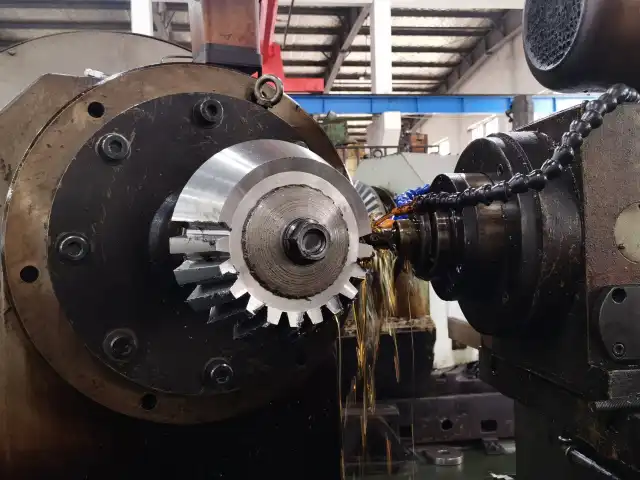
Gear hobbing is a continuous producing process in which the workpiece and a helical cutting tool called the hob spin at the same speed. The hob looks like a worm gear and has cutting edges that make gear teeth by cutting over each other over and over again. This method works very well for external spur and helical gears because it needs a lot of horizontal space beyond the gear face. Modern CNC hobbing machines can make more than 200 pieces of medium-module gears per shift thanks to their fast cycle times and constant cutting action. In mass production settings where standard external gears are the norm, hobbing works very well.
How Gear Teeth Shaping Functions
Gear Teeth Shaping uses a pinion-shaped cutter that goes back and forth while spinning around the object. Three motions work together in sync to do this: a circular producing motion between the cutter and the workpiece, vertical reciprocating cutting strokes, and radial in-feed. During each downstroke, the cutter, which is usually made of cobalt-alloyed high-speed steel with TiN or AlCrN coats, takes material by shaving it off. Shaping gets around important industrial problems that hobbing can't, especially when making internal ring gears where there is no axial space. It works great for cutting gears that are next to flanges or shoulders, cluster gears on transmission shafts, and double helix gears that don't have center gaps. Planetary gear systems in wind turbines and car transmissions depend on shaped interior ring gears to get the power density they need in small housings.
Tooling Materials and Cutting Parameters
For both methods to meet high standards, they need precise tools. Hobbing cutters can have solid HSS construction or carbide inserts. Depending on the material of the part, they can cut at speeds between 80 and 250 meters per minute. Gear Teeth Shaping cutters have slower cutting speeds—usually 30 to 80 strokes per minute—but they make up for it by being easier to use and more accurate in their profiles. Workpieces can be made from a variety of materials, ranging from 45# carbon steel to advanced alloy grades like 20CrMnTi, 40CrNiMo, and SAE4340. After cutting, heat processes like carburizing, induction hardening, or quenching and tempering can raise the surface hardness to 58–62 HRC. By knowing these factors, buying teams can choose the best ways to make things that meet both production efficiency and mechanical needs.
Comparing Gear Hobbing and Gear Teeth Shaping: Advantages and Limitations
When choosing between these methods for strategic manufacturing, you should look at how efficient they are, how precise they can be, and how much they cost.
Production Efficiency and Throughput
When a lot of things need to be made, gear hobbing is clearly more useful. With cycle times 30–50% faster than shaping for similar external gears in the module 3–8 range, the continuous cutting action cuts down on time spent not working. Automated hobbing lines that are connected to CNC control systems can make thousands of parts very consistently with very little help from a human. Gear Teeth Shaping, on the other hand, gives up some speed for flexibility. Inherently, the reversing action takes more time per part, but this trade-off isn't important when you think about situations where hobbing isn't possible. Shaping is the only way to make certain gear geometries that are important for aircraft and automobile uses because it can make internal gears, handle cuts that are interrupted near shoulders, and machine herringbone profiles without runout zones.
Precision and Quality Considerations
When done right, both methods reach amazing levels of accuracy, but their defect profiles are very different. External gears that are hobbed usually have very accurate tooth spacing and a smooth surface finish. Machines that are good at this can hit AGMA Q10–Q12 quality grades (ISO 6–8). But hobbing has trouble with internal gears and can't be used close to things that are in the way. Gear Teeth Shaping keeps the teeth perfectly centered and controls the pitch variation. This is especially helpful for internal ring gears where runout directly impacts the performance of the planetary gear system. The generating action of shaping cuts makes it possible to get very accurate involute profiles in small areas. After finishing operations, the surface roughness usually reaches Ra 1.6 to 3.2 micrometers. When shaping tools are kept in good shape, the consistency of the dimensions across production batches stays high.
Cost Analysis and Economic Factors
Prices for hobbing machines start at around $150,000 for basic CNC models and go up to over $800,000 for multi-axis precise systems. Most shaping machines are in the same price range. For example, vertical gear shapers can run anywhere from $120,000 to $600,000, based on their size and level of automation. But lifetime costs are more than just the price of the item. Hobbing cutters need to be re-sharpened every 8,000 to 15,000 pieces, based on how hard the material is. Shaping cutters, on the other hand, usually need to be sharpened every 5,000 to 10,000 strokes. Because shaping equipment is more flexible, facilities that make a wide range of gears often find it worth the investment, as they don't have to buy as many specialized tools. Operating costs, like cutting fluids, power use, and labor, change depending on the amount and complexity of the work being done. This is why specific cost modeling is so important for making decisions about what to buy.
Selecting the Right Gear Manufacturing Method for Your Business Needs
In gear manufacturing, overall success and cost competitiveness depend on how well the manufacturing method matches the output needs.
Production Volume Considerations
Gear hobbing is excellent for frequent external gear demands. Automotive gearbox manufacturers make tens of thousands of spur or helical gears yearly and benefit from Hobbing's quick cycle times and automation. Production rooms with robotic loading and in-line inspection equipment work without humans. Gear Teeth Shaping is cheaper for facilities that handle many goods and interchange them. Fitting internal gears, custom profiles, and unique geometries on a single machine base minimises capital costs and floor space while enabling customer customisations.
Gear Complexity and Design Requirements
Gear shape determines process. Planetary gear systems require curved internal ring gears since hobbing tools can't reach tooth gaps. Cluster gears, which have several gear sections on a shaft with little shoulder space, must prevent tool interference. Gear Teeth Shaping is the only cost-effective way to make double helical gears without centre grooves, which are increasingly used in high-performance naval and industrial gearboxes to manage thrust loads. When production quantities need specific sets, external spur and helical gears with enough axial clearance may be hobbed.
Automation and CNC Integration
CNC controls have standardised both processes. CNC hobbing machines are accurate because to predefined tool paths, automatic tool correction, and built-in measuring devices that validate measurements without lifting parts off the workbench. Complex controls in CNC gear shapers synchronise rotary, reciprocating, and in-feed movements with micron-level accuracy. Small repair and work shops use manual equipment. They're cheaper yet need skilled workers to match quality. Automation and manufacturing output must be balanced by procurement teams. CNC systems cost more but reduce scrap, expedite changeovers, and enhance process recording.
Top Gear Teeth Shaping and Hobbing Machines & Tooling Suppliers in 2026
Advanced Gear Teeth Shaping Capabilities from YIZHI MACHINERY
Gear Teeth Shaping providers in 2026 will need to offer precise cutting, open design, and reliable shipping around the world. YIZHI MACHINERY is an ISO 5–6 precision gear manufacturer that makes internal gears, double spiral gears, cluster gears, and other complicated transmission parts. The company provides stable quality for mining, aircraft, and industrial machinery uses with the help of modern CNC gear machining machines and automatic grinding equipment.
One-Stop Custom Gear Manufacturing Solutions
YIZHI MACHINERY offers full professional help, from making design plans and choosing materials to cutting, heat treating, inspecting, packing, and shipping. Premium materials like 20CrMnTi, SAE4340, and 42CrMo are used by the company. To meet strict performance needs, the company offers carburising, induction hardening, phosphating, and hard chrome finishing. Low minimum order amounts that are easy to change also make pilot and small-batch projects go more smoothly.
Reliable Global Delivery and Customer Support
YIZHI MACHINERY does more than just make strong products. They also make sure that global operations are safe and easy to manage by using custom wooden packing, shock-absorbing security, and multiple shipping options. Customers can stay up to date on the status of their packages at all times with real-time shipping tracking. With a one-year guarantee, quick customer service, and 35–60 day production wait times, the company has formed long-term relationships with mechanical engineering companies around the world.
Optimizing Gear Teeth Shaping Performance: Best Practices and Maintenance
Paying close attention to working factors and regular repair routines is necessary to get the most out of equipment output and part quality.
Operational Parameter Optimization
Gear Teeth Shaping works best with precise cutting speed, feed rate, and depth. Materials should decide stroke count. Hardened metals need 30–50 strokes per minute to minimise tool wear, but softer steels may handle 60–80. Depending on module and material, radial feed per stroke is 0.8–2.0 mm. Roughing passes decrease cutter distortion at moderate settings. Cutting fluid impacts tool finish and longevity. Sulfur-containing cutting fluids prevent cutters from rubbing and heating up during heavy-duty shaping. Modern fluids cool better and are greener. They must be tested for chemical contamination of working items.
Preventive Maintenance Strategies
Systematic repairs prolong equipment life. Do daily checks on cutting fluid, coolant, and chip removal. Spindle runout, guideway cleaning, and electrical connection stability are checked weekly. Reciprocating mechanisms, gear mesh backlash in the generating train, and precise marker alignment are inspected monthly. ISO requirements require annual machine maintenance, including calibration, part repair, and geometric accuracy tracking. Most shaped gear faults can be explained: rough surfaces suggest dull cutters or inadequate oil, pitch variations indicate gear wear or control system calibration drift, and involute profile defects indicate cutter geometry breakdown or wrong in-feed settings. Troubleshooting is improved by systematic data collection that ties process parameters to quantifiable results.
Design for Manufacturability Principles
When engineering and production plan together, expensive complications are avoided. Cutter space around shoulders and sides should be 3–5 mm for tool runout. Deep internal gear bores allow cutter movement and overtravel. Tool availability should determine module selection to reduce custom cutting delays. Tolerances should show process capability. ISO 6-7 AGMA Q9–Q10 manufacturing shape goals are excellent. Grinding or polishing smaller standards costs more. Continuous improvement cultures that collect operator feedback, assess scrap data, and compare performance to industry standards boost long-term performance and distinguish top producers.
Conclusion
When deciding between gear hobbing and shaping, consider the application's production rate, gear form, accuracy requirements, and cost. Hobbing produces more external gears efficiently. Gear Teeth Shaping is great for internal gears, limited spaces, and complicated patterns Hobbing cannot make. Tools, equipment, and operational discipline may make both methods precise. Smart purchases include capital investments, long-term business expenditures, equipment flexibility, and production portfolio compatibility. Understanding these technical and economic concerns helps industrial machinery, mining equipment, and aircraft producers improve gear production and secure component supply.
FAQ
1. What precision advantages does Gear Teeth Shaping offer compared to hobbing?
Gear Teeth Shaping works great for jobs that need very accurate concentricity and involute profiles, like for internal ring gears in planetary systems where hobbing can't reach the tooth spaces. The producing action makes AGMA Q10–Q12 (ISO 6-8) quality grades with better control over pitch variation in small spaces. Shaping also gets rid of the runout problems that come with hobbing close to shoulders or flanges, which is why it's necessary for transmission shaft cluster gears. Both hobbing and shaping can make external gears with about the same level of accuracy, but shaping can be used on shapes that hobbing can't.
2. How frequently do Gear Teeth Shaping machines require maintenance?
Daily checks for fluid and chip evacuation, weekly readings of spindle runout and lubrication, monthly checks of the reciprocating mechanism and generating train backlash, and full calibration methods once a year should all be part of preventative maintenance plans. If you keep your shapers in good shape, they will work effectively for decades. Under normal production conditions, you should repair major parts every 15 to 20 years. Depending on the hardness of the workpiece and the cutting settings, cutting tools need to be re-sharpened or replaced every 5,000 to 10,000 strokes.
3. Can small batch Gear Teeth Shaping meet stringent aerospace OEM standards?
Of course. Gear Teeth Shaping technology regularly gets the ISO 5–6 level of accuracy needed for parts of aircraft propulsion systems, landing gear mechanisms, and actuation splines. Modern CNC shapers can repeat processes and keep records, which meets the standards of AS9100 quality management. Material tracking, dimensional verification procedures, and surface integrity tests make sure that all batches meet the strict requirements of the aircraft industry. A lot of aircraft companies depend on specialized Gear Teeth Shaping suppliers to make small, precise parts where quality is more important than production number.
Partner with YIZHI MACHINERY for Superior Gear Manufacturing Solutions
More than decent gears are made with precision. Mining, aerospace, and industrial equipment need experienced workers. YIZHI MACHINERY provides ISO 5-6 Gear Teeth Shaping for internal gears, rotary ring gears, cluster gears, and hard-to-build spline profiles. We process 20CrMnTi, 40CrNiMo, SAE4340, and AISI8620. Carburising and induction hardening may provide 58–62 HRC surface hardness. Metal may be polished using strong chrome or phosphating. Modules from 0.5 to 50 may meet diverse demands with custom teeth counts and pressure angles.
Beyond our expertise, our technique is unique. We interact throughout our 35–60-day manufacturing cycles. Shock-absorbing liners and robust wood boxes reduce shipping damage to 0.1%, protecting your investment worldwide. Shipping via sea, air, and train reduces wait times and achieves project objectives. Track everything from the production floor to the receiving dock in real time. Our Gear Teeth 15 years of manufacturing expertise, ISO-compliant quality techniques, and long-term partnership with premier mechanical engineering businesses in three countries shape reputation. Low minimum order quantities allow prototypes, small batches, and speciality single-item production.
Contact us at sales@yizmachinery.com to talk about your unique needs for making gears. We offer complete technical advice, plan drawing services, and custom solutions that are in line with your budget and practical goals.
References
1. American Gear Manufacturers Association (AGMA). Gear Manufacturing Methods and Process Selection Guidelines. AGMA Technical Publication 920-B15, 2022.
2. Radzevich, Stephen P. Theory of Gearing: Kinematics, Geometry, and Synthesis. 3rd Edition. CRC Press, 2021.
3. Davis, Joseph R., ed. Gear Materials, Properties, and Manufacture. ASM International Handbook Committee, 2020.
4. Klocke, Fritz and Brecher, Christian. Gear Manufacturing Processes: Hobbing, Shaping, and Grinding. Springer-Verlag Berlin Heidelberg, 2019.
5. Stadtfeld, Hermann J. Advanced Gear Engineering. American Gear Manufacturers Association Technical Division, 2023.
6. International Organization for Standardization. ISO 1328-1:2020 Cylindrical Gears—ISO System of Flank Tolerance Classification. Geneva: ISO Standards Catalogue, 2020.

USER EVALUATE
Here is the customer's evaluation of us