


Cylindrical worm gear: The "invisible force" in mechanical transmission
When you think about what makes huge mine lines work well or how lifts safely lift thousands of pounds every day, the answer is often a part that doesn't get much attention. That unknown hero is the Cylindrical Worm Gear. A screw-like worm and a conjugate worm wheel work together in this special power transmission mechanism to deliver huge reduction ratios—usually between 5:1 and 100:1—in an incredibly small space. Its self-locking feature stops dangerous back-driving in vertical lifting applications, and its sliding contact gears make sure that it works very quietly even when it's carrying heavy loads.
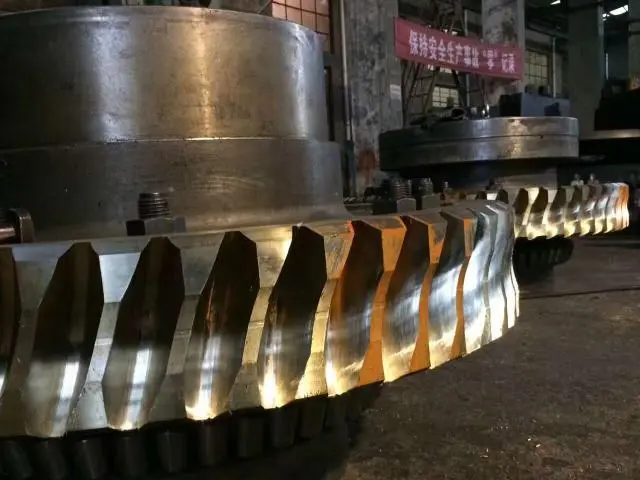
Understanding Cylindrical Worm Gears: Design, Functionality, and Advantages
What Makes a Cylindrical Worm Gear Unique?
A Cylindrical Worm Gear set has two main parts that work together perfectly: the worm, which looks like a threaded screw and has a consistent diameter along its axis, and the worm wheel, which fits into the threads on the worm. In globoidal designs, the worm's profile curves to fit around the gear, but in cylindrical designs, the shape of the worm stays the same along its length. This design sends motion between two shafts that are 90 degrees apart and don't intersect. This turns rotational movement into linear movement very efficiently in small spaces.
The magic happens when the worm threads and gear teeth slide against each other. This causes more friction than rolling contact gears, but it also makes an oil wedge effect that does a great job of absorbing shock loads. The shape types—ZA (Archimedean), ZN (Normal straight), ZI (Involute), and ZK (Cone driven)—affect how the teeth connect and how well the gearbox works overall.
Core Operational Advantages That Solve Real Problems
In industrial settings, parts need to work consistently even when they're under tough conditions. Here are the main reasons why Worm Gears are so important in the mining, industrial, and aircraft industries:
1. High Transmission Ratio in Minimal Space: To get the reduction ratios that a single Cylindrical Worm Gear set offers, traditional gear trains would need more than one stage. Because they are so small, they save money on housing, mounting structures, and labour for installation. By moving to properly designed worm drives, machine tool makers have been able to cut the size of their indexing mechanisms by 40%.
2. Self-Locking Safety Feature: The gear locks itself when the lead angle drops below a certain level, usually less than 5 degrees. This means that the output shaft can't move the input shaft backwards. This is a very important safety trait for hoists, winches, and transport systems that work on slopes. In many situations, this gets rid of the need for complicated external stopping systems. This makes upkeep easier and lowers the number of places where something could go wrong.
3. Exceptional Noise Reduction: Compared to Spur Gears or Helical Gears, sliding contact mechanics make a lot less noise when they're working. This feature is especially useful for aerospace ground support equipment and hospital lift systems, which have to follow strict rules about noise pollution and user comfort.
4. Superior Shock Load Absorption: The continuous sliding contact makes a film of lubricant that absorbs shocks from sudden changes in load. When moving fully loaded minerals on a mining conveyor, the start-stop cycles are very rough. The Worm Gear's ability to absorb these shock loads greatly increases the component's lifetime compared to other types of gearbox.
These benefits make it easier to get things done when there isn't enough room or when there are high torque needs. Reducers on automated production line are especially useful because they are small and reliable, staying in the same place over millions of rounds.
Material Science and Manufacturing Excellence
The effectiveness of any Cylindrical Worm Gear varies a lot on the material used and how it was made. Case-hardened alloy steels like 20CrMnTi, 40CrNiMo, SAE4340, and 42CrMo are used to make worms at YIZHI MACHINERY. Carburising, quenching and tempering, or induction hardening are complex heat treatments that are used on these materials to make the surfaces hard (between 58 and 62 HRC) while keeping the cores tough and flexible.
To keep the worm wheel from galling (cold welding) while it's working, it usually uses high-load bronze alloys like CuSn12Ni2. This combination of materials is very important because the fast moving speeds between tooth sides cause a lot of friction. Our precise grinding methods produce surface finishes that help oil films form properly, which lowers wear rates and increases the time between service intervals.
Cutting, hobbing, milling, and grinding are some of the processing methods that let us reach ISO 8-9 Grade precision. This level of detail makes sure that the geometry of the mesh is smooth, which reduces vibrations and increases the efficiency of power transfer. Because the module ranges from 1 to 50 and the tooth numbers can be changed, we can come up with answers for a wide range of problems, from small lab tools to huge industrial reducers.
Maintenance Practices That Maximize Investment
Even the most robustly designed parts need to be properly maintained in order to reach the full length of their useful life. The most important thing to do for Worm Gear systems is to lubricate them. The moving contact makes heat, so the right lubricants must keep the film strong across the working temperature range while also cooling enough.
For most industry uses, we suggest synthetic gear oils with EP (extreme pressure) additives. The thickness should be chosen based on the speed of operation and the temperature of the environment. Regular oil analysis finds early signs of wear so that repairs can be made before a major failure. At regular times, you should check the state of the tooth surface for pitting, scoring, or strange wear patterns that could mean the teeth aren't aligned properly or there are problems with the greasing.
When an application is on constant service, thermal management should be taken into account. The efficiency runs from 40% to 90%, based on the ratio and the load. The rest of the energy is turned into heat. Making sure there is enough heat absorption through housing design or active cooling stops oils from breaking down at high temperatures and keeps precision parts' dimensions stable.
Cylindrical Worm Gears vs. Other Gear Types: Making Informed Decisions
Performance Metrics Comparison Across Gear Technologies
To pick the right type of gear for your job, you need to know how different technologies measure up in key areas. Helical Gears are more efficient (usually between 95 and 98%) than worm drives, but they can't reach the reduction ratios of worm drives in a single step. When they roll against each other, they make more noise than properly oiled worm systems but less heat.
Bevel Gears are very good at changing the direction of a shaft quickly and efficiently, but they take up more space and are harder to place than Cylindrical Worm Gears. Because they have point contact geometry instead of line contact like Worm Gears, they can't handle shock loads as well. For parallel shaft uses, Spur Gears are the easiest to build and work most efficiently. However, their noise levels make them unsuitable for many industrial settings, and they can't handle perpendicular shaft arrangements like Worm Gears do easily.
Planetary Gear systems are very good at making small high-ratio reductions, but they usually cost three to five times more than similar Worm Gear solutions. Because the machines are more complicated, there are more places where they could go wrong, and they need better upkeep skills. When cost is an issue and reliability is important, the Worm Gear's simplicity becomes a clear advantage.
Total Cost of Ownership Analysis
Total cost of ownership includes purchase price, maintenance, energy use, and durability. Worm gears often provide lower initial costs and simpler maintenance than planetary systems. Although efficiency losses may increase operating expenses in high-power applications, their sealed design and strong overload resistance improve reliability in harsh environments, extending service intervals and reducing long-term costs.
Selection Criteria Based on Application Requirements
The choosing method is based on a few key questions. Does your app need to be able to lock itself? If stopping back-driving is very important for safety, the Cylindrical Worm Gear is the clear choice. How much space do you have? What reduction ratio do you need? Worm Gear solutions are strongly recommended for small packages with ratios above 20:1.
What amount of noise can you handle? The Worm Gear's quiet operation is very helpful for aerospace ground equipment and material handling systems that are used in crowded areas. How bad are the shock loads? Worm Gears are better at handling big changes in load than Spur Gears or Helical Gears when it comes to conveyor systems that move bulk materials.
What kind of repair skills does your team have? Servicing a planetary system is more difficult than servicing a Worm Gear. The Worm Gear's simple design greatly lowers the risk of failure if your facility is located in a remote area with limited access to technical assistance.
Global Procurement Guide: Sourcing Cylindrical Worm Gears for B2B Buyers
Evaluating Suppliers and Manufacturing Capabilities
Evaluating worm gear suppliers requires assessing manufacturing capability, quality control, and customization flexibility. Reliable providers should have advanced machining equipment, in-house heat treatment, and strong process control. Custom solutions for modules, materials, and configurations distinguish premium suppliers. Certifications provide assurance, but sample testing of dimensions, finishes, and materials is essential before production commitments.
Managing Lead Times and Logistics
Custom Cylindrical Worm Gears usually take between 35 and 60 days to make, which includes verifying the design, getting the materials, cutting, heat treatment, grinding, and final testing. Rush orders may be taken, but at a higher cost; sticking to realistic plans stops quality cuts that could hurt the performance of parts.
Transportation arrangements have a big effect on the total time it takes to buy something. We've come up with multi-channel transport plans that use sea freight, air freight, and rail services to meet your needs for speed and cost. Shipping large amounts of goods by sea is the cheapest option, but it takes 30 to 45 days to get from Chinese factory hubs to US ports. Air freight cuts travel time to 5–7 days, but it costs a lot more, so it's best for replacing things quickly rather than placing regular orders.
Precision gear shipments often get damaged during shipping, but custom packaging keeps that from happening. Tooth surfaces are especially likely to get damage from impacts, which changes the shape of the mesh and speeds up wear. We use shock-absorbing cushioning liners and handmade wooden boxes to keep shipping damage rates below 0.1%. In the very unlikely event that damage does happen despite our best efforts to avoid it, we have full insurance coverage.
Pricing Strategies and Bulk Purchasing
Worm gear pricing depends on size, material, precision, and order volume. Bulk purchasing reduces costs through volume discounts and optimized production planning. Combining orders and forecasting demand helps maintain supply while improving savings. Long-term supplier relationships often provide better pricing, technical support, payment terms, and priority scheduling compared with focusing only on individual transaction prices.
Building Trust: Top Cylindrical Worm Gear Brands and Industry Leadership
What Defines a Trusted Gear Manufacturer?
A trusted gear manufacturer earns credibility through consistent performance, traceable materials, detailed technical documentation, and responsive engineering support. Strict quality control, including dimensional checks, hardness testing, and surface inspections, ensures reliable products. Leading suppliers also provide certification records and strong after-sales assistance, working with customers to solve application issues and achieve long-term success.
Industry Case Studies and Performance Validation
Industry case studies demonstrate worm gear reliability across mining, machine tools, and automation. Mining conveyor upgrades reduced costs by 40% and improved safety through self-locking performance. CNC rotary tables achieved high positioning accuracy, reducing scrap rates by 15%. Automation systems improved storage density by 25% while maintaining quiet, durable operation over millions of cycles.
Partnering with YIZHI MACHINERY
Since we started in 2016, we've focused on making unique gears and precise mechanical parts, and we offer a full range of expert services to back them up. Our engineering team adds 15 years of experience to every project, making sure that the specs of each part are exactly what the application needs. We make more than just Cylindrical Worm Gears. We also make double Helical Gears, Internal Gears, and Bevel Gears, among other types of gears.
Our factory has some of the most advanced precision equipment in the world, such as high-precision CNC gear machining centers, fully automated gear grinding machines, and smart heat treatment production lines. This unified ability makes sure process control from raw material to finished part, getting rid of the quality risks that come with supply chains with multiple vendors. Before it is shipped, inspection equipment makes sure that every gear meets the ISO 8–9 Grade accuracy standards.
Working together with well-known mechanical engineering companies in the mining, aircraft, and industrial machinery sectors proves our technical skills and quality control. These partnerships give us real-world performance feedback that helps us keep improving the way we make things and the materials we use. The fact that these picky customers trust our parts shows how reliable we are in thousands of installations.
Future Trends and Performance Optimization in Cylindrical Worm Gears
Advanced Materials and Manufacturing Innovation
Advanced materials and manufacturing innovations enhance worm gear performance through improved wear resistance, lower friction, and longer service life. New alloys, specialized coatings, and advanced lubricants support demanding applications. Additive manufacturing accelerates custom designs through improved tooling and prototypes, while advanced heat treatments increase strength, accuracy, and durability for high-cycle operations.
Industry 4.0 Integration and Smart Monitoring
Integrating sensors into worm gear reducers enables smart monitoring and predictive maintenance. Vibration, temperature, and torque data help detect faults, optimize lubrication, prevent overloads, and reduce downtime. Data analytics improves maintenance planning and design decisions. Remote connectivity allows manufacturers to support customers proactively while collecting performance insights for continuous product improvement and stronger relationships.
Sustainability and Efficiency Enhancement Strategies
Sustainability efforts improve worm gear efficiency through optimized tooth designs, specialized synthetic lubricants, and better thermal management. Cooling solutions and hybrid systems can reduce energy losses while maintaining performance benefits. Lifecycle strategies, including recyclable materials, remanufacturing, and modular designs, further reduce environmental impact by extending product life and minimizing waste throughout manufacturing and operation.
Conclusion
Because of its small size, high reduction ratios, and self-locking safety features, the Cylindrical Worm Gear is still very important in industrial machinery, mining, and aerospace applications. While careful application engineering is needed to make things more efficient, the overall value of quiet operation, shock load tolerance, and mechanical simplicity is very high. As material science develops and smart tracking becomes the norm, these "invisible forces" will keep changing to meet higher performance standards while keeping the basic benefits that have made them essential in engineering for more than one hundred years.
FAQ
1.What reduction ratios are possible with Cylindrical Worm Gears?
Cylindrical Worm Gears usually offer reduction ratios between 5:1 and 100:1 in a single stage, with the most common range being between 10:1 and 60:1. Divide the number of teeth on the worm wheel by the number of starts, or threads, on the worm to get the ratio. For high ratios, single-start worms are most common. Multi-start designs, on the other hand, trade lower reduction for higher efficiency.
2.Why are worm gears less efficient than other kinds of gears?
There is more friction when worm threads and wheel teeth slide against each other than when Spur Gears, Helical Gears, or Bevel Gears spin against each other. This friction turns the power that goes in into heat instead of useful work that comes out. Depending on the decrease ratio, efficiency usually falls between 40% and 90%. Higher ratios mean lower efficiency. Proper lubrication and choice of materials can cut down on these losses, but they can't be stopped.
3.Is it possible to turn worm gears from the back?
It depends on the angle of the lead. Friction stops the worm wheel from moving the worm backward when the lead angle is less than about 5 degrees. This makes the worm self-lock. Higher lead angles let you back-drive, which makes the machine more efficient but takes away the safety feature that locks it in place. Which feature is more valuable: safety locks for hoists or reversible operation for some automation systems? That depends on the application.
Partner With YIZHI MACHINERY for Precision Worm Gear Solutions
Custom-designed worm gear drives from YIZHI MACHINERY are made to strict standards using high-quality materials like 20CrMnTi, SAE4340, and AISI4140. With 15 years of experience making things, we can guarantee ISO 8–9 Grade accuracy and a surface hardness of 58–62 HRC for long-lasting use. As a reliable Cylindrical Worm Gear seller, we offer flexible minimum order amounts, including production of a single unit. Delivery times range from 35 to 60 days, and we offer custom protective packing that keeps parts in good shape during global shipping. Contact us at sales@yizmachinery.com to talk about your specific application needs and get technical advice that will help you get the best performance while staying within your budget.
References
1. Dudley, D.W. (1994). Handbook of Practical Gear Design and Manufacture. CRC Press, Boca Raton, Florida.
2. Townsend, D.P. (1991). Dudley's Gear Handbook: The Design, Manufacture, and Application of Gears. McGraw-Hill Professional, New York.
3. Buckingham, E. (1988). Analytical Mechanics of Gears. Dover Publications, New York.
4. American Gear Manufacturers Association (AGMA). (2004). AGMA 6022-C93: Design Manual for Cylindrical Worm Gearing. Alexandria, Virginia.
5. Radzevich, S.P. (2012). Theory of Gearing: Kinematics, Geometry, and Synthesis. CRC Press, Boca Raton, Florida.
6. Stadtfeld, H.J. (2014). Gleason Bevel Gear Technology: The Science of Gear Engineering and Modern Manufacturing Methods for Angular Transmissions. The Gleason Works, Rochester, New York.

USER EVALUATE
Here is the customer's evaluation of us