


Comprehensive Guide to Custom Bevel Gear Services
Custom Bevel Gears are precisely built mechanical transmission parts that are made to fit exact requirements for intersecting-shaft uses in aircraft systems, mining equipment, and industrial machinery. These custom solutions, as opposed to off-the-shelf options, are made to fit particular space limitations, handle high loads, and meet performance standards that standard gears can't meet. This complete guide gives purchasing managers, engineers, and OEM decision-makers the information they need to choose, create, and source bevel gears that boost working efficiency and guarantee long-term dependability. At YIZHI MACHINERY, we use our 15 years of experience making specialized products along with quality standards that are in line with ISO to provide precise gear solutions that are trusted by businesses around the world that need them.
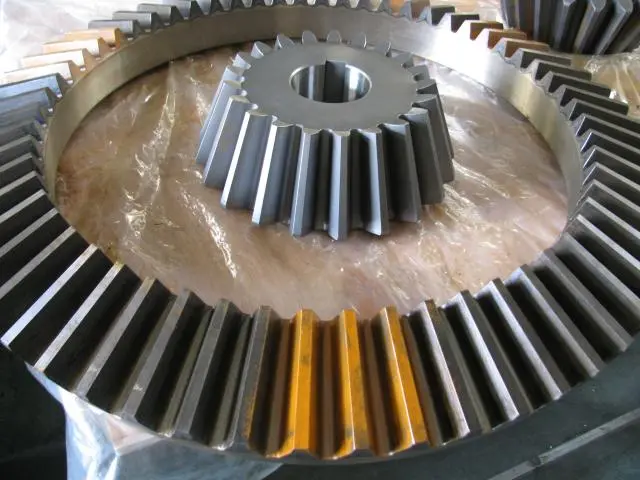
Understanding Custom Bevel Gears: Key Concepts and Applications
Custom Bevel Gears are basically different from normal inventory items because they allow for design freedom that can meet specific engineering needs. Customized solutions let engineers choose the exact module ranges, pressure angles, and material compositions that work best for their application's surroundings and needs. Standard gears have fixed sizes and tooth geometries.
What Makes Bevel Gears "Custom"?
The process of customization takes into account three important aspects that normal gears can't handle. Engineers can define non-standard cone angles other than the normal 90-degree intersection with geometric adaptation. This lets them make small installations in limited areas. Material optimization matches the right alloy to the right working conditions, like high-nickel steels for corrosive marine settings or advanced metallurgy for lightweight aircraft uses. Through specialized grinding, performance tuning changes the way teeth touch each other so that noise, vibration, and harshness are kept to a minimum in precise equipment.
Types and Their Distinct Characteristics
Straight bevel gears have teeth that are lined up straight to the gear center. They are simple and inexpensive for low-speed uses like farm equipment. Spiral bevel gears have curved teeth that connect gradually. This makes them easier to use and better for machine tool spindle drives and turning systems because they can handle more weight. YIZHI MACHINERY uses the Gleason profile method, which makes sure that the tooth contact shape is perfect so that the transmission efficiency is at its highest level (95–98%) across all of our products.
Material Selection and Performance Alignment
Material choice directly affects load capacity and service life. Our products use high-quality alloy steels including 20CrMnTi, AISI 8620, and SAE 4340, each offering distinct benefits. Case-hardening grades like 20CrMnTi achieve 58-62 HRC surfaces with 30-40 HRC tough cores for shock loads in mining equipment. Through-hardening grades such as 42CrMo provide balanced properties for moderate-load mechanical transmission systems requiring long-term reliability.
Designing and Manufacturing Custom Bevel Gears: A Step-by-Step Guide
Successful Custom Bevel Gear customization begins with a full design study that looks at practical factors that affect how long it lasts and how well it works. This organized method makes sure that every part meets all the requirements before production starts.
Critical Design Factors
The type of load determines the material that is used and the heat treatment steps that are taken. For uses that need to carry big loads all the time, like mine conveyors, carburizing treatments are needed to make the surfaces harder than 58 HRC while keeping the cores flexible. Rotational speed affects the choice of tooth shape. For high-speed uses above 1000 RPM, ground spiral teeth that reduce vibration and noise are best. Surface treatments are based on the environment. For example, corrosive environments need special coats or metals that don't rust.
Manufacturing Techniques and Quality Protocols
At YIZHI MACHINERY, the steps in the production process are very strict and make sure that every step is done correctly. When cutting gears, hobbing and milling are used to set the original tooth shape within ISO 8-9 grade tolerances. During heat treatment steps like carburizing, quenching, and tempering, the qualities of the material are improved. This leads to specific hardness patterns that balance how well the material resists wear and how well it absorbs shock. Precision grinding is used in finishing processes to fix thermal distortions caused by heat treatment. This keeps tooth profiles at the micron-level accuracy needed for smooth meshing and long service life.
Here are the core manufacturing advantages this methodical technique brings to manufacturing:
- Precision Control: CNC machining centers keep the same level of accuracy throughout production runs, so there are no changes in size that cause parts to wear out too quickly
- Thermal Stability: Specialized cooling methods keep teeth from breaking even when they are working at very high temperatures
- Surface Integrity: Multi-stage grinding forms surfaces with finishes that lower friction and make it easier for grease films to form
These industrial skills solve common problems in the industry, like controlling backlash, improving contact patterns, and making sure that the dimensions stay the same from batch to batch. Every piece of gear is checked against technical models using strict inspection routines before it is packed. This makes sure that customers get parts that are ready to be put into their assemblies right away.
Measurement and Maintenance Best Practices
For accurate measurement proof, you need special tools, like gear measuring machines that look at tooth profiles, lead angles, and pitch changes. Mounting distance limits of ±0.05mm are usually enough to control backlash during assembly and keep things from moving around too much, which can affect how accurately they are placed. Maintenance plans that stress choosing the right lubricant and keeping things clean greatly increase the life of an operation. Using the right oil viscosity grades stops border lubrication conditions that speed up wear.
Choosing Between Custom Bevel Gears and Standard Bevel Gears
Choosing between customized and standard solutions has a big effect on both the short-term costs of buying the solution and the long-term costs of running it. Procurement managers can make smart financial choices when they know when customization adds real value.
Design Flexibility and Performance Enhancement
Standard gears constrain engineers to fixed dimensions, potentially compromising system efficiency. Custom solutions precisely optimise gear ratios, eliminating extra speed reducers. Customised geometries improving power density prove valuable for non-standard shaft angles or compact envelopes. This adaptability proves critical in aerospace actuators and specialised industrial equipment where space constraints prevent standard component integration. Custom designs address unique mounting limitations effectively.
Scenarios Demanding Custom Solutions
Non-orthogonal shaft configurations require custom bevel gear sets for complex transmission systems. High-torque mining applications exceeding standard gear load limits need specialised tooth geometries and advanced metallurgy. Precision robotics requiring zero-backlash operation demands ground tooth profiles and tight assembly tolerances unavailable in standard inventory. Corrosive conditions, elevated temperatures, or strict noise specifications make customisation mandatory rather than optional for reliable operation and performance.
Material and Durability Comparisons
Standard gears typically use general-purpose steels with basic heat treatment, not optimised for demanding applications. Custom material selection matches alloy composition to specific stress profiles: high-nickel steels for mining equipment resisting impact damage, vacuum-melted alloys for aerospace ensuring defect-free structures. Advanced carburising creates case depths optimised for contact loads, extending heavy-duty product life by two to three times over standard options.
Procuring Custom Bevel Gears: What B2B Buyers Should Know?
To easily go through the buying process, you need to know the main factors that affect timelines, prices, and supplier choice. This organized method makes the whole buying process easier, from the first question to the final arrival.
The Procurement Process Overview
For projects to be successful, they need to start with a thorough list of requirements that include things like working conditions, load patterns, speed ranges, and environmental factors. Quotes are more accurate when there are technical models or sample parts, which lets makers find possible design improvements early on. When asking for quotes, you should be clear about how many items you need because the amount has a big effect on the price per unit through tooling costs. Custom Bevel Gears usually have lead times between 35 and 60 days. This is because they have to go through casting, machining, heat treatment, and finishing steps that can't be sped up without lowering the quality.
Understanding Cost Factors
Large price differences are caused by the complexity of the material. For moderate uses, standard carbon steels like 45# steel are cheaper, but specialty alloys like 18CrNiMo7 cost more but work better in harsh situations, so they are worth it. Costs are affected by the requirements of the manufacturing process. For example, ground gears that need precision finishing after heat treatment require more work than cut-only options that can be used for low-speed uses. Different providers have different minimum order amounts. YIZHI MACHINERY, on the other hand, can do single-piece production for developing prototypes and fixing specialized equipment, which lowers buyers' inventory risk.
Evaluating Supplier Reliability
When evaluating a supplier, the ability to manufacture, quality certifications, and availability of expert help should be given the most weight. Facilities with full production lines, such as those that do precision cutting and heat treatment in-house, can better control quality than those that outsource key tasks. Compliance with ISO standards and well-documented quality systems guarantee that output will always meet requirements. Logistics timelines are affected by geography. China-based companies like YIZHI MACHINERY use effective global shipping networks to offer affordable lead times through integrated freight solutions that combine ocean, air, and rail choices that can be tailored to meet urgent and budget needs.
The ability to provide technical help sets special sellers apart from commodity vendors. Consulting with an expert before a sale helps make designs better before they go into production, which saves money on changes. Synced progress updates and quality check records keep everyone in the loop during production. Full help after the sale, including warranty coverage and quick problem settlement, creates long-lasting partnerships that go beyond simple transactions.
Why Partner with YIZHI MACHINERY for Custom Bevel Gear Solutions?
The success of a project depends on choosing the right manufacturing partner who can deliver on time, provide consistent quality, and provide quick expert help. YIZHI MACHINERY has specific skills that have been built up over 15 years of working in the mining, aircraft, and industrial machinery sectors.
Advanced Manufacturing and Customization Capabilities
Our building has some of the most precise tools in the world for Custom Bevel Gear production, like high-precision CNC gear machining centers, automatic gear grinding systems, and smart heat treatment lines that keep strict process control. From module 0.5 to 50, this integrated production system lets you make any Custom Bevel Gear changes you want. It can handle everything from small instrumentation gears to big mining equipment parts. Expertise in Gleason profiles guarantees the best tooth contact shape for Custom Bevel Gears, and flexible tools can handle both large production runs and one-piece orders without affecting delivery times.
Quality Assurance and Certifications
Every step of the production process is governed by strict quality standards. After cutting, heat treating, and finishing, the dimensions are checked. Following the ISO standard makes sure that processes are always the same, and precision testing, which includes tooth contact pattern analysis, checks that the load is distributed evenly before it is shipped. Validation of the surface hardness shows that the heat treatment worked, reaching the desired ranges of 45–50 HRC for middling uses or 58–62 HRC for heavy-duty parts. This method with multiple checkpoints lowers the failure rate to less than 0.1%, which keeps delays from rejected packages to a minimum.
Logistics Excellence and Customer Support
We know that the quality of the gear doesn't matter if it gets broken during shipping, so we use custom packing with shock-absorbing padding and strong wooden pallets to protect the tooth surfaces. Cost and speed can be balanced with multi-channel transport solutions. For example, ocean freight is a cheap way to meet standard plans, air freight can speed up urgent orders, and China-Europe train offers choices in between. Real-time tracking systems keep customers up to date on the state of their packages throughout the whole shipping process, from loading at the factory to delivery at the end destination.
The whole interaction is covered by comprehensive service. Technical advice given before a sale helps improve specs and make plans more workable for production. During production, pictures and review reports are sent out regularly to show how things are going. After delivery, our one-year warranty and quick expert help make sure that any problems are fixed right away, keeping your business running.
Conclusion
To choose the right Custom Bevel Gear options, you have to balance technical needs, operational needs, and the facts of buying. When there are special shapes, harsh working conditions, or performance requirements that are higher than what standard Custom Bevel Gear can handle, custom choices can help in a measured way. Material choice, manufacturing accuracy, and source dependability for Custom Bevel Gear all have a direct effect on long-term costs through how often upkeep is done and how long parts last. With YIZHI MACHINERY's integrated services, including design consulting, precise production, and global logistics, procurement managers can get all the Custom Bevel Gear they need from a single source. Our dedication to quality, ability to accommodate different order sizes, and all-around support turn tough purchasing problems into easy-to-handle steps that keep your business running smoothly.
FAQ
1. When Should I Choose Custom Over Standard Bevel Gears?
It's necessary to make custom solutions when normal catalog gears can't work for your application because of its shape, load, or surroundings. Custom designs are very helpful for situations where the shaft angle isn't standard, the power needs to be higher than what's listed in the catalog, or there isn't enough room for standard sizes. For precision equipment that needs low backlash or to run quietly, the tooth shapes must be custom ground, which is not possible with stock inventory items.
2. What Specifications Do I Need to Provide for Accurate Quotes?
To get a full price, you need to know about the working conditions, such as torque loads, rotational speeds, job cycles, and environmental factors like temperature ranges or exposure to corrosives. Geometric parameters like shaft angles, chosen module range, wanted gear ratio, and room limitations help designers make the best designs possible. Giving example parts or technical drawings speeds up the quotation process and lets sellers see early on where changes could be made.
3. What Are Typical Production Lead Times?
Custom Bevel Gears usually take between 35 and 60 days to make, which includes getting the materials, cutting, heat treatment processes, and precision finishing. Complex shapes that need specialized tools may cause plans to be pushed back, but expedited services can shorten them when the right tools are available and production capacity allows it. YIZHI MACHINERY keeps its schedule clear and gives realistic delivery promises during the quote process.
Get Your Precision Custom Bevel Gear Solutions Today
YIZHI MACHINERY is ready to help you find the best answers to your gear transmission problems. Since 2016, we've been making Custom Bevel Gears for the mining, aircraft, and industrial machinery industries. We make accurate parts that meet the strictest requirements. Our ISO-compliant production processes, flexible order sizes that start at a single piece, and delivery times that range from 35 to 60 days give your projects the dependability they need. Contact us at sales@yizmachinery.com about your needs, get expert design advice, and get full quotes.
References
1. Dudley, Darle W. Handbook of Practical Gear Design and Manufacture. CRC Press, 2020.
2. Stadtfeld, Hermann J. Gleason Bevel Gear Technology: Manufacturing, Inspection and Optimization. Gleason Corporation Technical Publications, 2019.
3. ISO 1328-1:2013. Cylindrical Gears – ISO System of Flank Tolerance Classification – Part 1: Definitions and Allowable Values of Deviations Relevant to Flanks of Gear Teeth. International Organization for Standardization.
4. American Gear Manufacturers Association. ANSI/AGMA 2005-D03: Design Manual for Bevel Gears. AGMA Publications, 2018.
5. Klingelnberg GmbH. Bevel Gear Technology: Calculation and Manufacturing of Straight and Spiral Bevel Gears. Technical Reference Manual, 2021.
6. Radzevich, Stephen P. Dudley's Handbook of Practical Gear Design and Manufacture (Third Edition). CRC Press, 2016.

USER EVALUATE
Here is the customer's evaluation of us