


Understanding Bevel Gear Grinding
Bevel Gear Grinding is an important finishing step used to make perfect bevel gears, which are important parts of a lot of automobiles and industrial machines. For B2B buying managers looking to find high-quality gears, this advanced process is a must-have because it guarantees the desired surface finish, dimensional accuracy, and performance qualities. By learning about what Bevel Gear Grinding is and how it works, buying professionals can choose sources and technologies that are more likely to meet strict industry standards. This makes it easier to build trusting, long-lasting partnerships. At YIZHI MACHINERY, we've spent more than 15 years getting better at this craft. We serve clients in the mining, aerospace, and industrial machinery industries with a strong commitment to accuracy and dependability.
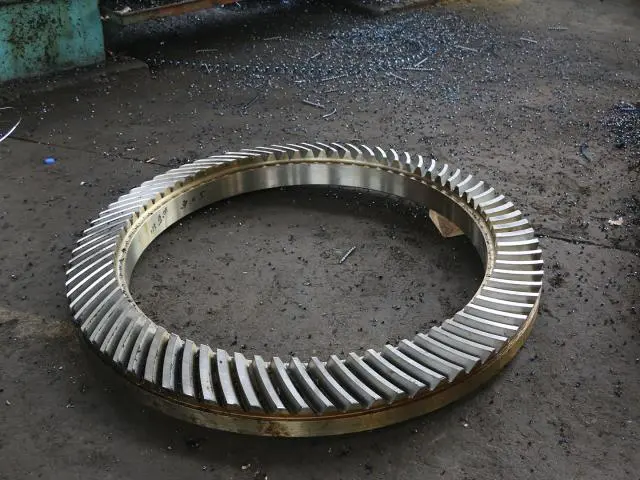
Understanding this hard-finishing process helps procurement teams deal with some of the biggest problems: getting rid of distortions caused by heat treatment, cutting down on noise and shaking, and making sure that the load is evenly distributed across all gear teeth. These things have a direct effect on how long technology lasts and how well it works.
What is Bevel Gear Grinding and How Does it Work?
Bevel Gear Grinding is a very precise way to finish off a hard part. It is mostly used to make spiral bevel, hypoid, and Zerol gears better after they have been heated up. Instead of soft-cutting, this method uses 5-axis CNC grinding tools with either Cubic Boron Nitride (CBN) or corundum wheels to take material from gear flanks that are 58–62 HRC hard. It solves some of the biggest problems in the industry by getting rid of heat treatment distortions (warping) that hurt gear mesh, NVH problems caused by surface undulations, and problems with uneven load distribution that are necessary for high-torque, right-angle power transmission systems.
The Fundamental Process Mechanics
There are a few important steps that make up the normal Bevel Gear Grinding process. To fix big distortions caused by carburizing, cooling and tempering, or induction hardening, rough Bevel Gear Grinding takes away a lot of material. The micro-geometry of the tooth side is then fine-tuned during finishing Bevel Gear Grinding to get the finished dimensions and surface quality. During these steps, special machines like face grinders and continuous producing grinders use mathematical coordinates to make parts that can be swapped out and have precise micro-geometry control instead of matched pairs.
Gear blanks will always be warped and have their shape changed when they are heated. In order to get the final micro-geometry of the tooth side, these deformations must be fixed by Bevel Gear Grinding. This predictable process cuts each part separately using exact mathematical coordinates. This ensures the kinematic accuracy needed for turning systems, machine tool spindle drives, and small mechanical transmission systems.
Manual Versus Automated Approaches
Knowing the difference between manual and automatic Bevel Gear Grinding helps procurement workers weigh the costs, accuracy, and throughput of a job. For high-end car differentials and aircraft use, modern multi-axis CNC grinders with closed-loop feedback systems and automatic tool changes make the process very quick and cheap. These advanced systems keep an eye on factors in real time and change the cutting conditions to avoid flaws and keep quality the same from one production run to the next.
At YIZHI MACHINERY, we use high-precision CNC gear machining centers and fully automatic Bevel Gear Grinding machines, which are some of the most precise production and inspection tools in the world. Our equipment takes care of all the important steps in the process, like cutting gears, Bevel Gear Grinding, and heat treating, so every part we make is ISO 8 Grade precise.
Key Techniques, Parameters, and Best Practices in Bevel Gear Grinding
Choosing the right techniques for the gear profiles and output needs is key to making Bevel Gear Grinding processes go smoothly. Generating Bevel Gear Grinding and form Bevel Gear Grinding are the two main ways used in the business. Generating Bevel Gear Grinding makes the gear tooth shape by moving in a continuous generation motion. It works well for spiral bevel gears that have complicated designs. Form Bevel Gear Grinding uses a wheel that has been shaped to fit the tooth size that is needed. It is good for small production runs that need a lot of freedom.
Critical Grinding Parameters
Bevel Gear Grinding factors like speed, feed rate, depth of cut, and lubrication have a big effect on the quality of the gear, the consistency of the surface, and the reduction of defects. To avoid Bevel Gear Grinding burn, which happens when too much heat weakens the surface hardness, the specific material removal rate (Q-prime) needs to be adjusted. When high-performance Vitrified CBN wheels are used with high-pressure coolant directed at the contact zone, thermal damage can be successfully controlled while output is kept up.
Another important factor is how often the wheels are dressed. When you dress your tools often, you can keep the cutting edges sharp, which lowers the crushing forces and heat production. At YIZHI MACHINERY, our experts constantly check the state of the wheels and schedule dressing operations based on how the wheels are wearing instead of set times. This makes the wheels last longer and the parts last better.
Implementation of Best Practices
Stressing best practices like regular machine repair, thorough user training, and strict quality control makes sure that work is done quickly and correctly every time. These things are very important for buying teams that want to get the best return on their investments and lower output risks. Standardized OEM customization processes include talking about requirements, making design sketches, production machining, quality checking, packing, and shipping. This makes sure that orders are filled quickly.
Another important thing to think about is bias control. When you bite down on a tooth, the vertical touch pattern is called bias. If the inclination is wrong, the load moves to the edge of the tooth when it bends, which breaks it. Bevel Gear Grinding certain "Ease-Off" designs can center the contact pattern under full load, which greatly increases the gear's service life in tough situations like mining equipment and military chopper transmissions.
Benefits and Challenges of Bevel Gear Grinding: Making an Informed Decision
Compared to other methods like gear cutting or polishing, this one has the highest level of accuracy, the smoothest surface, and the best repeatability. These benefits make the product more reliable and less expensive than big production runs. Bevel Gear Grinding makes replaceable parts with precise micro-geometry control, which is better for high-speed, high-load uses than lapping, which makes matching pairs that are prone to NVH variation.
Comparative Advantages Over Alternative Methods
Bevel Gear Grinding is different from other processes like gear hobbing, cutting, milling, and CNC turning in a number of important ways. Hobbing and milling are both soft-cutting techniques that can be used to shape gears at first, but they can't produce the surface roughness or precise dimensions needed for high-end uses. Shaving makes the surface finish better, but only on gears that have already been hardened. Bevel Gear Grinding alone can finish parts that have been honed to 58–62 HRC and fix flaws caused by heat treatment.
Our ground bevel gears can transmit space and angle in a variety of ways; they have a small design that lets you place them in a variety of ways, and they are both efficient and accurate at transmitting. Because of these qualities, they work great in high-performance car differentials, farm machinery, and light industry equipment that needs to be reliable.
Addressing Common Challenges
Problems like surface burns, tooth deformation, and chatter marks can lower quality if they are not fixed correctly. During bevel gear grinding with bevel grinding wheels, temperatures may exceed critical levels, which reduces surface hardness and leads to surface burns. Tooth displacement occurs when excessive cutting forces are applied or when surface support is insufficient. Machine vibration or imbalance in the bevel grinding wheel can cause chatter marks on the surface, resulting in undulating patterns over time.
When procurement managers know about these common flaws, they can weigh quality, cost, and growth, which helps them make better buying choices. Bevel Gear Grinding can only fix so much distortion before it destroys the gear: if the distortion goes beyond the case hardening depth, Bevel Gear Grinding will remove the hardened layer. This fact shows how important it is to have good pre-heat-treat soft machining quality. YIZHI MACHINERY strictly controls this area by using strict quality checking methods.
Choosing the Right Bevel Gear Grinding Solution for Your Business
To find the best Bevel Gear Grinding machine or service, you need to carefully compare the top names on the market, such as Kapp, Gleason, Klingelnberg, Reishauer, Oerlikon, DMG Mori, and Bosch. Each maker has their own unique features that work well with a range of production sizes and levels of accuracy. Gleason and Klingelnberg are the leaders in the aircraft and car industries thanks to their wide range of Bevel Gear Grinding solutions and strong technical support networks. Kapp is great at ultra-precision tasks that need limits of less than one micron.
Evaluation Criteria for Procurement Decisions
When deciding what to buy, procurement officials should weigh the pros and cons of custom tooling versus standard solutions, taking into account needs for precision, wait times, prices, and help after the sale. Our production time is between 35 and 60 days, based on how complicated the job is. We can keep our prices low by using modern technology and optimizing our workflows. We can make unique mechanical solutions that can make gears with modules running from 0.5 to 50, pressure angles of 14.5° or 20°, and surface hardnesses between 45 and 50 HRC and 58 and 62 HRC, depending on the needs of the application.
The choice of material has a big effect on how well the Bevel Gear Grinding works and how the end gears turn out. We only use the best materials at YIZHI MACHINERY. These include 45# steel, 20CrMnTi, 40CrNiMo, SAE4340, 42CrMo, AISI4140, 18CrNiMo7, 17CrNiMo6, 20CrNiMo, AISI8620, 20CrNi2Mo, and SAE4320. Different materials grind differently, so the right wheel specs and factors are needed for each material.
Custom Services and Flexibility
We know that today's buying needs to be flexible. Because we have low minimum order numbers, we can make just one item at a time. Bevel grinding wheel precision gear solutions can be applied across a wide range of scenarios, from prototyping to retrofitting specialized machinery. This approach differs from many manufacturers’ policies, which require large minimum orders and may force customers to hold excessive inventory or compromise on design specifications.
Custom services go beyond production and provide end-to-end support. As part of our pre-sales service, we provide design drawings and technical consultation to ensure that specifications align with intended applications. During production, we offer sample validation, real-time progress updates, quality documentation, and supply tracking. After delivery, clients receive a one-year warranty with rapid response and issue resolution, helping to minimize downtime risk.
Real-World Applications Across Industries
The ground bevel gears we make are used in a lot of different areas. Since e-motors in electric vehicles run at 15,000 RPM or more, there is no background engine noise, so gear whine is not appropriate. Bevel Gear Grinding makes sure that the side shape is optimal for quiet operation under a range of loads, which directly addresses this important NVH problem.
Both main and tail rotor chopper drives are safety-critical settings where gears must be able to handle high bending loads and changes in temperature. Ground components have the right amount of surface toughness and pitch accuracy to keep things from going horribly wrong. In the same way, right-angle reducers are used in big industrial robots and mining equipment where precise positioning and zero-backlash are very important. Ground gears make sure that they always work the same way in rough, high-shock conditions, where soft-finished options would wear out or get pits quickly.
Marine power systems, like Z-drives and azimuth rockets, have to work in the sea with a lot of hydrodynamic pressure. Bevel Gear Grinding gives the surface a smooth, high-quality finish that helps the lubricant film stay in place and prevents pitting and micropitting. In the real world, these examples show why purchasing managers in the mining, military, and industrial machinery industries always choose ground bevel gears for important tasks.
Logistics Excellence Supporting Global Operations
In addition to making high-quality products, YIZHI MACHINERY stands out by having full transportation capabilities. Due to the fragile nature of gears that are easily scratched and prone to tooth surface damage, we use custom packing and damage prevention measures. Custom wooden pallets and shock-absorbing cushioning layers protect the purity of the goods, lowering the rate of damage during transport to less than 0.1%.
Our multi-channel transport system includes sea freight, air freight, and freight trains that run between China and Europe. This lets us adapt solutions to the size of the order and the time frame for delivery. This method makes sure that transit times are accurate and easy to manage, which is very important for buying teams that have to keep up with tight production plans. Visual tracking from start to finish lets you keep an eye on your order in real time, with live updates sent at every step, from loading the factory to getting the customer's signature.
Conclusion
Bevel Gear Grinding is a process that is needed to get the accuracy, surface quality, and dependability that are needed in mining, aerospace, and industrial gear. Procurement experts can make choices that are both cost-effective and of the highest quality if they understand the basic mechanics, key parameters, comparative benefits, and evaluation standards for suppliers. YIZHI MACHINERY has been making things for 15 years and has ISO-compliant quality systems, modern tools, and the ability to make any changes that are needed to make ground bevel gear solutions that meet the strictest requirements. Our dedication goes beyond just making things; it also includes full technology help, flexible order amounts, and top-notch logistics services.
FAQ
1. What is the main difference between lapping and grinding for bevel gears?
Lapping is a random process that makes matched pairs that are prone to NVH variation, so the gears need to stay together as a set. Bevel Gear Grinding is a methodical way to make replaceable parts with exact micro-geometry control. It works best for high-speed, high-load uses that need to be serviceable in the field.
2. How does grinding affect gear performance and longevity?
Bevel Gear Grinding greatly improves gear performance by fixing errors caused by heat treatment, making contact patterns more efficient, and getting a better surface finish. Compared to soft-finished options, these changes cut down on friction, noise, and vibration, and make the product last 40–60% longer in tough situations.
3. Can grinding correct all heat treatment distortions?
Within certain limits, Bevel Gear Grinding can fix geometric flaws. If the damage goes beyond the case hardening depth, Bevel Gear Grinding will remove the hardened layer, which will make the gear less reliable. This limitation shows how important it is to keep a close eye on quality during pre-heat-treat soft machining, which is something that YIZHI MACHINERY always does.
Partner with YIZHI MACHINERY for Superior Ground Bevel Gear Solutions
YIZHI MACHINERY is a top company that specializes in Bevel Gear Grinding. They offer precision-engineered parts that are accurate to ISO 8 Grade and can be customized in a wide range of ways. With 15 years of experience making things, cutting-edge CNC technology, and high-quality materials like SAE4340, AISI4140, and 18CrNiMo7, we can make sure that the parts you need for your most important projects meet the strictest requirements. Industrial machinery, mining, and aerospace customers from all over the world come to us for expert advice, help with design, and flexible production that can range from single prototypes to large orders. Our regular processes ensure delivery within 35–60 days. We also offer top-notch transportation, such as custom packing and tracking in real time. Contact us at sales@yizmachinery.com about your unique needs, ask for technical documentation, or get a detailed quote for your next job.
References
1. American Gear Manufacturers Association. (2019). AGMA 2008-C01: Assembling Bevel Gears. Alexandria, VA: AGMA Publications.
2. Stadtfeld, H.J. (2014). Gleason Bevel Gear Technology: Manufacturing, Inspection and Optimization. Rochester, NY: The Gleason Works.
3. Klingelnberg GmbH. (2017). Bevel Gear Grinding: Technology and Applications for Precision Power Transmission. Hückeswagen, Germany: Klingelnberg Technical Publications.
4. Dudley, D.W. (1994). Handbook of Practical Gear Design and Manufacture. Boca Raton, FL: CRC Press.
5. Radzevich, S.P. (2016). Dudley's Handbook of Practical Gear Design and Manufacture, Second Edition. Boca Raton, FL: CRC Press.
6. ISO 17485:2006. (2006). Bevel Gears — ISO System of Accuracy. Geneva, Switzerland: International Organization for Standardization.

USER EVALUATE
Here is the customer's evaluation of us