


Best suppliers of internal teeth gears for industrial machinery
Procurement workers have to make a big choice when they're looking for the best providers of Internal Teeth Gears for industrial machinery. This choice affects how well the equipment works, how long it lasts, and how much it costs to own. Planetary gear systems, winches, and transmission units in the mining, aircraft, and heavy industry sectors all depend on Internal Teeth Gear parts to work. The right provider not only provides precisely made parts that meet ISO 5-6 grade standards, but also offers full technical support, the ability to make changes as needed, and dependable global shipping. This guide takes you through the important things you need to think about, from understanding the basics of gear to checking out the records of suppliers. It gives your team useful information they can use to make smart buying decisions.
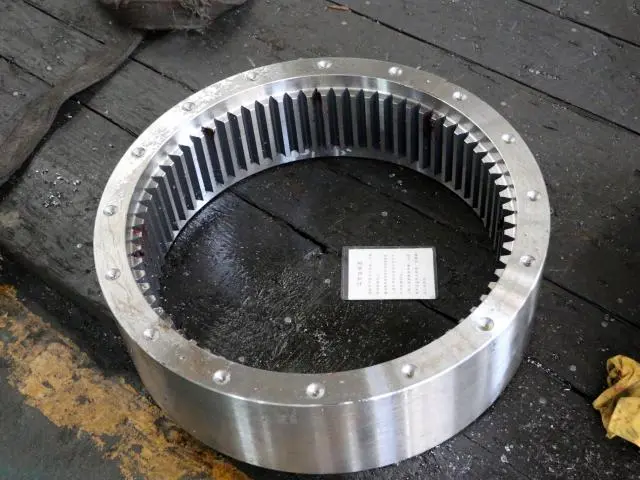
Understanding Internal Teeth Gears — Fundamentals and Industrial Relevance
It's a special kind of Internal Teeth Gear design where teeth are machined along the inside diameter of a ring. This makes a meshing arrangement that is very different from external gear systems. The gear and pinion can turn in the same way with this design, and the coaxial layout stays small, which is very helpful in situations with limited room.
Working Principles and Design Elements
When pressure angles are set to 20° or 25°, the involute profile shape used in Internal Teeth Gear teeth makes power transfer smooth. When working, external gears push apart, but Internal Teeth Gear configurations pull together, which naturally keeps the system stable when it's under load. The ring gear's curved tooth surface wraps around the convex pinion teeth, making more contact and spreading the forces over a bigger area. This conformal contact lowers Hertzian contact stress by a large amount, which makes parts last longer in high-torque situations.
When making these parts, interference protection needs to be carefully thought out. When the difference in the number of teeth on the pinion and ring gear is less than the ideal range, which is usually between 8 and 12 teeth, trochoid interference can happen where the pinion tip digs into the ring gear root. Professional manufacturers accurately figure out these factors during the planning process, which makes sure that the mesh geometry is reliable.
Industrial Applications and Performance Benefits
Internal Teeth Gear kits work really well in planetary gear reducers that are used in mining equipment because they need to have small footprints and a high power density. These gears make motion smooth and stable, which helps machine tool feed systems do precise placing even when loads change. Transmission systems for lifting tools use the high load-bearing capacity built into the design to handle shock loads safely that would damage external gear setups.
Because Internal Teeth Gear systems are sealed, they naturally keep out contaminants. This is a big plus in tough mining and building settings where dust, mud, and abrasive particles can damage gears. Instead of open exterior gear trains, the ring gear works better as a covering element, protecting the mesh zone and keeping the oil in better.
Comparative Analysis — Selecting the Best Internal Teeth Gear Type and Supplier
Which Internal Teeth Gear or external gear setup to use depends on the needs of the application. Each has its own performance traits that are best for different working conditions.
Performance Comparison Across Gear Types
When comparing power density, Internal Teeth Gear sets are better than external spur gears of the same size. Because they are conformal, they can transfer more weight per unit volume, which makes them perfect for situations where weight and area limitations limit design choices. When planetary setups use Internal Teeth Gear ring gears, they can achieve reduction ratios that aren't possible with simple external gear trains. They can also keep the load evenly spread across multiple planet gears.
For uses that need to be serviced often, external gears are still better than internal ones because they are harder to check. To see where the teeth are on the inner circle, the part usually needs to be taken apart or a special borescope is used. Analysis of oil waste is now the best way to plan preventative maintenance for Internal Teeth Gear systems that work in protected spaces.
When gears are arranged internally instead of externally, the sliding speed at the mesh point is lower. This keeps the hydraulic oil film in place and lowers the rate of wear. This means better mechanical efficiency and lower operating temperatures, which are very important in heavy-duty industry settings where thermal control affects how long parts last.
Critical Supplier Evaluation Criteria
Material specs are the basis for how well and how long a piece of gear works. After being heated, high-grade alloy steels like 20CrMnTi, 42CrMo, AISI 4140, and SAE 4340 have the right mix of core stiffness and surface hardness. Carburizing processes make the surface hard (58–62 HRC) while keeping the cores flexible and able to withstand shock loads. This is important for mining and aircraft uses where loads change quickly.
Precision standards have a direct effect on how well a system works and how noisy it is. When gears are made to ISO 1328 or AGMA 2000-A88 accuracy classes of 5–6, they have the tight limits needed for high-speed uses and run smoothly. Tooth profile deviations, pitch differences, and runout specs must all match the performance needs of your tools.
Customization features set sellers that can handle complicated projects apart from basic vendors. It is possible to make gears with different tooth numbers, module ranges (0.5 to 50), helix angles (between 5° and 45°), and heat treatment methods that are specific to the application. This allows for the best system design. Suppliers who give full technical help, such as CAD modeling, stress analysis, and prototype development, are worth a lot more than just making parts.
Top Suppliers of Internal Teeth Gears for Industrial Machinery
The global supplier landscape includes both well-known international names that sell standard goods and specialty companies that make solutions that are specifically made for each purpose.
Leading Global Suppliers and Their Offerings
SKF, Timken, Rexnord, and NSK have built reputations on consistent quality, extensive R&D, and global distribution networks. Their stringent quality control systems certified to international standards ensure product consistency across production runs. Technical documentation and application engineering support benefit global corporations standardising components across multiple locations. Premium pricing reflects investments in advanced manufacturing technology, rigorous testing protocols, and comprehensive warranty programs that align with aerospace and regulated industry requirements.
Specialized Manufacturers and Custom Solutions
US, Chinese, and European manufacturers offer excellent alternatives for Internal Teeth Gear projects requiring custom designs, flexible order quantities, or specific material requirements. These Internal Teeth Gear suppliers typically respond faster to engineering change requests and accommodate smaller production runs that larger manufacturers cannot due to minimum order constraints. YIZHI MACHINERY exemplifies this capability for Internal Teeth Gear with complete in-house production including CNC gear machining, automatic grinding, and intelligent heat treatment for carburising, quenching, and induction hardening. Low minimum order quantities for Internal Teeth Gear, including single-piece production, support prototype development and equipment repair applications.
Pricing Structures and Lead Time Considerations
Pricing varies significantly based on material specification, precision grade, heat treatment requirements, and order quantity. Standard stock items ship within days with limited customisation options. Custom-engineered parts require 35-60 days for material procurement, machining, heat treatment, and finish grinding. Material costs fluctuate with alloy steel market prices, with premium grades commanding higher prices. Procurement teams should evaluate total cost of ownership rather than unit price alone—higher-quality gears deliver extended service life and reduced maintenance costs offsetting initial premium.
Procurement Tips and Best Practices for Internal Teeth Gears
Technical needs, quality testing, and managing relationships with suppliers should all be balanced in good procurement strategies to make sure that parts meet performance standards while staying within project budgets and timelines.
Quality Assessment and Verification Methods
Before accepting delivery, obtain material certifications showing alloy composition, heat treatment parameters, and hardness test results. Dimensional inspection methods should verify tooth profile accuracy, pitch variation, runout measurements, and surface finish standards using CMM equipment. Suppliers offering witnessed inspection opportunities demonstrate confidence in quality systems. Sample testing programs prove valuable when qualifying new sources or implementing custom designs. Prototype gears enable functionality verification in actual operating conditions before production quantity commitment.
Strategic Supplier Collaboration
Long-term relationships with reliable suppliers deliver benefits beyond individual transactions. Suppliers familiar with your equipment requirements, quality standards, and delivery preferences can better accommodate urgent requests and suggest improvements based on application-specific knowledge. Regular communication about preventive maintenance procedures and spare parts availability ensures operational continuity. Suppliers maintaining inventory of previously manufactured custom parts enable rapid response to unexpected failures, minimising costly downtime in critical applications where production schedules cannot tolerate extended outages.
Contract Negotiation and Risk Mitigation
Warranty terms should clearly define coverage duration, failure conditions, and remedy procedures. Comprehensive warranties covering material defects and manufacturing errors protect against quality issues. Understanding exclusions regarding improper installation, inadequate lubrication, or operation outside specified parameters clarifies responsibility. Payment terms protecting both parties' cash flow needs should be structured as milestone payments tied to production events including material receipt, rough machining completion, heat treatment, finish grinding, and final inspection. This approach maintains quality standards until final payment.
Future Trends and Innovations in Internal Teeth Gears Supply
New developments in manufacturing technology, material science, and digital integration are changing how Internal Teeth Gear parts are developed, made, and bought in all kinds of industries.
Advanced Manufacturing Technologies
Power skiving has become the industry standard for high-volume internal gear production, offering faster cycle times than traditional shaping while achieving ISO 5-6 grade accuracy. Multi-axis CNC machining centres enable complex gear geometries in single setups, eliminating repositioning errors and reducing handling time. Automation in tooth grinding now includes intelligent systems automatically compensating for heat treatment distortion. Press and die quenching physically restrain thin-walled ring gears during quenching, preventing ovality and dimensional changes complicating finish grinding.
Material Science Developments
New alloy formulas improve the mix between surface hardness and core toughness, which makes gears last longer in tough situations. The nickel-chromium metals that were made just for aircraft use have very high resistance to fatigue under cyclic loading conditions and keep their shape over a wide range of temperatures. These materials make designs lighter without lowering their strength, which is very important for uses in airplanes and space systems that need to be light.
Composite materials that contain modern plastics show promise for uses where metal gears are not appropriate. Corrosion protection, electrical insulation, and lighter weight are some of the benefits of these materials. This means they can be used in new ways in chemical processing and marine environments where standard steel gears break down quickly.
Digital Supply Chain Integration
Sharing CAD models and making virtual prototypes make the design approval process faster, which cuts down on the time it takes to go from idea to production. Cloud-based teamwork tools let suppliers and engineering teams look over designs at the same time. This helps solve problems with measurements and makes the design as easy to make as possible before cutting metal. This digital process cuts down on the number of expensive redesign rounds that push back project deadlines.
Real-time production tracking tools let you see where an order is at any time during the manufacturing process. At important points, like when the materials are received, the work is finished on the machine, it is heated up, the quality is checked, and the package is ready to go, buyers are automatically notified. This lets them plan their processes ahead of time and give accurate delivery dates to internal stakeholders. This end-to-end visual tracking is provided by YIZHI MACHINERY. They send live information from the plant loading to the customer signing, so you can keep an eye on your shipment from anywhere.
E-commerce sites designed for business-to-business purchases make it easier to get quotes, place orders, and pay for standard parts. Technical specification filters make it easy for buyers to find goods that meet their needs, and built-in engineering tools help with the right choice and size. They cut down on the time it takes to buy things and the work that needs to be done to manage them compared to standard "request for quote" methods.
Conclusion
If you want to find the best Internal Teeth Gear provider, you need to look at their technical skills, quality systems, ability to make changes, and service support that fits your application needs. Understanding the basics of gears, how they compare in terms of performance, and new production technologies helps procurement teams make smart choices that balance short-term cost concerns with long-term practical value. Whether you buy from well-known global names or specialized custom makers, making sure the quality is checked thoroughly, working with suppliers strategically, and having clear contract terms all protect your investment and make sure the parts are reliable. The use of more advanced manufacturing methods and digital supply chain integration is making it possible for better gear solutions to be used in mining operations, industrial tools, and aircraft.
FAQ
1. What manufacturing process delivers the best results for Internal Teeth Gear production?
Power skiving is the best way to make high-volume, high-precision Internal Teeth Gear right now. This method is faster than standard gear shaping and gives you more options than broaching, which is especially helpful for gears with shoulder limits. The process cuts cycle times by a large amount while still keeping the tight limits needed for tough industrial uses.
2. How do you verify quality and precision before purchasing Internal Teeth Gear components?
Ask for full material certificates that list the alloy's makeup, how it was heated, and the results of a hardness test. Measurements of tooth profile correctness, pitch variation, and runout should be checked against ISO 1328 standards in dimensional inspection records. Sample testing programs let you make sure that the product works properly in real-world situations before committing to large-scale production. This shows performance traits that can't be reproduced in a lab.
3. What typical lead times should procurement teams expect for custom Internal Teeth Gear production?
Custom-engineered Internal Teeth Gear usually need 35 to 60 days to be made. This time frame includes getting the materials, doing precise machining like cutting and hobbing, heat treatment cycles like induction hardening or carburizing, finish grinding to get the required surface hardness levels of 58 to 62 HRC, a full quality check, and packaging to keep them safe. For pressing needs, rush production may be offered at a higher cost.
Partner with YIZHI MACHINERY for Precision Internal Teeth Gear Solutions
If you're looking for a reliable Internal Teeth Gear provider, you've found it. This company has technical know-how, open customization options, and a global reach. Precision gear making has been YIZHI MACHINERY's specialty for 15 years, and they make parts that meet the strict needs of industrial tools, mining operations, and aerospace uses. Our production methods are in line with ISO standards. They use high-tech CNC gear machining centers, automatic grinding systems, and smart heat treatment lines to get accuracy grades of ISO 5–6 across module ranges from 0.5 to 50. We can handle projects of any size, from single-piece prototypes to mass production, with delivery times ranging from 35 to 60 days and special packing that keeps damage to less than 0.1 percent during global shipping. As part of our full service model, we offer design advice and CAD help before the sale, synchronized production changes with real-time tracking, and a one-year guarantee with quick troubleshooting. Contact us at sales@yizmachinery.com to talk about your unique gear needs, get full technical specs, or get a competitive quote. Find out how our custom production services and track record of working with well-known mechanical engineering companies around the world can help improve the performance and dependability of your equipment.
References
1. American Gear Manufacturers Association (AGMA). AGMA 2000-A88: Gear Classification and Inspection Handbook—Tolerances and Measuring Methods for Unassembled Spur and Helical Gears. Alexandria: AGMA Publications, 1988.
2. Dudley, Darle W. Handbook of Practical Gear Design and Manufacture. 2nd ed. Boca Raton: CRC Press, 2012.
3. International Organization for Standardization. ISO 1328-1:2013: Cylindrical Gears—ISO System of Flank Tolerance Classification—Part 1: Definitions and Allowable Values of Deviations Relevant to Flanks of Gear Teeth. Geneva: ISO Publications, 2013.
4. Litvin, Faydor L., and Alfonso Fuentes. Gear Geometry and Applied Theory. 2nd ed. Cambridge: Cambridge University Press, 2004.
5. Radzevich, Stephen P. Dudley's Handbook of Practical Gear Design and Manufacture. 4th ed. Boca Raton: CRC Press, 2021.
6. Society of Automotive Engineers. SAE J1141: Transmission Internal Ring Gear Specification. Warrendale: SAE International Standards, 2019.

USER EVALUATE
Here is the customer's evaluation of us