


How to choose the right internal gear wheel manufacturer for industrial use
Getting Internal Gear Wheels from the right maker has a direct effect on the accuracy, uptime, and cost-effectiveness of your equipment. Planetary reducers, mine winches, aircraft actuation systems, and heavy-duty machinery all depend on the Internal Gear Wheel, which has teeth that are cut inward. When choosing a provider, you should look at how knowledgeable they are about the material, how well they can make things, how well they follow international standards, and how well they can help you after the sale. If you make an intelligent choice, your transmission systems will work perfectly even when they are under a lot of stress, at very high or very low temperatures, or with demanding job cycles. This will save you money over their whole life and keep them working properly.
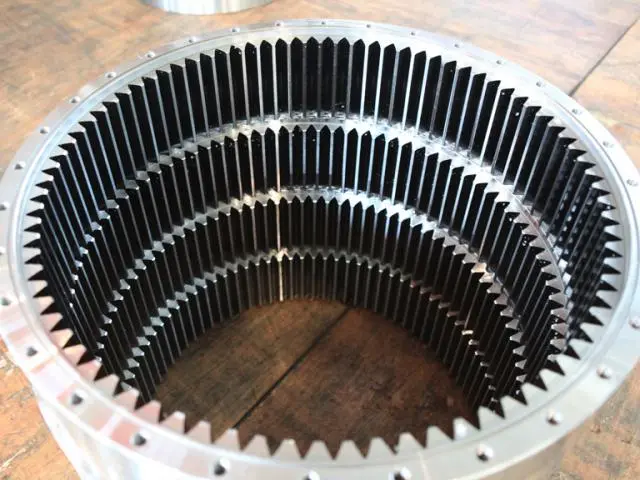
Understanding Internal Gear Wheels and Their Industrial Significance
What Defines an Internal Gear Wheel?
An Internal Gear Wheel is different from other types of gears because its teeth face inward and connect with a smaller pinion gear that is inside its circle. Unlike external gear pairs, this set-up lets both gears turn in the same way. The tooth connection makes the contact ratio higher, which spreads loads more evenly across the tooth surface and lowers Hertzian stress. Because of this design concept, Internal Gear Wheels are necessary in small, high-torque uses that need to be efficient without sacrificing strength because of limited room.
Core Applications Across Industries
Ring gears are used a lot in planetary gear reducers. They are the outer ring of three-part systems that also include sun gears and planet carriers. When used in mines, these parts are put through shock loads in winch drums and conveyor drives. For actuator assemblies and rotor transmission systems, aerospace uses need Internal Gear Wheels that are both light and strong. Machine tool feed systems depend on their accuracy to position things to within a few microns, and lifting equipment relies on their load-bearing ability to safely move loads of several tons.
Material Selection and Heat Treatment
Some materials, like 20CrMnTi, 42CrMo, and SAE 8620, have the right amount of core stiffness and surface hardness. A heat process called carburizing makes a hard case layer that is 58–62 HRC and resists scoring and pitting. The flexible core, on the other hand, absorbs impact forces. When you quench and temper metal, you smooth out the grains, which makes it more resistant to wear. Induction hardening can improve the surface in particular load areas. These mechanical methods decide whether an Internal Gear Wheel can last 10,000 or 100,000 hours of use in harsh conditions.
Core Criteria to Evaluate When Choosing an Internal Gear Wheel Manufacturer
Quality Assurance and Certification Standards
ISO 9001 demonstrates process control, but gear-specific standards matter more. ISO 1328 Grade 6 or higher ensures planetary gearbox dimensional precision. AGMA quality classes define pitch, profile, and lead error limits. DIN 3962 regulates tooth flank geometry. Suppliers provide material certificates with steel origin and composition, plus heat treatment records showing case depth and hardness uniformity. Third-party CMM and gear tester inspection verifies compliance before shipment.
Advanced Manufacturing Capabilities
Modern Internal Gear Wheel production requires specialised equipment beyond standard hobbing machines. Power skiving accelerates cycle times for high-volume orders. Gear shaping uses rotating cutters for internal tooth cutting. Broaching achieves tight internal spline tolerances with job-specific tooling. Grinding corrects heat-treatment distortion to ISO Grade 5 accuracy for low-backlash robotics. CNC machines handle integrated features like mounting flanges and keyways in single setups, reducing cumulative tolerances. Full in-house manufacturing ensures tighter quality control than outsourced operations.
Here are the capabilities that distinguish leading suppliers:
- Material Expertise: We carry a range of alloy types, such as 40CrNiMo, AISI 4140, and 18CrNiMo7, to meet the needs of different applications and ensure the best mechanical qualities.
- Customization Flexibility: engineers can help with modules from 0.5 to 50, helix angles from 5° to 45°, and tooth numbers that are exactly what the ratio needs.
- Inspection Rigor: Full-dimension reports with noise measurement, gear roll tests, and metallurgical cross-sections that show the case depth is uniform.
- Scalability: means being able to handle both small trial runs and large production runs without affecting delivery times or the cost per unit.
These qualities make gears that mesh quietly, transfer power well, and don't wear out too quickly when loaded and unloaded many times. When companies spend money on grinding technology and climate-controlled production areas, the parts they make meet standards for medical devices and aircraft, not just general industry grades.
Supply Chain Reliability and Logistics
Custom Internal Gear Wheels require 35-60 day lead times covering design validation, raw material sourcing, milling, heat treatment, and finishing. Suppliers maintaining raw material inventory and transparent production schedules accommodate urgent orders without premium charges. Protective packaging using custom wooden boxes with shock-absorbing layers and anti-corrosion coatings prevents transit damage, keeping damage rates below 0.1%. Sea freight for bulk orders combined with air freight for critical components balances cost and delivery speed. Real-time tracking systems provide visibility from plant loading to final delivery.
After-Sales Support and Warranty Programs
Comprehensive after-sales support distinguishes strategic partners from transactional suppliers. Technical assistance during installation prevents assembly errors like interference fits damaging tooth flanks. Maintenance guidelines specifying inspection intervals, lubrication schedules, and wear limits extend operating life. Rapid field issue response through remote monitoring or engineering visits minimises downtime costs. One-year or 10,000-hour warranty coverage demonstrates manufacturer confidence in product durability. Suppliers offering gear refurbishment and reverse engineering services for obsolete parts support long-term asset management for legacy equipment without original documentation.
Comparing Leading Internal Gear Wheel Manufacturers: What Differentiates the Best?
Established Global Brands
SKF and Timken became well-known for their bearing technology, but they also started making combined transmission parts, such as high-precision Internal Gear Wheels for car and industrial clutches. Their strength is that they have a lot of testing sites that mimic real-life temps, loads, and levels of contamination. KHK has a collection of common gears that are easy to get but can't be changed much. Bonfiglioli makes full planetary reducers with custom-designed gears inside that work best in certain situations, like sun tracking and crane slewing drives. The high prices of these names are based on their proven dependability in safety-critical settings.
Specialized Custom Manufacturers
When you have specific needs, companies that only make gears can often provide the best value. YIZHI MACHINERY is a great example of this type of company because it has 15 years of experience making things and can customize everything. Their production methods are ISO-compliant and can work with a wide range of materials, from normal 45# steel to special metals like SAE 4320. The surface hardness ranges from 45 to 50 HRC for light duty uses to 58 to 62 HRC for heavy duty uses. You can make one-piece samples without having to meet a minimum order quantity. This is useful for research and development projects and aftermarket repairs where volume doesn't support investing in tooling at bigger providers.
Differentiating performance shows up in practical factors. Noise levels below 70 dB(A) at stated speeds show that the teeth are perfectly shaped and the parts are balanced. Multi-stage gears that have efficiency scores above 98% lose less energy than those that don't. As long as the load capacity estimates follow the rules set by AGMA in 2001, there are enough safety factors to protect against bending fatigue and contact stress. Case studies from mine operations show that Internal Gear Wheels can last for more than 50,000 hours in rough conditions if they are made with the right case depth and leftover compressive stress profiles. For aerospace applications, weight-optimized designs are shown that achieve 2:1 strength-to-weight ratios by using modern materials and shape optimization.
Navigating the Procurement Process: How to Buy Internal Gear Wheels Online or from Custom Manufacturers?
Sourcing Channel Evaluation
Online markets are convenient for buying standard parts, but they don't have engineering help for problems that are unique to a particular application. Distributors keep popular sizes in stock and can get them quickly, but they add hidden costs and don't offer any services that add value. Engaging directly with custom makers allows for joint design improvement, help with choosing materials, and cost optimization through reviews of design-for-manufacturability. Before agreeing to produce large amounts, quality claims can be checked by asking for examples. When you compare quotes, you have to make sure that the specs are the same. A lower price for lower-quality materials or looser limits ends up being more expensive when they break down early and need to be replaced or production stops.
Technical Specification Development
To make a good purchase, you need to know all the details, like the number of teeth, the module (or diametral pitch), the helix angle, the hole diameter and tolerance, the face width, the material grade, the heat treatment standards, and the surface finish. By giving working conditions like input power, speed, duty cycle, temperature range, and lubrication method, makers can suggest the right designs and find problems like thermal expansion mismatches or not enough lubrication access. Checking for interference and making sure a setup works are easier with CAD models. Tolerance analysis makes sure that parts from different sources that fit together properly have the right amount of slack and concentricity.
Negotiating Terms and Risk Mitigation
Lead time promises should include extra time in case materials are late or heat treatment needs to be redone. Payments at set points in the production process, like when raw materials are bought, rough cutting is finished, heat treatment is done, and the final check is done, make sure that cash flow is in line with value delivery. Inspection hold points let the buyer check things out before actions that can't be undone happen. Having clear acceptable standards, like margins for size, hardness, and surface finish, stops arguments. When you buy things from other countries, you need to pay attention to import taxes, freight handling, and protecting yourself against currency fluctuations. Having the right paperwork, like material certificates, inspection reports, and (if needed) CE marks, makes clearing customs easier and meets audit standards.
Maintenance and Longevity Tips to Maximize Your Internal Gear Wheel Investment
Routine Inspection Protocols
Actual job cycles can be taken into account by setting inspection times based on working hours instead of calendar time. Visual inspections can find early scoring, pitting, or micropitting damage before it spreads. Gear tooth scales are used to measure the thickness of teeth. This lets you keep track of how much wear is happening and repair the teeth before they break. Vibration analysis finds things that aren't balanced or aren't lined up correctly, which speeds up the breakdown process. Metallic bits found in oil research show active wear, while changes in viscosity show pollution or thermal breakdown. Inspections of the bore and keyways stop fretting rust, which can break press fits or make the rotating part slip when it's under load.
Lubrication and Environmental Controls
Centrifugal forces in spinning Internal Gear Wheels push lubricant away from mesh zones. To make sure the film thickness is right, pressure-fed systems or guided oil jets are needed. Synthetic oils with EP (extreme pressure) additives keep the moving parts from sticking together when the machine is first starting up or when it is under shock loads. Filtration systems that get rid of particles bigger than 10 microns stop rough wear that speeds up surface fatigue. Housings that are sealed keep out contaminants, and breather holes let air flow so that temperatures can rise without building up pressure. Monitoring the operating temperature stops the machine from getting too hot, which can soften case-hardened surfaces or break down oil additives.
Strategic Replacement Planning
Internal Gear Wheels that are getting close to 80% of their design life should be replaced before they break during planned repair windows instead of waiting until it's too late. Keep important spares on hand to cut down on unexpected purchases and production loses. When you change something, upgrading to better materials or designs takes advantage of performance improvements that have come up since the original equipment was made. Suppliers with trade-in programs or core swaps help OEMs save money on repair costs and get data from field failures that they can use to improve future designs. A lifecycle cost study that compares high-end parts with longer service intervals to low-cost ones that need to be replaced more often usually shows that original investments in quality are better.
Conclusion
When choosing an internal gear wheel manufacturer, you have to weigh the short-term cost with the long-term dependability and assistance. Risks that come with important internal gear wheel transmission parts can be reduced by giving priority to suppliers with documented quality systems, advanced production skills, and quick customer service. Material tracking, the ability to grind precisely, and strong packing for internal gear wheels all work together to protect your investment from the time you buy it until you put it. Customization gives you the freedom to meet the specific needs of your internal gear wheel application, and scalable production lets you make both prototypes and large quantities. By forming relationships with makers who show they have technical knowledge and care about their customers' success, you can be sure that your internal gear wheel equipment will work as designed for as long as it is in use.
FAQ
1. How do internal and external gear wheels differ functionally?
Internal Gear Wheels and their corresponding pinions spin in the same direction, which makes it possible for planetary designs to be small. Since external gears turn in different directions, the center lengths need to be bigger. Higher contact ratios are achieved by internal designs, which spreads loads more widely and lowers noise. When compared to external gear meshes that are open to dirt and debris, the concave-convex tooth contact protects the mesh zones naturally.
2. What certifications verify manufacturer quality standards?
ISO 9001 shows how to handle quality in general, while ISO 1328 talks about gear accuracy grades in particular. Quality classes for American uses are set by AGMA guidelines. Material papers show what the metal is made of and that the heat treatment was done correctly. Accredited third-party inspection records are a reliable way to check the accuracy of measurements, the uniformity of hardness, and the metal's mechanical qualities.
3. What lead times should I expect for custom orders?
Standard handmade Internal Gear Wheels usually take 35 to 60 days to make, which includes technical approval, getting the materials, machining, heat treatment steps, and finishing. Timelines may be longer if the geometry is complicated or the materials are rare. Suppliers who keep raw material stocks on hand and have open schedules can handle urgent orders, but they usually charge more. Misunderstandings can be avoided by being clear about shipping needs during the quote process.
Partner with YIZHI MACHINERY for Precision Internal Gear Wheel Solutions
When it comes to industrial tools, mining, and aircraft, YIZHI MACHINERY makes transmission parts that meet the highest standards. We can make changes to modules ranging from 0.5 to 50, helix angles of up to 45°, and materials such as 20CrMnTi, 42CrMo, and SAE 8620, with surface hardness choices reaching 58 to 62 HRC. ISO Grade 6 precision is reached by advanced grinding technology, and full heat treatment facilities make sure that case levels are regular and cores are tough. As a maker of Internal Gear Wheels with 15 years of experience, we can help you with your projects from the first idea to the finished product. We do this with standard processes that include validating the design, keeping everyone up to date on progress, and checking the quality thoroughly. Our logistics system includes tracking in real time and packaging that keeps parts from getting damaged, so they come ready to be installed. Contact us at sales@yizmachinery.com to talk about your unique needs and get thorough technical proposals that are made to fit your application.
References
1. American Gear Manufacturers Association. (2020). AGMA 2001-D04: Fundamental Rating Factors and Calculation Methods for Involute Spur and Helical Gear Teeth. Alexandria, VA: AGMA Publications.
2. Dudley, D. W. (2019). Handbook of Practical Gear Design and Manufacture (3rd ed.). Boca Raton, FL: CRC Press.
3. International Organization for Standardization. (2018). ISO 1328-1:2013 – Cylindrical Gears: ISO System of Flank Tolerance Classification. Geneva: ISO Standards.
4. Radzevich, S. P. (2021). Theory of Gearing: Kinematics, Geometry, and Synthesis (2nd ed.). Boca Raton, FL: CRC Press.
5. Stadtfeld, H. J. (2020). Advanced Gear Manufacturing and Finishing: Classical and Modern Processes. Munich: Carl Hanser Verlag.
6. Townsend, D. P. (2017). Dudley's Gear Handbook: The Design, Manufacture, and Application of Gears (2nd ed.). New York: McGraw-Hill Education.

USER EVALUATE
Here is the customer's evaluation of us