


Why Use a Bevel Grinding Wheel for Bevel Gear Finishing?
To finish bevel gears precisely, you need special tools that are accurate, quick, and give you a uniform surface quality. A Bevel Grinding Wheel is designed to do this job especially. It has a curved grinding surface that fits the shape of bevel gears' conical teeth. These wheels are different from regular flat-faced abrasive tools because they can make smooth contact with complicated tooth profiles. This reduces thermal damage while still meeting the tight limits needed in aircraft, mining, and industrial machinery. Because they are custom-made, they don't have the geometry problems that happen with other grinding methods. This makes them essential for making high-performance gears.
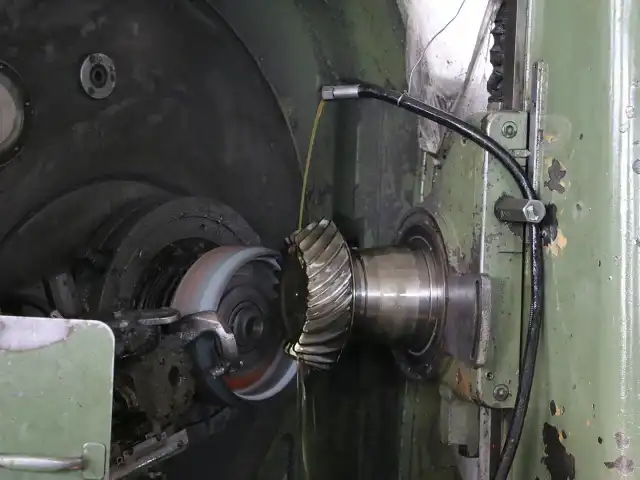
Understanding Bevel Grinding Wheels in Bevel Gear Finishing
What Makes Bevel Grinding Wheels Unique?
Bevel Grinding Wheels are very different from other grinding tools. Their tapered shape, which is usually called Type 38 or a special design, lets them precisely connect with the flanks of gear teeth at an angle. This shape keeps the edges from breaking, which happens when regular wheels try to spin at an angle. The design works with the usual pressure angles of 14.5° and 20° used to make bevel gears. This makes sure that the same amount of material is removed from the whole tooth surface without weakening the structure.
Due to their cylindrical shape, bevel gears need precise polishing. Bevel gears transport objects between shafts that cross at 90° angles, unlike spur gears, which have parallel axes. Their teeth have intricate contact patterns due to cylindrical surfaces that meet at the tip. The surface must be micron-accurate across bent tooth profiles for a smooth mesh. Specialised grinding wheels are ideal for this purpose since they retain their form under pressure.
Core Materials and Technical Specifications
Gritty makeup affects product performance. For general-purpose uses on medium-hardness steels like 42CrMo and AISI4140, aluminium oxide wheels work well. They are affordable for 0.5–50 module runs. Different varieties of silicon carbide may operate with tougher materials like 20CrMnTi and SAE4340 after carburisation (58–62 HRC). Diamond-coated wheels are excellent. These tools perform best with carbide-tipped gears and high-volume manufacturing, where their extended life justifies the initial expenditure.
Choosing the optimum grit size balances material removal speed and surface quality. Finer grits (120–220) offer aircraft gearbox systems mirror finishes, whereas coarser grits (36–60) speed up roughing. RPM compatibility is crucial. Resin bonds may reach 60 m/s, whereas vitrified bonds function at 33–45 m/s. Matching wheel specifications to machine capabilities prevents severe overspeed failures and maximises hobbing, milling, and grinding efficiency.
Induced Porosity and Thermal Management
Modern Bevel Grinding Wheel designs include forced porosity, which are tiny holes in the bond matrix that hold fluid. When gear teeth are being finished, friction creates strong localised heat that can soften areas that are too hard or make flaws in the metal. When compared to dense wheels, porous shapes let coolant flow straight to the cutting zone, lowering temperatures by 40 to 60%. This temperature control is very important when working with aerospace-grade materials like 18CrNiMo7, because keeping the hardness between 45 and 50 HRC across the whole tooth profile is what makes sure that the machine works reliably in high-stress situations.
Why Bevel Grinding Wheels Are Essential for Bevel Gear Finishing
Precision That Protects Critical Applications
Bevel Grinding Wheel gears might cease operating due to size variations if finished without proper grinding wheels. ISO 8–9 accuracy is essential for automotive steering systems and machine spindle drives; differences of more than 5 microns may cause early wear or catastrophic failure. Old-fashioned grinding produces inconsistent contact patterns. Especially for spiral bevel gears, tooth impact progressively rises to reduce noise and shock loads.
Specialised wheels meet industrial equipment Gleason profile specifications. These tools respond to tooth curves without stress risers to maintain gearbox efficiency in tiny mechanical systems. This precision is particularly useful for mining equipment that works under strong loads, as even minute surface imperfections may accelerate fatigue cracking in SAE4340 or 40CrNiMo gear teeth.
Economic Impact Across Production Cycles
The cost analysis extends beyond tool purchases. Conventional abrasives lose 30–40% of their wheel volume when dressed into bevel shapes. This requires frequent replacement, stopping output. Pre-formed Bevel Grinding Wheels avoid this waste by maintaining a constant shape from start to finish. This reduces unit finishing costs by 15-20% in facilities that create 500 or more gears per month.
More money is saved by extending tool life. Regular aluminium oxide wheels wear out after 200 to 300 gears, whereas diamond-coated ones endure 800 to 1200. Superior abrasives cost more initially but last longer and cost 40 to 60% less over a year of manufacturing. Aerospace suppliers that grind 17CrNiMo6 gears with a surface hardness of 58–62 HRC appreciate this toughness because heat treatments and unique materials need grinding solutions that minimise downtime.
Documented Performance Improvements
Bevel Grinding Wheels helped automobile automatic gearbox manufacturers get results. Spiral bevel gear case studies showed 35% quicker closure times and half the amount of repairs. The greater surface homogeneity eliminated small fractures after cooling and tempering. This extended gear life to 8,000–10,000 hours.
Aerospace usage has far greater consequences. Diamond-coated wheels gave a robotic aeroplane gearbox system manufacturer 0.8 micron surface roughness. Other methods produced 1.5 micron finishes, but this is superior. This adjustment reduced gear noise by 12 dB and improved load capacity by 18%. These numbers are crucial for systems where every gram of weight and decibel of noise affects plane performance.
How to Choose the Right Bevel Grinding Wheel for Your Procurement Needs
Material Compatibility Assessment
Grinding effectiveness and surface quality depend on how well the abrasive is matched to the subject material. When the surface hardness stays below 50 HRC, aluminum
oxide wheels function nicely on 45# and 20CrNi2Mo. Friable grain splits apart when sliced, exposing new sides that maintain removal rate. This self-sharpening characteristic is ideal for fairly accurate and cost-effective agricultural equipment gears.
Harder metals need harsher abrasives. Silicon carbide or ceramic grains are required for induction hardening or carburising to 58–62 HRC. AISI8620 and 20CrNiMo gears benefit from these tougher abrasives since they don't dull at high pressures while grinding reinforced casings. Better dimension and surface polish control offset slower material removal rates.
Diamond-treated wheels are ideal for creating several stronger gears. They are useful for continuing activities where changing equipment would hinder labour due to their durability. Hundreds of steering system and spindle drive gear pieces retain the same form when diamond abrasives grind AISI4140 (58+ HRC) materials. Over time, greater service life and quicker completion times pay for the initial outlay, which is three to five times that of a conventional wheel.
Evaluating Supplier Reliability
Buying involves more than product details. They also list selling capabilities. Famous manufacturers maintain lot-to-lot homogeneity for production planning. Differences in grit or bond hardness between pairs of wheels cause finishing issues that reduce quality control. Suppliers who implement ISO standards demonstrate process controls that limit variance. This maintains performance throughout multi-year purchase transactions.
Customisation possibilities satisfy prevalent bevel gear demands. Module levels from 0.5 to 50, tooth counts, and pressure angles provide for a variety of grinding demands. Custom wheel suppliers eliminate stock product issues. YIZHI MACHINERY provides unique solutions based on 15 years of precise manufacturing expertise using this approach. Their whole customisation process—determining what you need, designing the wheel, constructing it, checking it, packaging it, and sending it—ensures it fits your gears flawlessly.
Logistics reliability is crucial in global supply chains. Reliable shipment arrangements keep production going throughout 35–60-day lead periods. Suppliers that provide real-time shipment monitoring and specialised packaging that prevents damage during international shipping give customers peace of mind. Shipping freight between China and Europe via water, air, or rail affords enterprises several timetable options to balance cost and urgency. Custom hardwood boxes and shock-absorbing packaging with damage rates below 0.1% safeguard your investment throughout the supply chain. A trustworthy Bevel Grinding Wheel vendor supports this process.
Best Practices for Using and Maintaining Bevel Grinding Wheels
Safe Mounting Procedures
When wheels are installed correctly, they don't break down in dangerous ways that put workers at risk and damage equipment. To start, use the ring test to look for cracks in wheels: hang the wheel and tap it gently with something that isn't metal. Wheels that aren't broken make a clear ringing sound, while wheels that are cracked make a dull thud sound that means the structure is weak. Never place wheels that have damage, chips, or colouring that looks like it was caused by heat.
Check to see if the RPM settings for the Bevel Grinding Wheels and the spinning speeds of the grinding machine are compatible. When you go faster than the highest working speed, centrifugal forces are created that break wheels in terrible ways. Match the width of the arbour hole very closely—gaps bigger than 0.1 mm cause vibrations that speed up wear and damage the surface finish. Put compressible nuts on both sides of the wheel to spread the tightening pressure out evenly and stop stress build-ups that cause cracks. Tighten the fixing nuts all the way, but don't use too much force, as that can bend the structure of the wheel.
Put protection guards on newly mounted wheels and let them run at full speed for 60 seconds before you start grinding. This test spin finds problems with balance or flaws that weren't seen before the object touches it. During this important safety check, move out of the way of the possible fragment's path.
Maintenance Routines That Extend Service Life
When wheels "glaze," swarf builds up on rough surfaces and hinders material removal; frequent cleaning restores performance. Single-point diamond dressers remove thin layers to show fresh grains while maintaining gear tooth form bevel angles. Dress wheels if grinding pressures increase or surface polish degrades. This normally occurs after 20–30 gears, depending on material hardness.
How wheels are kept affects their lifespan. Storage in a climate-controlled location with below 60% relative humidity is necessary because resin-bonded wheels absorb water and break the bond. Wheels should be stored upright on racks designed for tapered profiles to prevent bending. The exact geometry of wheels stored horizontally under load changes. Rotate stock following the first-in, first-out criterion since bond materials degrade over time, even when not utilised. Even though vitrified wheels can endure more weather, they perform best when kept carefully and away from extreme temperatures.
Coolant management prevents grinding heat damage. Coolant should flow directly to where the wheel touches the item, where friction raises temperatures most. Maintain the manufacturer-recommended coolant percentage. Too-diluted coolant ceases operating, while too-concentrated coolant leaves residues. Cleaning cooling systems monthly prevents bacteria growth, which degrades fluids and stinks.
Safety Protocols and Personal Protection
Grinding involves dangers that need protective gear. Side-shielded safety glasses prevent eye injury from moving objects. High-removal-rate procedures benefit from face shields. Grinding noise exceeding 85 dB requires hearing protection. This is common in industries with multiple machines running. When grinding carbide-tipped gears or chemicals-plated objects, protect your lungs from fine particles.
Machine guards must be present at all times. Even when treated carefully, these barriers retain wheel parts together when occasional failures occur. To avoid pulling workpieces into gaps, support them within 3 mm of the wheel sidewalls. Never use grinding tools with missing or damaged guards. Short-term convenience is never worth the great danger of injury.
Make sure work locations are safe for tripping and have adequate light for delicate tasks. Set appropriate work hours to prevent workers from doing difficult grinding duties while exhausted, which increases accident risk. Regular safety training emphasises proper procedure, which helps everyone prevent injuries.
Comparing Bevel Grinding Wheels with Other Finishing Solutions
Bevel Grinding Wheels versus Flap Wheels
Flap wheels are flexible because they have abrasive wings that meet and can be used on rough surfaces. This design works well for tasks like deburring and mixing where surface preparation is more important than aggressively removing material. Because they are compliant, operators don't need to have as much skill, which makes them popular for basic manufacturing work. The rate of material removal is between 40 and 60% for fixed grinding wheels, which is fine for low-volume jobs but not good enough for production settings.
Bevel Grinding Wheels give you the accuracy you need to finish gears. During the cutting process, the hard structure keeps the same angular shape, which makes sure that the tooth profiles are the same on hundreds of parts. Flap wheels don't have this kind of physical stability. As flaps wear down differently, the shape of the wheel changes, which makes it harder for gears to mesh properly. In the same way, stiff wheels have better surface finish quality, with hardness levels of 0.8 to 1.2 microns compared to 1.8 to 2.5 microns for flap wheels.
A cost study shows which scenarios are best for each approach. Flap wheels work best in repair shops that only need to grind a few gears a month because they are cheaper to buy and don't require as much skill. When factories make more than 500 gears a month, they can get much better economics with purpose-built Bevel Grinding Wheels. This is because the higher costs of the tools are justified by the lower costs of finishing each unit.
Diamond versus Standard Abrasives
Diamond-coated wheels cost $150–$400 more than aluminium oxide wheels. This discrepancy indicates diamond abrasives' heat conductivity and hardness. When grinding 58–62 HRC gears, diamond retains its sharp cutting edges 4–6 times longer than other abrasives. Longer tool life reduces tool changes, which is important for continuous production operations.
Precision makes diamond wheels stand out in challenging settings. Its crystal structure makes it easy to manage dimensions and fulfil ISO 8 grade criteria. Precision machine tool spinning gears and gearbox components for aeronautical use benefit from this precision. Two- to three-micron deviations may affect performance. Long-term production runs are difficult for ordinary abrasives because they lose sharpness, increasing grinding pressures that bend workpieces and lowering dimension accuracy.
Diamonds also regulate heat efficiently. Better heat transmission than aluminium oxide decreases grinding temperatures by 40%, preventing metal damage that softens difficult surfaces. This is particularly useful for 18CrNiMo7 or 17CrNiMo6 gears that need precision hardness adjustment. Lower temperature stress allows more material to be removed without burning, speeding production without affecting surface quality.
Even though diamonds are preferable, abrasives are commonly used because of cost. Normal abrasives are cost-effective for agricultural and light industrial gears with looser tolerances. Lower hardness specifications (45–50 HRC) help aluminium oxide wheels last longer and cost less. Operators should consider production and quality while selecting abrasives. Diamond wheels' high cost is quickly offset in high-volume or precision-critical applications.
Conclusion
Gear cleaning is now a controlled, repeatable process thanks to specialised Bevel Grinding Wheels, which make the process easier. Their designed shape fits the conical tooth outlines of bevel gears, which makes them more precise than regular abrasives. Choosing the right material, from cheap aluminium oxide to high-end diamond coats, lets you get the best results in a wide range of situations, from farming tools to spacecraft transmissions. The right selection factors, which take into account things like material hardness, production volumes, and quality standards, make sure that purchasing choices are in line with practical goals. Safety rules and upkeep procedures protect workers and extend the life of tools. The recorded performance gains in the aerospace and car industries show measured returns through shorter finishing times, better surface quality, and longer gear service life, which support the investment in custom grinding solutions.
FAQ
1. What grit size works best for bevel gear finishing?
The choice of grit relies on the stage of finishing and the stiffness of the material. 36-60 grit wheels that focus on material removal over surface quality are good for roughing processes that need to remove a lot of stock. During semi-finishing, the grit changes from 80 to 120, which balances speed with better surface qualities. For final cleaning, 150–220 grit wheels are used to get the 0.8–1.5 micron surface hardness needed for precise tasks. To get the same surface quality on harder materials, like carburised 20CrMnTi, you usually need smaller grits than on lighter materials, like 45# steel.
2. How often should grinding wheels be replaced?
When to replace them depends on the type of grit and how hard it is used. Standard aluminium oxide wheels can usually handle 200 to 300 strengthened gears before they stop working well because of wear. Diamond-coated variants can handle 800-1200 gears, which is why they cost more in industrial settings. Keep an eye on the grinding forces and the quality of the surface finish. If the pressure needs to go up or the roughness gets worse, it means the end of the life is getting close. Replace wheels that are worn down more than 25% of their original width or have any damage to the structure, no matter how many parts they have.
3. Can one wheel handle multiple gear materials?
Although it is technically possible, performance is best when wheels are made specifically for a group of materials. Because 45# steel (usually 200–250 HB) and carburised 18CrNiMo7 (58–62 HRC) are not the same hardness, they need different types of abrasives. Putting wheels that are made for case-hardened gears on softer materials causes them to wear out too quickly, and putting soft wheels on hardened surfaces makes them dull very quickly. To get the best speed and surface quality across the whole production range, companies that work with a variety of materials should keep different inventories of wheels that are organised by the hardness ranges of the pieces they are working on.
Partner with YIZHI MACHINERY for Premium Bevel Gear Solutions
To get great results when finishing bevel gears, you need more than just good grinding wheels. You also need a manufacturing partner that is dedicated to accuracy, customisation, and on-time delivery. YIZHI MACHINERY has been making accurate gears for 15 years and supplies ISO-compliant parts to the mining, aircraft, and industrial machinery industries. Our Bevel Grinding Wheel applications cover modules 0.5 to 50 and can handle tooth numbers that aren't standard and pressure angles of 14.5° or 20°. Surface hardness ranges from 45 to 50 HRC to 58 to 62 HRC, which makes it suitable for a wide range of uses, from farming tools to high-stress transmission systems. As a reliable seller, we offer full support from the first design advice to production, quality control, and shipping around the world, all in 35 to 60 days. Our real-time tracking of shipments and damage rates of less than 0.1% give you peace of mind during foreign delivery. Contact us at sales@yizmachinery.com to talk about your unique needs, get detailed drawings, or look into custom solutions that will help you make better gears.
References
1. Brown, J.R. (2019). Precision Grinding Technology for Gear Manufacturing. Industrial Press, New York.
2. Davis, M.L. & Thompson, K.A. (2021). "Abrasive Material Selection for Hardened Steel Gear Finishing." Journal of Manufacturing Processes, 68, pp. 234-248.
3. European Committee for Standardisation (2020). ISO 1328-1:2020 Cylindrical Gears - ISO System of Flank Tolerance Classification. Geneva, Switzerland.
4. Klocke, F. (2018). Manufacturing Processes 2: Grinding, Honing, Lapping. Springer-Verlag, Berlin.
5. Marinescu, I.D., Hitchiner, M., Uhlmann, E., Rowe, W.B. & Inasaki, I. (2020). Handbook of Machining with Grinding Wheels. CRC Press, Boca Raton.
6. Society of Automotive Engineers (2022). "Heat Treatment Standards for Automotive Transmission Gears." SAE Technical Paper Series, Paper No. 2022-01-0134.

USER EVALUATE
Here is the customer's evaluation of us