


Why High Precision Bevel Grinding Wheel Matters in Industry
Investing in high-precision Bevel Grinding Wheels is a crucial step toward improving modern manufacturing. The industrial gear, aircraft, and mining industries need these specialised abrasive tools to get the precise measurements and high-quality finishes they need. Precision grinding is the only way to regularly meet ISO 8-9 grade standards for spur and helical bevel gears that need perfect tooth geometry for power transfer. The difference between standard and high-precision wheels decides whether your finished parts meet exact specs or need expensive rework, which has a direct effect on how well your business runs and how much money you make.
Understanding High Precision Bevel Grinding Wheels
What Defines a High Precision Bevel Grinding Wheel
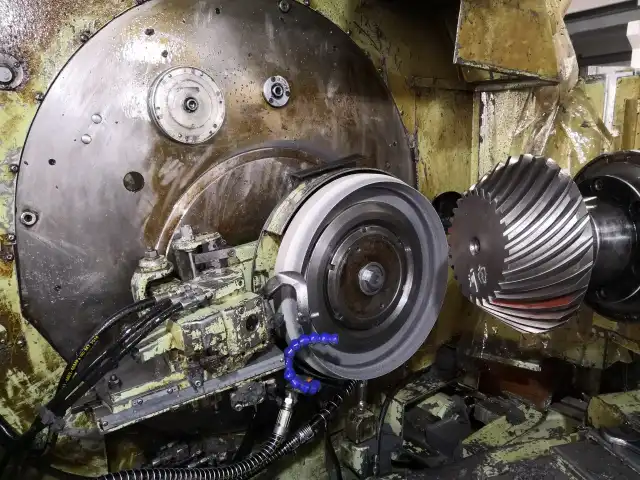
Being a grinding tool with an angled face or curved edge, a Bevel Grinding Wheel is designed to get to tight clearance angles during gear finishing operations. In contrast to flat-faced wheels, these specialised tools keep their angular shape constant while they grind. Tough production controls affect the spread of grain sizes, the strength of the bonds, and the dynamic balance of high-precision variants. For complex conical gear teeth, these factors make sure that the rate of material removal is reliable and the surface quality is excellent.
The precision number is directly related to the wheel's concentricity limits, which are usually kept to 0.005mm or less. This level of manufacturing quality stops chatter marks caused by vibrations that damage the finish on the tooth surface. This level of accuracy is a must when grinding spiral bevel gears for aircraft engines or mining equipment drive trains.
Core Materials and Their Performance Characteristics
Material choice affects how effectively a Bevel Grinding Wheel functions with different surface hardnesses and application parameters. Identifying these characteristics helps procurement experts match the correct equipment to production concerns.
These cheap abrasives perform effectively on farm tools and light industrial machine carbon and low-alloy steel parts. Their easy breaking helps the wheel self-sharpen while being used, exposing fresh cutting edges that grind effectively without dressing regularly.
It cuts more easily than aluminium oxide on metallic objects but wears out quicker due to its sharper, angular grain structure. Silicon carbide doesn't polish reinforced gear steel well, although it's useful for other purposes.
When surface hardness exceeds 58–62 HRC, CBN wheels retain their form. This hardness range is required after carburising and induction hardening. Grinding 20CrMnTi and 18CrNiMo7 metals with these wheels minimises heat damage to the reinforced case layer. The initial costs are greater than standard abrasives, but their longer life and superior dimension control minimise the cost of grinding each item in high-production scenarios.
Precision Parameters That Impact Performance
Quality of surface polish relies on balance accuracy. Unbalanced wheels vibrate the grinding spindle and object contact zone. This causes final gear edges to be wavy. High-precision wheels are multi-speed balanced to provide smooth operation at 33–45 m/s for vitrified bonding.
The surface roughness and material removal rate depend on grain size. Finer grains provide greater grinding heat, which might weaken stiff gear teeth if coolant supply is low. When the grain size is suitable for rough grinding, semi-finishing, or superfinishing, the process works better.
Bond hardness ratings indicate how well the matrix retains sharp grains. Old grains separate quickly under softer bindings, exposing fresh, sharp grains that cut hard materials rapidly. Harder links retain grains longer while grinding lighter bits, extending wheel life.
Why High Precision Bevel Grinding Wheels Are Crucial in Industrial Settings
Achieving Dimensional Tolerances and Surface Quality
Manufacturing must constantly fulfil stringent requirements without additional labour to succeed in a competitive industrial market. Precision Bevel Grinding Wheels allow spiral bevel gears with tooth side variations of less than 8 microns to fulfil Gleason profile standards. Turning systems and machine tool spindle drives depend on gear mesh quality for smoothness and quietness.
Aerospace gearbox parts need stricter tolerances and material traceability. When grinding flight-critical SAE 4340 or 42CrMo bevel gears, surface polish specifications frequently need Ra values less than 0.4 microns. Well-maintained precision grinding wheels and equipment are needed for consistent results throughout manufacturing batches.
Mining equipment manufacturers must overcome difficulties including creating components sturdy enough to withstand large stress loads. Big trucks and excavators employ bevel gears to transmit power. These gears require substantial case hardening for wear resistance and toughness. Wheels that preserve the form correctly while removing hardened material fast without introducing tensile pressures that might induce wear fractures are needed to grind these components.
Cost Reduction Through Operational Excellence
Good Bevel Grinding Wheels save manufacturing costs in many ways. Lower repair rates reduce waste parts and labour hours required to rectify dimensions, increasing productivity. Precision wheels that retain their form need fewer setup modifications and have less batch-to-batch variation.
CNC gear grinders are costly; therefore, machine downtime costs rise fast in high-capital industries. Grinding time is increased by precision wheels working longer between cleanings. Due to their balanced design, shaft bearings last longer and don't need to be repaired during critical production runs.
Longer wheel life reduces abrasive usage and supply costs immediately. Superabrasive wheels cost ten times more but last twenty times longer in certain conditions. Lights-out production environments benefit most from avoiding tool changes, which reduces labour and permits longer periods without a worker.
Safety Improvements and Risk Mitigation
Wheel structural failures cause serious grinding safety issues. High precision manufacturing standards evaluate wheels for structural stability to ensure they can withstand operation with adequate safety gaps. Spinning vitrified bond wheels faster than their maximum speed tests them before shipping. Ensures structural integrity.
Precision wheels at the correct speeds and feeds provide more consistent grinding forces. This reduces part ejection and wheel breakage. Their consistent performance allows operators to select safe, tried-and-true process parameters instead of constantly altering settings for wheels that don't function as planned. This operational stability improves workplace safety and compliance.
Grinding reinforced gears requires heat management for safety. Localised hardening weakens the solid case layer and decreases component load capacity due to excessive heat. Precision wheels have engineered permeability to direct coolant to the grinding zone. This reduces heat and prevents metal damage that might cause field failures.
Choosing the Right High Precision Bevel Grinding Wheel for Your Application
Material Compatibility and Specification Matching
You must know the workpiece's material to pick the suitable wheel. Superabrasive CBN wheels grind AISI 8620 and 20CrNi2Mo parts best. Because they transmit heat well, they manage grinding zone temperatures and sharpen cutting edges, reducing grinding forces and stress.
Small instrument gears to massive mining equipment drives may fit in 0.5–50 module sizes. Larger module gears increase Bevel Grinding Wheel-module contact areas, requiring stronger wheel designs. Finer grain sizes are required for smaller modules to define the tooth profile without removing too much material, which might damage narrow gear teeth.
Pressure angle restrictions of 14.5° or 20° affect wheel form. Making sure the grinding wheel taper angle matches the gear pressure angle ensures tooth side contact throughout the face width. Even tiny angles may generate high-stress locations where two parts meet fast, speeding wear and making noise. Custom wheel forms machined to specifications don't have these issues. Better component performance and longer service life justify their greater cost.
Comparative Analysis of Grinding Solutions
Gearmaking uses different grinding tools for different tasks. Abrasive cloth flap wheels are good for deburring and blending but not precision dimensional grinding. They are flexible enough for uneven surfaces but lack the geometric accuracy needed to complete gear teeth.
Grinding discs are portable and easy to repair in the field. When attached to angle grinders, they make objects easier to reach, but they don't regulate procedures like grinding tools and wheel profiles. This decreases disc surface polish and size accuracy, making them unsuitable for crucial gearbox component mass manufacturing. Selecting the right wheel requires knowing the workpiece's material. Superabrasive CBN wheels grind AISI 8620 and 20CrNi2Mo best. They reduce grinding pressures and stress by managing grinding zone temperatures and sharpening cutting edges by transmitting heat effectively.
Modules 0.5–50 can fit instrument gears to huge mining equipment drives. Bevel grinding wheel module contact areas grow with larger module gears, necessitating stronger wheels. Smaller modules need finer grain sizes to design the tooth shape without damaging narrow gear teeth via material removal.
Wheel shape is affected by 14.5° or 20° pressure angle limits. Matching the grinding wheel taper angle to the gear pressure angle guarantees tooth side contact throughout the face width. Even minor angles may create high-stress areas where two parts contact quickly, causing wear and noise. Custom-machined wheels don't have these concerns. Better component performance and longer life justify higher cost.
Grinding Solution Comparison
In gearmaking, various grinding tools are used for distinct jobs. Deburring and blending are excellent with flap wheels made from abrasive cloth, but they're not firm enough for exact dimensional grinding. Their flexibility allows them to suit uneven surfaces, but they lack the geometric precision required to complete gear teeth.
Grinding discs are portable and simple to use for field maintenance and repairs. They make items simpler to reach when connected to angle grinders, but they don't provide process control like specific grinding tools and wheel profiles. This reduces disc surface polish and dimension accuracy, making them unsuitable for mass production of critical gearbox components.
Specialised Bevel Grinding Wheels are used in precision manufacturing, which needs accurate measurements, a smooth surface, and consistent process control. This is why these wheels are expensive. Engineered shapes, controlled abrasive patterns, and precise balance give them abilities that general-purpose grinding tools can't match. When part requirements call for ISO 8-9 grade accuracy and uniform surface hardness across 58–62 HRC ranges, choosing the right wheel becomes the key to successful production or costly quality failures.
Optimising Usage and Maintenance of High Precision Bevel Grinding Wheels
Mounting, Balancing, and Dressing Procedures
The Bevel Grinding Wheel must be properly installed for precision grinding. Clean, flat, and the proper size flanges provide consistent binding pressure and don't deform the wheel body. Tightening arbour nuts to the torque values prevents wheel slide and cracking. Blotter paper between the wheel rims and sidewalls properly distributes pressing forces and handles slight surface irregularities.
Wheel production alters mass distribution, yet dynamic balancing compensates. Even exact wheels must be rebalanced after installation owing to axle part and assembly discrepancies. Computerised balancing systems recognise imbalance angles and sizes and advise professionals to add or remove counterweights until the imbalance reduces below tolerances. Quality balancing instantly increases surface finishing and spindle bearing life.
Dressing reveals new abrasive grains and shapes the wheel to geometric requirements to restore wheel cutting. Diamond roll dressers grind finely for final grinding, whereas single-point diamond tools roughen and activate wheels for stock removal. Dressing frequency depends on wheel parameters, workpiece hardness, and grinding settings. Controlling procedure determines optimal dressing times for wheel life and part quality.
Inspection, Cleaning, and Storage Protocols
Regular visual inspections detect fractures, chips, and unusual wear patterns before they damage the Bevel Grinding Wheel or item. Ring testing includes mild wheel tapping while dangling. Sound wheels ring, while cracked wheels thump. Ring checks before and after use, impacts, and unforeseen events might avoid catastrophic failures.
Grinding swarf in wheel holes warms and lowers cutting efficiency. Regularly using wheel cleaning sticks restores porosity and performance. Avoiding harsh cleaning methods that might damage the wheel or remove abrasive grains preserves the accuracy that justified the investment.
How wheels are maintained influences their longevity, especially resin-bonded wheels that absorb water. Climate-controlled storage chambers regulate temperature and humidity to preserve bonds. Vertical wheel racks prevent curved edges from deforming and make handling and spinning simpler. Correctly placed labels protect wheels and ensure safe speeds.
Procurement Insights: Sourcing High Precision Bevel Grinding Wheels Worldwide
Evaluating Suppliers and Certification Standards
When planning a global sourcing strategy, it's important to think about both cost and quality security and supply chain stability. Reputable makers keep their ISO 9001 quality management standards up to date, which shows that they use structured process controls all the way through the production process. These certifications give buyers peace of mind that the Bevel Grinding Wheels they buy will always meet the stated standards, no matter what production lot they come from.
Industry-specific certifications boost aviation and defence app credibility. Suppliers with AS9100 accreditation have quality systems that satisfy aerospace industry standards. These systems need stringent testing and material monitoring. Mining and heavy equipment manufacturers benefit from suppliers that can make components operate in difficult situations.
Technical skills differ across common abrasive suppliers and important production partners. Supplier application engineering helps customers choose specifications, grind settings, and address process issues. This collaboration speeds up part creation and output switching to sophisticated manufacturing processes. Long-term relationships with skilled suppliers let you use new abrasive technologies and improve your processes, giving you a competitive edge.
Pricing Strategies and Customisation Services
Bulk purchases save money with bulk savings and simplified processes. Supply and buying power rise when many production sites combine needs or yearly contracts are based on expected demand. Many vendors provide vendor-managed inventory systems that automatically replenish and detect consumption, saving time and eliminating production stops.
Instead of store items, customisation tools may meet application needs. Precision profiling equipment allows manufacturers to make Bevel Grinding Wheels for specific gear geometries or machine tools. Module ranges from 0.5 to 50 can accommodate many component sizes, and bespoke pressure angles fit profiles well. Full customisation needs minimum order numbers, although the performance benefits and lack of manual profile tweaks often justify it, even for modest production volumes.
Plan ahead and follow the manufacturing schedule for 35–60-day production lead times. Having enough safety stock and clever supplier relationships may assist with demand shifts and unanticipated demands. By communicating design details, quality objectives, and delivery plans, everyone can avoid expensive mistakes and ensure the items fulfil application requirements.
Conclusion
In the production of industrial tools, mining equipment, and aerospace parts, Bevel Grinding Wheels are indispensable. Their ability to regularly give tight limits on dimensions and high-quality finishes on the outside has a direct effect on the quality of the products they make, the safety of operations, and the cost structures of manufacturing. Choosing the right wheel by matching the abrasive type, grain size, and bond characteristics to the needs of the product improves performance and increases operating life. Following the right steps for installing, maintaining, and storing the wheel will keep its precision qualities over its lifetime. Global buying strategies that balance low costs with technical support and approval standards give producers a competitive edge through reliable supply chain partnerships and ongoing process improvement.
FAQ
1. Why does my precision grinding wheel lose its edge shape rapidly?
Rapid edge wear usually means that the bond strength is not right for the grinding job. When high grinding forces are applied to softer bond grades, the coarse grains come loose early, which speeds up the loss of shape. If you change the grade to something harder or use ceramic or CBN abrasives, the edge stays sharp for a lot longer between cleaning processes. Checking grinding factors like feed rates and depth of cut might also show that too much material is being removed at too fast of a rate, which speeds up wear.
2. Can standard wheels be dressed to create bevel profiles?
It is certainly possible to dress straight wheels to make angled shapes, but it is not a good use of time or money to do so. The large amount of abrasive material that needs to be removed loses expensive wheel volume, and cleaning takes too long, which limits the grinding capacity. Pre-formed precision wheels have the same level of structural stability across their engineered shape. This means they work better and cost less per component ground.
3. How can I prevent thermal damage when grinding hardened gears?
Thermal burn marks happen when heat doesn't escape properly during the cutting process. When you use abrasives with friable grains, like white aluminium oxide or seeded gel, the grinding forces and temperatures are lower. Making sure that the coolant valves point the high-pressure flow directly at the grinding contact zone stops windage effects that push coolant away from important areas. Engineered porosity in wheels makes coolant channels inside that send oil straight to the grinding contact, which makes thermal control much better.
4. What peripheral speed should I use for bevel grinding wheels?
Always look at the sign on the wheel to see what the fastest speed it can go is. Going faster than that could cause a catastrophic failure and break safety rules. Most of the time, vitrified bond wheels work at speeds between 33 and 45 m/s, while resin bonds can handle speeds up to 50 to 60 m/s. Figure out the real peripheral speed for Bevel Grinding Wheels by using the spindle's RPM and the diameter of the wheel, taking into account that the diameter will shrink over time as the wheel is used.
Partnering with YIZHI MACHINERY for Superior Bevel Gear Solutions
This company, YIZHI MACHINERY, makes precision-engineered bevel gears and complete grinding solutions for tough industrial uses. Because we've been making specialised parts for fifteen years, we can guarantee that every part meets the strict ISO 8-9 grade quality standards. We use high-tech methods like hobbing, milling, and precision grinding, along with controlled heat processes like carburising, cooling, tempering, and induction hardening, to make sure that the surface hardness falls between 45 and 50 HRC and 58 and 62 HRC. Custom services can meet your exact needs with flexible minimum order amounts. They can even help you make a single item when you need to quickly make a prototype or repair a part. Customised packing with shock-absorbing liners and wooden boxes keeps damage during transport to less than 0.1%. Multiple shipping methods, such as sea freight, air shipping, and train, allow us to control arrival times and show real-time tracking information. Contact our team at sales@yizmachinery.com to talk about your needs with a Bevel Grinding Wheel seller who is dedicated to your manufacturing success.
References
1. Marinescu, I.D., Rowe, W.B., Dimitrov, B., & Inasaki, I. (2013). Tribology of Abrasive Machining Processes. Norwich, NY: William Andrew Publishing.
2. Malkin, S., & Guo, C. (2008). Grinding Technology: Theory and Applications of Machining with Abrasives. New York: Industrial Press.
3. Klocke, F., & König, W. (2005). Manufacturing Processes 2: Grinding, Honing, Lapping. Berlin: Springer-Verlag.
4. Salmon, S.C. (1992). Modern Grinding Process Technology. New York: McGraw-Hill.
5. American National Standards Institute. (2019). ANSI B7.1-2017: Safety Requirements for the Use, Care, and Protection of Abrasive Wheels. Washington, DC: ANSI.
6. Brinksmeier, E., Aurich, J.C., Govekar, E., Heinzel, C., Hoffmeister, H.W., Klocke, F., & Peters, J. (2006). Advances in Modeling and Simulation of Grinding Processes. CIRP Annals - Manufacturing Technology, 55(2), 667-696.

USER EVALUATE
Here is the customer's evaluation of us