


Where to buy drive gear shafts
It is very important to know where to buy Drive Gear Shafts that meet strict technical standards when you need to buy precision gearbox parts for mining equipment, metallurgical machinery or port operations. Quality Drive Gear Shafts are the mechanical backbone that connects your heavy-duty equipment to prime movers. This means that choosing a dealer is more of a strategic choice than a transactional purchase. Working with purchasing directors across North America has taught us that three things are essential for a successful procurement: technical compatibility, supplier capacity reserves, and reliable logistics. This guide will show you tried-and-true ways to find high-performance Drive Gear Shafts that will keep your operations running smoothly and reduce downtime.
Understanding Drive Gear Shafts – Key Concepts for Buyers
What Makes a Drive Gear Shaft Different from Standard Axles
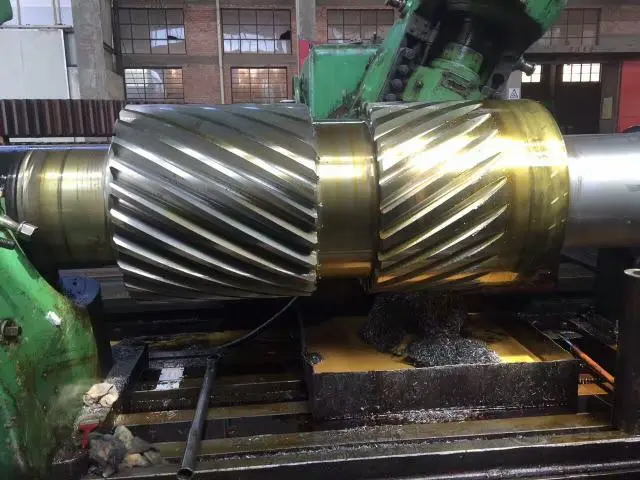
A Drive Gear Shaft is an important part that connects rotating power from motors or engines to machinery further down the line. It has to be able to handle huge radial and torsional loads. Unlike simple shafts, these parts have gear teeth that are machined straight onto forged steel blocks. This makes a single structure that doesn't have any weak spots like keyed units do. In the 15 years that YIZHI MACHINERY has been in business, we've seen that integral Drive Gear Shafts are about 40% less likely to fail catastrophically than standard bolted gear-to-shaft links in mining uses.
When choosing parts for crushers, ball mills, or conveyor systems, the technical difference is very important. On the other hand, standard shafts only hold up rotating parts, while Drive Gear Shafts actively transfer power through precisely ground gear profiles. Because of this useful difference, special production methods like forging, hobbing, precision grinding, and controlled heat treatment are needed to make the parts that your equipment needs.
Material Selection and Heat Treatment Impact Performance
The type of material directly affects how well Drive Gear Shafts work in your specific situation. For moderate-duty uses, 42CrMo, AISI4140, and SAE4340 are common standards. But for harsh conditions like mining or big rolling mills, advanced metals like 18CrNiMo7 or 20CrNiMo are often needed. These alloy steels have extra chromium, nickel, and molybdenum added to them, which makes them harder and tougher when heated.
Heat treatment methods change the qualities of raw materials into performance characteristics that are ready for use. Carburising makes a surface layer that is resistant to wear and has a hardness of 58 to 62 HRC. The core stays flexible so it can handle shock loads without breaking into brittle pieces. The quenching and tempering processes balance the hardness and toughness of the whole shaft cross-section. Induction hardening strengthens the surface of the bearing journals in specific places. When looking at different sources, make sure that they keep an eye on important factors that affect the long-term stability of the dimensions, such as case depth, core hardness transition zones, and leftover stress patterns.
Technical Specifications That Define Compatibility
When matching Drive Gear Shafts to existing equipment, procurement professionals should look at a few important specs. Modules, which set the tooth size and proportional measurements, run from 0.5 for precise tools to 50 for heavy mining gearboxes. Between 5° and 45°, the helix angle affects how the load is distributed and how much noise is made. Higher angles make engagement smoother but add axial thrust forces.
Surface hardness standards are usually broken down into two groups: 45–50 HRC for general industry uses and 58–62 HRC for places with a lot of wear and tear, like coal crushers or cement mills. Precision grades are important for many reasons. For example, ISO 6 grade tolerance makes sure that gear teeth mesh with little backlash, which is very important for tasks that need precise positioning or low gearbox error. These specs aren't just random numbers; they're performance signs that tell you how long the product will last under your unique load profiles and duty cycles.
How to Choose the Right Drive Gear Shaft Supplier
Quality Certifications and Manufacturing Capabilities
ISO certification indicates baseline quality control, but deeper evaluation requires evidence such as furnace calibration records, CMM inspection reports, and material traceability to mill test certificates. Strong suppliers integrate forging, CNC machining, grinding, and inspection in-house to improve quality control and responsiveness. Advanced testing equipment—including gear analyzers, contour instruments, and NDT systems—demonstrates a strong commitment to precision and reliable manufacturing capability.
Customization Flexibility and Engineering Support
Off-the-shelf parts are rarely used in heavy industry without being changed. The best provider should let you customise everything, including the number of teeth, the type of module you choose, the shape of the shaft, the keyway setups, and any special surface treatments. When replacing old parts or making prototypes for new equipment designs, being able to make single custom units instead of minimum order quantities gives you a lot of freedom.
Costly mistakes can be avoided by getting engineering help during the design step. Suppliers with a lot of experience will look at the input power, working speed, duty cycle, and environmental conditions of your product to suggest the right materials and heat treatments. With this consultative method, procurement goes from being a one-time purchase to a relationship that works together to solve problems. During the design process, our technical team at YIZHI MACHINERY often works with chief mechanical engineers to make sure that shaft designs are correct. They do this by giving CAD drawings and finite element analysis.
Check out the supplier's process from design to delivery. An organization is mature when it has structured processes like requirement analysis, drawing approval, sample validation, production machining, and quality checking. Clear communication at every stage, especially during the 35–60 day production period that is normal for custom Drive Gear Shafts, keeps your project on track and avoids mistakes when the equipment is put into service.
After-Sales Support and Warranty Terms
Strategic suppliers provide comprehensive after-sales support, including a 12-month warranty covering manufacturing defects and fast response to claims. Rapid troubleshooting and replacement part production help reduce costly downtime. Detailed technical documentation, such as maintenance manuals and installation guides, improves equipment lifespan and usability. Long-term supplier relationships ensure reliable order history access, enabling efficient spare part sourcing and support for customized configurations even years after installation.
Where to Buy Drive Gear Shafts – Procurement Channels and Best Practices
Direct OEM Sourcing Versus Distributor Networks
The choice of procurement method has a big effect on cost, lead time, and the level of technical assistance. When you buy directly from OEM makers like YIZHI MACHINERY, you can usually get better deals on large orders, more customisation options, and direct access to engineering experts. Manufacturers can make changes to specs during production, work with changing schedules, and give clear information about the state of production that distributors can't do.
This direct relationship is especially helpful for big businesses that have needs that come up often. When you commit to a certain amount of work every year, you can often get better prices, more flexible schedules, and personal account management. Manufacturing partners who want to build long-term relationships will let you know ahead of time about things like material supply, capacity limits, or process changes that could help your business.
Distributor networks work well in a variety of purchasing situations. When looking for standard configurations in small amounts, distributors offer immediate availability with no minimum order size. Regional wholesalers take care of import paperwork, keep local stock, and combine orders from different makers, which makes logistics easier for businesses that don't have their own foreign purchasing infrastructure. As a trade-off, unit costs are higher and customisation options are limited compared to working directly with an OEM.
Evaluating International Suppliers and Import Logistics
By buying from specialised manufacturers in other countries, you can find more suppliers than just in your own country, and you can often get better deals on precision-engineered parts. To be successful at international procurement, you need to know what the total landed cost is, not just the FOB prices. Shipping costs, customs fees, insurance, and possible delays change the real cost comparison when compared to local suppliers.
Planning for lead times is even more important when you work with foreign providers. When compared to domestic trucking, ocean freight usually adds three to four weeks. Air freight, on the other hand, offers faster delivery at a much higher cost. China-Europe goods trains are a middle ground between cost and speed for suppliers who can get to rail hubs. At YIZHI MACHINERY, we offer multi-channel transport solutions that can be tailored to your needs and budget. These solutions include reliable delivery schedules that are important for planned maintenance shutdowns.
Following customs rules and making sure paperwork is correct avoids costly waits at ports. Harmonised tariff classifications, commercial invoices, and certificates of origin are all handled correctly by international suppliers with a lot of experience. This speeds up the customs clearance process. Our visual tracking system shows shipments from the time they are loaded at the factory until they are delivered. This gives supply chain managers real-time information that wasn't possible with international procurement before.
Negotiating Custom Manufacturing Projects
Custom Drive Gear Shafts need to be bought in a different way than standard parts. Start the conversation with specifics about the application, such as load patterns, running speeds, environmental conditions, and the size of the interface. Giving engineering sketches or reference samples speeds up the quote process and clears up any confusion about the specifications that could cause the project to run late.
Custom Drive Gear Shafts usually take 35 to 60 days to develop from the time the design is approved until production is finished. This plan includes getting the raw materials, forging, heat treatment, precision machining, and the final check. Since speeding up these steps lowers the quality, setting reasonable deadlines helps keep equipment build plans on track.
Validating prototypes lowers the risk of using new designs or sources that haven't been tried yet. Before committing to production numbers, making model units lets you check the dimensions, test the material's properties, and make sure the fit is right. YIZHI MACHINERY offers single-unit prototyping to support this risk-mitigation strategy, knowing that engineering confidence justifies a little higher prototype costs compared to failures in the field.
Maintaining and Troubleshooting Drive Gear Shafts for Longevity
Common Failure Modes and Root Causes
Knowing how things usually go wrong helps procurement teams choose the right shaft designs and set up good maintenance routines. Tooth wear shows up as a slow loss of shape. This can happen when there isn't enough oil or when the hardness of the gears that fit together isn't right. Carburising teeth to 58–62 HRC makes them much more resistant to abrasive wear than through-hardened parts, which means they last longer in dusty mine settings.
Most fatigue cracks start at places where there is a lot of stress, like the roots of gear teeth, the corners of keyways, or the shoulders where the diameters change. The likelihood of fatigue is lower when the fillet angles are set correctly during cutting and the heat treatment is controlled so that leftover tensile stress is not created. Talk to providers about these design details when you ask for custom Drive Gear Shafts so that the geometry is best for your job cycles and load patterns.
When gear teeth aren't lined up correctly, the load isn't spread evenly across the sides of the teeth. This causes uneven wear and extra heat in certain areas. This problem is usually caused by bad fitting, differences in thermal growth, or the base sinking, not by problems with the parts. Using dial indicators or laser alignment systems, maintenance teams should check the alignment during installation and on a regular basis afterward.
Preventive Maintenance Best Practices
Schedules for regular inspections keep small problems from getting worse and leading to catastrophic failures. During planned shutdowns, visual checks should be made for cracks, surface cracking, or wear patterns that don't seem normal. Vibration analysis finds problems like worn-out bearings or damaged gear teeth before they break completely. This lets you do condition-based maintenance instead of reactive repairs.
How well the Drive Gear Shaft is oiled directly affects how long it lasts. When metal bits, water, or dirt get into oil, they speed up wear by a huge amount. To get the most out of your oil change times, use tools that analyse the viscosity, contamination levels, and additive loss. Laboratory checking, which doesn't cost much, keeps expensive parts from having to be replaced too soon.
Precision-ground surfaces are safe from damage as long as they are handled properly during installation and removal. When gear teeth or bearing journals get even small dings, they create stress concentrations that spread into cracks when the load is cycled. For a small investment, you can keep expensive damage from happening during service interventions by teaching repair staff the right way to put things and using the right tools.
Leveraging Supplier Technical Support
When you buy from an experienced supplier, you get more than just the delivery of parts. When looking into strange wear patterns or sudden failures, manufacturer engineering teams can help because they have a lot of experience with these kinds of problems. Photographs that show damage modes can help with remote diagnostics, which could help find mistakes in the installation or problems with how the system works that are causing it to fail early.
Planning for maintenance is easier when suppliers provide a lot of information. Maintenance teams can use detailed measurement models to help them make custom installation tools or check the sizes during inspections. Installation mistakes that hurt efficiency or safety can be avoided by following the suggested force levels, preload requirements, and assembly steps.
When manufacturing flaws cause something to break down early, warranty support gives you a way to get your money back, and the claim process shows that the supplier is honest. At YIZHI MACHINERY, we have quick response plans for warranty issues, such as quickly making replacements and doing technical investigations to find out what went wrong. This dedication to helping customers after the sale creates trust that leads to long-term relationships rather than just one-time purchases.
Conclusion
To find good Drive Gear Shafts, you have to balance technical specs, the supplier's skills, and the total cost, which includes the initial buy price. Working directly with skilled OEM makers gives you more options for customisation, engineering support, and long-term relationship benefits than working with distributors. When you buy from specialised international suppliers like YIZHI MACHINERY, you have more choices, but you have to pay close attention to logistics, lead times, and import laws. Successful procurement teams don't just look at prices when they evaluate suppliers; they also look at quality certifications, manufacturing processes, the ability to customise products, and customer service after the sale. Preventive repair and technical partnerships with suppliers can help you get the most out of the service life of your parts, saving your machine investment and uptime.
FAQ
1.What factors have the biggest impact on the service life of a Drive Gear Shaft?
Three things determine how long something will last: the choice of material and the quality of its heat treatment; how well it is oiled; and how precisely it was installed. Properly carburised shafts with a surface hardness of 58 to 62 HRC resist wear a lot better than parts that haven't been treated properly. A clean lubricant with the right viscosity stops abrasive damage, and exact positioning during fitting makes sure that the load is spread evenly across the gear teeth. Operating conditions, such as shock loads, task cycles, and environmental contamination, also affect life, which is why it's important to get specs that are right for the job when you're buying something.
2.What is the price difference between custom Drive Gear Shafts and standard ones?
Because they require more engineering time, special tools, and smaller production runs, custom Drive Gear Shafts usually cost 20 to 40 percent more than normal ones. However, this extra cost is usually worth it when perfect dimensional fit gets rid of the need for adapter plates, speeds up installation, or makes performance gains that aren't possible with off-the-shelf parts. Direct cost comparisons with standard parts can be misleading for many heavy industry applications because they need to be customised.
3.Can providers fix Drive Gear Shafts that are broken, or do they have to be replaced?
Most of the time, replacing precision gear teeth is better than fixing them. The welding process changes the qualities of the heat treatment and the depth of the case, making weak spots that are likely to break quickly. When you re-grind broken teeth, you change important profile measurements that affect how the mesh works. Broken Drive Gear Shafts are usually replaced, but bearing journals and keyways can sometimes be fixed if the damage isn't too bad and the application is very important.
Partner with YIZHI MACHINERY for Reliable Drive Gear Shaft Solutions
Mining equipment makers, heavy machinery OEMs, and metallurgical companies all over North America trust YIZHI MACHINERY to provide them with precisely made gearbox parts. We can make Drive Gear Shafts out of a wide range of materials, from advanced 18CrNiMo7 alloys to 42CrMo. We can also completely customise the modules from 0.5 to 50 and the helix angles to fit your needs. Because they are ISO 6 grade precision ground, heat treated under control, and go through a full quality inspection, our parts meet the strict needs of heavy industry applications. We can handle orders of any size, even a single unit, and our 35–60 day shipping plans and real-time shipment tracking make it easy for you to place your order. Our engineering team offers design advice before the sale, updates on production that happen at the same time, and a one-year warranty with fast response times. To talk about your transmission shaft needs with an experienced Drive Gear Shaft supplier who is dedicated to solving your power transmission problems through technical excellence and reliable global logistics, please contact us at sales@yizmachinery.com.
References
1. American Gear Manufacturers Association. (2019). Fundamental Rating Factors and Calculation Methods for Involute Spur and Helical Gear Teeth. AGMA 2001-D04 Standard.
2. Deutschman, A.D., Michels, W.J., & Wilson, C.E. (2018). Machine Design: Theory and Practice. Macmillan Publishing, New York.
3. Norton, R.L. (2020). Machine Design: An Integrated Approach, 6th Edition. Pearson Education, Boston.
4. Budynas, R.G., & Nisbett, J.K. (2021). Shigley's Mechanical Engineering Design, 11th Edition. McGraw-Hill Education, New York.
5. Metals Handbook Editorial Committee. (2017). Properties and Selection: Irons, Steels, and High-Performance Alloys. ASM International Handbook Committee, Volume 1.
6. International Organization for Standardization. (2020). Calculation of Load Capacity of Spur and Helical Gears – Part 1: Basic Principles. ISO 6336-1:2019 Standard.

USER EVALUATE
Here is the customer's evaluation of us