


How to Optimize Performance with Precision Gear Shafts
To get the most out of Precision Gear Shafts, you need to know how the material you choose, how precisely they are made, and the conditions of use all affect each other. A Precision Gear Shaft made to ISO Grade 6 tolerances gets rid of gearbox errors, lowers noise and vibration, and makes equipment last longer when it's under a lot of stress. By choosing the right alloy steels, using advanced heat treatment methods like carburising, and following preventative maintenance plans, companies can improve the efficiency of torque gearbox, the stability of dimensions, and the long-term dependability of these parts. This turns them from simple rotating parts into strategic assets in high-value production environments.
Understanding Precision Gear Shafts and Their Performance Factors
What Defines a Precision Gear Shaft
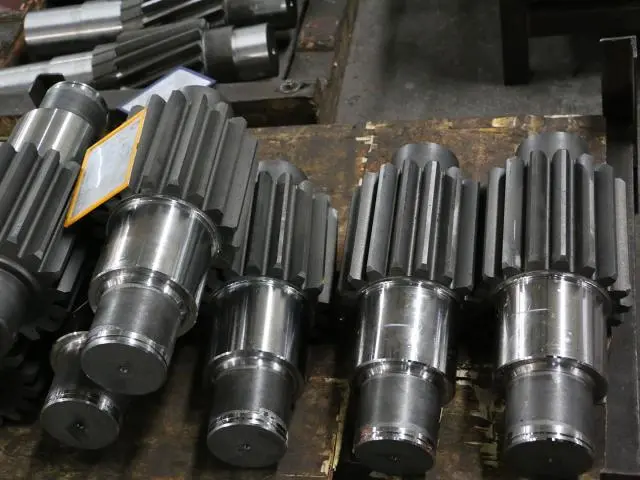
A Precision Gear Shaft has gear teeth that are directly attached to a spinning shaft body. It acts as both a power generator and a structural support element in mechanical systems at the same time. Instead of having different pinions and couplings for each assembly, this uniform design gets rid of connection backlash and makes the total size smaller. When something is labelled "precision," it means that it meets strict tolerance standards, like ISO Grade 5-7 or AGMA Q10–Q12. This is usually done by grinding the gear after heating it to fix any distortion and keep the tooth profile accuracy within 5 microns.
Material Properties That Influence Performance
The choice of material has a big impact on how well a shaft works under operational stress. High-carbon alloy steels like 20CrMnTi, 40CrNiMo, and SAE4340 can be hardened very easily and have a very tough core. They can also handle repeated loads without failing too soon due to fatigue. For moderate-duty uses, grades that go through through-hardening, such as 42CrMo and AISI4140, offer a good balance of strength and machinability. Case-hardening metals like 18CrNiMo7, 20CrNiMo, and AISI8620 make it possible for surfaces to hit 58–62 HRC while keeping cores that are flexible and strong against impact. Micropitting and tooth root cracking are the two most common ways that gearbox systems fail. This combination of hard, wear-resistant surfaces and tough interiors stops them.
Common Types and Their Industrial Applications
Through slow tooth contact, helical gear shafts make operation smooth and quiet. This makes them perfect for CNC machine tool spindles where controlling vibration directly affects the quality of the surface finish. Spline shafts can transfer a lot of torque and move axially. They are often used in robotic joint actuators that need to be able to precisely place the joints in space without any rotational play. Worm gear shafts have high reduction ratios in small packages. They are used in precision instrument transmission systems that need to save space and be able to lock themselves in place. Each design meets a different set of mechanical needs, helping engineers find solutions that work with different load rates, speed ranges, and environmental conditions.
Identifying and Overcoming Performance Bottlenecks in Precision Gear Shafts
Common Performance Challenges
Tolerance deviations build up during the manufacturing process, leading to misalignment that creates stress concentrations and early wear in certain areas. Variations in surface roughness make it easier for grease to break down, which causes micropitting, which is a form of increasing surface wear that lowers load capacity by 30 to 40 percent over the life of the machine. Corrosion from the atmosphere or tainted oils makes measurements less accurate and causes stress risers. When fitting isn't done correctly, bending moments that are higher than the design limits are introduced. This causes the shaft to deflect and tooth contact patterns to be uneven.
Manufacturing Precision as the Foundation
Controlling the quality of measurements during production is the first step in optimisation. Forging evens out the grain structure and gets rid of any internal holes. With CNC machining, the outer diameters, bore sizes, and shaft shoulders can be set to within ±0.01mm of accuracy. The tooth profiles are made by gear hobbing or milling, and then the metal is heated and treated. Carburising spreads carbon into the surface layers, quenching locks in the hardness, and tempering releases any remaining stresses. Grinding gets rid of the distortion caused by heat treatment, giving the final tooth profile accuracy and a surface finish of 0.4 to 0.8μm. This methodical process makes sure that all of the parts meet the ISO Grade 6 precise standards.
Heat Treatment Techniques That Enhance Durability
When you harden something by carburising it, you leave behind compressive residual stress in the top layers. This makes the wear life 300–400% longer than with through-hardened parts. By carefully hardening only the tooth sides and fillet radii, induction hardening keeps the center flexible, which improves resistance to both contact stress and twisting loads. By quenching and tempering, the mechanical properties are balanced. The metal becomes hard enough to fight wear while still being tough enough to take shock loads during starting or load changes. By controlling the rate of cooling and the temperature, properties can be changed to fit the needs of a particular application, whether durability on the surface or strength in the core is more important.
Measurable Improvements Through Optimization
A major aerospace part maker had problems with planetary gearbox output shafts that kept breaking down when they were working at 8,000 RPM with 15 kW loads. Analysis showed tooth profile errors bigger than 12 microns and case depth that wasn't enough because the heat treatment wasn't done right. By redesigning with 18CrNiMo7 material, vacuum carburising to a case depth of 1.2 mm, and finish grinding to a profile accuracy of 4 microns, the average time between failures went from 1,800 to 7,200 operating hours, which is a four-fold increase that cut down on unplanned downtime and maintenance costs by a large amount.
Comparing Different Gear Shaft Solutions to Make Informed Procurement Decisions
Precision versus Standard Gear Shafts
Standard business gear shafts made to AGMA Q6–Q8 quality standards are used in general industry settings where some noise and regular upkeep are okay. Precision Gear Shafts that meet AGMA Q10–Q12 or DIN Grade 6 standards offer better angular accuracy, lower gearbox error, and longer service intervals. These are important qualities for robotic surgery systems, semiconductor manufacturing equipment, and aerospace actuators where positioning accuracy has a direct effect on safety or quality of the product.
The difference in performance can be seen and measured: standard shafts have gearbox errors of 15 to 25 arc-minutes, making noises louder than 75 dB at full speed. Precision Gear Shafts keep noise levels below 65 dB and gearbox errors below 8 arc-minutes. This meets strict noise standards and keeps nearby parts from getting damaged by vibrations.
Key Evaluation Metrics for Selection
The degree of tolerance decides how well two parts fit together. ISO 6 grade accuracy makes sure that the mesh geometry is correct without too much space or interference. Ratings of accuracy measure tooth profile deviations, pitch variations, and runout. These measurements are closely linked to noise production and load distribution regularity. Surface hardness between 45 and 50 HRC is good for modest loads, while 58 to 62 HRC is good for high-torque, compact uses with serious contact stresses.
Lead times of 35 to 60 days show how complicated precision manufacturing is—forging, multiple machining operations, controlled heat treatment cycles, and finish grinding can't be sped up without lowering the quality. The price depends on how much the materials cost, how hard the process is, and how strict the quality control is. Minimum order numbers depend on the seller. Specialised makers like YIZHI MACHINERY can handle custom orders for a single piece, which lets prototypes be made and low-volume production can happen without having to keep too much inventory.
Balancing Performance Requirements with Cost Considerations
Engineers need to be able to independently measure program requirements. Precision Gear Shaft variants are needed for high-speed spindles that go over 10,000 RPM to stop resonance and damage to bearings from vibration. When heavy industrial pumps are running at less than 500 RPM and are subjected to shock loads often, core toughness is more important than perfect surface finish. Premium precision grades are needed for robotic joints that need to be positioned with no backlash, while standard commercial accuracy is fine for conveyor drives.
Lifecycle analysis, not just the initial purchase price, shows how cost-effective something is. When used in critical production environments, Precision Gear Shafts that cost 40 to 60 percent more often have 3-5 times longer service lives, which means they don't need to be replaced as often, cost less to maintain, and have a much lower total cost of ownership.
Best Practices for Procuring High-Quality Precision Gear Shafts
Tailoring Strategies to Buyer Segments
When OEM makers put gear shafts into their own equipment, they make sure that the sizes are always the same, that any changes can be made easily, and that engineers work together on the designs. When industrial end users replace worn-out parts, they want them to be able to be used with current installations, be available quickly, and have technical help for fixing problems. Bulk buyers who manage inventory across various sites focus on bulk price, reliable delivery, and standard specs to keep the number of SKUs to a minimum.
Criteria for Supplier Selection
Getting ISO 9001 approval shows that your quality management system is mature, but it doesn't really set you apart. Suppliers with CNAS-accredited labs do their own metallurgical analysis, dimensional checking using CMM equipment, and gear testing under virtual load conditions. These in-house tests make sure that standards are always met, instead of depending on confirmation from outside sources. OEM relationships with aircraft, defence, or medical device makers show that the company can meet strict standards and keep track of all the paperwork needed for traceability.
Manufacturing capacity is important more than just nameplate ratings. When compared to suppliers who only use traditional hobbing and atmosphere furnaces, those who use high-precision CNC gear grinding centers, vacuum heat treatment furnaces, and automatic inspection systems can offer tighter tolerances and more stable processes. Since it started in 2016, YIZHI MACHINERY has bought some of the best precision manufacturing equipment in the world, such as automated gear grinding machines and intelligent heat treatment production lines. This lets us reliably meet the needs of demanding applications.
Navigating Pricing, Lead Times, and Negotiation
Clear pricing separates material costs, processing fees, and tooling investments, which lets people talk about value engineering opportunities in a smart way. Knowing that 25–35% of the total cost goes to precision grinding helps buyers understand where the best quality investments are made. Lead times of 35 to 60 days allow forging sourcing, multiple machining operations, controlled heat treatment processes, and final grinding. These realistic plans keep quality from suffering because of rushed production.
A good deal strikes a mix between lowering costs and lowering risks. By promising a certain amount of goods, you may be able to get savings of 8 to 15 percent and be sure of a production spot during times of high demand. Setting up blanket buy orders with planned releases keeps prices stable while still letting you change your inventory as needed. Working together on the technical side during the design phase saves money on redesigns and speeds up the time it takes to get a product to market. This is an example of how relationship dynamics are more valuable than arguing over prices.
Here are strategic considerations when finalizing supplier relationships:
1. Certification Verification: Ask for copies of test results on the material, approvals of heat treatment, and data from dimensional inspections. Genuine suppliers give clear documentation that shows they control the process and can be tracked. This practice stops expensive failures in the field that are caused by poor materials or processing.
2. Production Visibility: Suppliers who offer synchronised reports on the progress of production make it possible to plan ahead instead of having to rush things. Real-time tracking from plant loading to final delivery lowers uncertainty and lets you time installation activities with the arrival of parts, which is especially helpful for planned repair windows or starting up new equipment.
3. After-Sales Commitment: A one-year guarantee with quick response times shows that the source is sure the product will last. Access to technical support for installation help, troubleshooting, and failure analysis shows a focus on partnerships rather than transactional relationships. This is important for mission-critical applications because it protects them from problems.
Maintenance and Long-Term Optimization of Precision Gear Shafts
Scheduled Maintenance Protocols
The quality of the lubrication and how often it is changed have a direct effect on how long the shaft lasts. When synthetic gear oils keep their viscosity stable across a range of temperatures, they stop boundary lubrication conditions that cause adhesive wear. Monitoring contamination through regular oil analysis finds metallic bits that indicate abnormal wear development, allowing for action before a catastrophic failure. Filtration systems that get rid of particles bigger than 10 microns keep precisely ground tooth surfaces from being worn down by abrasion.
Visual checks during scheduled maintenance times find early warning signs, such as strange noise patterns that mean the bearings are out of line, rising temperatures that mean the lubrication is breaking down, or changes in sound that mean the bearings are wearing out. Regular checks every 2,000 to 3,000 hours of use for light-duty tasks or 1,000 to 1,500 hours for tough tasks balance the cost of upkeep with the chance of failure.
Preventive Measures Against Fatigue and Corrosion
Stress builds up at fillet radii, keyways, or press-fit interfaces, which leads to fatigue failures. Making sure the fillet angles are correct during design, using induction hardening to create compressive surface stresses, and staying away from sharp geometric changes are some of the best ways to keep cracks from starting. Overstress can be avoided by working within the torque limits that were designed for the job. Setting up monitoring systems that let operators know when overloading happens protects parts from damaging excursions.
Corrosion protection starts with choosing the right materials for the environment—stainless grades for chemical or marine settings, protective coatings for outdoor installations, and the right way to seal things to keep out water and other contaminants. Controlling the humidity in storage places stops rusting while items are being stocked. Using rust-proof coatings and tight packaging during shipping and storage is important to keep parts in good shape until they are installed.
Continuous Improvement Through Data Feedback
By gathering operational data like vibration spectra, temperature trends, and lubricant analysis results, baseline profiles that show how things normally work are made. When there are deviations, they are usually looked into, which often shows process drift, changes in the environment, or component degradation before they break down. Failure study of replaced parts finds the root reasons, which helps improve specifications for future purchases. This closed-loop method gradually improves the choice of parts, how they are used, and how they are maintained, maximising the return on capital investment over the whole duration of the equipment.
Conclusion
To get the most out of Precision Gear Shafts, you need a comprehensive strategy that includes material science, excellent manufacturing, and disciplined operational practices. Choosing the right alloy steels and heat treatment methods sets up the natural potential. Precision grinding and quality control make sure that the dimensions are correct, which leads to solid performance in the field. Strategic procurement looks at more than just price when choosing a supplier. It sees technical collaboration, process openness, and help after the sale as ways to set the supplier apart. Tough maintenance rules and constant growth based on data keep things running smoothly for longer, which pays off in measured ways like less downtime, better quality products, and a lower total cost of ownership. When companies follow these rules, Precision Gear Shafts go from being common parts to valuable assets that give them an edge in tough manufacturing settings.
FAQ
1.What distinguishes precision grade from standard commercial gear shafts?
The "precision" label means that the product meets the tolerances set by ISO Grade 6 or AGMA Q10–Q12. This is done by grinding the gears after heating them so that the tooth profile mistakes stay below 5 microns. Standard commercial shafts made to AGMA Q6–Q8 standards use hobbing or shaving instead of grinding, which causes profile differences of 12–25 microns. This is fine for most uses, but not when noise control, positioning accuracy, or long service intervals are important enough to justify spending more.
2.How does heat treatment affect service life?
When you case harden something by carburising it, the surface hardness goes up to 58–62 HRC and there are still compressive stresses. This makes the contact fatigue resistance 300–400% higher than with through-hardened parts. In high-load applications, this makes the average time between failures a lot longer. The right tempering balances hardness and toughness, which keeps the metal from breaking easily when it's being started up or when it needs to be stopped quickly.
3.What customization options accommodate unique applications?
Module ranges from 0.5 to 50, helix angles from 5° to 45°, and tooth counts can all be changed to fit different speed ratios, torque needs, and space limitations. The qualities of a material are chosen based on its properties, such as its ability to fight corrosion, stay stable at room temperature, or let magnets pass through it. Specialised changes to the teeth, like crowning, tip relief, and profile shifting, make the noise and load distribution work best in certain working situations.
Partner with YIZHI MACHINERY for Precision Gear Shaft Solutions
To solve the tricky gearbox problems in aerospace, robotics, and precision manufacturing, you need a supplier with both deep technical knowledge and excellent manufacturing skills. YIZHI MACHINERY makes custom-designed Precision Gear Shafts to ISO Grade 6 standards using high-quality metal steels and cutting-edge heat treatment methods. We can make modules ranging from 0.5 to 50, and the surface hardness can be between 45 and 50 HRC or 58 and 62 HRC. This means that we can make parts for a wide range of uses, from delicate instrument drives to heavy industrial gears.
What makes our value offer unique goes beyond the quality of the parts. As part of pre-sales engineering support, design advice and the creation of technical drawings are given to make sure that the best specifications are met before production starts. During the 35–60 day production cycle, progress updates are sent at the same time to keep everyone informed. A full quality check and real-time tracking of operations provide peace of mind. After delivery, our one-year warranty and quick technical response take care of problems right away, keeping your business running smoothly.
Customised packing with shock-absorbing liners and damage-prevention promises keeps parts in good shape while they are shipped around the world, with damage rates below 0.1%. Flexible logistics that include options for sea freight, air freight, and rail freight can match the need for delivery quickly with the cost constraints. Our low minimum order quantities, which include the ability to make a single piece, allow for prototype development and other unique uses without the need for a lot of inventory.
Contact our team at sales@yizmachinery.com to discuss your specific requirements with experienced application engineers. Whether sourcing Precision Gear Shaft components for new equipment designs or identifying replacement solutions for existing installations, YIZHI MACHINERY's combination of manufacturing sophistication, customization flexibility, and customer-focused service delivers measurable value throughout your supply chain. Visit yizhimachinery.com to explore our complete capabilities as your strategic Precision Gear Shaft supplier.
References
1. American Gear Manufacturers Association. (2020). AGMA 2015-1-A01: Accuracy Classification System - Tangential Measurements for Cylindrical Gears. Alexandria: AGMA Publications.
2. Davis, J.R. (2005). Gear Materials, Properties, and Manufacture. Materials Park: ASM International.
3. International Organization for Standardization. (2018). ISO 1328-1:2013 Cylindrical Gears - ISO System of Flank Tolerance Classification. Geneva: ISO Standards.
4. Stadtfeld, H.J. (2014). Advanced Bevel Gear Technology. Rochester: The Gleason Works Publishing.
5. Dudley, D.W. (1994). Handbook of Practical Gear Design and Manufacture. Boca Raton: CRC Press.
6. Townsend, D.P. (1992). Dudley's Gear Handbook: The Design, Manufacture, and Application of Gears. New York: McGraw-Hill Professional.

USER EVALUATE
Here is the customer's evaluation of us