


What Is Precision Helical Gear? 2026 Guide
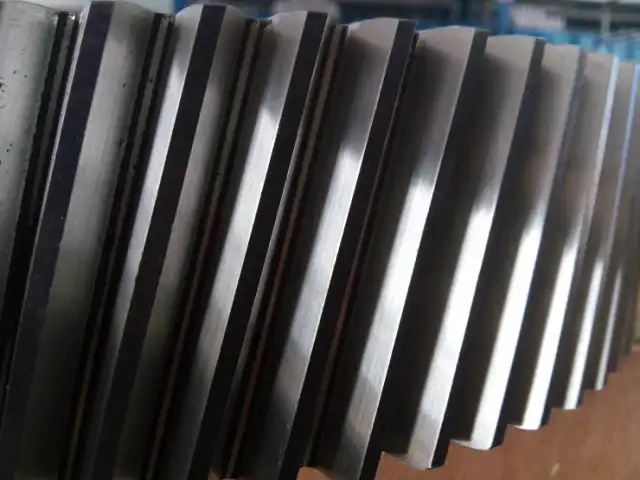
A Precision Helical Gear is a cylinder-shaped gear part with teeth that are cut at an angle to the gear axis. This makes a helix pattern that lets the teeth connect gradually instead of all at once. Unlike regular spur gears, these parts are made to very tight specs (usually ISO Grade 6 or better) so they can transfer power smoothly and quietly in tough situations. The angled teeth make it possible for multiple tooth pairs to share loads at the same time. This lowers shaking and noise levels while increasing power capacity. Because of how they are made, Precision Helical Gear sets are necessary for high-speed machines, aerospace systems, and industrial equipment that needs to be reliable and work well. Having a good understanding of these basics helps buying pros choose the right gear for important tasks.
Understanding Precision Helical Gears
Core Design Principles
The shape of the teeth is what makes helical gears identifiable. In most industrial settings, the helix angle is between 5° and 45°. This angle controls how slowly the teeth connect during spinning. This angled shape makes what engineers call "progressive contact," which means that tooth attachment starts at one end and moves across the width of the face. Most of the time, the contact ratio is higher than 2.0, which means that at any given time, at least two pairs of teeth are carrying the load.Module selection is another important factor that determines how the sizes of gear teeth relate to each other. We can make modules ranging from 0.5 to 50, which means we can make anything from tiny precise tools to huge mining equipment. Larger units can handle higher torques, but they are less compact, so it's important to find the right mix between load capacity and room limitations.
Manufacturing Excellence That Matters
To make helical gears that are truly accurate, you need to use complex manufacturing methods. Forging high-quality materials like 20CrMnTi, 40CrNiMo, and AISI 8620 alloy steels is the first step. These steels were chosen because they have great strength-to-weight ratios and respond well to heat treatment. These substances are the building blocks for gears that can last for years of tough use.Hobbing and milling are two methods used to cut the basic shape of teeth, but fine grinding is what makes one gear unique from another. Tooth grinding can get surface finishing as smooth as Ra 0.4μm, which gets rid of almost all micro-irregularities that cause wear to happen too quickly. Carburizing is one type of heat treatment that makes the surface hard, hitting 58–62 HRC, while keeping the core tough at 30–40 HRC. This mix is strong against both surface wear and shock loads, which are two common ways that industrial transmissions break down.
How Helical Gears Transmit Power
The way torque transfer works explains why these parts work so well in tough conditions. When teeth that are mated touch along their angled sides, contact pressure is spread over a bigger area than with spur gears. This spreads out the stress that causes pitting and spalling. Transmission error, the small changes in speed that cause noise and vibration in cheaper gearsets, is also kept to a minimum by the slow contact.Axial force is a property that engineers need to think about. The helix angle creates a force component that is aligned to the shaft axis. To counteract these loads, thrust bearings or double-helical designs are needed. If you choose the right bearings, this feature can be turned from a problem into a design feature that makes the shaft more stable.
Key Benefits and Applications of Precision Helical Gears
Advantages That Drive Industrial Performance
In the 15 years we've been making gears, we've seen steady benefits in a wide range of situations. The engineering gains lead straight to improvements that can be seen and felt by end users. Here are the main reasons why Precision Helical Gear solutions are the best choice for important machinery:
1. Better load capacity: These gears can transmit 20–30% more power than similar spur gears without getting bigger because their tooth contact area is bigger. When room limitations mean that the motor can't be as big as it needs to be, this feature becomes very important.
2. Vibration and Noise Reduction: As the mesh cycles, progressive tooth contact lowers impact loading, which lowers working noise by 10-15 dB(A) compared to spur gears at the same speeds. The quieter operation is appreciated by manufacturing facilities because it makes working conditions better and lowers acoustic stress in close parts.
3. High-Speed Capability: The smooth contact design lets the gears work at two to three times faster rotational speeds than spur gears do without losing their dynamic stability. Helical gears are often pushed past 12,000 RPM by motors for electric vehicles. At these speeds, spur gears would make too much noise and wear out too quickly.
4. Durability Under Varying Loads: Case-hardened surfaces don't micropit or wear out easily, so they last longer even when loads change. This robustness makes it possible for mining equipment and wind turbine drives to work reliably even in harsh circumstances and when power demands change.
These benefits solve real problems in business. Aerospace companies need control systems with helical gears because they are reliable and save weight. For mining operations to work, they need to be able to handle high loads and dirty surroundings. Builders of industrial tools like the longer repair intervals and less downtime.
Real-World Applications Across Industries
Spindles for Machine Tools: High-precision machine centers need gears that keep the position accurate while reducing cutting forces. Helical gears with backlash less than 3 arcminutes make sure the object moves exactly as planned. This has a direct effect on the quality of the part and lowers the rate of scrap.
1. Large gears for Heavy Industry: Steel mills, cement plants, and other similar places use gears that constantly send thousands of horsepower. Our gears, which are made from SAE4340 and 42CrMo steels, can handle these harsh conditions, and with the right amount of grease, they can work at more than 98% efficiency per stage.
2. Compressor Drives: Pulsating loads from reciprocating and screw compressors make gears last longer. Precision Helical Gear sets' high contact ratio spreads out these shock loads, which keeps teeth from breaking like they do with cheaper gearsets.
3. Aerospace Actuation Systems: The control surfaces of airplanes need transmitters that are small, light, and work perfectly in a wide range of temperatures. These needs are met by helical gears made from the alloy 18CrNiMo7, which also has the safety margins needed for aircraft uses.
Material Selection Strategy
When picking the right materials, you have to weigh the needs for strength, ease of use, reaction to heat treatment, and cost. Lower-carbon steels, such as 20CrMnTi, work really well in carburizing processes because they have very hard surfaces (60+ HRC) and tough centers. Medium-carbon alloys like AISI 4140 and 40CrNiMo work well with through-hardening or induction hardening, and they can be used in situations with mild surface contact stress.
Instead of automatically choosing the strongest material, people who work in procurement should choose materials based on how they will be used. Matching the right materials together increases the life of gears and keeps costs low. This is especially important for big gearboxes where material costs have a big effect on overall project budgets.
Precision Helical Gears vs. Other Gear Types
Comparative Performance Analysis
Understanding gear types helps match components to application needs. Spur gears are simple and low-cost but noisy and limited to low speeds due to impact loading. Bevel gears handle right-angle drives but are complex and less economical than parallel-shaft options. Worm gears offer high reduction but low efficiency and heat issues. Planetary gears are compact but costly due to precision demands. For many applications, Precision Helical Gear units provide a balanced, efficient, and cost-effective solution.
Application-Specific Advice on How to Choose
Low-speed machinery under 500 RPM can use spur gears to reduce cost if noise is acceptable. However, Precision Helical Gear units justify their higher cost when higher speeds or quieter operation are required. Ground helical gears achieve low backlash (under 5 arcminutes), ensuring precise robotic positioning. In harsh mining environments with dust, shock, and temperature changes, their strong, case-hardened teeth provide durability, with service lives exceeding five years under proper maintenance.
Procurement Guide for Precision Helical Gears
Specifying Requirements Effectively
Clear technical requirements are the first step to a successful Precision Helical Gear purchase. In addition to module and tooth count, buyers should also indicate the helix angle, accuracy grade (ISO 1328 or AGMA 2000), surface hardness, and core hardness. These details keep things clear and make sure that the parts supplied meet the needs of the application.When choosing materials, you need to think about the working surroundings. Stainless metals or protective coatings are good for parts that are subject to corrosive circumstances. Extreme temperatures can make it necessary for materials to keep their strength at high temperatures or their toughness at very low temperatures.
Lead Times and Production Planning
Making custom gear takes time and care. Because of the careful steps needed to make fine parts, our normal production time ranges from 35 to 60 days. It takes time to forge raw materials, do rough machining, heat treatment, end grinding, and quality checking. Rushing through these steps lowers the quality and costs more in the long run because they fail before they should.You might be able to get bulk discounts for large sales, but you can still make just one item if you need to make a prototype or replace something quickly. We've set up our business so that we can handle both large production runs and one-time unique needs without lowering the quality of our work.
Evaluating Total Cost of Ownership
The purchase price is only one part of the total cost. Longer service life, less frequent maintenance, and lower energy use due to better efficiency often make the small increase in original investment worth it. When gears break down too soon, it costs a lot more than the difference in price between good and perfect parts.When problems happen, warranty coverage and the ability to get expert help are very important. Our one-year warranty and quick tech help give you peace of mind that problems will be fixed quickly, keeping production from stopping.
Trusted Brands and Suppliers of Precision Helical Gears
Identifying Reliable Manufacturing Partners
Choosing a supplier has a huge effect on the success of a project. Quality standards, such as ISO compliance, are a good way to make sure that a seller can make something, but a more in-depth look shows which ones really shine. When looking at possible partners, we suggest looking at a few key things.The powers of manufacturing tools directly affect how precise Precision Helical Gear components can be made. No matter what licenses they have, suppliers who use old gear hobbers and don't have precision grinding tools can't make parts that meet tight tolerances. Our building has CNC gear machining centers, automatic grinding equipment, and smart heat treatment lines that show how modern production is becoming.
Quality Assurance Practices
Inspection methods tell the difference between producers who really care about quality and those who just say they do. For each production batch, the dimensions should be checked carefully, the sharpness of the surface should be checked, the material should be certified, and a metallurgical study should be done. We keep track of each piece of equipment by connecting it to a specific batch of materials and set of processing settings. This lets us figure out what went wrong if problems happen in the field. Long-term relationships with well-known companies that make industrial tools are a good sign of a supplier's dependability. Our long-term partnerships show that we consistently provide high-quality goods and quick technical help that procurement professionals who manage complicated supply lines value.
Post-Sale Support Infrastructure
When application problems happen, having access to technical help becomes very important. Suppliers who give technical advice can help you choose the best Precision Helical Gear and fix problems that come up out of the blue. We offer design review services before a sale, reports on the production process while the product is being made, and quick problem-solving after delivery. When buying things from other countries, global transportation skills are important. Customized packaging with shock-absorbing materials and strong wooden boxes keeps the surfaces of delicate gear teeth safe while they're being shipped. Because we pay close attention to how our packages are designed and which carriers we choose, our transport damage rate stays below 0.1%. Real-time package tracking lets everyone in the supply chain see what's going on, which makes delivery plans less uncertain.
Conclusion
Choosing the right geared parts has a big effect on how well machinery works, how much it costs to maintain, and how reliable it is in the field. Precision Helical Gear sets have measured benefits over other designs, such as smoother operation, higher load capacity, and longer service life. Procurement pros can choose the best parts for their needs by knowing the design parameters, production quality indicators, and application-specific criteria. Working with skilled manufacturers who have up-to-date tools, strict quality control systems, and quick expert help will make sure that projects get parts that meet the highest standards. Investing in fine Precision Helical Gear units pays off over the life of the equipment through less downtime, less upkeep, and better system efficiency.
FAQ
1. Which position of the spiral works best for my use?
For most industry uses, helix angles between 15° and 25° are perfect for balance. Lower angles lessen axial flow, but they also lose some of their ability to decrease noise. Higher angles improve smoothness and load capacity, but they need stronger thrust bearing setups. During the design review process, we look at your specific working conditions, such as speed, torque, room limitations, and the way your bearings are set up, to suggest the best helix angles for your Precision Helical Gear requirements.
2. Can I add helix gears to spur gear housings that are already there?
Most of the time, direct replacement needs changes. Helical teeth create axial thrust, which means that thrust-capable bearings are needed, which aren't always present in spur gear housings. Center lengths might need to be changed, and the shapes of the shafts might need to be made stronger. We offer engineering review services to check if a retrofit is possible and suggest any changes that need to be made. This will help you decide whether it is more cost-effective to upgrade or redesign.
3. How do I keep precision helix gears in good shape?
Keeping the gears properly oiled is the single most important thing that can be done to make them last longer. Choose oils that are right for the speeds and temperatures of the operation and keep things clean to avoid harsh contamination. Audio and sound readings should be kept an eye on to spot problems early on. Regular oil analysis finds wear particles that show damage to the surface before it breaks in a big way. When our customers follow these steps, the service lives they get regularly go beyond what was expected by design.
Partner with YIZHI MACHINERY for Superior Helical Gear Solutions
YIZHI MACHINERY has been making accurate helical gears for 15 years for use in mining equipment, industrial machinery, and spacecraft. Our ISO-certified factory makes unique gears from high-quality materials like 20CrMnTi, AISI 8620, and 18CrNiMo7 alloys. The gears are finished to ISO Grade 6 precision by grinding them over and over again. We can handle any order, from a single prototype gear to high-volume production runs, and we offer full customization from the initial design meeting all the way through world delivery. Our normal process guarantees delivery in 35 to 60 days, and we keep you up to date on progress at all times during production. Contact us at sales@yizmachinery.com to talk about your Precision Helical Gear needs with a maker that cares about quality, customization, and quick technical help throughout the lifecycle of your project.
References
1. Dudley, D.W. (2020). Handbook of Practical Gear Design and Manufacture. CRC Press, Third Edition.
2. American Gear Manufacturers Association (2019). AGMA 2000-A88: Gear Classification and Inspection Handbook—Tolerances and Measuring Methods for Unassembled Spur and Helical Gears.
3. International Organization for Standardization (2021). ISO 1328-1:2013—Cylindrical Gears: ISO System of Flank Tolerance Classification.
4. Townsend, D.P. (2018). Dudley's Gear Handbook: The Design, Manufacture, and Application of Gears. McGraw-Hill Education, Second Edition.
5. Radzevich, S.P. (2022). Theory of Gearing: Kinematics, Geometry, and Synthesis. CRC Press, Second Revised Edition.
6. Budynas, R.G. & Nisbett, J.K. (2021). Shigley's Mechanical Engineering Design. McGraw-Hill Education, Eleventh Edition, Chapter 13: Gears—General.

USER EVALUATE
Here is the customer's evaluation of us