


Industrial Helical Gear OEM/ODM Guide
It's important to have a strategic understanding of design basics, production skills, and source relationships in order to buy Industrial Helical Gear components. This complete guide talks about important things that B2B buyers need to think about in the mining, aerospace, and industrial machinery sectors. Accurate power transfer has a direct effect on working uptime and profits in these fields. When procurement teams understand the differences between OEM partnership and ODM customization, they can find reliable, cost-effective gear options that meet exact performance requirements while keeping lead times short and quality high.
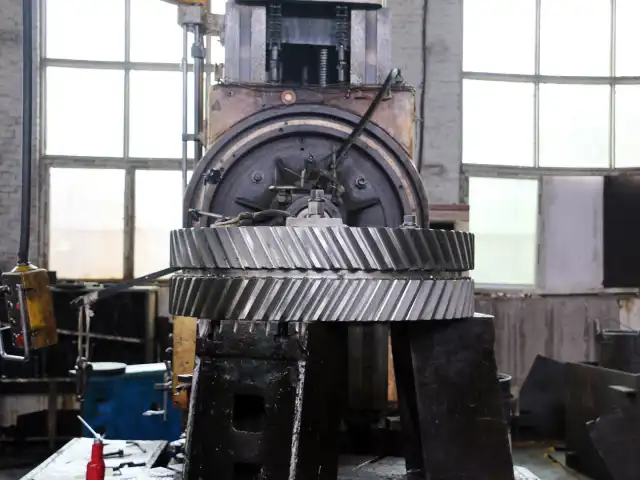
Understanding Industrial Helical Gears: Fundamentals and Design Principles
Industrial Helical Gear units represent a complex step forward in the way mechanical power is transferred. They are easily recognized by their teeth that are machined at an exact angle to the gear axis. This helix angle, which is usually between 15° and 30° in normal designs, lets the teeth engage gradually instead of quickly, which is how spur gears work. The new operational profile lowers vibration amplitude and noise emissions in a way that can be measured. This is important for facilities that have to follow strict noise rules or work in settings that require precision.
How Helical Gears Work
The basic process is based on the angled tooth shape, which makes a sliding contact pattern when the teeth meet. When a straight-cut spur gear engages, the whole tooth face does so at the same time. But spiral configurations spread the load gradually across several teeth. This longer contact ratio—which is often 30–50% higher than similar spur designs—means that it can handle more force within the same size limits. The trade-off is axial thrust generation, which is a force vector that runs parallel to the shaft axis and needs strong bearing choice and housing design.
Design Elements That Drive Performance
Different technological elements affect how things operate. The spiral angle directly impacts load distribution and force. Steeper angles smooth things but need stronger thrust bearings. The tooth form specs—module (0.5 to 50 in custom manufacture), pressure angle, and addendum changes—affect bending strength and contact stress limitations. Material selection is crucial. Through carburising heat treatments, alloy steels like 20CrMnTi and 18CrNiMo7 may achieve surface hardness of 58–62 HRC while preserving core toughness. Manufacturing techniques include hobbing, grinding, and precision heat treatment impact accuracy ratings. ISO 5-6 Grade precision parts function effectively at speeds above 3,600 RPM due to tooth profile changes of fewer than 10 microns. Double helical designs with mirrored helix angles eliminate axial thrust but double manufacturing complexity and expense. Heavy-duty gears for mine conveyors and industrial compressors can handle this compromise.
Industrial Helical Gear Performance Comparison and Selection Criteria
Systematic performance testing against different gear designs helps with buying choices for Industrial Helical Gear components. Spur gears are easier to make and slightly more efficient than helical designs (usually 98–99% vs. 96–98%), but their rapid tooth contact makes 8–12 dB more noise under the same loading conditions. In crowded industrial buildings or situations where OSHA noise exposure limits must be met, this acoustic punishment is no longer acceptable.
Performance Trade-offs Across Gear Types
Bevel gears work great in situations where right-angle power transfer is needed, but they make it harder to align the parts and do upkeep. Worm gear sets have high reduction ratios in small sizes, but they are less efficient (60–85%) and can cause heat when they are used continuously. Helical gears are in the middle when it comes to performance. They can handle loads that are similar to those of bevel gears, but they keep the parallel shaft ease of spur setups.Metrics for durability show that spiral structures are better at resisting wear. When you apply a steady load, the peak contact stresses go down. This makes the material last 40–60% longer against pitting and bending wear compared to spur versions tested in the lab according to AGMA 2001 standards. This advantage of lasting longer is even stronger in tough settings like mines, where abrasive dust speeds up the wear process.
Selection Criteria for Industrial Applications
The conditions of use must be taken into account when choosing materials. Standard carbon steels, such as 45# steel, are inexpensive options for moderate-load uses. They can be quenched and tempered to reach a surface hardness of 45 to 50 HRC. For high-performance applications in aircraft actuation systems or precision machine tool spindles, alloy types like SAE4340 or AISI8620 are needed because they achieve better case depth regularity during the carburizing process. The hardness gradient that forms, with case thicknesses of up to 2.5 mm, stops both surface wear and the start of underlying fatigue cracks.Lubrication needs are also taken into account when thinking about efficiency, along with mesh losses. Continuous oil bath or spray lubrication systems with ISO VG 220-320 grade industrial gear oils and high pressure additives are needed for helical designs. On the other hand, some low-speed worm gear uses can handle regular grease greasing, which changes how to figure out the total cost of ownership.
OEM/ODM Industrial Helical Gear Solutions: From Custom Manufacturing to Bulk Procurement
Using specialized OEM/ODM makers changes the buying process from a one-time event to a long-term relationship. Industrial Helical Gear custom making meets application-specific needs that standard catalog goods can't, like special mounting connections, non-standard center distances, or material requirements for harsh locations. Manufacturers also contribute their design engineering skills during the product creation stages as part of ODM relationships.
The Custom Manufacturing Process
Engineering teams initially examine environmental constraints, task cycles, and load spectra for technical guidance. The typical process of YIZHI MACHINERY is an industry best. Communication about requirements establishes performance targets and size restrictions, and collaborative design drawing creation utilising CAD technologies ensures that drawings may be created before production.Manufacturing uses advanced process chains. Forging produces near-net gear plates with excellent grain flow patterns that withstand wear. After Hobbing machines cut tooth profiles, heat treatment might be carburising for case-hardened teeth or induction hardening for selective tooth surface treatment. CNC gear grinders improve tooth form and physical correctness by eliminating heat treatment distortions.A coordinate measurement machine compares tooth form to DIN 3960 criteria for quality assurance. Controlled load testing analyses contact pattern, while magnetic particle examination detects faults underneath the surface. Before packing and shipping, these methods ensure that the parts are ISO 5–6 grade correct.
Pricing and Lead Time Considerations
Unit pricing are heavily influenced by volume economics. Prototypes and low-volume orders (1–10 pieces) have higher tooling amortisation costs but enable you test the concept before production. For mid-volume batches (50 to 200 units), costs decrease 30 to 40%, while high-volume contracts provide tier pricing that accounts for automated manufacturing line utilisation. Production wait periods range from 35 to 60 days, depending on heat treatment cycles and machine space.How difficult the product is and what the producer can perform determine minimum order quantities. Flexible manufacturing cells can handle one-piece orders for prototype development and emergency repairs. Flight clients that require FAA-trackable parts or mining operations that need timely delivery to reduce unexpected downtime benefit from this flexibility.
Maintenance and Durability of Industrial Helical Gears: Maximizing ROI
Maintenance practice and the quality of the materials used at the start are directly related to how long Industrial Helical Gear setups work. Helical gearboxes in industrial use usually last longer than 50,000 hours before they need to be overhauled. That's about 5 to 8 years of nonstop use in a normal 24/7 production setting. For this service life to be reached, lubrication, alignment, and wear tracking methods must be followed consistently.
Essential Maintenance Practices
Managing lubrication is the key to making gear last a long time. Condition-based maintenance methods are possible with oil analysis tools that keep track of levels of contamination, wear metal concentrations, and viscosity stability. Between 500 and 1,000 hours of operation, sampling intervals can find new problems before they become catastrophic. Trending analysis can show the difference between slow wear development and sudden damage events that could be caused by misalignment or overloading.
Vibration tracking is a painless way to check on someone's health. When operating data is compared to baseline signatures set up during testing, changes in amplitude or new frequency components show that problems are starting to appear. Infrared thermography is used in addition to vibration analysis to find areas of high heat caused by poor lubrication or friction caused by imbalance.
Material Durability Factors
Choice of alloy has a big effect on how well it resists rust and how stable it is at high temperatures. For controlled indoor settings, standard carbon steels are fine, but for sea or chemical processing uses, stainless steels or special coatings are needed. YIZHI MACHINERY's range of materials, which includes 40CrNiMo and 42CrMo, makes it easier to harden bigger parts. This means that through-hardening can be done on gear blanks with a diameter of more than 200 mm, where case-hardening alone isn't enough.
Fatigue efficiency is based on the strength of the heat treatment. When carburizing processes are done correctly, they leave behind compressive residual stresses on the tooth surfaces that stop cracks from spreading. On the other hand, case crushing failures are caused by too much case depth or not enough core hardness. Induction hardening lets you strengthen only the edges of the teeth while leaving the insides of the holes softer for interference fit assembly, which is a common requirement in machine tool spinning uses.
Leading Industrial Helical Gear Manufacturers and Suppliers: Choosing a Reliable Partner
When choosing an Industrial Helical Gear supplier, it's not just about price; it's also about professional know-how, quality processes, and long-term dependability. Vertical integration includes everything from buying raw materials to inspecting the finished product. This way, the best makers make sure quality control at every step of the process instead of relying on outside suppliers whose standards may be different.
Evaluating Technical Capabilities
The level of complexity of manufacturing tools is a good way to tell what it can do. CNC gear hobbing centers with automatic tool correction, multi-axis grinding machines with accuracy of less than 5 microns, and computerized heat treatment ovens that keep the temperature even to within ±5°C are all used in advanced facilities. YIZHI MACHINERY has invested in some of the best precision manufacturing equipment in the world. These machines, such as fully automatic gear grinding machines and intelligent heat treatment production lines, help them keep producing ISO 5-6 Grade work.
Portfolios of certifications show that quality management is mature. For example, ISO 9001 certification shows that the process is being run correctly, while AS9100 certification for aerospace uses or API certification for oil and gas tools shows that the company has specific knowledge. Testimonials and case studies from satisfied customers show that you can solve problems and reliably send goods even when things go wrong.
Building Strategic Partnerships
Relationships that work well go beyond just buying things and include working together to make things better. Leading providers give extra services that add value, such as design advice, help with failure analysis, and application engineering support. This method is shown by YIZHI MACHINERY's full service framework, which includes expert advice and help with drawing development before the sale, synchronized production updates during production, and a one-year guarantee with quick problem resolution after delivery.
Logistics skills affect both the total cost of landing and how predictable delivery is. Customized wrapping from suppliers lowers the risk of damage during transport, which is very important for precision-ground gear teeth that are easily damaged by contact. Multiple types of transportation that balance cost and speed make it possible to find the best solutions, whether it's urgent air freight for when a production line is down or cost-effective sea freight for when you need to restock your shelves. Real-time shipment tracking tools make the whole supply chain clear, which reduces doubt and makes it possible to handle problems before they happen.
Conclusion
To buy Industrial Helical Gear parts successfully, you need to think about technical specs, manufacturing quality, and the possibility of forming a relationship with a seller. The small increase in efficiency compared to easier gear types is worth it because of the performance benefits in load capacity, noise reduction, and smooth operation, especially in demanding industrial machinery, mining, and aircraft applications. When you work with skilled OEM/ODM makers who can show you their precise manufacturing infrastructure, strong quality systems, and full service support, procurement goes from being just buying things to being a strategic benefit. Experienced providers like YIZHI MACHINERY offer flexible customization options and production times of 35 to 60 days. This lets customers get solutions that are perfect for their needs while still having a low total cost of ownership.
FAQ
1. What lead times should I expect for custom Industrial Helical Gear orders?
Standard production times for an Industrial Helical Gear order are between 35 and 60 days, but they can be longer or shorter based on the complexity, amount, and current production plans. Forging, multistage heat treatment processes that need exact temperature control, and finish grinding to ISO 5–6 Grade accuracy can all be done in this amount of time. For important uses, rush orders can be filled through faster handling, but there is usually an extra charge. Because they don't need as many tools, prototypes are often finished faster than production runs.
2. How do helical gears compare to spur gears in noise and efficiency?
When compared to spur gears, helical designs are 8–12 dB quieter because the loads are spread out more evenly across the teeth over time. This sound benefit comes with a slightly lower efficiency—usually 96–98% vs. 98–99% for spur configurations—because the pointed tooth contact causes more rolling friction. In most workplace settings, the difference in efficiency isn't very noticeable. However, the noise reduction is very important in places where people are working or where there are strict noise laws.
3. What design support do OEM/ODM suppliers provide?
Reputable makers offer full technical support, including figuring out load capacities according to ISO 6336 guidelines, using CAD modeling to make sure the parts fit, and using finite element analysis to figure out where stresses are concentrated in important situations. YIZHI MACHINERY's pre-sales advice includes working together to make drawings, suggesting materials based on operating conditions, and reviewing designs to make sure they are the best in terms of both performance and production efficiency. This technology relationship lowers the risk of development and speeds up the time it takes for custom apps to reach the market.
Partner with YIZHI MACHINERY for Premium Helical Gear Solutions
YIZHI MACHINERY is ready to provide you with precisely built Industrial Helical Gear parts that are made to fit your exact needs. We have been making things for 15 years and have experience in the mining, aircraft, and industrial machinery industries. Our quality standards are in line with ISO standards, and we can make changes to any order, from a single sample to a large production run. Our plant is vertically integrated and has high-tech CNC machine centers, automatic grinding equipment, and smart heat treatment lines that make gears from 45# steel to SAE4340 alloy grades with a surface hardness of up to 62 HRC.
Take advantage of our full range of services, which include expert advice before the sale, tracking of production in real time, and a one-year guarantee with fast response resolution. Our custom packing guidelines and multi-modal transport network make sure that your packages get delivered without damage and on time, with lead times of 35 to 60 days. Whether you need a reliable supplier for regular purchases or a development partner for unique transmission solutions, our team gives you measurable value through high-quality products and on-time delivery. Email us at sales@yizmachinery.com to talk about your needs and get a full quote with competitive prices and your exact specs.
References
1. Dudley, D.W. (1994). Handbook of Practical Gear Design and Manufacture. CRC Press, Boca Raton.
2. ISO 6336-1:2019. Calculation of Load Capacity of Spur and Helical Gears - Part 1: Basic Principles, Introduction and General Influence Factors. International Organization for Standardization, Geneva.
3. AGMA 2001-D04. (2004). Fundamental Rating Factors and Calculation Methods for Involute Spur and Helical Gear Teeth. American Gear Manufacturers Association, Alexandria.
4. Stadtfeld, H.J. (2014). Gleason Bevel Gear Technology: Manufacturing, Inspection and Optimization. The Gleason Works, Rochester.
5. Radzevich, S.P. (2012). Dudley's Handbook of Practical Gear Design and Manufacture (2nd Edition). CRC Press, Boca Raton.
6. Lynwander, P. (1983). Gear Drive Systems: Design and Application. Marcel Dekker Inc., New York.

USER EVALUATE
Here is the customer's evaluation of us