


What Is Machining Spline on Shaft and Why It Matters in Precision Engineering
To make lengthwise ridges (teeth) or grooves on power transmission shafts, a precision subtractive or deformation manufacturing process called Machining Spline on Shaft is used. Splined shafts can mesh with gears, couplings, or pulleys, while simple keyed connections can't. This lets them transfer high torque loads while keeping precise angular alignment. This process solves important engineering problems like preventing torque failure, lowering vibrations, and preventing fretting fatigue in high-stress situations. This makes it necessary for industries that need reliable mechanical performance.
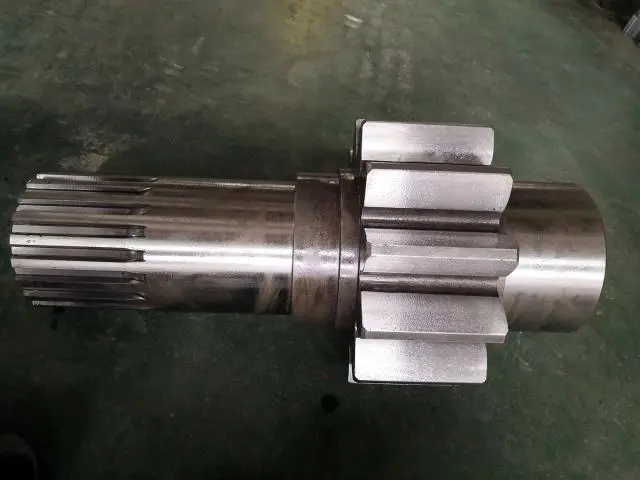
Understanding Machining Spline on Shaft: Basics and Importance
When engineers and procurement managers look at power transmission parts, they need to know the basics of Machining Spline on Shaft in order to make reliable and cost-effective choices about where to buy them.
What Defines a Spline Shaft and Its Function
A spline shaft has many longitudinal teeth machined into its surface. These teeth are meant to fit into grooves in a hub or coupling. Instead of putting all the stress on one keyway, this design spreads the torque fairly across several contact points. The shape causes a self-centering effect that lowers radial runout, which is very important for high-speed applications going over 5,000 RPM. This design keeps alignment errors within microns while machine tool spindles, robotic joints, and precision instrument gearbox systems are in use.
Involute vs. Straight-Sided Spline Profiles
In industry, two main spline shapes are used most often. Involute splines have bent tooth shapes that meet ANSI B92.1 or DIN 5480 standards. They are better at spreading load and centring themselves. Because they are curved, they can handle small misalignments without putting stress on the edges. This makes them perfect for uses in car driveshafts and servo motor gearboxes. ANSI B92.2 says that straight-sided splines have easier manufacturing requirements and lower tooling costs, but they allow less room for errors in alignment. Manufacturers of hydraulic pumps often choose designs with straight sides for fixed uses where rigid mounting can keep the pump perfectly aligned.
Internal vs. External Spline Configurations
External splines are machined into the outside diameters of shafts, while internal splines are cut into the inside diameters of hubs or gears. External Machining Spline on Shaft usually uses hobbing, milling, or rolling, which makes it easy to get ISO 6 Grade precision. It's trickier to make internal splines because you need to broach or use special shaping tools to get into the small holes. Depending on the needs of the assembly, external splines allow sliding couplings for uses with changeable lengths, while internal splines provide compact housings for setups with limited room, such as precision gearbox assemblies.
Load Distribution and Torque Transmission Advantages
Instead of putting all the stress on two contact points like keyed shafts do, splined connections spread the load out over many teeth. Depending on the number of teeth, this shape lowers touch pressure by 10 to 30 times. A normal 24-tooth involute spline working at 500 Nm feels about 20 MPa of contact pressure, but a similar keyed shaft feels over 300 MPa. This huge decrease in stress concentration directly leads to longer service life and lower failure rates in settings with repeated loading that are common in industrial robot joints and car powertrains.
International Tolerance Standards and Design Rigor
Precision Machining Spline on Shaft follows strict international rules that make sure parts can be used with each other and that the work is always the same. Tolerance classes in ISO 4156 range from IT6 to IT10. IT6 is the tightest tolerance that can be used for high-speed applications. According to ANSI rules, there are seven fit classes. Class 5 fits are normal for most industrial uses, and Class 4 fits are best for aircraft actuation systems because they have the least amount of backlash. These standards set important limits for things like major diameter, minor diameter, tooth thickness, and pitch change. All of these things are tested to within a range of 0.01 to 0.05 mm.
Common Machining Processes Comparison
There are different ways to make things, and each has its own benefits. Hobbing uses a spinning cutting tool to make teeth one at a time. This gives the surface a great finish and gives the maker options for trial runs. A multi-tooth cutting tool is pushed through the workpiece in a single pass during broaching. This process can produce a lot of parts quickly, but it needs expensive special tools. Grinding hardened shafts gives them the smoothest surface finish (Ra 0.4–0.8 μm), which is necessary for tasks that need very little friction and long-lasting performance. Rolling cold-forms teeth by moving material around instead of cutting it, which strengthens the grain structure and cuts down on cycle times, making it a better choice for making a lot of cars.
How to Machine Spline on Shaft: Step-by-Step Process and Best Practices
Find out how to machine a spline on a shaft step by step and how to do it right. By understanding how production works, buying teams can judge the skills of suppliers and set reasonable deadlines for unique orders.
Material Selection for Application-Specific Requirements
The choice of material has a direct effect on how well the spline works and how it is machined. We usually use alloy steels like 42CrMo, AISI4140, 20CrMnTi, and SAE4340. The steels we choose depend on how strong they need to be, how easily they can be hardened, and the conditions in which they will be used. Tougher grades, like 40CrNiMo, are better for parts that will be loaded with shocks. On the other hand, uses that need an extremely hard surface need carburising grades, like 18CrNiM7 or 20CrNi2Mo. Different materials are easier to machine in different ways. For example, softer grades can be roughed at faster cutting speeds, while harder alloys need carbide tools and slower feed rates to stay accurate in terms of size.
CAD/CAM Design Verification and Preparation
Before starting production, engineering teams make precise 3D models that include spline shape, requirements for dimensional limits, and requirements for surface finish. CAD/CAM software checks the accuracy of the tooth shape against standards, and CAM code creates toolpaths that work best with certain machining centers. This digital proof stops mistakes that cost a lot of money. For example, a wrongly estimated involute curve or pressure angle can make a whole production batch useless. Design reviews also find problems that might happen during production, such as not enough space for grinding wheels or not enough stock to account for warping during heat treatment.
Roughing, Finishing, and Precision Inspection Steps
Most of the time, production goes through clear stages. Roughing processes use hobbing or milling to remove large pieces of material, leaving 0.5 to 1 mm of stock for the next step, which is finishing. This step puts the rate of material removal ahead of the quality of the surface. In finishing passes, feeds and depths of cut are lowered to get the desired surface texture and accuracy of dimensions. The next step is heat treatment, which can be either carburising, quenching and tempering, or induction hardening, based on the needs of the product. Grinding after heat treatment fixes distortion and gets the final tolerances. During production, coordinate measuring machines (CMMs) and specialised spline gauges are used for dimensional checking to make sure that the parts are made according to the plan.
CNC Machining Advantages for Complex Profiles
Modern CNC machining centers change the way Machining Spline on Shaft is done because they offer unmatched accuracy, repeatability, and adaptability. Five-axis CNC mills can make complex helix angles between 5° and 45° while keeping the accuracy of their positions within 0.005mm. Programmable tool changes can switch between roughing, finishing, and chamfering processes without any help from a person. This cuts down on setup time and mistakes made by people. CNC capability is an important factor for purchasing managers to look at when they are looking for suppliers who can handle a wide range of requirements, such as modules from 0.5 to 50, custom tooth counts, and unique profile changes.
Quality Assurance Through Advanced Inspection Technology
Spline quality assurance relies on advanced inspection methods to ensure dimensional and functional accuracy. DOP testing verifies tooth thickness and fit class, while CMM-based profile and lead error analysis ensures geometric precision and proper load distribution. Surface roughness checks confirm finishing quality, and go/no-go gauges validate functional fit. NDT methods such as magnetic particle inspection and Barkhausen noise analysis detect cracks and grinding damage after heat treatment.
Comparing Machining Methods and Spline Shaft Types for Informed Procurement
To make sure that technical needs are met while staying within budget and meeting delivery dates, procurement workers need to have a good idea of the pros and cons of each manufacturing method.
Machining vs. Broaching: Efficiency and Cost Considerations
Broaching is highly efficient for mass production, completing internal splines in 30–60 seconds per part, but requires expensive tooling ($15,000–$50,000) and is economical only above 500 units. Machining methods like hobbing or milling take 5–15 minutes per shaft but use lower-cost universal tools ($500–$2,000), making them suitable for small batches. Broaching also delivers superior surface finish (Ra 0.8–1.2 μm), while machining may require additional grinding.
Spline Shafts vs. Key Shafts: Performance Comparison
Keyed shafts are simple and low-cost but create stress concentrations by transmitting torque through limited contact areas, reducing fatigue life and load capacity. Splined shafts distribute load across multiple teeth, increasing torque capacity by 200–400% and enabling axial sliding for applications like telescoping driveshafts. Their compact design also eliminates protruding keys, making them ideal for space-constrained systems such as robotics and precision instruments.
Internal vs. External Spline Machining Complexity
External spline production usually has fewer technical problems because the tools can reach the workpiece from different angles. With normal setups, hobbing tools can work with external splines from 10 mm to 500 mm in diameter. Geometric limitations affect internal Machining Spline on Shaft because cutting tools have to fit inside bore diameters and stay rigid to avoid deflection. Broaching is still the best way to make internal splines for large-scale production, but CNC shape and wire EDM are better for small-scale uses. Tolerance achievement is also different. External grinding can easily fix heat treatment distortion on the outside diameters of shafts, while internal grinding needs special tools and longer cycle times. Because of these differences in complexity, internal splines cost 30–50% more than external ones of the same size.
Practical Procurement Considerations
When looking for splined parts, the total cost of the project is affected by more than just the unit price. Expected lead times must include the time it takes to buy and set up the tools. For example, special broach tools take 8 to 12 weeks to make, but CNC machining can start within days using existing cuts. Minimum order numbers are very different. For example, broaching needs 100 or more pieces to cover the cost of the tools, but CNC machining can handle samples made from a single piece. Suppliers can do more than just basic manufacturing. They can also offer services that add value, such as heat treatment, surface coating, and assembly integration. When you look at a supplier's ISO 9001 certification, the level of complexity of their equipment, and their engineering support, you can be sure that you'll be working with makers who can solve technical problems as your product is being developed.
Procurement Insights: Spline Shaft Suppliers, Services, and Market Solutions
To make sure that supply lines for precision parts are reliable, you need to know your competitors and carefully evaluate possible partners.
Leading Global Brands and Evaluation Criteria
The spline shaft industry includes global leaders and specialized manufacturers such as Timken, SKF, Schaeffler, Bosch, NTN, and Rexnord, offering standardized and application-specific solutions. Supplier evaluation should prioritize certifications like ISO 9001 and AS9100, which indicate strong quality systems. Advanced capabilities in CNC grinding, heat treatment, and CMM inspection reflect precision manufacturing commitment. Facility audits and capability reviews help assess equipment condition, maintenance practices, and technical compliance.
Custom Machining Services and Turnkey Solutions
In addition to catalogue items, many applications need custom Machining Spline on Shaft configurations that work best in certain situations. YIZHI MACHINERY specialises in custom solutions that take into account specific dimensions, materials, and heat treatments that are best for a certain use. Standardised workflows are usually used for custom services. Communication about requirements sets technical specifications and performance criteria, engineering teams make design drawings that are checked through CAD analysis, production machining follows approved methods, quality inspection confirms compliance, and special packaging keeps parts safe during transport. This "turnkey" method makes buying easier by combining several sellers into a single partnership. Another big benefit is that you can choose the minimum order quantity that works best for you. For example, accepting single-piece orders lets you make prototypes and do low-volume speciality jobs without having to pay huge setup costs.
Cost Estimation and Value Balance
Spline shaft cost depends on material, geometry complexity, tolerances, surface finish, and order volume. Basic 45# steel external splines cost about $15–$30 in bulk, while aerospace-grade SAE4340 precision-ground and tested parts can exceed $200. Heat treatment significantly impacts cost, adding 15–25% for quenching/tempering and 40–60% for carburising. Procurement should define functional needs clearly, as appropriate tolerance selection (e.g., IT7 vs IT6) can affect cost by around 30%.
Advanced Manufacturing Technology Investment
Advanced spline shaft manufacturers invest in advanced CNC gear machining systems, such as DMG MORI and Gleason machines, enabling precise five-axis interpolation for complex geometries. Automated grinding systems from Klingelnberg and Reishauer achieve micron-level accuracy for hardened components. Computer-controlled heat treatment ensures consistent mechanical properties, while optical CMMs and high-precision measuring tools enable rapid, detailed inspection. Such capital investment improves product quality, process stability, and reduces lead times through automation and reduced setup requirements.
Ensuring Long-Term Value: Design, Inspection, and Maintenance Best Practices
To get the best return on investment for precision parts, you need to pay attention not only when you buy them but also during their whole working life.
Adherence to Precise Tolerance Standards
Maintaining tight tolerances is essential to prevent premature wear and catastrophic failure in spline applications. Excess backlash causes impact loading during torque reversals, leading to fretting corrosion, while excessive interference increases assembly stress and reduces fatigue strength. Standards such as ANSI B92.1 Class 5 suit general use, while Class 4 requires precision grinding. Appropriate hardness levels—45–50 HRC for moderate duty and 58–62 HRC for heavy duty—ensure wear resistance while preserving core toughness.
Routine Inspection and Preventive Maintenance Strategies
Even properly manufactured splines require regular inspection to ensure long-term reliability. Routine visual checks detect early wear such as polishing, scoring, or pitting on tooth surfaces. Spline micrometers measure dimensional changes, indicating reduced tooth thickness and end-of-life conditions. Proper lubrication is critical to prevent metal-to-metal contact, while protective covers reduce contamination in harsh environments. Recording wear trends enables predictive maintenance, allowing component replacement during planned downtime instead of unexpected failures and production stoppages.
Future Trends in Spline Machining Technology
Industry 4.0 is transforming spline machining through automation, connectivity, and data analytics. Smart machining centers with vibration and acoustic sensors enable real-time tool wear detection and automatic process adjustments to maintain precision. Digital twins allow virtual process optimization before production, while additive manufacturing enables complex spline geometries for prototyping and low-volume aerospace parts. Advances in materials science also improve strength and durability, leading to higher efficiency, precision, and reliability in component manufacturing.
Conclusion
Machining Spline on Shaft technology is an important part of modern precision engineering because it makes links more reliable and better at distributing load and transmitting power than traditional keyed connections. When procurement workers know the basics of spline types, Machining Spline on Shaft methods, and quality standards, they can make smart buying choices that meet technical needs and stay within budget. There are many different ways to make things, from flexible CNC cutting to high-volume broaching. Each is best for a certain type of job. By looking at suppliers' certifications, equipment, and services, you can be sure that the partnerships you make will be able to provide consistent quality throughout the lifecycle of a project. Industry 4.0 integration and new materials are making manufacturing technology better, and Machining Spline on Shaft is changing to meet the higher performance needs of the automotive, aerospace, robotics, and industrial machinery industries.
FAQ
1.What distinguishes involute splines from straight-sided splines in practical applications?
Involute splines have curved tooth profiles that allow them to self-center and work with small misalignments without putting stress on the edges. This shape works well for fast-rotating parts like car driveshafts that can't be guaranteed to be perfectly aligned. Straight-sided splines are easier to make and cost less, but they need to be perfectly aligned. This means they are best for fixed uses like hydraulic pump connections, where hard mounting keeps the parts centred during operation.
2.Which machining method produces the strongest spline shafts?
Spline rolling makes the strongest parts because it uses cold-forming teeth instead of cutting to strengthen the structure of the grains through work hardening. For high-volume production, this method works well, but it needs materials that are easy to bend and doesn't allow for much physical freedom. Broaching, hobbing, and then a carburising heat treatment all give similar strength by changing the metal, but they can be used with a wider range of materials and sizes.
3.How should I select qualified suppliers for custom Machining Spline on Shaft?
Give more weight to providers who can show that they have ISO 9001 certification, up-to-date CNC tools, the ability to do heat treatment in-house, and full inspection technology. Ask for sample parts that come with inspection reports that show how well the dimensions and surface finish are met. Check how quick the engineering help is during the quotation process. Technical collaboration is key to making ideas work better. Think about the company's production capacity, normal wait times, minimum order flexibility, and logistics skills to make sure they can meet the needs and deadlines of your project.
Partner with YIZHI MACHINING for Superior Spline Shaft Solutions
YIZHI MACHINERY uses advanced CNC machining centers and cutting-edge checking tools to make Machining Spline on Shaft components that are precisely designed and meet ISO 6 Grade tolerances. We have been making things for 15 years, so we know how to work with tough materials like 42CrMo, AISI4140, 20CrMnTi, and SAE4340. To get a surface hardness of 45 to 62 HRC, we use special heat treatments like carburising, quenching and tempering, or induction hardening. We can make products to your exact specifications, including tooth counts, modules from 0.5 to 50, and helix angles from 5° to 45°. Our minimum order quantities are flexible, so we can make anything from a single prototype to large production runs. Communication of requirements, creation of design drawings, production machining, strict quality inspection, protective packaging with damage rates below 0.1%, and real-time tracking of logistics are all part of our full service model. With production lead times of 35 to 60 days and multiple shipping choices, arrival times can be planned ahead of time. Our team can help you with technical questions and complete solutions for anything from precision gearbox parts to custom transmission shafts and robotic joint assemblies. Contact us at sales@yizmachinery.com or visit yizhimachinery.com to talk about your project needs and get full quotes.
References
1. American National Standards Institute. (2017). Involute Splines and Inspection Standards ANSI B92.1. New York: ANSI Publications.
2. Deutsches Institut für Normung. (2018). DIN 5480: Involute Splines Based on Reference Diameters. Berlin: DIN Standards Committee.
3. International Organization for Standardization. (2019). ISO 4156: Straight Cylindrical Involute Splines - Metric Module, Side Fit. Geneva: ISO Central Secretariat.
4. Radzevich, S.P. (2016). Dudley's Handbook of Practical Gear Design and Manufacture (3rd ed.). Boca Raton: CRC Press.
5. Townsend, D.P. (2020). Gear Handbook: Design and Calculations. Materials Park: ASM International.
6. Klingelnberg GmbH. (2021). Precision Gear Metrology and Inspection Technology. Hückeswagen: Klingelnberg Technical Publications.

USER EVALUATE
Here is the customer's evaluation of us