


Uses of Spur Gear Grinding in Aerospace and Automotive Industries
A very important finishing step in aircraft and automobile manufacturing is Spur Gear Grinding, which directly meets the need for very accurate, high-strength gear components. This abrasive cutting method fixes distortions caused by heat treatment and creates beautiful surface finishes, reaching ISO 5–6 and 8–9 levels of precision. Grinding hardened gears gets rid of the tiny irregularities that cause noise, vibration, and early wear. This makes them reliable transmission elements that can handle high working loads in high-performance gearboxes, airplane actuators, and turbine systems.
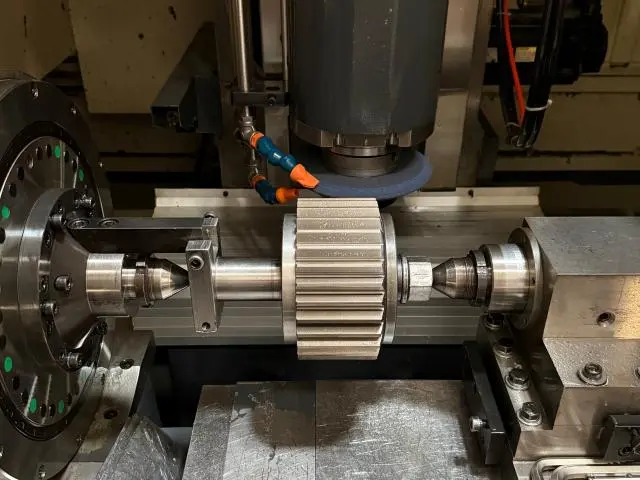
Understanding Spur Gear Grinding in High-Precision Industries
Understanding how Spur Gear Grinding can precisely shape gears is essential for modern gear manufacture. Grinding employs abrasive wheels (typically aluminum oxide or Ceramic Boron Nitride (CBN)) to remove extremely thin layers of material off sharpened tooth surfaces. After heat treatment, this technique fixes deformities from induction, cooling, and carburizing.
Why Precision Grinding Matters in Critical Applications
Heat treatment is needed to get 58–62 HRC surface hardness, however it invariably changes material size. Grinding restores involute forms and ensures tooth alignment satisfies requirements. Ground gears provide more than size accuracy. They may carry more weight, reduce friction, and endure longer. Grinding is the only method to make airplane actuators operate at 30,000 feet or vehicle gearboxes shift power smoothly at highway speeds.
Core Parameters Influencing Grinding Quality
You must carefully regulate many connected aspects for the best outcomes. The feed rate controls cycle durations and heat loads, while the grinding wheel speed controls material removal and surface roughness. Coolants prevent grinding burn, a metal imperfection that weakens a tiny region, by regulating heat loss during rough contact. Modern CNC gear grinding centers use closed-loop monitoring to modify these parameters in real time. This ensures consistent manufacturing quality.
Addressing Common Grinding Defects
Gears with micro-cracks, waviness, or spec deviations are less effective. Advanced grinding machines employ dressing cycles to retain the wheel's form, and coordinate measurement machines (CMM) verify the profile thereafter. Nital etch testing, which satisfies ISO 14104 criteria, may detect heat damage that measurement inspection can't. These quality control methods ensure gears fulfill AS9100 and IATF 16949 aerospace and automotive specifications.
Precision grinding differs greatly from ordinary gear cutting. Hobbing is good for rough shaping huge volumes of material, whereas grinding is excellent for sub-micron hard materials. Grinding addresses pitch and concentricity issues, creating gears with optimal power transmission contact patterns. This is great for safety-critical systems where a faulty element may be devastating.
Key Spur Gear Grinding Techniques and Process Optimization
To make the Spur Gear Grinding process work better, you have to balance a lot of technical factors with the cost of production. The quality of the finished part and the speed at which it is made are determined by how well the machine works, how skilled the user is, and how the material behaves.
Impact of Process Variables on Manufacturing Outcomes
The operational triangle includes grinding speed, feed rate, and coolant chemical. Process efficiency depends on it. Higher perimeter wheel speeds remove material quicker but increase thermal stress, which may damage case-hardened surfaces. Slower feed rates improve surface quality but increase cycle times, reducing manufacturing capacity. Extreme-pressure chemicals in synthetic coolants reduce friction and prevent precision-ground surfaces from rusting during storage and shipping. Maintaining geometric precision throughout thousands of manufacturing cycles requires frequent machine calibration. Spindle alignment, wheel balance, and thermal adjustment prevent crucial dimensions from shifting. Lubricating guideways, filtering water, and inspecting encoders ensures machines perform ISO 5-6 precise work.
Manual Versus Automatic Grinding Systems
The best tools depend on the job and precision required. Expert machinists may alter manual grinding machine settings in real time, making them versatile for prototype development and small-batch bespoke orders. This procedure works for aircraft that need SAE4340 or 18CrNiMo7 alloys or tooth modifications. Automatic CNC grinding centres are used in high-volume automotive manufacture, where quality and low labour costs are crucial. These systems can produce over 100 pieces every shift because to automated wheel dressing, in-process measurement, and robotic filling. Automated technologies help Tier-1 automobile suppliers with three shifts meet statistical process control and just-in-time delivery demands.
State-of-the-Art Grinding Technology
Gleason, Liebherr, and Walter create cutting-edge grinding equipment that is more dependable and productive. Multi-axis CNC control allows complicated tooth modifications, and flexible grinding operations cater for material hardness. Integrated measuring systems' closed-loop input changes grinding settings automatically to maintain tolerances without human intervention. These characteristics reduce setup time, wheel wear, and scrap metal recycling. These factors greatly affect total cost of ownership. Modern tools enable scheduled repair, reducing downtime. Vibration sensors detect worn bearings before they fail, while coolant sensors alert workers to filtering system pollution. These characteristics maximize system availability, shielding production plans from unexpected issues that might compromise supply chain commitments.
Applications of Spur Gear Grinding in Aerospace Industry
When making aerospace products, strict quality standards are needed because the dependability of parts directly affects the safety of passengers. Precision Spur Gear Grinding is an important part of many parts of an airplane, from the landing gear motors to the extra power units.
Critical Aerospace Components Requiring Ground Gears
Flight control systems use gearboxes. They control surfaces with precise pilot commands. Backlash or placement errors might make the aircraft tougher to manage, particularly while landing. Ground gears eliminate these issues by ensuring micron-accurate tooth spacing. This ensures that mechanical response remains constant regardless of load. Another challenge is driving turbine engine accessories. Fuel pumps, hydraulic systems, and engines use these gears at extreme temperatures. Gears must have sturdy surfaces due to high rotating speeds, continual loads, and vibration. Grinding provides a superior finish while maintaining dimensions over heat cycles.
Meeting Aerospace Quality Standards
AS9100 accreditation requires extensive planning, manufacturing, and testing quality control systems. Manufacturers must demonstrate regular and reliable part production that meets customer needs. Grinding operations aid with compliance by documenting the process, statistically assessing measurement data, and ensuring that finished items can be traced back to its source material certificates. Material selection is crucial. Due of their durability, aircraft gears employ nickel-chromium metals like AISI8620 or 20CrNi2Mo. When heated to "carburizing," these materials have 0.8 to 1.5 mm case depths and 60 HRC surface hardness. Grinding removes the thin oxide layer formed after heat treatment without affecting the solid casing. This leaves flawless regions for final construction.
Value of Specialized Grinding Service Providers
Many aerospace businesses outsource precise cutting to contract organizations with high-tech equipment and processes. This method enables aircraft manufacturers concentrate on their strengths while suppliers handle difficult materials and forms. You must consider several criteria, including the professional support team's responsiveness and equipment performance, to select ideal partners. Henan Yizhi Machinery Co., Ltd. collaborates with aviation firms that require dependable grinding services for specific gears. Our CNC grinding facilities are aerospace-standard, and our experts are AS9100-trained. Single test units to medium-volume production runs benefit from our flexible manufacturing and high inspection requirements.
Applications of Spur Gear Grinding in Automotive Industry
Automotive uses are different from aerospace applications in that they focus on both speed and cost-effectiveness. When you need Spur Gear Grinding for a lot of things, you have to find ways to balance quality with cost.
Enhancing Transmission and Drivetrain Performance
Modern gearboxes use dozens of precision gears to smoothly transfer power over a broad speed range. Grinding is vital for high-end automotive markets because noise, vibration, and harshness (NVH) affect consumer satisfaction. Grinding reduces tooth spacing and surface roughness errors, lowering meshing noise. This is particularly obvious in electric automobiles without engine sound filtering. Gears in the differential and transfer case benefit from grinding. These pieces are loaded with shocks as the vehicle accelerates up or turns, therefore they must be strong and durable. Heat and grind 42CrMo and AISI4140 to the right size for strength. Even in harsh driving conditions, surface hardness between 58 and 62 HRC ensures lengthy service life.
Comparing Grinding With Mass Production Methods
Due of its speed and cost, hobbling is still the most frequent approach to build car gears. However, Hobbing can't create exact grades for dual-clutch clutches or hybrid system gears. Grinding allows producers to create components with lower tolerance bands without reducing output. Turning or grinding depends on the part's purpose and quantity. High-volume transmission gears may need hobbing and targeted grinding of important surfaces. Full grinding is needed for low-volume performance. Procurement managers must consider tooling, cycle times, and quality-related scrap while selecting production processes.
Cost-Effective Grinding Strategies
Plan ahead and consider where grinding will provide the greatest value to obtain the optimum quality-price balance. Automotive manufacturers utilize a variety of technologies, saving grinding for silent gears and cheaper finishing for quieter parts. This application reduces manufacturing costs without affecting unit performance. Equipment maintenance costs are another consideration. Automatic grinding machines need professional repairmen and original parts to operate. When you engage with equipment vendors that provide timely technical support and a large choice of parts, you can prevent protracted downtime that disrupts production and client deliveries.
How to Choose the Right Spur Gear Grinding Solution for Your Business
To choose the right Spur Gear Grinding powers, you need to look at more than just the starting cost of the equipment. Long-term profitability depends on making sure that the features of the machine meet the needs of the production while also making sure that the provider can be relied on.
Critical Evaluation Criteria for Equipment Selection
Most procurement procedures prioritize accuracy, but throughput and operational flexibility should also be considered. A machine that grades ISO 5-6 slowly may not be as cost-effective as one that grades ISO 8-9 rapidly when the work requires stricter requirements. Machines that can handle 0.5 to 50 modules allow companies that service several markets greater possibilities. Aftermarket care greatly impacts total cost of ownership. Equipment vendors that give extensive training, timely technical support, and simple access to replacement parts reduce downtime risks. Local service centers and process optimization specialists help keep equipment operational for as long as possible.
Comparative Analysis: When Grinding Outperforms Alternative Methods
Grinding is often the only option, although costing more. Abrasive cutting is the only option to improve gear surface quality at high speeds and little oil. Safety-critical parts need precision and repeatability since failure would cost more than its cost. However, moderately speeding huge agricultural tractor gears may benefit from hobbed teeth. Understanding an application's demands prevents producers from over-specifying processes, which optimizes capital utilization across all equipment. Besides direct manufacturing costs, ROI assessments should incorporate quality expenses like scrap rates, warranty claims, and customer satisfaction.
Procurement Checklist for Supplier Evaluation
Business-to-business customers considering grinding service providers or equipment suppliers should check a few factors before partnering. Certifications like ISO 9001 demonstrate your quality management skills, while sector-specific standards like AS9100 or IATF 16949 demonstrate your aerospace or auto industry expertise. Equipment walks that indicate cleanliness, organization, and condition may teach you operational discipline. Technical abilities include understanding materials, heat treatment, and advanced testing equipment in addition to machine building. Full-service suppliers that collect raw materials, check, and pack completed items make supply chain management simpler and ensure product quality. Communication during quotation and project delivery might indicate long-term relationship satisfaction. Potential customers are welcome to tour Henan Yizhi Machinery Co., Ltd. and discuss our goods and services. Our manufacturing equipment includes CNC gear machining centers and completely automated grinding machines for modules 0.5 to 50. We use 45# steel, 20CrMnTi, 40CrNiMo, and SAE4340. We can satisfy 45–62 HRC surface hardness standards using heat treatments. If the project is intricate and many are ordered, production takes 35 to 60 days. Customized services are available. Here are the key reasons our grinding services are superior than product vendors. Custom design assistance helps clients acquire the right gear shape, and variable minimum order quantities may be utilized for prototypes and bulk manufacturing. ISO-standard quality control ensures that every manufacturing batch has the same dimensions and surface integrity. Custom packaging with shock-absorbing materials and hardwood pallets that protect tooth surfaces during overseas delivery keep our damage rate below 0.1%. Everyone in the logistics chain can view real-time shipment tracking, eliminating guesswork regarding package arrival. These advantages address typical purchasing difficulties including quality, communication, and supply chain reliability. Long-term partnerships with mining, aerospace, and industrial equipment customers demonstrate our ability to satisfy rigorous criteria in many circumstances. Our systematic method for discussing requirements, developing, manufacturing, inspecting, packaging, and shipping fills orders fast and accurately without compromising quality.
Conclusion
Precision Spur Gear Grinding used to be a specialist finishing technique, but today it's a crucial aspect of creating items that keep aircraft and vehicles safe and functioning properly. Grinding may repair heat treatment distortions while preserving sub-micron limitations, making it critical when component trustworthiness directly impacts system performance. Aerospace motors, turbine drives, EV transmissions, and speed gearboxes depend on ground gears for long-term performance. Look beyond equipment specifications to identify appropriate grinding partners. Check their professional skills, quality systems, and service dedication. Grinding skills help manufacturers achieve increasingly strict precision standards, giving them a competitive advantage in worldwide marketplaces.
FAQ
1. What advantages does grinding offer over traditional gear cutting methods?
Grinding is the best way to fix flaws that happen during heat treatment. It can achieve exact grades between ISO 5 and 6 that cutting can't do on hardened materials. The process makes better surface finishes that cut down on noise and friction and make parts last longer. Even though it costs more than hobbing or shape, grinding is a good choice for high-stress situations where the costs of failure are higher than the costs of production.
2. How frequently should grinding machines undergo calibration and maintenance?
How often calibration is done depends on how much is being made and how precise it needs to be. High-volume car providers usually check important measurements every day and do a full calibration every month. Because tolerances are tighter in aerospace, makers may adjust once a week. For consistent output quality, maintenance plans should follow what the equipment maker suggests. This usually includes checking the coolant system once a week, inspecting the spindle once a month, and making sure the alignment every three months.
3. Can custom grinding services accommodate small-batch aerospace projects?
Reliable grinding service providers are flexible enough to support both the development of prototypes and large production runs. Custom services include helping with design, choosing materials, and speeding up delivery when a job needs to be finished quickly. Different suppliers have different minimum order amounts, but experienced aircraft contractors usually accept orders for a single piece because they know how important it is to support product development processes and meet the needs for spare parts.
Partner With a Trusted Spur Gear Grinding Manufacturer
Henan Yizhi Machinery Co., Ltd. is a trusted Spur Gear Grinding supplier with 15 years of experience making precision gears for companies worldwide in the mining, aircraft, and industrial machinery sectors. We can grind spur gears with tooth counts and surface hardness levels that meet ISO 5-6 and 8-9 accuracy grades. Our grinding capabilities cover modules from 0.5 to 50. We use high-quality materials like 20CrMnTi, 40CrNiMo, SAE4340, and AISI8620 and put them through a full set of manufacturing processes, including forging, hobbing, milling, heat treatment, and final grinding. Before shipment, every part undergoes strict quality inspection to ensure accurate dimensions and zero material defects. Get in touch with our technical team at sales@yizmachinery.com to talk about your gear needs and find out how our customized solutions, open order numbers, and reliable global shipping can help your product perform better and put you ahead of the competition.
References
1. Smith, J.D. (2019). Gear Noise and Vibration: Fundamentals and Advanced Design Practices. Marcel Dekker Press.
2. Klocke, F., & Gorgels, C. (2020). "Grinding Process Optimization for Aerospace Gears." International Journal of Precision Engineering and Manufacturing, 21(4), 673-688.
3. Anderson, N.E., & Loewenthal, S.H. (2018). Effect of Geometry and Operating Conditions on Spur Gear System Power Loss. NASA Technical Publication.
4. Brecher, C., & Brumm, M. (2021). "High-Performance Grinding Technologies for Automotive Transmission Gears." Production Engineering Research and Development, 15(2), 245-259.
5. Radzevich, S.P. (2017). Dudley's Handbook of Practical Gear Design and Manufacture (3rd ed.). CRC Press.
6. ISO 1328-1:2013. Cylindrical Gears - ISO System of Flank Tolerance Classification - Part 1: Definitions and Allowable Values of Deviations Relevant to Flanks of Gear Teeth. International Organization for Standardization.

USER EVALUATE
Here is the customer's evaluation of us