


Uses of Double Helical Gearbox in Marine and Mining
Double helical gearboxes are very important in naval propulsion systems and mining equipment because they cancel out axial thrust loads, lower noise, and last a very long time when there is a lot of power. These transmission systems were carefully designed to have opposite helix angles that balance forces inside the system. This means that heavy thrust bearings are not needed, and power transfer stays smooth and reliable even in the harshest conditions.
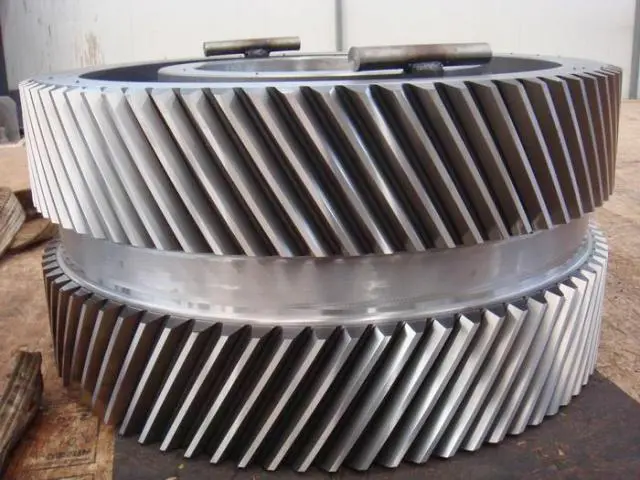
Understanding Double Helical Gearbox and Its Working Principle
It is important to understand how herringbone gear technology works when looking at power transfer options for tough industrial uses. This high-tech gearbox design has two sets of helix teeth organized on the same gear blank in a V shape. Each set of teeth is at an angle in the opposite direction.
How the V-Shaped Tooth Design Works
Special tooth form distinguishes the Double Helical Gearbox from other helical gears. Unlike standard helical gears, this design's opposite helix angles internally negate axial forces. This self-balancing device pushes the left-hand helix in one direction and the right-hand helix in the other, resulting in no net axial stress on the shaft and bearings. Thus, engineers can opt for simpler radial bearings over thrust bearings. Naval and mining applications benefit from lower axial thrust, friction losses, and mechanical efficiency of 98–99.5% per stage, leading in quieter operation, reduced vibration, and lower maintenance.
Load Distribution and Torque Capacity
Double helical gears distribute loads throughout the gear face with continuous tooth contact. YIZHI MACHINERY makes these precision components from stress-resistant and shape-retaining alloy steels including AISI4140, 18CrNiMo7, and 20CrMnTi. ISO 5-6 precision is achieved through forging, hobbing, milling, and fine grinding. We maintain core toughness and surface hardness between 58 and 62 HRC via carburizing and induction hardening. We customize gearboxes for tiny drives to 10,000 horsepower mill drives with helix angles between 20° and 30° and module options from 0.5 to 50.
Key Uses of Double Helical Gearboxes in Marine Industry
Transmission systems that can handle saltwater corrosion, constant job cycles, and rapid load reversals are needed for maritime activities. These problems can be solved with herringbone gears, which also run quietly enough for current ship designs that put crew comfort and following the rules first.
Ship Propulsion and Main Drive Systems
Commercial ships, military vessels, and offshore support boats need main propulsion gears to reduce diesel or high-speed turbine engine output to appropriate propeller speeds, usually 10:1 to 40:1. The Double Helical Gearbox is preferred because it eliminates axial thrust, preventing rotor misalignment that could harm turbine bearings or generator timing. By switching from single helical units to herringbone patterns in ice-class cargo ships, a European shipbuilder reduced noise by 8 dBA, vibration intensity by 40%, and bearing replacement intervals from 15,000 to 28,000 hours, lowering maintenance costs and improving crew comfort.
Thrusters and Dynamic Positioning Systems
Gearboxes that can handle a lot of starts, stops, and direction changes are needed for bow and stern engines. Because double helical gears have balanced loads, they don't let as much pressure go through to the mounting structure. This keeps the hull from wearing out in the thruster tube. This technology is used by drill ships and cable-laying ships' dynamic positioning systems to keep them on station even when the seas are rough.
Winches, Cranes, and Deck Machinery
Double helical transmissions' high power density and long lifespan help cargo handling equipment including anchor windlasses, mooring winches, and platform cranes aboard container ships, bulk carriers, and offshore platforms. Load swaying is reduced by consistent torque flow, improving user control during essential processes. Our technical team customizes gearboxes for electric drives and hydraulic motors at YIZHI MACHINERY. We give detailed design blueprints during pre-sales and update you on production during the 35–60 day manufacturing cycle to keep your project on track.
Applications of Double Helical Gearboxes in Mining Industry
One of the hardest situations for mechanical tools is in places where minerals are extracted and processed. Transmission parts need to be designed to last as long as possible because of rough dust, heavy shock loads, constant use, and limited repair windows.
Crushers and Primary Comminution Equipment
Jaw, gyratory, and cone crushers all depend on gears that can handle the huge inertia of starting a room that is full of rocks and the impact that happens when rocks that are too big enter the crushing cavity. When there is a shock, the balancing axial forces keep the bearings from getting damaged, and the double helical gear systems provide the needed thrust. A robust Double Helical Gearbox ensures these operations remain uninterrupted. This tooth design's high contact ratio spreads Hertzian contact stress over a bigger area, which stops pitting and spalling that would otherwise cause the gear to break too soon. Miners say that well-kept units can last more than 60,000 hours, even when working with hard ores like taconite and quartzite.
Ball Mills and SAG Mills
The machines in ore preparation plants that use the most mechanical power are the grinding mills. These huge cylinder-shaped tanks spin all the time, turning rock and grinding media around to make particles smaller. Mill drive gearboxes have to be able to handle torques of more than 1,000,000 lb-ft in big setups while running slowly, between 10 and 30 RPM. Because double helical gears transfer power smoothly, they lower torsional shaking in the pinion stand and mill shell. This keeps these structural parts from cracking from overuse. Our precise grinding methods get tooth surfaces with finishes below 0.8 Ra. This lowers friction losses and increases the life of the fluid in these important situations.
Conveyor Drives and Material Handling
Every year, overland conveyors, stackers, and reclaimers move millions of tons of material around mine sites. Drive stations need gears that can keep exact speed control even when loads change and the temperature ranges from the desert to the arctic. Double helical shapes are perfect for these kinds of projects because they are strong and don't change much in temperature.
Maintenance Guidelines for Extended Service Life
To maximize your investment in high-quality transmission tools, we recommend several best practices based on our 15 years of experience and feedback from mining clients:
- Conduct regular oil analysis to detect early signs of wear or contamination, especially in harsh environments—sampling should not exceed 1,000 hours.
- Monitor vibrations using ISO 10816 standards to identify worn bearings or damaged teeth before failures occur.
- Check breather filters monthly to prevent moisture that can cause rust and pitting.
- Verify gear alignment during planned shutdowns to ensure proper operation.
These preventive measures, combined with our precision-ground gears’durability, lead to reduced downtime and longer repair cycles. Our after-sales team provides prompt technical support and maintains essential spare parts to keep your operations running smoothly.
Comparing Double Helical Gearboxes with Other Gear Systems for Marine and Mining
To choose the best transmission technology, you need to carefully look at its performance, prices over its lifetime, and the needs of the application. Procurement experts can make better choices that meet operational goals and price limits when they know how different types of gear compare.
Torque Capacity and Power Density
Because they have a better contact ratio and load spread, herringbone gears work great in high-torque situations. In helical designs, the teeth overlap over time, which lowers shock loads and allows higher power transfer in the same envelope size. This is different from spur gears, which engage and release all of their teeth at once. Planetary gears have small sizes, but they can't usually match the torque capacity of a Double Helical Gearbox in single-stage setups with more than 5,000 horsepower.
Noise and Vibration Performance
Acoustic properties have a big effect on choosing tools, especially for naval uses where noise rules are getting stricter. Unbalanced axial forces cause single helical gears to vibrate a lot, which usually needs isolation plates and lets noise through the structure. Due to their sudden tooth contact pattern, spur gears make the most noise. At the same power level, herringbone designs are 5–10 dBA quieter than single helix units of the same type and 12–15 dBA quieter than spur gears.
Efficiency and Energy Consumption
Over the 20–30 years that naval and mine sites usually last, mechanical efficiency has a direct effect on running costs. Because there is no axial push, there are no friction losses in thrust bearings, so double helical gears are 98 to 99.5% efficient per stage. When bearing wear is taken into account, single spiral units usually reach 96–98% efficiency. The range for planetary gears is from 94 to 97%, based on how many stages they have and how the bearings are set up. At $0.10 per kWh, the difference in efficiency between 97% and 99% for a 5,000-horsepower system that runs for 8,000 hours a year saves about $85,000 in energy costs over ten years.
Durability and Maintenance Requirements
Equipment that can work in harsh situations with little help is needed in mining and sea settings. The balanced load properties of herringbone gears lower bearing stress, so they don't need to be replaced as often as single spiral designs, which put radial and axial loads on the bearings at the same time. Spur gearboxes are easy and inexpensive, but they wear out faster because of the sliding friction that happens when the teeth connect. This means that the oil needs to be changed more often and the inspections need to be done less often.
Total Cost of Ownership Analysis
The buying price is only a small part of the total costs over the product's lifetime. When choosing a transmission, you should think about how long it will take to make, how easy it is to get extra parts, how much energy it will use, and how long it is supposed to last. Double helical gears usually cost 15–25% more than single helix units, but they are worth the extra money because they last longer, use less energy, and break down less often. This dependability benefit makes the initial investment worth it for important uses where equipment failure stops production, like main mill drives or ship power. YIZHI MACHINERY's engineering team helps clients get quotes by doing a full lifecycle cost analysis and showing clear comparisons that help you choose the transmission solution that will give you the most long-term value for your specific operating conditions and performance needs.
Procuring Double Helical Gearboxes: Best Practices for B2B Buyers
It takes more than just checking prices to find the right precision transmission tools. Strategic buying looks at what suppliers can do, how they make sure quality, how flexible they are with customization, and how long-term a relationship could be.
Evaluating Manufacturer Credentials and Capabilities
Check certificates and quality control before judging a manufacturer. ISO 9001, ISO 14001, and OHSAS 18001 certifications show Double Helical Gearbox production adheres to quality, environmental, and safety standards. Additionally, evaluate the manufacturer's technical competence and equipment. Advanced technologies including multi-axis CNC machining centers and precision grinding tools provide quality within 0.001 inches at YIZHI MACHINERY. We check load distribution with magnetic particle inspections, ISO 10816 vibration analysis, and blueing tests.
Customization Capabilities and Engineering Support
Stock items generally don't meet maritime and mining needs. It's vital to establish if vendors will collaborate on engineering solutions rather than tweak existing designs. The manufacturer's technical team must understand your working conditions, space limits, and interface needs to customize effectively. YIZHI MACHINERY starts the design process by gathering performance requirements and envelope measurements and producing detailed CAD models to avoid costly installation and testing adjustments. Our team's diversified knowledge lets us apply marine sector solutions to mining problems and vice versa.
Managing Lead Times and Production Scheduling
Custom gearbox construction takes 35–60 days, depending on size, complexity, and material availability, and requires thorough planning. This can take 90 days for larger units requiring specialized forgings. Set reasonable deadlines and communicate with your supplier to track progress while scheduling. After forging, machining, heat treatment, grinding, and final assembly, YIZHI MACHINERY provides frequent production updates. Transparency helps you organize shipment and installation to ensure on-time delivery and long-term performance.
Quality Assurance and Acceptance Testing
In your purchase order, specify acceptance criteria and request factory acceptance tests (FAT) before shipment. Comprehensive FAT should include dimension checks, tooth contact pattern analysis, vibration measurements, and load testing if feasible. For your quality records, request documentation such as material certificates, heat treatment reports, and inspection records. At YIZHI MACHINERY, customer representatives are welcome to visit our plant to observe gearbox testing, and we provide detailed test records with every shipment. Our quality control meets ISO 5-6 grade standards, ensuring each manufacturing step is documented for the reliability required in mission-critical applications.
Logistics Considerations and Damage Prevention
Heavy and precisely manufactured gearboxes require careful handling and packaging to ensure their safety during shipping. Verify if your supplier provides engineered packing solutions that protect against damage during international transport. Custom wooden boxes with shock-absorbing liners, moisture barriers, and secure tie-downs safeguard your equipment. At YIZHI MACHINERY, our shipping team uses materials designed to reduce vibration and prevent corrosion suitable for sea freight. We partner with reputable freight forwarders experienced in handling large machinery, allowing real-time shipment tracking. These comprehensive safety measures help maintain our damage rate below 0.1%.
Warranty Coverage and Technical Support
After-sales support is crucial for establishing long-term relationships with suppliers. It’s important to review warranty terms to understand the issues covered, response times, and spare parts availability. A provider that offers a one-year warranty and prompt issue resolution demonstrates commitment to customer success and confidence in their products. At YIZHI MACHINERY, every gearbox comes with a one-year warranty covering material and manufacturing defects. Our expert support team responds to inquiries within 24 hours, and we maintain a stock of essential spare parts like bearings, seals, and pinions for quick replacements, fostering a partnership aimed at shared success and growth.
Conclusion
Double helical gear technology cancels axial stresses, reduces noise, and works best in hard environments for marine motor systems and mining tools. The optimum lifecycle value for a Double Helical Gearbox depends on choosing the correct supplier because to the exact production procedures, high-quality materials, and thorough quality control that go into these transmission systems. We examined procurement working principles, specific uses, comparative benefits, and best practices to help industrial purchasers make good decisions. No matter if you require a small marine gearbox or a mill drive with thousands of horsepower. Balanced load distribution, great efficiency, and exceptional durability make this technology the best solution for essential applications where failure is not an option.
Frequently Asked Questions
1. What distinguishes double helical gears from standard helical designs?
The key distinction is horizontal force management. Normal helical gears press the shaft axis hard, requiring hefty thrust bearings. However, Herringbone designs cancel out these forces inside the gear using right-angle helix angles. Self-balancing simplifies bearing setups, reduces friction losses, and boosts efficiency to 98–99.5% per stage from 96–98% for single helix units. Internal force cancellation defines a Double Helical Gearbox.
2. Can these gearboxes handle variable speed applications?
Double helical gears perform effectively at several speeds. From 10% to 100% of its maximum speed, the continuous tooth engagement pattern smooths power transfer. When used with variable frequency drives, these gearboxes can precisely adjust conveyor, mill, and ship thruster speeds without the shaking that spur gear systems cause.
3. How does the center groove affect performance?
The gap or relief groove between the spiral sections enables the cutting tool move and distributes oil. This difference barely affects load capacity or economy. True herringbone patterns without a gap—where the teeth meet at a sharp point—look better but are harder to construct and cost more without improving performance for most usage.
Partner with a Trusted Double Helical Gearbox Manufacturer
With 15 years of experience in precision gear manufacturing, YIZHI MACHINERY, a leading Double Helical Gearbox manufacturer, delivers customized transmission solutions tailored to the naval and mining industries. Our ISO-certified factory utilizes advanced CNC cutting, automatic grinding, and complex heat treatment processes to produce high-quality ISO 5-6 gears from alloy steels like AISI4140 and 18CrNiMo7. We offer comprehensive technical support from initial design to production, quality control, and global shipping. With production times of 35 to 60 days, flexible order quantities, and a one-year warranty, we ensure your Double Helical Gearbox arrives safely. Contact our expert team at sales@yizmachinery.com for more information to explore our products and services.
References
1. Dudley, D.W. Handbook of Practical Gear Design and Manufacture. CRC Press, 2018.
2. Lynwander, P. Gear Drive Systems: Design and Application. Marcel Dekker Inc., 2019.
3. International Organization for Standardization. ISO 1328-1:2013 Cylindrical Gears - ISO System of Flank Tolerance Classification. Geneva: ISO, 2013.
4. American Gear Manufacturers Association. AGMA 6011-I03: Specification for High Speed Helical Gear Units. Alexandria: AGMA, 2003.
5. Shipley, E.E. Marine Engineering: Power Transmission Systems for Naval and Commercial Vessels. Society of Naval Architects and Marine Engineers, 2017.
6. Mazurkiewicz, M. Heavy-Duty Gearboxes for Mining Applications: Design Considerations and Field Experience. Mining Equipment International, Vol. 45, 2020.

USER EVALUATE
Here is the customer's evaluation of us