


Custom Spur Gear vs Standard Gear: Which One to Choose?
Choosing a Custom Spur Gear depends on project complexity, performance needs, and operating environment. Because they are made to order, spur gears can have different teeth counts, materials, and finishes. Industrial, military, and mining apparatus with enormous loads, limited space, or mission-critical applications benefit from them. Standards are affordable, ready-to-ship hardware for numerous tasks. A customized Spur Gear is worth the upfront cost if your application requires extreme durability, size, or heat treatments.
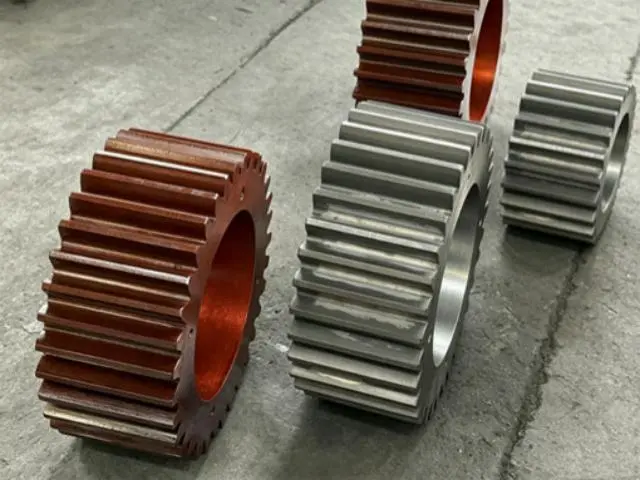
Understanding Custom Spur Gears and Standard Gears
When choosing gears for industrial power transmission systems, it's important to know the main differences between standard gears and the product components. This difference affects everything, from the total cost of ownership to the freedom of how the equipment is designed.
What Defines a Custom Spur Gear?
Precision-engineered Spur Gears meet unique applications. Custom gears allow engineers to choose the number of teeth, module ranges from 0.5 to 50, and pressure angles for specific kinematic requirements. Catalog gears have fixed specifications. These gears are created utilizing modern forging, hobbing, milling, and precise cutting. Regular materials and high-performance metals like 18CrNiMo7, SAE4340, and AISI8620 are available. These are chosen for load capacity, wear resistance, and environment. Carburizing and induction hardening heat metal to 45–50 or 58–62 HRC, depending on the application. You get a gear solution that fits your operating envelope. It eliminates off-the-shelf part concerns.
Characteristics of Standard Gears
Standard gears are made to meet set industry norms, which are usually in line with AGMA, DIN, or ISO rules. These parts are made in large quantities using standard tools, which cuts the cost per unit by a large amount. Most of the time, you can only choose from standard types of steel, such as 1045 carbon steel or basic alloy steels. Standard gears work well in situations where the required loads, tolerances for size, and working conditions are all within the normal range for the business. Their major benefit is that they are available right away and their prices are always the same. This makes them good for repair replacements, prototyping, or transmission systems with low criticality. Short production lead times are possible because makers keep popular designs in stock, which lets them be quickly deployed in projects that need to be finished on time.
Material and Design Considerations
The choice of material has a huge effect on how well and how long something works. Custom Spur Gear solutions let you use special metals that were made to work in harsh situations. Materials like 42CrMo and 40CrNiMo have great tensile strength and wear resistance for mine crushers that have to deal with shock loads and rough dirt. Vacuum-melted SAE4340 is good for aerospace uses because it keeps its shape even when temperatures change. Standard gears usually use medium-carbon steels, which are fine for mild loads but don't have the advanced metalworking skills needed in harsh conditions. Another important difference is design freedom. Custom manufacturing can handle different bore sizes, keyway setups, and face widths that work smoothly with existing equipment. Standard gears, on the other hand, may need expensive redesigns of nearby parts to fit properly.
Key Differences Between Custom Spur Gears and Standard Gears
The technical and functional differences between Custom Spur Gear and standard gears have a direct effect on choices about what to buy, how to run operations efficiently, and how to keep things in good shape. By knowing these differences, buyers can choose gear that fits the needs of their unique projects.
Design Flexibility and Engineering Adaptability
Because they accommodate diverse center lengths, mounting arrangements, and keyway-free shaft designs, custom Spur Gear units are excellent. This adaptability restores outmoded machines and maximizes space in new designs without gear measurements. Engineers can request tip relief or crowning to reduce transmission error and noise, unlike stock pieces. Custom designs enable complex gear sets and multi-stage reduction techniques to maximize power. Standard gears simplify standard combinations but have preset shape. Engineering and replacement planning are faster with set sizes. Low-downtime repairs are extremely helpful.
Manufacturing Workflows and Production Timelines
Gears vary in construction. Billet forging optimizes grain flow in custom Spur Gear components. Precision hobbing, rough cutting, and days-long heat treatment follow. ISO 5-6 or 8-9 grade pitch width, runout, and tooth spacing are met via precision grinding. This multi-step process takes 35–60 days from order confirmation to shipment. Regular gears can be made faster with existing tools and heat treatment batches. Products can be made in days or sent from stock. Variable quality control methods exist. While statistical sampling examines typical gear batches, coordination measuring equipment and gear testers inspect each Custom Spur Gear individually. Project planning and material management differ by method.
Performance Metrics and Operational Excellence
Performance varies substantially between gear groups. ISO 5–6 teeth are ground by the product. Possible surface finishes include Ra 0.8µm or higher and pitch errors below 15 microns. This accuracy lowers vibration, noise, and boosts power transfer efficiency to over 98% in properly placed systems. Heat treatment customization lets you choose moderate (45–50 HRC) for shock-load resistance or case-hardened (58–62 HRC) for wear resistance. Standard gears are ISO 8-9 grades, suitable for commercial use but not high-speed or precision tasks. Standard gears have safe load rates, but custom designs are finite element stress-tested to maximize torque transfer within weight and space limits.
Application Scenarios: When to Choose Custom Spur Gears Over Standard Gears
To find the best gear types, you have to look at specific working situations, performance needs, and cost factors. Even though the original cost is higher, Custom Spur Gear engineering is definitely worth it for some uses.
High-Performance Industrial Applications
Custom Spur Gears are needed for heavy mining. Dust, shock loads from uneven material flow, and numerous duty cycles plague deep mine conveyor drive systems. Custom 18CrNiMo7 Spur Gear components with big modules (20–50 mm) and case depths beyond 2 mm may survive these harsh conditions longer. With repeated load variations, surface treatments like shot peening create compressive pressures that prevent cracks. Different aircraft control system difficulties require different fixes. Power-to-weight ratios matter for flap drive gears. The gears use vacuum-melted metals and aerospace heat treatments. Flight operations require precision grinding to keep slack under 0.02 mm. Standard gears fail when material size or limit changes.
Specialized Machinery and Unique Fitment Requirements
Custom Spur Gears solve tool assembly difficulties. When normal gear dimensions hinder automated production lines, gearboxes must fit. By choosing the best face widths, bore combinations, and overall sizes, custom designs maximize power in the smallest space. Custom Spur Gear components for irregular high-torque loads and offshore corrosion-resistant materials enhance renewable energy systems, especially wind turbine pitch control mechanisms. Medical gadgets that need little noise and precise positioning use custom precision gears. Standards gears lack material quality and manufacture accuracy certificates needed in controlled enterprises. Farm machinery manufacturers are increasingly ordering custom Spur Gear units for harvesting equipment. Annual usage trends enable improved designs that reduce weight and increase fuel economy over too-specific standard parts.
Cost-Benefit Analysis and ROI Considerations
The economic assessment must incorporate ownership costs, not just purchase price. Special Spur Gears cost 150–300% extra. Because they last longer, require less maintenance, and don't fail again. The right Custom Spur Gear parts can last three years for a mine that replaces gears every three months owing to tooth wear, eliminating repair work and production disruptions. Volume matters in economics. Capital equipment can be custom-made, but high-volume consumer products may not suit because stock gears work just as well at a lower cost. Before building production equipment, prototyping uses standard gears for proof-of-concept testing. Inventory carrying costs should be included in break-even analysis. Standard gears can be obtained just-in-time, but custom versions must be ordered ahead and extra parts may be needed to offset supply chain risks.
Procurement Considerations for B2B Buyers
To buy gear successfully, you need to carefully evaluate sellers, communicate clear specifications, and handle the supply chain strategically. When looking for a Custom Spur Gear, these factors become especially important.
Supplier Evaluation and Quality Assurance
Find qualified gear producers by looking at professional skills, quality systems, and field knowledge. ISO 9001 underpins quality management. Gear-specific standards like AGMA 2001 or ISO 1328 show your expertise. See a company's manufacturing tools. Modern CNC gear grinders and gear hobbing centers can handle tight tolerances. Inspection instruments include coordinate measuring machines, gear analyzers, and hardness testers verify measurements and material quality. Get business case studies. Aerospace and mining equipment manufacturers meet strict traceability and durability standards. Trust is increased by AS9100 aviation certifications and API oil and gas standards. Make sure the supplier's finances and manufacturing capabilities match your volume and delivery standards to avoid project delays.
Technical Specification and Communication Protocols
Proper requirements communication prevents costly mistakes and reviews. Full engineering designs should include teeth, module or diametral pitch, pressure angle, helix angle (zero for real spur gears), face width, hole diameter, and keyway information. Avoid general terms and specify material grades (AISI, SAE, or foreign). Explain heat treatment requirements like carburization, case hardness, core hardness, and stress release. ISO 1328 or AGMA precision grade. This drastically impacts manufacturing and costs. Bore, outside width, and side surface finish standards eliminate assembly difficulties. Standards for inspection should indicate which factors to certify and measure. To avoid complications when converting units of measurement when buying Custom Spur Gear from other countries (metric modules vs. diameter pitch), know the standard. Set unambiguous revision control criteria to document and agree on plan changes before production.
Logistics Planning and Lead Time Management
Project timelines should account for Custom Spur Gears' considerable build time. Materials, cutting, heat treatment, and grinding require 35–60 days. Rush production at higher prices may degrade quality. Include prototype validation in your procurement plan. Fit and performance testing on initial samples before mass production is wise. Shipping issues affect wait time and cost. Sea freight is the cheapest way to send large orders in 4–6 weeks. Air freight expedites vital supplies but costs 3–5 times more. Shock-absorbing packing and hardwood crates preserve precision-ground surfaces during shipping. Reliable suppliers let you track shipments in real time to prepare. Correct Incoterms set shipping duties and risk transfer points. Key Custom Spur Gear units should be backed up in case they escape. Production delays should be evaluated against inventory expenses.
Final Decision-Making Guide: Custom Spur Gear vs Standard Gear
By systematically comparing the needs of the project with the features of the gear, you can confidently choose between Custom Spur Gear and standard choices. This organized method strikes a balance between expert performance, budgetary limitations, and operating needs.
Comparative Analysis Framework
Multiple considerations should influence decisions. Custom Spur Gear manufacture for precision grades tighter than ISO 8, surface hardness over 55 HRC, or non-standard materials depends on performance. Custom designs are needed when space limits prevent installation of standard gears. Work at extreme temperatures, acidic atmospheres, or hard dirt may demand special materials in unusual sizes. Economics must account ownership costs, not just purchase prices. Determine gear replacement frequency, downtime cost, and what other equipment may be affected if it breaks too soon. Timelines matter. Projects with tight deadlines may need conventional gears even if they don't work, and scheduled equipment builds delay Custom Spur Gear orders. Needed units determine unit economics. One-time custom work is pricey, but bulk sales lower pricing.
Tailored Recommendations by Industry Sector
Even though they cost more, mining gears with large modules, case-hardened surfaces, and alloy steel construction are more durable and shock-resistant. Costly year-long replacements are worth it. Space applications demand specialized Spur Gear systems with strict material certification, traceability, and weight optimization. These needs rarely fit regular gear. Industrial pumps, elevators, and mixers employ conventional gears. Custom Spur Gear units are needed only for special fittings or extreme service. Small gearbox makers can make unique gearboxes with Custom Spur Gear parts. Annual consumption variations and rising prices affect agricultural equipment. Main powertrain parts utilized during harvesting are rare, while secondary gears are widespread.
Long-Term Value and Maintenance Considerations
Maintenance affects gear choice. Custom Spur Gear products reduce labor expenses and operating delays for low-maintenance equipment with extended service intervals. Machinery that is routinely dismantled for cleaning or inspection may use standard gears since they are cheap and quick to fix. Obsolescence risks should be evaluated. Custom Spur Gear units associated to certain equipment types may have trouble finding suppliers throughout support, so they must stock up or maintain supplier relationships. While standard gears are available, firms may eliminate them to streamline their product lines. Total cost modeling should consider 10–15-year ownership and energy economy. Precision Custom Spur Gears with low friction losses save power in continuous-duty applications. Custom Spur Gear optimisation minimizes noise and vibration, extending bearing life and structural wear in neighbouring elements, benefiting the system beyond the gear.
Below is a comparison table summarizing the advantages and trade-offs:
| Criteria | Custom Spur Gear | Standard Gear |
|---|---|---|
| Design Flexibility | No limits on choices for specifications | Catalog sizes that don't change |
| Precision Grade | ISO 5-6 is possible | Typically ISO 8-9 |
| Material Options | You can get specialized metals | Only available in common grades |
| Lead Time | 35 to 60 days | Right away to two weeks |
| Unit Cost | More money needed at the start | Lower price to buy |
| Minimum Order | Single-piece possible | Usually needs minimum amounts |
| Application Suitability | Important mission-critical service | General-purpose, light loads |
Conclusion
When choosing Custom Spur Gear over conventional gears, consider technical needs, cost, and practical aims. Custom Spur Gear solutions for harsh-condition mining, aerospace, and precision industrial applications offer unrivaled performance, design freedom, and material optimization. Precision manufacture, special alloys, and precise size make them more reliable than regular parts. With established loads and sizes, conventional gears are cost-effective for common use. Proven manufacturers, thorough application assessment, and clear specification communication are needed for successful procurement. The purchase price is not the only factor in long-term value evaluation. Maintenance schedules, downtime costs, and system performance changes should also be considered.
Frequently Asked Questions
1. What information do I need to provide when ordering custom spur gears?
Custom Spur Gear requires technical specs. Technical drawings should specify teeth count, module (or diametral) pitch, pressure angle, face width, bore diameter, and keyway dimensions. Material standards must list metal grades in AISI, SAE, or similar notation. Heat treatment parameters include desired hardness and carburization depth. List ISO 1328 or AGMA grade requirements. Key measurement surface finish criteria avoid assembly difficulties. Requesting your application's load characteristics, working speeds, and environmental conditions helps manufacturers give the best solutions. CAD standardization simplifies quotations and reduces errors.
2. How long does custom spur gear production typically take?
From order confirmation to shipment, Precision Custom Spur Gear units require 35-60 days. The timeline includes materials, forging, rough machining, heat treatment, precision grinding, and final inspection. Custom-tooled complex plans may take longer. Manufacturer capacity and order volume determine production strategies. We can process samples faster. Use these wait periods and building shipment times to plan your orders. Professional suppliers can help you picture your plan and prioritize essential needs.
3. Can custom gears reduce operational noise compared to standard gears?
Precision Custom Spur Gear component manufacture minimizes noise in several ways. Transmission issues generate most gear whine. Tight tooth width and profile precision reduce transmission error. Tip relief and topping lessen biting edge loads and contact forces. Grinding improves surface finishes and reduces friction. Material choice and even heating reduce stress-causing rough spots. Sometimes Custom Spur Gear products are 5 to 10 dB quieter than standard gears. This is useful in enclosed operator scenarios or noise-sensitive industries where rules are important.
Partner with YIZHI MACHINERY for Precision Custom Spur Gear Solutions
YIZHI MACHINERY creates high-performance Custom Spur Gears for industrial, mining, and aerospace applications. Since 2016, we have made precision gears from 18CrNiMo7, SAE4340, and AISI8620. ISO 5-6 accuracy is achieved through casting, hobbing, and precise grinding. Modules from 0.5 to 50, surface hardness from 45 to 62 HRC, and induction hardening and carburizing are customizable. Our 15 years of manufacture make us a reliable Custom Spur Gear supplier. We offer design assistance, global logistics, and single-piece production in 35–60 days. Custom packing with shock-absorbing protection keeps your items safe; shipping damage is less than 0.1%. Contact our engineering team at sales@yizmachinery.com for technical drawings or full estimates.
References
1. American Gear Manufacturers Association. (2020). AGMA 2001-D04: Fundamental Rating Factors and Calculation Methods for Involute Spur and Helical Gear Teeth. Alexandria, VA: AGMA Publications.
2. Budynas, R. G., & Nisbett, J. K. (2019). Shigley's Mechanical Engineering Design (11th ed.). New York: McGraw-Hill Education.
3. Drago, R. J. (2017). Fundamentals of Gear Design. Warrendale, PA: SAE International.
4. International Organization for Standardization. (2013). ISO 1328-1:2013 Cylindrical Gears — ISO System of Flank Tolerance Classification. Geneva: ISO Standards.
5. Stadtfeld, H. J. (2018). Advanced Gear Engineering. Warrendale, PA: SAE International.
6. Townsend, D. P. (2021). Dudley's Handbook of Practical Gear Design and Manufacture (3rd ed.). Boca Raton, FL: CRC Press.

USER EVALUATE
Here is the customer's evaluation of us