


Top Helical Teeth Gear Benefits for Industry
In industrial tools, mining activities, and aerospace, Helical Teeth Gear are very important for making things work efficiently. Comparing to standard spur gear options, these precision-engineered transmission parts offer higher load capacity, lower operating noise, and longer service life. By understanding the unique benefits of Helical Teeth Gear technology, procurement managers and engineers can improve the performance of equipment while keeping costs low over its entire life. The precision with which these gears are made to ISO 5-6 Grade standards using high-tech materials like SAE4340 or 18CrNiMo7 makes them better at handling power, reducing vibration, and keeping working reliably in harsh industrial settings.
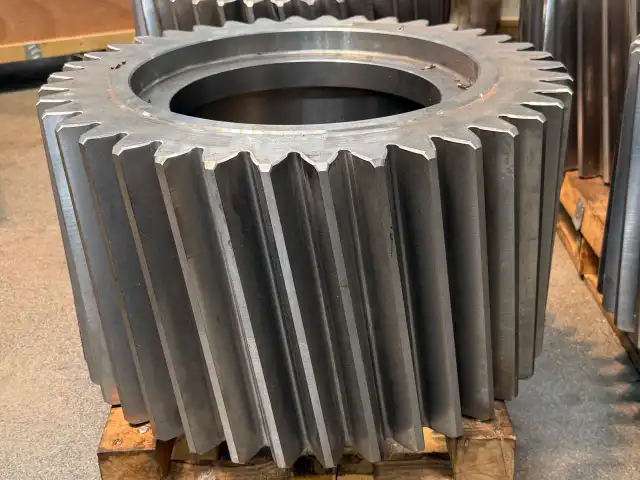
What Are Helical Teeth Gears and How Do They Work?
Understanding Helical Gear Design Fundamentals
The teeth in Helical Teeth Gear are cut at an angle, called the helix angle, that is usually between 5° and 45° from the gear shaft. This slanted shape is very different from spur gears that are cut straight across. As the tooth turns, the angled teeth gradually touch each other through point-to-line contact instead of a rapid full-tooth collision. This feature of the design keeps multiple teeth in contact at the same time, getting contact rates higher than 2.0. The basic idea behind it is to spread the loads that are transferred over a larger tooth surface area. If you mesh two Helical Teeth Gear, their slanted teeth fit together easily, instead of the rough impact forces that happen when spur gears work. While allowing higher power transfer in smaller spaces, this gradual contact pattern greatly lowers transmission vibration and noise emissions.
Comparing Helical Gears Against Alternative Gear Types
Helical designs work better than spur gears in situations where smooth power transfer and noise control are needed. At speeds above 1,500 RPM, spur gears have immediate full-tooth contact, which causes impact stress and the characteristic whine. Because they connect more gradually, Helical Teeth Gear get around this problem. Helical designs are easier to make and give you more options for customization than bevel gears, which are used for curved shaft setups. Worm gear systems have high reduction ratios, but they are less efficient (usually 40–85%) and make too much heat. Helical Teeth Gear can handle higher speeds and loads while still maintaining up to 98% efficiency rates per stage.
Materials and Manufacturing Excellence
We use high-quality alloy steels like 45# steel, 20CrMnTi, 40CrNiMo, SAE4340, 42CrMo, AISI4140, 18CrNiMo7, 17CrNiMo6, and AISI8620 to make our Helical Teeth Gear. To get accurate tooth shape, these materials are forging, cutting, hobbing, milling, and grinding in very complex ways. Using heat to treat metals, like carburizing, cooling and tempering, and induction hardening, makes the surface hardness range from 45 to 50 HRC to 58 to 62 HRC while keeping the tough core qualities. This mix guarantees very high wear resistance and strain power. When you grind teeth, you get ISO 5–6 Grade precision, which is close enough for machine tool spindles, compressors, big gears, and precision transmission equipment.
Top Benefits of Helical Teeth Gears in Industrial Applications
Enhanced Load Capacity and Torque Transmission
The slanted teeth layout spreads work forces over larger contact areas compared to spur gears of the same size. Because of this physical benefit, helical shapes can hold 30–50% more weight while keeping the same envelope size. The multiple-tooth contact design keeps stress from building up on any one tooth, which greatly increases fatigue resistance in situations like cyclic loads that are common in mine crushers and heavy conveyors. Testing in the real world shows that Helical Teeth Gear can handle shock loads that would cause spur gear systems to break early. This toughness immediately leads to less downtime and lower repair costs in mission-critical settings like mineral processing equipment and aircraft actuators.
Superior Noise Reduction and Smooth Operation
As the teeth contact gradually, the impact-generated noise that comes with spur gear meshing is eliminated. At the same speeds and loads, Helical Teeth Gear are 5 to 15 decibels lower than spur gears that are similar in form. This sound benefit is very important in sealed factories where noise pollution rules apply and worker comfort is important. The smooth power transfer also lowers the amount of vibration in all the machines that are linked. Less vibration means longer bearing life, less shaft deflection, and better overall system precision. These are benefits that are especially valued in aircraft sensors and precision manufacturing equipment that needs to be accurate in terms of dimensions.
Extended Durability and Reduced Maintenance Costs
In high-cycle uses, the even load spread and lower impact stress make the gear last 40 to 60 percent longer than spur alternatives. Longer replacement times mean that you don't have to keep as many spare parts on hand, and repair work can be done without stopping production. Less shaking means that supporting parts like bearings, seals, and connection elements wear out less quickly. This improvement to system stability lowers the total cost of ownership over the span of the equipment. When mining companies switch important gearboxes from spur to helical designs, unexpected downtime goes down by a measured amount.
Versatility Across Industrial Sectors
Helical Teeth Gear technology can be used in many different areas, such as car transmissions, industry automation systems, and heavy industrial installations. Module sizes ranging from 0.5 to 50 mm, varying helix angles, and application-specific tooth counts are just some of the customization choices that make it possible to match exactly to operational needs. The high power density and smooth operation at different speeds make it useful for aerospace uses. Mining equipment depends on being able to handle shock loads and last for a long time in dirty settings. Precision and quiet operation are important for manufacturing equipment that supports quality production.
How to Choose the Right Helical Teeth Gear for Your Industry Needs
Assessing Critical Technical Parameters
Buying choices should start with a thorough examination of the needs of the business. Specifications for load capacity must take into account situations with high power, such as sudden starts and stops. The right helix angles and tooth profiles depend on the speed. For example, steeper helix angles work well for high-speed uses but create more axial pressure, which needs strong bearing support. Extreme temperatures, contamination exposure, and limited lubrication are some of the environmental factors that affect the choice of material and the requirements for protection coatings. In mining, materials that don't let abrasive particles in are needed, and in aircraft, lightweight metals with high strength-to-weight ratios are preferred.
Key Design Factors for Optimal Performance
Choosing the right module size combines the need for strength with the need for room and the cost of production. Larger sections can hold more weight, but they also make the gears bigger and heavier. The pressure angle choice is usually between 20° and 25°, which changes how strong the teeth are and how fast they slide. Backlash specs make sure that there is enough space between the meshes and stop too much play that makes placing less accurate. Tight manufacturing standards and careful assembly processes are needed to make sure that backlash is kept to a minimum for precision uses. We offer customization services that can meet specific needs, such as pressure angles, face sizes, and bore configurations that aren't standard and are made to fit specific mounting setups.
Sourcing from Qualified Manufacturers
To find reliable suppliers, you need to look at more than just the price quotes they give you at first. As part of evaluating a company's manufacturing capabilities, it should check its precise grinding equipment, heat treatment facilities, and quality checking systems. Process maturity is shown by ISO approval and following foreign standards like DIN 3962 and AGMA 2015. Expectations for lead times must match the plans of the projects. Making a custom Helical Teeth Gear usually takes 35 to 60 days, which includes verifying the design, manufacturing, heat treatment, and final testing. When normal catalog things can't meet the needs of an application, customization becomes very important. Support after the sale, such as professional help, warranty coverage, and the ability to get new parts, is a big part of the value of a long-term relationship.
Best Practices for Maintenance and Longevity of Helical Teeth Gears
Regular Inspection and Lubrication Protocols
Setting up regular inspection schedules stops major breakdowns and increases the life of the gears. Visual exams should be done once a month to look for signs of abnormal wear, tooth surface pitting, or the buildup of bacteria. Monitoring vibrations with accelerometers finds problems before they get bad enough to stop operations. Helical Teeth Gear lasts a long time if they are properly oiled. It is important to choose an oil that is right for the working temperature and load. For example, industrial gearboxes usually need ISO VG 220-460 gear oils with high pressure additives. Oil research tools find patterns of contamination and wear and tear, which helps with replacing fluids at the right time. When to lubricate depends on how the system is being used, but for sealed systems, the gaps are usually between 2,000 and 5,000 hours.
Recognizing Wear Patterns and Failure Modes
Helical Teeth Gear have unique wear patterns that let you take action early. If the bearing support isn't good enough, axial thrust loads eat away the tips of the teeth in a unique way. When something isn't lined up right, vertical contact patterns show up on a visual review. When there is too much load, the tooth sides near the pitch line get cracking and spalling. Knowing these types of failure allows for proactive repair plans. Fixing small alignment problems stops wear from getting worse faster. By keeping an eye on the state of the tooth surfaces, replacements can be planned for times when maintenance is due, rather than having emergency breaks that throw off production plans.
Extending Gear Lifespan in Harsh Environments
Mining and heavy industry settings have special problems, like rough materials, changing temperatures, and shock loads. With positive pressure filter systems and sealed building designs, particles can't get in. Keeping the right temperature by cooling the oil and letting the heat escape stops lubricants and materials from breaking down at high temperatures. Precise alignment during installation and regular checks make sure that the load is evenly distributed across all tooth surfaces. To avoid edge loading conditions, the shaft's movement under load should stay within the limits set by the designer. These practices get the best return on investment by extending service times and lowering lifetime costs in situations where operations are very demanding.
Conclusion
In conclusion, Helical Teeth Gear technology has clear benefits for industrial tools, mining operations, and aerospace uses by increasing load capacity, lowering noise, and increasing operational longevity. The angled tooth geometry makes power transfer smooth and efficient, with an efficiency of over 98%. It also requires a lot less upkeep than other gear designs. By choosing the right materials, manufacturing with precision to ISO 5-6 Grade standards, and following the right upkeep procedures, you can get the best performance in a wide range of operating settings. To meet the complex needs of transmission systems, procurement professionals benefit from working with experienced makers that offer full customization, expert advice, and reliable global logistics support.
Frequently Asked Questions
1. What is the typical lifespan of helical gears in industrial conditions?
When maintained properly and loaded correctly, industrial Helical Teeth Gear made to ISO 5-6 Grade precision usually last longer than 20,000 to 50,000 hours of use. Lifespan changes a lot depending on the type of load, the speed at which it is used, the quality of the oil, and the surroundings. In mining, where there is shock loading and contamination, parts may need to be replaced every 10,000 to 15,000 hours. But in controlled environments for precision manufacturing, parts can last longer than 75,000 hours before they need to be replaced.
2. How do sound levels compare between helical and spur gears?
At the same speeds and power levels, Helical Teeth Gear sets are 5 to 15 decibels quieter than spur gears of the same type. At higher rotational speeds, where spur gear contact noise rises dramatically, this difference stands out even more. Because helical designs gradually engage their teeth, they don't make the whine that comes from spur gear meshing. This makes them important for enclosed industrial settings that need to control noise.
3. Can I order custom helical gears for specialized machinery?
Full design services can handle unique needs like non-standard tooth numbers, module sizes ranging from 0.5 to 50, helix angles ranging from 5° to 45°, and materials that are best for the job. We have low minimum order amounts and can make just one item at a time, which lets you make prototypes and small batches of unique solutions. Our expert team gives advice on design and helps with fitting into custom transmission systems.
Partner with Experienced Helical Teeth Gear Manufacturers
YIZHI MACHINERY has been making precision-engineered Helical Teeth Gear for 15 years, and they work with companies around the world in the mining, aircraft, and industrial machinery sectors. Our ISO-compliant factories use cutting-edge CNC gear machining centers, automated grinding tools, and smart heat treatment lines to make sure that the quality is the same for both unique and standard setups. We have module values from 0.5 to 50, helix angles that can be changed, and material choices such as SAE4340, AISI4140, and 18CrNiMo7 that are best for your purpose. Our streamlined buying process allows for production timelines of 35 to 60 days, with customizable packaging that protects the purity of the cargo and real-time logistics tracking that makes wait times manageable. Get in touch with our technical team at sales@yizmachinery.com to talk about your Helical Teeth Gear needs and find out how our affordable price, wide range of customization options, and one-year warranty can help you meet your equipment's performance goals. As a reliable Helical Teeth Gear provider, we accept purchase requests for both small prototypes and large production runs.
References
1. Dudley, D.W. (2019). Handbook of Practical Gear Design and Manufacture. CRC Press, Boca Raton.
2. American Gear Manufacturers Association. (2018). AGMA 2015-2-A06: Accuracy Classification System - Tangential Measurements for Cylindrical Gears. Alexandria, VA.
3. Townsend, D.P. (2020). Dudley's Gear Handbook: The Design, Manufacture, and Application of Gears. McGraw-Hill Education, New York.
4. International Organization for Standardization. (2017). ISO 1328-1:2013 Cylindrical Gears - ISO System of Flank Tolerance Classification. Geneva, Switzerland.
5. Radzevich, S.P. (2018). Theory of Gearing: Kinematics, Geometry, and Synthesis. CRC Press, Boca Raton.
6. Linke, H., Börner, J., and Heß, R. (2016). Cylindrical Gears: Calculation, Materials, Manufacturing. Hanser Publications, Munich.

USER EVALUATE
Here is the customer's evaluation of us