


Helical Gear Grinding Cost Guide 2026
In 2026, Helical Gear Grinding is still the best way to get very accurate tooth shape and high-quality surface finishes. This precise hard-finishing method fixes errors caused by heat treatment and meets ISO 5-6 Grade standards for dimensional accuracy. Understanding how costs change over time, how materials affect costs, and how to choose a provider gives procurement managers in the mining, aerospace, and industrial machinery sectors the power to find the best grinding solutions that match quality with budget.
Introduction
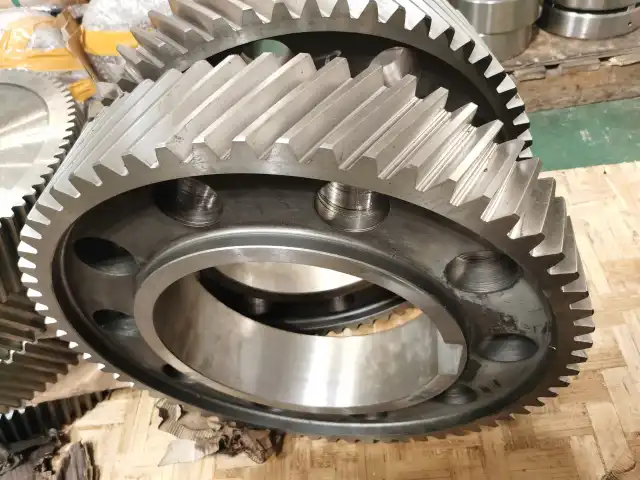
Helical Gear Grinding is a very important business choice for companies that need to make high-precision transmission parts. Understanding the complete pricing structure helps us develop 2026 purchase strategy. This guide explains the procedure, what affects expenses, what alternatives are available, and how to pick a provider. Procurement managers, design engineers, and OEM customers can discover relevant information to maximise gear grinding purchases while maintaining quality. Helical tooth shapes need grinding processes that cater for 5° to 45° helix angles. Advanced CNC alignment between workpieces and abrasive wheels is needed. Heat-treated 42CrMo, AISI4140, and 20CrMnTi parts lose modest amounts of material to harden the surface (58–62 HRC) while maintaining form. To make wise judgements in today's competitive B2B environment, this cost guide provides technical and commercial information on machine tool spindle, wind turbine gear, and aeroplane transmission parts.
Understanding the Helical Gear Grinding Process
The Core Mechanics of Precision Tooth Finishing
Helical Gear Grinding uses vitrified or CBN abrasive wheels to remove thin hardened layers formed after carburizing or induction hardening. The process includes workpiece setup, wheel dressing, rough and finish passes, and dimensional inspection. Key parameters such as wheel speed (30–60 m/s), feed rate, dressing frequency, and coolant delivery directly affect surface quality and cycle time. Modern CNC systems apply continuous generating grinding, where worm-shaped wheels mesh with gear blanks using synchronized rotational and linear motion, while profile grinding offers flexibility for large modules but requires longer processing times.
Overcoming Common Technical Challenges
Process instability in Helical Gear Grinding can cause defects like grinding burn, chatter, and dimensional drift. Excessive heat alters surface microstructure, reducing durability. Preventive measures include optimizing material removal rates, precise high-pressure coolant delivery, and frequent wheel dressing. Dimensional errors often result from thermal expansion or deflection, addressed by real-time temperature monitoring and adaptive control systems. Helix angles add complexity, requiring diagonal grinding paths and advanced CNC programming to maintain tooth geometry and avoid twist errors, ensuring consistent precision in finished gears.
Performance Advantages in High-Precision Applications
Helical Gear Grinding delivers superior performance through precise geometry and surface quality. Achieving Ra values below 0.4 μm reduces noise, vibration, and harshness, critical for high-speed systems like EV drivetrains. Micro-geometry modifications such as tip relief improve load distribution and prevent premature wear. Accurate tooth contact patterns enhance load capacity and durability. These advantages support demanding applications including compressors, robotic joints, and precision gear systems, where low backlash, stable motion, and long-term positional accuracy are essential for maintaining efficiency and reliability over extended operating cycles.
Key Cost Factors in Helical Gear Grinding
Machine Investment and Automation Levels
Investment in Helical Gear Grinding equipment varies by automation level. Manual machines cost $80,000–$150,000 and require skilled labor, while mid-range CNC systems ($250,000–$500,000) offer consistent accuracy for medium volumes. Fully automated cells exceeding $800,000 enable high-speed, large-scale production with robotic handling and adaptive controls. Break-even typically occurs above 5,000 units annually. Machines with broad capability ranges (module 0.5–50) provide flexibility for evolving product lines, helping procurement teams balance capital investment, production efficiency, and long-term operational adaptability.
Grinding Wheel Selection and Consumable Costs
Consumables significantly impact Helical Gear Grinding costs. Vitrified wheels ($300–$800) require frequent dressing and process fewer parts, while CBN wheels ($2,000–$5,000) last longer and handle harder materials efficiently. Cost per part depends on wheel life; long-lasting CBN wheels reduce unit costs substantially. Dressing tools, such as diamond cutters ($150–$400), also influence consistency and require periodic replacement. Optimizing wheel type and maintenance strategy improves productivity, reduces downtime, and ensures stable surface quality across production cycles.
Material-Specific Cost Implications
Material properties strongly affect Helical Gear Grinding efficiency and cost. Hardened carburized gears (≈60 HRC) require slower feeds and multiple passes, increasing cycle time by up to 50% compared to softer materials. Easily machinable alloys like AISI8620 improve productivity. Helix angles above 30° demand complex multi-axis motion, increasing programming time and limiting feed rates. Larger modules also extend processing time due to higher material removal. Batch size impacts cost efficiency, as setup and inspection require several hours, making small orders significantly more expensive per unit.
Comparing Helical Gear Grinding with Other Gear Finishing Methods
Cost-Precision Trade-offs Across Finishing Technologies
Pre-hardening processes like hobbing and shaving are cost-effective but cannot correct distortion after heat treatment. Helical Gear Grinding uniquely restores dimensional accuracy and achieves high precision levels such as DIN Class 4. Although grinding equipment is more expensive, it delivers long-term benefits in applications where noise, durability, and efficiency are critical. Industries like wind energy justify higher upfront costs through reduced maintenance and extended service life, making grinding the preferred solution for high-performance gear systems.
CNC Versus Manual Grinding Economics
Manual Helical Gear Grinding remains useful for prototypes, repairs, and large components requiring flexibility. However, high labor costs and slower production make it inefficient for volumes above 50 units. CNC grinding provides consistent quality, reduced scrap rates (1–2% vs. 5–8%), and faster cycle times. Break-even typically occurs around 1,000 units annually, where automation lowers overall production costs. CNC systems also reduce dependency on highly skilled operators, improving scalability and production stability.
Lapping and Honing as Complementary Processes
Lapping and honing enhance surface finish after Helical Gear Grinding. Lapping removes minimal material to achieve ultra-smooth finishes below 0.2 μm Ra, ideal for aerospace applications requiring minimal friction. Honing is effective for internal gears with limited accessibility. These processes add $5–$15 per part but build upon the precision achieved through grinding. Selection depends on performance needs: grinding alone suffices for most industrial applications, while high-end systems may require additional finishing for maximum efficiency and durability.
How to Choose the Right Helical Gear Grinding Solution for Your Business
Aligning Machine Capabilities with Production Demands
Setting the criteria for your components is the first step in evaluating vendors. Machine size and axis configurations are set by module ranges, helix angles, tooth numbers, and thickness limits. Whether batch-type positioning machines or continuous-feed systems are best for output depends on how much production is expected. How complex a measuring system is based on how precise the measurements need to be. For flight tolerances, in-process probing keeps statistical process control, while for industrial uses, regular checking is enough. When a company sells a lot of different shapes, flexibility is important. Universal Helical Gear Grinding centers can handle a wide range of module and helix angles with their quick-change wheel kits and flexible software.
Evaluating Leading Equipment Manufacturers
When selecting a Helical Gear Grinding solution, choosing an experienced partner like YIZHI MACHINERY is essential. Founded in 2016 with over 15 years of production expertise, the company delivers ISO-compliant precision gears using advanced CNC grinding and heat treatment systems. Its strong customization capability, stable 35–60 day delivery cycle, and strict quality control make it a reliable manufacturer for industries requiring high-precision and durable gear transmission components.
Balancing Cost and Performance in Procurement Negotiations
Total operating costs are rarely included in the first price. Ask for full breakdowns that include installation, setup, training for operators, and consumables for the first year. Different warranty terms, like normal one-year coverage versus extended three-year deals with predictive maintenance clauses, have big effects on risk profiles. Capital leases and production-based payment plans are two types of financing that help growing producers keep their cash flow stable. Getting wheel package deals that include CBN grinding wheels, finishing tools, and coolant at a price lowers the cost of doing business. References from current customers who have used similar products in the past are very helpful for understanding speed, dependability, and how responsive a seller is during production ramp-ups.
Maximizing ROI on Helical Gear Grinding Equipment and Services
Operational Excellence Through Training and Maintenance
Profitability is directly linked to machine performance. Schedules for preventive maintenance that take care of shaft bearings, ballscrews, and the filtering of the coolant system stop catastrophic breakdowns before they happen. Scrap rates drop from 5% to less than 1% when operator competency programs focus on consistent wheel cleaning, workholding methods, and quality checks. Advanced training courses that cover CNC code for micro-geometry changes allow design iterations to be done in-house without the need for outside engineering help. Working with wheel makers on application engineering helps you get the best Helical Gear Grinding results for the materials you work with. By changing things like wheel specs, dressing conditions, and coolant chemistry, you can cut cycle times by 15–25% and make wheels last longer.
Build Versus Buy Analysis for Grinding Capacity
When the number of parts made each year is less than 500 to 1,000, it makes financial sense to outsource grinding services. This is especially true during the testing phase of a product when design changes happen a lot. Depending on the complexity, module, and accuracy needs, specialized grinding shops charge $15 to $50 per part. Lead times are usually two to three weeks, which is fine for MRO (maintenance, repair, and operations) needs but hard for just-in-time (JIT) production. By investing in grinding equipment that is used in-house, you can cut down on supplier wait times, protect your intellectual property in custom designs, and keep the margins that you would normally pay freelancers. When figuring out break-even, you should include the costs of equipment wear and tear (7–10 years), operator pay, materials, and the cash that could have been used elsewhere. Companies that work more than 2,000 gears a year usually get their money back in 18 to 30 months.
Future-Proofing with Industry 4.0 Technologies
Sensors built into next-generation grinding centers keep an eye on wheel wear, thermal drift, and sound leaks to find quality problems before they happen. Connectivity to the cloud lets equipment makers fix problems remotely over secure data lines, which cuts down on downtime. Digital twin models help improve grinding strategies almost before cutting metal, which shortens the time it takes to build a new process. When manufacturers invest in these technologies, they set themselves up to be able to add more machines that use centralized code and quality files instead of experts who work in separate areas. Analyzing data shows trends that connect differences in dimensions to different batches of materials, room temperatures, and coolant conditions. This lets proactive changes be made that keep capability scores above 1.67.
Conclusion
To find the best Helical Gear Grinding cost optimization for 2026, you need to look at more than just the machine prices that are given. Total cost of ownership depends on the materials chosen, the amount of work that needs to be done, the level of accuracy needed, and the level of operating knowledge. When you compare grinding to other finishing methods, it becomes clear when higher investments pay off in a measured way by improving product performance and lowering warranty claims. When picking providers, you need to look at their professional skills, support infrastructure, and the chance of a long-term relationship. To get the best results, you need to be disciplined about practical matters like keeping equipment in good shape, training staff, and using digital tools that make processes more visible. Strategic choices about what to buy have to balance short-term budget constraints with long-term competitive positioning in markets where transmission quality is what sets winning goods apart.
FAQ
1. What are the primary factors influencing helical gear grinding costs in 2026?
The main things that affect costs are the amount of money spent on machines, the level of automation, the choice of grinding wheel, the thickness of the material, and the amount of output. CNC technology costs more up front, but it saves money on labor costs per part for jobs that make more than 1,000 each year. Even though they cost 5–7 times more than regular abrasives, CBN wheels last 10–15 times longer when cutting steels that are harder than 55 HRC. AISI8620 and other materials that are easy to machine allow for faster runs and longer wheel life than metals that are resistant to wear.
2. How do material differences affect grinding technique and pricing?
When carburized case-hardened gears hit 60 HRC, they need more finishing passes and less material removal to keep from burning during grinding. This makes cycle times 30–50% longer than for through-hardened parts. For rare metals, you may need special CBN wheel formulas that cost more. For helix angles greater than 30°, advanced CNC interpolation is needed to keep accuracy, which limits feed rates. This makes processing time 15-20% longer than for spur or low-helix shapes.
3. What ROI can be expected from investing in CNC grinding equipment?
When switching from outsourcing at $25–$40 per part, manufacturers that make more than 2,000 gears a year usually get their money back within 24–30 months. ROI is sped up by less scrap (5–8% vs. 1-2%), faster cycle times that allow throughput to rise, and the end of two–three week supply wait times. Long-term benefits include protecting intellectual property and capturing margins by outsourcing tasks that add value.
Partner with YIZHI MACHINERY for Superior Helical Gear Grinding Solutions
YIZHI MACHINERY makes precision-ground Helical Gear Grinding solutions that are designed to meet the tough needs of mining, aerospace, and industry machines. Our manufacturing methods are in line with ISO standards. They use cutting-edge CNC grinding technology and 15 years of production experience to get ISO 5-6 Grade tolerances across modules ranging from 0.5 to 50. We work with high-quality materials like 42CrMo, AISI4140, and 20CrNiMo to meet surface hardness requirements of 58–62 HRC. This makes sure that the materials can handle more weight and noise better. Customization options allow for everything from single-piece trials to high-volume production with wait times of 35 to 60 days. Our full-service plan includes design advice, synchronized production updates, quality documents, and custom packaging that keeps damage from shipping to less than 0.1%. Expertise in global transportation combines sea freight, air freight, and rail travel, allowing for real-time tracking. Get in touch with our technical team at sales@yizmachinery.com to talk about your precise grinding needs with a reputable manufacturer that is dedicated to providing real quality and reliability benefits.
References
1. Davis, J.R. (2005). Gear Materials, Properties, and Manufacture. ASM International, Materials Park, Ohio.
2. Klocke, F. & Brecher, C. (2016). Gear Grinding: State of the Art and Future Potential. CIRP Annals - Manufacturing Technology, 65(2), 783-802.
3. Rowe, W.B. (2014). Principles of Modern Grinding Technology, Second Edition. William Andrew Publishing, Oxford.
4. American Gear Manufacturers Association (2021). AGMA 2015-1-A01: Accuracy Classification System - Tangential Measurements for Cylindrical Gears. Alexandria, Virginia.
5. Stadtfeld, H.J. (2023). Advanced Gear Manufacturing and Finishing: Classical and Modern Processes. The Gleason Works Technical Library, Rochester, New York.
6. International Organization for Standardization (2019). ISO 1328-1:2013 - Cylindrical Gears: ISO System of Flank Tolerance Classification. Geneva, Switzerland.

USER EVALUATE
Here is the customer's evaluation of us