


Top Benefits of Planet Gear Reducer Systems
The choice of speed reduction technology can make or break how efficiently you run your business when you're looking for transmission parts for industrial gear, mining equipment, or military uses. Planet Gear Reducer systems are one of the most useful and dependable options on the market right now. These precision-engineered systems have a high torque capacity and a small size. They are also very efficient, reaching 95–97% per step. Unlike traditional worm gears, planetary designs spread loads across multiple gear teeth at the same time, which lowers wear and increases service life. Their coaxial input-output alignment makes it easier to add them to existing systems, and their low backlash—often less than 3 arc-minutes—makes them essential for robotics, CNC machines, and heavy-duty conveyors that need precise positioning and smooth power transfer.
Introduction
Selecting the right gear reducer directly impacts equipment life, maintenance costs, and production output. Planet Gear Reducer systems are essential for reliable speed reduction and torque multiplication. Understanding planetary technology helps match technical requirements with business goals—whether procuring for mining operations handling shock loads or military projects needing precision transmission. This guide explains key benefits including high torque density and customization flexibility. Smart selection improves operational efficiency and lowers total ownership cost.
Understanding Planet Gear Reducer Systems
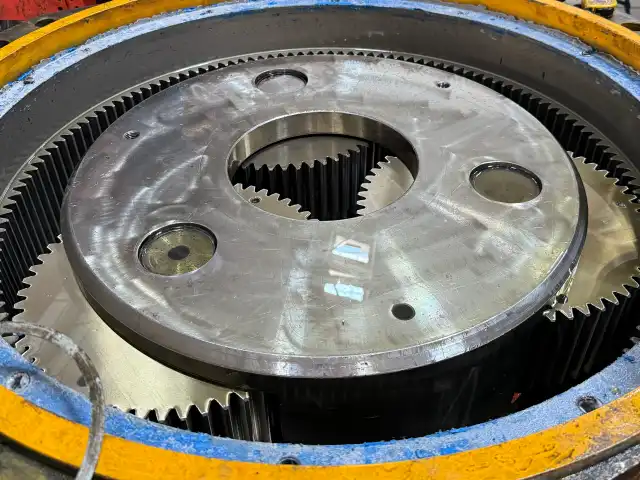
Planetary gear reducers feature a sun gear meshing with multiple planet gears engaged with an outer ring gear. This design distributes torque loads across multiple contact points simultaneously. Input shaft drives the sun gear; the planets spin on their axes while orbiting the sun. Motion transfers to the planet carrier as output. This simultaneous multi-tooth contact enables smooth power transfer with minimal backlash and noise, outperforming single-mesh designs.
Mechanical Architecture and Load Distribution
Planet Gear Reducer planetary architecture's circular configuration maintains coaxial input-output alignment—simplifying installation and saving space versus parallel gear reducers requiring offset mounting. With three to six planet gears sharing load, each tooth experiences only part of total force, dramatically reducing contact stress and extending component life. This excels in radially space-constrained environments like robotic joints. Balanced design also minimizes bearing loads, reducing noise and extending service life.
Precision Manufacturing Standards
YIZHI MACHINERY uses advanced processes—casting, hobbing, milling, precision cutting—achieving ISO 5-6 grade accuracy. High-quality materials include 20CrMnTi, 40CrNiMo, and SAE4340 alloy steels selected for specific mechanical properties. Carburizing heat treatment provides 58–62 HRC surface hardness while maintaining tough core, preventing fracture under cyclic loading. Surface finishing options including phosphating and hard chrome plating provide corrosion resistance for mining and marine environments.
The Benefits of Planet Gear Reducer Systems
Planetary technology delivers optimal performance across multiple areas:
- Exceptional torque density enabling compact units to handle loads requiring larger worm/helical reducers
- Superior efficiency (95–97% per stage) reducing energy costs and extending battery life in mobile equipment
- Compact coaxial design simplifying machine integration
- Low backlash below 3 arc-minutes for precision servo positioning
- Customization flexibility across module ranges 0.5–50 with various material grades and surface hardness options (45–62 HRC)
Comparing Planet Gear Reducers with Other Gear Reducer Types
Worm gear reducers offer high single-stage ratios but produce heat from sliding contact, limiting duty cycles. Their 50–70% efficiency wastes energy—problematic for battery-powered equipment. Helical reducers operate quietly and efficiently but require parallel shaft alignment, limiting packaging density. Cycloidal reducers provide excellent shock tolerance but cost more and use complex eccentric cam systems. Planetary designs excel when compactness, efficiency, and torque capacity are simultaneously required.
Procurement Considerations for B2B Clients
There's more to finding the right Planet Gear Reducer than just meeting the power and speed numbers on a datasheet. Industrial buyers need to look at mounting flange designs, shaft setups, and general envelope dimensions to make sure the new equipment will work with the old ones. Duty cycle analysis figures out whether models with a continuous rating or models with sporadic ratings work best for the way things are used. Material choice and closing requirements are affected by things like the temperature range, the presence of coolants or corrosive agents, and the needed ingress protection ratings.
Supplier Evaluation Criteria
Production partner selection impacts outcomes beyond initial product cost. YIZHI MACHINERY brings 15 years manufacturing expertise with ISO-compliant quality systems. Verify suppliers perform critical processes like precision grinding and carburizing in-house versus outsourcing. OEM certifications and long-term machinery maker partnerships demonstrate proven reliability. Warranty length matters—our one-year guarantee protects against manufacturing defects. Lead time consistency affects production schedules; our standard 35–60 day cycle enables accurate material requirement planning.
Customization and Technical Support
Off-the-shelf reducers rarely perfectly match application requirements. Manufacturers offering comprehensive customization add value beyond component supply. Our engineering team assists throughout specification—from initial requirements communication through design drawing verification. We accommodate low minimum orders, producing single units for prototypes. Pre-order technical guidance optimizes gear ratio, material, and mounting arrangement selections. Synced progress updates maintain visibility during production; quality documentation enables traceability. Post-delivery support reduces commissioning delays.
Maintenance Tips to Maximize Planet Gear Reducer Performance
With regular upkeep, Planet Gear Reducer systems last a lot longer, saving your investment and keeping you from having to pay for expensive unplanned downtime. Even though these strong systems can work in harsh circumstances, careful maintenance makes them work better for as long as they're in use. Most precision planetary reducers use lifetime synthetic grease (NLGI Grade 00 or 000) that doesn't need to be replaced under normal conditions. This means that you don't have to do any regular cleaning chores. But oil lubrication systems that provide active cooling may be better for heavy-duty uses in mines or settings with constant high temperatures.
Monitoring the amounts of noise and shaking during operation lets problems be found early, before they become too bad to fix. Strange noises usually mean that the motor and gear input shafts are not lined up correctly. During fitting, make sure that the clamping collar is tight and that the shafts are centered. If there is too much shaking, it could mean that the bearings or gear teeth are wearing out or breaking. If you don't fix the problem, it will get worse quickly. Using thermal imaging for regular checks can find strange heating patterns that could mean there isn't enough oil or the system is overloaded. If you set planetary reducers vertically, make sure the grease levels are correct and that the upper bearings get enough oil. When you place your order, you can choose between input-up and input-down configurations to get the best internal oil spread.
Checking for wear and replacing worn parts on time keeps expensive gear sets from getting damaged again. When there is coolant mist or metal chips around, the input shaft seals need extra care because the contamination speeds up internal wear by a huge amount. Cleaning the outside of equipment that works in dusty places and its air flow paths on a regular basis helps keep the temperature under control. Setting up written maintenance rules with inspection plans and service intervals that work with your job cycle makes sure that everyone on the maintenance team is responsible and follows the same rules. When you compare these preventative steps to run-to-failure methods, which risk damage to other parts and longer downtime for emergency fixes, the lifecycle costs are much lower.
Conclusion
In conclusion, because they are so efficient, have a high torque density, and are small, Planet Gear Reducer systems are very useful in a wide range of industries, including mining, aircraft, and industrial machines. Knowing how they work and how they work mechanically gives procurement professionals the power to choose options that boost operational output while keeping lifecycle costs low. Experienced makers make it possible for planetary reducers to be customized to fit a wide range of needs, from low-inertia robot axes to heavy-duty mine conveyors. When finding these important gearbox parts, it's important to look at more than just the price. Things like manufacturing know-how, quality systems, and technical help are all things that you need to think about. Correct repair methods will help you get the most out of your investment by ensuring steady performance over long service lives in tough industrial settings.
FAQ
1. How do I determine if a Planet Gear Reducer matches my application requirements?
Figure out the output torque, reduction ratio, and duty cycle you need, and then make sure these values are within the reducer's stated capacity, taking into account the necessary safety factors. Think about the temperature ranges, contamination exposure, and mounting position in the surroundings. Model choice is also affected by limitations on size, like the amount of mounting room that is available and the needs of the shaft contact. Reputable makers offer selection tools and tech help to make sure that the products work together.
2. What distinguishes planetary reducers from worm gear alternatives in practical operation?
Planetary designs are 95–97% efficient, while worm gears are only 50–70% efficient. This means that much less heat is produced and energy costs are lower. Their multi-tooth load distribution makes them more resistant to shock loads, and the lower friction makes it possible for longer service times. Worm reducers have higher single-stage reduction ratios and can self-lock, but they make more noise and need to be cooled actively when they are used continuously.
3. Can manufacturers customize planetary gear reducers for specialized torque or dimensional specifications?
Manufacturers with a lot of experience can make a lot of changes, like using non-standard gear ratios, special materials for toxic conditions, different mounting interfaces, and stronger parts for heavy loads. We can make unique specs for module ranges from 0.5 to 50, different grades of alloy steel, and surface hardnesses from 45 to 62 HRC at YIZHI MACHINERY. During the specification process, our engineering team works together to make sure that the goods we give exactly meet the needs of the application, even for orders of just one unit.
Partner with YIZHI MACHINERY for Precision Planetary Solutions
YIZHI MACHINERY has all the skills that industrial procurement teams looking for a reliable Planet Gear Reducer maker need. We've been in business since 2016 and specialize in making custom gears for the mining, military, and industrial machinery industries around the world. We use high-quality materials like 20CrMnTi and 40CrNiMo alloy steels and precise production methods like hobbing, grinding, and carburizing heat treatment to make ISO 5-6 grade parts. We can make any changes you want to modules 0.5 to 50, and the surface hardness can be between 45 and 62 HRC. We also offer full technical support from design advice to global shipping. Our custom packing with shock-absorbing liners keeps shipping damage to less than 0.1%, and real-time tracking lets you see where your package is at all times. We can help with both prototype development and mass production. Our production wait times are 35 to 60 days, and we accept low minimum amounts. Get in touch with our expert team at sales@yizmachinery.com to talk about your planetary gear reducer needs and get solutions that are specifically designed to solve the problems you're facing in your business.
References
1. Budynas, Richard G., and Nisbett, J. Keith. "Shigley's Mechanical Engineering Design, 10th Edition." McGraw-Hill Education, 2015.
2. Deutschman, Aaron D., Michels, Walter J., and Wilson, Charles E. "Machine Design: Theory and Practice." Macmillan Publishing, 1975.
3. Jelaska, Damir T. "Gears and Gear Drives." John Wiley & Sons, 2012.
4. Lynwander, Peter. "Gear Drive Systems: Design and Application." Marcel Dekker Inc., 1983.
5. Müller, Ludger. "Handbook of Engineering Design: Planetary Gear Trains." Springer-Verlag, 1982.
6. Townsend, Dennis P. "Dudley's Gear Handbook: The Design, Manufacture, and Application of Gears, 2nd Edition." McGraw-Hill Professional, 1991.

USER EVALUATE
Here is the customer's evaluation of us