


The Practical Ultimate Guide to Cylindrical Worm Gears
Cylindrical Worm Gears are the only option when businesses need to reduce torque by a significant amount in a small amount of area. These special power transmission parts have a worm shaft that looks like a screw and a wheel that fits on top of it. Together, they can offer reduction ratios from 5:1 to 100:1 in a very small space. In contrast to normal gear trains that need multiple stages, a single Cylindrical Worm Gear assembly can do the same job while taking up much less room. This built-in design efficiency solves important problems in fields like mining, aircraft, and industrial machines where every cubic inch counts. Also, because they self-lock, they don't back-drive when they're loaded, which means you don't need expensive external braking systems for vertical lifting. When procurement managers and experts understand these basics, they can choose the best option for tough tasks.
Understanding Cylindrical Worm Gears: Basics and Design Principles
Core Structure and Operating Mechanism
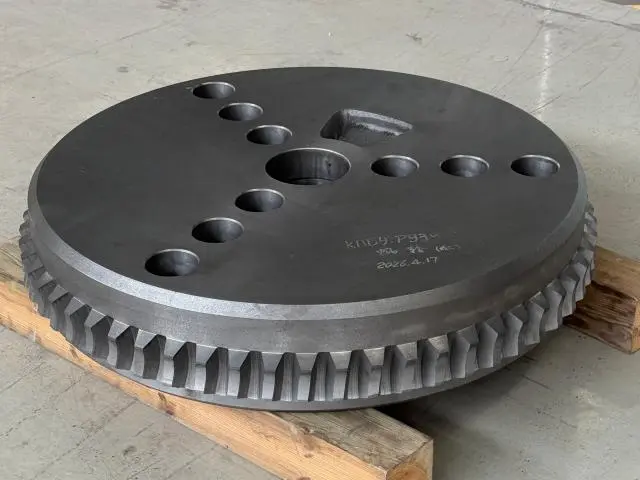
A Cylindrical Worm Gear system is made up of two main parts that work in opposite directions. The worm is like a threaded screw that spins on its axis, and the wheel has spiral teeth that are cut to fit perfectly with the threads on the worm. This straight-line arrangement moves motion between shafts that are at right angles to each other—a geometric benefit that you can't get with spur or bevel arrangements. There are four types of thread profiles: ZA (Archimedean), ZN (Normal straight), ZI (Involute), and ZK (Cone driven). Each has its own contact features. The axial module and pressure angle have a direct effect on how load is distributed across the tooth sides, which has an impact on both noise production and longevity.
Material Selection for Maximum Performance
Worm gear systems work best and last longer when the right materials are used together. Case-hardened alloy steels like 20CrMnTi, 40CrNiMo, SAE4340, and 42CrMo are used to make worms at YIZHI MACHINERY. By carburising and cooling these materials, the top hardness is raised to between 58 and 62 HRC, but the core stays tough. For the worm wheel, high-load bronze alloys like CuSn12Ni2 are often used to keep the sliding contact from galling. This mix of different materials makes for good tribological conditions. The hard steel worm rubs against the soft bronze wheel, controlling wear on the wearable part while protecting the more expensive worm shaft. This engineering concept increases the useful life of something while lowering the cost of upkeep.
Design Parameters Affecting Load Capacity
The performance range of Cylindrical Worm Gears is limited by a number of technical requirements. The speed ratio and efficiency depend on how many worm starts there are. Single-start configurations offer the highest reduction but lower efficiency, while multi-start designs increase efficiency at the expense of lower ratio. Modules 1 through 50 can be used for a wide range of tasks, from fine tools to heavy mining equipment. Figuring out the lead angle is important for self-locking behaviour; angles below 5 degrees usually allow for static self-locking, but EN 81 standards say that dynamic conditions need extra safety mechanisms. Precision-grade manufacturing to ISO 8-9 standards at our plant guarantees tooth geometry correctness within microns, allowing smooth operation under a range of loads. Cutting, hobbing, milling, and grinding are some of the processes we use to make tooth surfaces with Ra values below 0.4 µm. This keeps friction losses to a minimum and increases the time between service intervals.
Applications and Performance of Cylindrical Worm Gears
Heavy-Duty Industrial Applications
Worm gear drives can't be replaced in demanding areas because of the way they work. For effective anti-rollback security on inclined paths, mine operations depend on these parts in conveyor systems that move ore. The self-locking feature stops loaded belts from going backwards during emergency stops. Other gear types can't meet this safety standard without using complicated brake systems. Cylindrical Worm Gears are used in lift traction machines to keep smooth acceleration rates while carrying heavy loads of people. Machine tool indexing mechanisms use duplex worm configurations to achieve arc-second positioning accuracy, which makes it possible to make aerospace parts with great accuracy. Automated production line reducers use the high ratio feature to keep transport speeds in sync across multiple stages of a process. These uses all need the same things: a small place for installation, high shock-load absorption, and reliable overload safety.
Performance Parameters and Efficiency Considerations
The main thing that determines which worm gear system to buy is its load capacity. Because sliding contact creates an oil wedge effect, the units we make can handle constant torque loads of more than 50,000 Nm in mining-grade designs. This hydrodynamic lubrication film spreads pressures over a bigger contact area than rolling gears, which makes it better at absorbing shock. But thermal efficiency needs close attention—sliding actions make more heat than rolling contact designs. Depending on the lead angle, surface finish, and quality of the oil, the efficiency can be anywhere from 40% to 90%. We suggest Polyglycol (PAG) synthetic oils with ISO VG 320 or 460 viscosity grades for the best results. When compared to mineral oils, these lubricants lower working temperatures by up to 20°C. This delays micropitting fatigue and increases the life of parts.
Maintenance Strategies for Extended Service Life
Worm gear setups get the best return on investment when they are maintained properly. During the first 50 to 100 hours of breaking in, microscopic rough spots on the sides of the teeth wear away, creating high temperatures. This seems like a normal thing to happen, but changing the oil after run-in gets rid of the rough wear particles that would speed up the breakdown. Bronze content should be checked regularly in the oil; visible glitter means scuffing from lack of lubrication or too rough a worm surface. Blueing tests that look at contact patterns show that the mesh is properly arranged; ideal patterns tend to gather on the side where the mesh exits, letting lubricant enter. Through Nital etch testing, operators should look for grinding burns on hardened worm surfaces. These burns soften the case depth and cause premature pitting. When you measure backlash at set center distances, you can be sure that thermal expansion stays within the design limits. This keeps the parts from sticking when the temperature changes.
Cylindrical Worm Gear Comparisons: Making the Right Choice
Geometric Differences and Torque Handling
Knowing how different types of worm gears relate helps engineers match parts to the needs of the application. Compared to hourglass shapes, cylindrical designs keep the thread width the same along the worm axis. This makes production easier and lowers costs. Hourglass worms have curved thread profiles that increase the contact area. This increases the load capacity by 30 to 50 percent, but it needs to be ground with special tools. Helical gears are more efficient (95–98%), but in single stages they can't get reduction ratios above 10:1. Bevel gears can change the angle of the shaft, but they can't lock themselves. Spur gears are the most efficient, but they can only be used on shafts that are parallel to each other. Like worms, hypoid gears have offset axes, but they produce large axial thrust forces that need strong bearing supports.
Efficiency Trade-offs Across Gear Types
Cylindrical Worm Gears are a good choice when choosing a gearbox method based on how efficiently it moves power. For maximum reduction and self-locking, single-start designs with low lead angles give up efficiency. Multi-start designs with lead angles of about 15 degrees get efficiencies close to 90%, which is about the same as helical gear performance while still being small. Planetary or parallel-shaft reducers may work better in situations where energy use is more important than room. But the small loss in efficiency is okay in systems like vertical lifts, valve action, or positioning where stopping back-driving is important. Instead of just looking at efficiency percentages, people who work in procurement should look at the total cost of ownership, which includes installation room, safety features, and upkeep needs.
Precision and Backlash Considerations
Backlash needs to be carefully managed in applications that need very accurate positioning. Standard Cylindrical Worm Gear sets have fixed offset that is set during production and is usually between 0.04mm and 0.12mm, based on the module and quality grade. Changing the center distance to fix offset breaks the contact pattern, which leads to point loading and faster wear. If you need zero-backlash, duplex or split-wheel designs let you pre-load against opposite sides, which gets rid of play but makes friction higher. These arrangements make it possible for machine tool indexing tables and rotary stages to be repeatable to within arc seconds. On the other hand, standard designs make maintenance easier and the original investment lower for uses that can handle modest backlash.
Procurement Guide: How to Source Cylindrical Worm Gears Effectively
Evaluating Supplier Capabilities and Certifications
A careful evaluation of the seller is the first step to successful procurement. Quality certifications are the most basic form of validation. For example, ISO 9001 confirms that the process is being controlled, and industry-specific standards show that the person is technically competent. When buying parts for aerospace applications, you have to get AS9100 certification. People who want to buy mining or heavy machinery should make sure that it meets the appropriate AGMA or DIN standards. Check the skills of the production tools in addition to certifications. Suppliers who have CNC gear grinding centers and coordinate measure tools can always deliver with accuracy. Ask for proof of the heat treatment steps, because the load capacity can be affected by incorrect carburising or hardening. Audit records that show consistent case depth and surface hardness remove high-quality makers from less-than-stellar providers.
Navigating Pricing Models and Order Quantities
Knowing how costs are structured helps you negotiate more effectively. When you order custom gears, you usually have to pay extra for hobbing cuts or grinding wheels that are made to fit your module and pressure angle. Depending on how complicated they are, these one-time costs can be anywhere from $2,000 to $15,000. When you buy more than 100 pieces, the cost per unit usually goes down by 30 to 40 percent compared to the prototype numbers. There are minimum order requirements for many makers, but specialised sources like YIZHI MACHINERY can make one piece for testing or quick replacements. Lead times depend on how much material is available and how much the machine can handle. Standard modules ship within 35 to 45 days, while special requirements may take 50 to 60 days. For important applications, air freight choices shorten arrival times, but costs go up in line with that.
Technical Support and Customization Services
The best suppliers are more like engineering partners than just suppliers of parts. Having access to design advice during the project development steps keeps costly specification mistakes from happening. Providers of finite element analysis check load rates in real-world service situations, which helps choose the best materials and heat treatment cycles. When making custom gears, they can be made to fit specific mounting arrangements, materials, or tooth profiles. Suppliers who offer thorough 3D CAD models make it easier for mechanical designers to put worm gears into complicated systems. Post-delivery support, such as installation instructions, technical help, and suggestions on how to improve performance, sets industry leaders apart from transactional sellers.
Trusted Brands and Suppliers of Cylindrical Worm Gears
Established Industry Leaders
Several manufacturers have become well-known by consistently making good products for decades. Japan's KHK Gears has a large selection of stock worm gear sets that come with detailed scientific information. This makes them popular for everyday use. Precision parts made by SDP/SI are popular with lab equipment and aircraft companies that need to stick to tight standards. Rexnord Corporation has more than one hundred years of experience making heavy industrial drives. They provide ruggedised designs to the cement and mining industries. Boston Gear, which is part of Altra Industrial Motion, offers low-cost options through worldwide networks of distributors. These brands make sure that all of their products are the same by controlling the whole process, from getting the raw materials to inspecting the finished goods.
Evaluating Emerging Suppliers
Even though well-known names offer safety, new makers often offer better value. Companies that use current CNC technology and follow the principles of lean production can compete well in terms of quality and lead time. Logistics are affected by geography. For example, Asian suppliers often offer cheaper unit costs, but shipping takes longer and there may be contact problems. European makers charge higher prices, but they are great at making quick prototypes and small batches that are exactly what you want. North American sources are closer, which is helpful for projects that need to be done quickly, and the warranty process is easier. When looking at new suppliers, make sure to ask for case studies that show how they've successfully implemented similar solutions in the past. Customer references from well-known end users are a better way to prove skills than marketing materials.
Partnership Criteria for Long-Term Success
To build strategic ties with suppliers, you need to agree on more than just price and service. The speed at which problems are solved depends on the technical support infrastructure—suppliers who keep application engineers who know your industry speak your language. When a warranty claim is made, quick makers speed up replacements and do root-cause analyses to make sure the problem doesn't happen again. Making manufacturing processes clear builds trust; sellers who are willing to have their facilities inspected show that they have faith in their business. Stable finances ensure continuity; working with suppliers who are having cash flow issues increases the risk of parts being left behind and projects being shelved. When sharing proprietary ideas, protecting intellectual property is very important. Check non-disclosure agreements and think about how people in your culture feel about protecting trade secrets.
Conclusion
There are a lot of technical and business factors that go into choosing the right Cylindrical Worm Gear system. The unique mix of high reduction ratios, self-locking capability, and compact shape makes these parts impossible to replace in mining, aircraft, and industrial machines. In order to specify systems that work reliably for long periods of time, it's necessary to understand design principles like material pairing, lead angle optimisation, and thermal management. For buying to work well, you need to look at more than just price quotes when examining suppliers. You should also look at their expert support, manufacturing equipment, and prospects for partnerships. Following the tips in this guide will help engineers and procurement workers find precision-engineered parts that meet strict application needs while lowering the total cost of ownership. You can use what you've learned about maintenance protocols, trade-offs between efficiency and quality, and quality control criteria to make smart decisions that will help your project succeed.
FAQ
1.What distinguishes cylindrical from hourglass worm gears?
Because cylindrical worms keep the thread width the same along their length, they make production easier and lower the cost. Hourglass shapes have curved thread profiles that increase the contact area by 30 to 50 percent. This makes them stronger but requires special cutting tools. Most of the time, cylinder configurations work well enough for commercial uses and cost less.
2.How can I improve worm gear efficiency?
Multi-start worm designs that raise the lead angle, precision grinding to get a surface finish of Ra < 0.4 µm, and choosing PAG synthetic lubricants with the right viscosity can all make the machine more efficient. Viscosity breakdown can be avoided by keeping the operating temperatures at the right level and cooling the mixture enough. When these strategies are used together, they can boost efficiency from 40% to 90%.
3.What maintenance practices extend worm gear life?
After the 50–100 hour break-in time, change the oil to get rid of the first wear particles. Do an oil study every three months to check for metal content that could mean abnormal wear. Once a year, check the contact pattern to make sure the mesh shape is correct. Keep the temperature of the lubricant below 90°C by cooling it down enough. These techniques make parts last longer and reduce the number of unexpected breakdowns.
Get Premium Cylindrical Worm Gears from YIZHI MACHINERY
For fifteen years, YIZHI MACHINERY has been making unique worm gears for the mining, aircraft, and industrial machinery industries. Our ISO-compliant factory uses cutting-edge CNC grinding centers and automated heat treatment lines to make parts that are precise enough to meet ISO 8-9 standards and have a surface hardness of 58–62 HRC. From module 1 to 50, we can completely customise your order, from a single prototype to a high-volume production run. We fit the specs to your exact load needs using materials like 20CrMnTi, SAE4340, and AISI4140. With our streamlined process, which includes design advice, quality control, and global logistics, we can send final parts in 35 to 60 days. Customised packing with shock-absorbing bags and real-time tracking of shipments make sure that deliveries go without damage. We offer one-year warranties and quick expert help because we are a reliable Cylindrical Worm Gear seller. Contact us at sales@yizmachinery.com to talk about your power transmission problems and get custom solutions that will improve performance, stability, and cost-effectiveness for your most important uses.
References
1. Dudley, D.W. (1994). Handbook of Practical Gear Design and Manufacture. CRC Press, Boca Raton, Florida.
2. American Gear Manufacturers Association (2004). Design Manual for Enclosed Epicyclic Gear Drives: AGMA 6123-B06. Alexandria, Virginia.
3. Buckingham, E. (1988). Analytical Mechanics of Gears. Dover Publications, New York.
4. Radzevich, S.P. (2012). Dudley's Handbook of Practical Gear Design and Manufacture, Second Edition. CRC Press, Boca Raton, Florida.
5. Deutsches Institut für Normung (1998). Cylindrical Worm Gear Units: DIN 3996. Beuth Verlag GmbH, Berlin.
6. Litvin, F.L., Fuentes, A. (2004). Gear Geometry and Applied Theory, Second Edition. Cambridge University Press, Cambridge, United Kingdom.

USER EVALUATE
Here is the customer's evaluation of us