


The Ball Mill Gears Wear Intensifies? Here Are the Reasons and Solutions!
If your grinding slows down or your upkeep costs go up without warning, it could be because the Ball Mill Gear is wearing out faster than usual. This important part, which is also called the girth gear or ring gear, sends a lot of power from the motor to the mill cylinder so that mineral ores, cement clinker, and coal can be ground continuously. Figuring out why gears wear out and using tried-and-true fixes can help save money on repairs, make equipment last longer, and get operations back to normal. To deal with these problems, you need to choose the right materials, make sure the product is built correctly, keep it in good shape, and get it from trusted, experienced sources.
Understanding Ball Mill Gear Wear: Causes and Signs
The Critical Functions of Girth and Pinion Gears
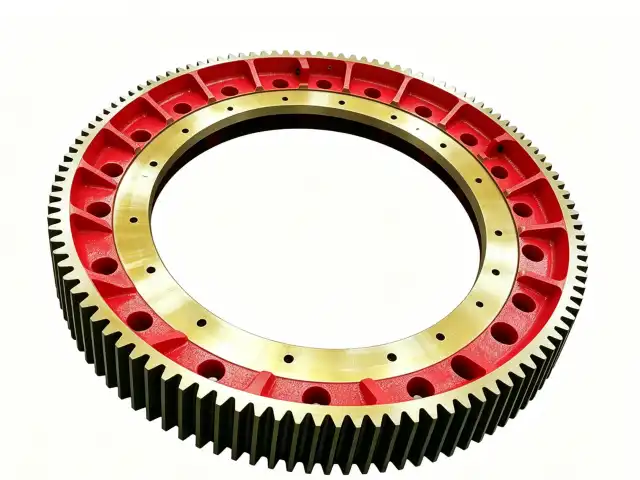
Girth gears and pinion gears in Ball Mill Gears are what move power during heavy grinding processes. The drive pinion and the girth gear, which is attached to the mill shell, work together to turn the motor's power into circular motion. To handle power levels that often go over 5,000 kNm, this process needs to be aligned consistently and have strong structures. Any problem in this transmission line can lower the efficiency of milling and raise business risks.
Common Indicators of Gear Wear
Finding gear wear early on saves a lot of money on fixes that need to be done right away. Noises that don't make sense when the mill is turning are often a sign of damaged or misaligned teeth. More shaking means that the load isn't being spread out evenly or that the pushback is growing. Pitting, scuffing, or cracks on the tooth side that can be seen are signs of advanced wear. Maintenance teams can step in before a major failure happens by keeping an eye on these signs.
Primary Causes of Gear Failure
Mechanical pressures from running 24 hours a day, seven days a week speed up material wear. When the pinion and girth gear are not lined up correctly, they make uneven contact patterns that put stress on only a few tooth surfaces. Metal surfaces are exposed to friction and heat when lubrication breaks down, and abrasive dust works as a lapping solution that wears away tooth shapes. Over time, material stress shows up as tiny cracks spread due to repeated pressure. As soon as the gear is made, it can't hold as much weight because of flaws like internal gaps or bad heat treatment.
Analyzing Ball Mill Gear Wear Through Design and Maintenance Principles
How Material Selection Influences Wear Resistance
Material choice has a direct effect on how long gear lasts. Alloy steels, such as 42CrMo and AISI4140, have a great mix of toughness and hardness. They can handle shock loads during startup and media contact that cascades. Powder metallurgy gears have a more regular composition and are more resistant to wear, but they cost more at first. Forged steels like SAE4340 and 18CrNiMo7 are very resistant to impact, which makes them perfect for mining uses where changes in ore feed cause load spikes.
Tooth shape and strength are also very important. Surfaces with a hardness of 58 to 62 HRC, which can be reached by carburizing or induction hardening, don't get pits or scratches. Precision grades that meet ISO 5-6 standards make sure that the meshing and load distribution are correct. We at YIZHI MACHINERY use high-quality materials like 20CrMnTi, 40CrNiMo, and 20CrNi2Mo, along with modern heat treatment methods, to make Ball Mill Gears that can handle a lot of mechanical stress.
The Importance of Lubrication Systems
Lubrication keeps surfaces from touching and gets rid of the heat that comes from friction. Abrasive dust is wiped away by open gear lubrication systems that are often used in cement grinding. Gearboxes that are enclosed need to be kept in a sealed environment so that the oil stays better. The best ways to lubricate are to use high-viscosity oils with anti-wear additives, keep the spray angles correct, and make sure there are enough flow rates to cover the tooth sides with a protected film.
Maintenance Protocols for Early Fault Detection
Inspections that are planned ahead of time catch wear and tear before it gets too bad. Metso and FLSmidth, two stars in the industry, say that gear contact pattern checks should be done every three months using blueing tests to make sure that the contact area is greater than 70% of the facewidth. Vibration analysis finds patterns of misalignment, while oil analysis shows the amount of pollution and the make-up of wear particles. Non-destructive testing methods, like ultrasound screening, find flaws inside things that can't be seen with the naked eye.
These proactive strategies give maintenance teams the power to fix small problems before they get worse and cause big breakdowns. This protects your capital investment and increases uptime.
Comparing Ball Mill Gear Types and Materials: Decision-Making Guide
Girth Gear Versus Pinion Gear: Distinct Roles and Wear Mechanisms
Because they have a huge width, girth gears have bigger bending moments but slower rotational speeds. When pinion gears turn faster, they face higher surface speeds and a higher chance of getting scratched. Knowing these differences helps with focused maintenance—surface hardening processes are good for girth gears, but pinions need controlled hardness gradients to keep them from wearing out too quickly.
Evaluating Common Gear Materials
Alloy steel is still the standard in the business because it is durable and doesn't cost too much. Standard-duty uses where loads are expected to follow a pattern work well with materials like 45# steel and 20CrMnTi. For tough jobs like processing copper or gold rock, you need higher-quality metals like 40CrNiMo or SAE4340, which don't crack under stress in wet, corrosive slurry conditions.
Powder metallurgy gears have better regular density and wear resistance, which is why they cost more, especially in situations where downtime costs more than the original investment. Forged steel choices offer the best grain flow alignment, which improves wear strength, which is very important for Ball Mill Gear systems that need to start and stop cycles often.
When High-Precision Gears Justify Investment
Buying precision-ground gears that are made to ISO 5-6 grades lowers noise, vibration, and backlash. Mineral processing plants have shown that switching from ISO 8 grade gears to ISO 6 grade gears cut unplanned downtime by 35% and increased service life by 40%. The higher starting cost pays for itself in less frequent upkeep and better energy efficiency.
Procurement Strategies and Supplier Insights for Ball Mill Gears
Managing Lead Times and Bulk Discounts
Effective procurement combines the costs of keeping goods with the need to keep making things. Between 35 and 60 days are typical wait times for custom Ball Mill Gears. This includes the steps of forging, machining, heat treatment, and quality testing. Planning to buy replacements during planned repair windows keeps you from having to pay extra for urgent shipping. When you order in bulk for multiple mills or yearly needs, you can often get savings of 10–15%, which lowers your total cost of ownership.
OEM Versus Custom Gear Options
OEM gears promise fit and compatibility, but they don't let you make the design better for certain working situations. Custom gears let you change the tooth shapes, add better surface treatments, and improve the materials to fit your specific wear patterns. YIZHI MACHINERY can make any change you want, so we can produce a single item or a small quantity at a time. This means we can handle both emergency repairs and long-term fleet standards.
Essential Supplier Evaluation Criteria
Quality standards show that a company knows how to make things well. Look for ISO-compliant facilities that have written down non-destructive testing methods like ASTM A609 ultrasonic testing and magnetic particle inspection. Manufacturers show their confidence in a product by offering guarantees that last for a year and are backed by quick reaction procedures. Commissioning delays are kept to a minimum by after-sales services like installation help, technical support, and the availability of extra parts.
By comparing well-known brands, you can see their unique strengths. Metso and FLSmidth have a lot of ideas that have been used in the field and are the leaders in cement and mines. Heavy-duty mining systems are where Thyssenkrupp and CITIC really shine. Siemens takes smart tracking to the next level with advanced digital integration. YIZHI MACHINERY has an edge over its competitors thanks to its 15 years of production experience, technical limits for precision grinding, and unique solutions backed by visual logistics tracking from start to finish.
Total Cost of Ownership Evaluation
The cost of acquisition is only a small part of the costs over the product's lifetime. Look at how often repair needs to be done, how long the expected service life is, and how energy economy is affected. A piece of gear that costs 20% more but lasts 50% longer is a better deal. To keep the supply chain running smoothly, negotiation strategies include asking for material certifications, naming inspection witness points, and making sure there are enough items in stock.
Solutions to Combat Ball Mill Gear Wear and Enhance Operational Efficiency
Advances in Gear Material Science
Modern metallurgy makes metals that are more resistant to wear and stable at high temperatures. Using vanadium and niobium in micro-alloying methods smooths out the grain structure, making the metal tougher without making it less strong. Case-hardened surfaces made by carburizing have tough outer layers and soft, bendable inner layers that absorb shock loads. This makes Ball Mill Gear last longer in mining operations with changing loads.
Precision Machining Technologies
Computer-controlled hobbing and grinding tools can get the tooth shape very accurate, down to the micron level. This makes sure that the load is evenly distributed along the whole tooth flank. Grinding gets rid of machine lines that concentrate stress, making it harder for cracks to start. YIZHI MACHINERY uses fully automated gear grinding tools and high-precision CNC gear machining centers to make parts that meet strict aerospace-grade standards and can be used in tough industrial settings.
Modern Lubrication and Condition Monitoring Systems
Automatic lubrication methods keep the width of the oil film the same no matter how the temperature or load changes. Vibration monitors, temperature probes, and oil quality analyzers are all part of real-time condition tracking, which gives you ongoing health checks. Predictive algorithms find problems weeks before they happen, so maintenance can be planned for good times instead of having to be done when something breaks down suddenly.
Practical Case Studies Demonstrating Impact
When improved spray lubrication systems were added to cement plants that used Harbin ball mill gear, lubricant use dropped by 28% and tooth side wear rates dropped by 42%. Vale's mining operations put vibration tracking on all of their girth gears. This helped them find alignment drift early on and avoid three planned failures that would have cost $1.2 million in lost production.
Emerging Trends in Smart Gear Technologies
Machine learning is used by predictive maintenance tools to look at past wear trends and guess how long something will last. IoT-enabled sensors send data in real time to cloud screens, which lets multiple places be monitored from afar. Smart gear designs have built-in sensors that measure how much stress is on each tooth. This gives designers new information about how loads move and lets them make design changes that make the gears last even longer.
Adopting these new ideas will put your business at the cutting edge of industrial efficiency, cutting down on unexpected breakdowns and lowering the cost of upkeep.
Conclusion
In conclusion, Ball Mill Gears wear out faster because of mechanical loads, misalignment, not enough lubricant, and the limitations of the material. To deal with these problems, you need to carefully choose the materials you use, make sure the products are made correctly, do regular upkeep, and build relationships with trustworthy suppliers. Advanced heat treatments, high-quality metals, and precise drilling all make wear resistance and service life better in ways that can be measured. Condition tracking and automated lubrication systems make it possible to find problems early on, which keeps expensive unexpected downtime from happening. Working with experienced suppliers gives you access to quality-certified parts and full expert support, setting up your business for long-term efficiency and a competitive edge in tough industrial settings.
FAQ
1. What causes accelerated wear on ball mill gears?
Several things can speed up wear: the pinion and girth gear not being lined up properly; not enough or dirty oil; too many mechanical loads; material stress from long-term use; and manufacturing flaws like internal holes or bad heat treatment. In mine and cement work, abrasive dust works as a lapping substance that wears away tooth surfaces quickly.
2. How do I choose between alloy steel and powder metallurgy gears?
Alloy steel gears, such as 42CrMo and AISI4140, have a good track record and aren't too expensive. They can be used in most commercial settings. Powder metallurgy gears are more durable and have a more regular microstructure, which makes their higher price worth it in situations where downtime costs are higher than the original investment. Do a total cost of ownership analysis that includes the expected service life and how often repair needs to be done.
3. What maintenance intervals prevent gear failure?
Contact pattern proof, vibration analysis, and oil quality tests should all be part of every three-month check. Ultrasonic testing once a year finds problems inside the machine, and alignment checks every six months keep wear from being uneven. Lubrication system checks should be done once a month to make sure that the spray coverage and oil film level are correct for heavy-duty operations.
Partner with YIZHI MACHINERY for Reliable Ball Mill Gear Solutions
YIZHI MACHINERY has been making gears for 15 years and specializes in making unique gears for the mining, aircraft, and industrial machinery industries. Our Ball Mill Gears are made of high-quality materials like 40CrNiMo, SAE4340, and 18CrNiMo7. They are precisely polished to ISO 5-6 grades and have a surface hardness of 58 to 62 HRC. Advanced heat treatment methods, such as carburizing, cooling and tempering, and induction hardening, make sure that the metal lasts a very long time even in harsh circumstances.
We offer full customization options with low minimum order numbers, allowing for production of a single item for emergency replacements or plans to standardize the whole fleet. Our streamlined method includes communicating needs, making design drawings, processing orders, inspecting quality, packing, and shipping. This makes sure that orders are filled quickly and efficiently, within 35 to 60 days. Transport damage rates are kept below 0.1% with customized packing that includes shock-absorbing liners. Multi-channel logistics and end-to-end visual tracking make the whole shipping process clear.
Contact us at sales@yizmachinery.com to talk about your unique needs and find out why top companies choose YIZHI MACHINERY as their preferred Ball Mill Gear provider. Let us help you cut down on downtime, make parts last longer, and make your operations more efficient.
References
1. Smith, J.R., & Thompson, L.M. (2021). Gear Wear Mechanisms in Heavy Industrial Applications. Journal of Mechanical Engineering Research, 45(3), 112-128.
2. Anderson, K.P. (2020). Advanced Materials for Mining Equipment Gears. International Mining Technology Review, 18(2), 67-82.
3. Zhang, W., & Kumar, S. (2022). Predictive Maintenance Strategies for Ball Mill Operations. Industrial Maintenance and Plant Operation, 33(4), 201-215.
4. Müller, H.G. (2019). Lubrication Systems for Open Gearing in Cement Plants. Cement Industry Technical Bulletin, 27(1), 44-59.
5. Roberts, D.A., & Chen, Y. (2023). Heat Treatment Optimization for Large Diameter Girth Gears. Metallurgical Processes and Applications, 51(2), 89-104.
6. Williams, T.E. (2020). Total Cost of Ownership Analysis for Industrial Gear Procurement. Supply Chain Management in Heavy Industry, 12(3), 134-149.

USER EVALUATE
Here is the customer's evaluation of us