


Rolling Mill Gearbox Maintenance Strategy: Preventive to Corrective
When you are running a rolling mill, you have to keep an eye on your important engine parts all the time. A Rolling Mill Gearbox is the moving portion of a metalworking machine that turns the motor's turning into culminate torque and speed control so that the quality of the wrapped up item is continuously the same. When this claim to fame transmission unit breaks down without caution, it can taken a toll thousands of dollars per hour to halt generation, which can influence shipping times and connections with clients. Our repair arrange combines preventative following with remedial activity. This way, we can make beyond any doubt that your gearbox frameworks work dependably indeed when they are beneath a parcel of push and moreover make the apparatuses final longer. Knowing when to plan schedule upkeep versus crisis repairs is the contrast between running a smooth trade and one that costs a part to settle. This is particularly genuine in areas like aviation fabricating, mining, and overwhelming mechanical apparatus generation where exact resiliences and consistent uptime are essential.
Understanding Rolling Mill Gearbox Maintenance: Concepts and Importance
The Core Function of Transmission Systems
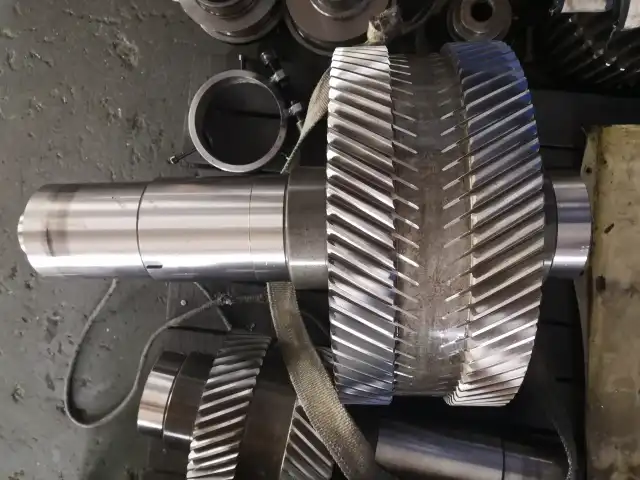
Rolling Mill Gearbox systems convert high-speed engine yield into controlled, high-torque turn for rolling operations in steel plants, aluminum preparing offices, and metal creation lines. These frameworks withstand serious spiral powers, stun stacking, and turning around conditions amid generation. Inner gears are commonly fabricated from amalgam steels such as 18CrNiMo7 and 20CrMnTi, at that point treated through carburising and acceptance solidifying to accomplish 58–62 HRC surface hardness. This designing combination gives strength against warm push, overwhelming stacking, and requesting working cycles found in present day rolling process applications.
Why Maintenance Directly Impacts Your Bottom Line
Maintenance quality directly affects operational efficiency and production reliability in every Rolling Mill Gearbox installation. Startling shutdowns hinder generation plans, increment labor costs, delay client conveyances, and may make auxiliary gear harm. Compelling upkeep methodologies move forward uptime, expand component life expectancy, and diminish crisis repair costs. Appropriate reviews too move forward working environment security by distinguishing dangers such as bearing seizure or equip tooth disappointment some time recently unsafe conditions happen. Acquirement groups progressively assess gearbox providers not as it were by hardware cost, but too by the long-term upkeep bolster biological system they provide.
Design Considerations That Influence Maintenance Needs
Modern Rolling Mill Gearbox designs include structural features that unequivocally impact support productivity and benefit life. Stress-relieved steel lodgings move forward unbending nature and decrease vibration, making a difference anticipate untimely bearing wear. Measured development permits specialists to supplant person equip stages without disassembling the whole framework, decreasing downtime amid repairs. Progressed tooth micro-geometry adjustments, counting tip alleviation and delegated, disseminate loads equitably indeed when shaft diversion happens beneath weight. Understanding these plan subtle elements makes a difference support groups recognize ordinary wear from anomalous working conditions caused by grease issues, over-burdens, or disgraceful arrangement amid operation.
Preventive Maintenance Strategies for Rolling Mill Gearboxes
Establishing Routine Inspection Protocols
Preventive maintenance programs for Rolling Mill Gearbox systems require structured inspection schedules to identify issues before failures occur. Monthly visual inspections and quarterly detailed evaluations help technicians monitor lubricant condition, contamination levels, and wear indicators. External housing checks identify cracks, corrosion, and seal deterioration that may allow contaminants to enter the gearbox. Infrared thermography establishes baseline operating temperatures, while deviations of 15–20 degrees Celsius often indicate developing problems. Vibration monitoring through accelerometers detects imbalance, looseness, or misalignment weeks before severe component damage occurs, enabling maintenance teams to plan corrective action efficiently.
Lubrication Management as Failure Prevention
Lubrication management is one of the most critical maintenance tasks for extending Rolling Mill Gearbox service life. Industrial gear oils must maintain proper viscosity across wide operating temperatures, including startup conditions and heavy-load operation above 80 degrees Celsius. Quarterly oil analysis identifies contamination, additive depletion, and microscopic wear particles that reveal developing internal problems. Excessive particles larger than 14 microns indicate accelerated gear tooth wear requiring immediate attention. Automated lubrication systems deliver precise oil quantities consistently, reducing human error and maintaining protective film thickness on gears and bearings under demanding industrial operating conditions.
Early Detection Systems and Monitoring Technology
Modern condition monitoring technologies transform Rolling Mill Gearbox maintenance from reactive repairs into predictive planning. Permanently installed vibration sensors continuously transmit frequency data to monitoring systems that identify bearing defects and abnormal gear mesh patterns. Temperature sensors located near critical bearings provide early warning alerts when overheating develops. Oil debris monitoring equipment continuously measures metal particle size and concentration, revealing internal wear progression before visible damage occurs. These systems allow maintenance teams to schedule repairs during planned shutdowns instead of emergency stoppages, significantly reducing production disruption and improving overall operational reliability and maintenance efficiency.
Corrective Maintenance: Diagnosing and Resolving Gearbox Problems
Common Failure Modes and Root Causes
Understanding common Rolling Mill Gearbox failure modes helps technicians diagnose problems quickly and accurately. Gear tooth pitting develops when lubrication becomes insufficient or operating loads exceed design limits, leading to surface fatigue damage. Bearing failures often create abnormal temperatures and characteristic vibration frequencies that experienced personnel can identify rapidly. Seal deterioration allows lubricant leakage and contaminant entry, particularly harmful in rolling mill environments containing scale, moisture, and oxide particles. Shaft misalignment produces uneven tooth contact patterns that accelerate wear on localized gear surfaces while reducing overall load distribution efficiency during operation.
Transition Criteria: When Prevention Becomes Correction
Determining when preventive maintenance should transition into corrective action is essential for protecting Rolling Mill Gearbox reliability. Vibration readings above 7.1 millimeters per second usually indicate serious bearing damage or mechanical looseness requiring immediate intervention. Oil analysis results exceeding 200 parts per million of iron particles suggest active gear wear needing inspection even if performance appears normal. Temperature increases more than 30 degrees Celsius above baseline often indicate lubrication breakdown or preload problems. Maintenance managers balance repair costs, production schedules, and failure risks to decide when immediate corrective maintenance becomes economically necessary.
Executing Effective Repairs With Quality Components
Successful Rolling Mill Gearbox repairs require replacement components that meet or exceed original equipment specifications. Precision-manufactured gears produced to ISO 5–6 accuracy standards ensure correct tooth engagement and even load distribution during operation. Materials such as 17CrNiMo6 and SAE4340 provide excellent surface hardness and core toughness for demanding rolling mill conditions. Heat treatment certifications verifying carburising depth and hardness consistency help ensure long-term reliability. Working with experienced gearbox manufacturers also provides technical guidance, installation support, dimensional verification, and warranty protection, reducing the risk of premature failures after maintenance activities are completed.
Optimizing Rolling Mill Gearbox Performance Through Maintenance
Integrating Predictive Analytics and IoT Technologies
Advanced Rolling Mill Gearbox maintenance programs increasingly rely on IoT sensors and predictive analytics to improve reliability. Connected monitoring systems continuously collect temperature, vibration, sound, and power consumption data, which cloud-based software analyzes using artificial intelligence algorithms. These systems learn normal operating patterns for individual equipment and identify subtle deviations that may indicate developing failures. Predictive models estimate remaining component life and recommend maintenance windows before breakdowns occur. Companies implementing predictive maintenance commonly achieve lower maintenance expenses, reduced unplanned downtime, and more efficient scheduling compared with traditional time-based maintenance approaches and inspections.
Material and Design Upgrades That Enhance Reliability
Reliability improvements for Rolling Mill Gearbox systems often involve upgrading materials, bearings, and surface treatments during planned overhauls. Replacing conventional alloy steels with stronger materials such as 42CrMo or AISI4140 improves fatigue strength and load-carrying capacity. Surface enhancement methods like shot peening create compressive stresses that slow crack propagation and extend service life significantly. Ceramic hybrid bearings reduce friction losses and tolerate higher temperatures than traditional steel bearings. Collaborating with original equipment manufacturers ensures design modifications maintain proper alignment, load distribution, and compatibility while improving operational performance and long-term durability under demanding conditions.
Documented Case Study: Measurable Performance Improvements
A North American steel producer improved Rolling Mill Gearbox reliability by implementing predictive maintenance technologies and structured inspection procedures across four-high cold rolling mills. Before the program, unexpected stoppages caused approximately 18 hours of annual downtime per mill, while emergency repairs exceeded $145,000 yearly. After introducing quarterly oil analysis, permanent vibration monitoring, and upgraded replacement components, downtime decreased to 4.5 hours annually within two years. Emergency repair expenses fell dramatically, while planned maintenance costs increased only slightly. The operation achieved substantial annual savings, improved worker safety, and maintained more consistent product quality during production.
Procurement Considerations Related to Gearbox Maintenance
Selecting Reliable Manufacturing Partners
Strategic choices about Rolling Mill Gearbox manufacturers and component sources have a huge impact on the success of a repair program. You can be sure that new parts will work with your system if you buy from a reputable company with a quality system that has been certified by ISO and follows AGMA standards. Assessing a supplier's skills should include looking at places that do heat treatment, high-precision cutting, and non-destructive testing methods that check the quality of parts that can't be seen during the receiving review. When planning repair windows, lead time dependability is very important. Suppliers who consistently deliver within stated timeframes make scheduling easier, while uncertain delays force production interruptions or high emergency expediting costs. Superior partners are different from commodity providers when it comes to technical help. Being able to get engineering advice during troubleshooting, dimensional verification, and installation guidance saves a lot of money by avoiding costly trial-and-error methods during important fixes.
Cost Factors and Long-Term Value Assessment
When purchasing managers look at repair parts, they have to weigh the price of the part right now against its total cost over its entire life. Premium materials and precise manufacturing lead to higher starting costs, but they also lead to longer service intervals that lower the number of replacements needed and the work costs that come with them. Warranty terms that protect against early failure move the risk from the operators to the makers. This is especially helpful when adding new parts to systems that are already in use. When you arrange volume buy deals with key suppliers, you can get better prices and make sure that your needs are met first when supply problems affect other markets. To get the most out of your maintenance inventory, you need to weigh the costs of keeping it and the costs of getting it quickly in an emergency. For example, you could keep high-wear items like seals and bearings in-house while depending on source inventory for less-often-needed parts like gear sets and housings. These financial factors work together with practical priorities to help make buying choices that are in line with business goals.
Building Strategic Supplier Relationships
Long-term partnerships with gearbox makers build value that goes beyond just buying parts. Working together lets you make unique answers to problems that only happen in a certain setting. For example, you could change the gear ratios to get the best mill speed ranges, make the seal designs stronger so they can handle dirty environments, or use special finishes to stop wear in corrosive environments. As a preferred customer, you'll get real benefits like faster wait times in an emergency, faster access to technical help, and early notice of product improvements or problems with obsolescence that affect current installations. Many companies teach their techs how to do preventative maintenance, which includes teaching them the right way to check, spot failure modes, and install parts in a way that makes them last longer. After-sales help, such as managing warranties, looking into failures, and suggesting ways to make things better all the time, boosts operational skills while lowering the total cost of ownership. We have been making parts for industrial machinery, mining operations, and aerospace uses for 15 years. During that time, YIZHI MACHINERY has built lasting relationships with customers who value technical teamwork along with product excellence.
Conclusion
For Rolling Mill Gearbox repair to work well, you need a balanced plan that includes both proactive tracking and quick corrective action. Systematic inspection routines, controlled lubrication management, and modern condition tracking technologies keep things from breaking down without warning and make the best use of maintenance resources. Structured diagnostic methods and smart agreements with quality component suppliers make sure that problems are fixed quickly so that production can resume. Predictive analytics and targeted equipment changes are used by advanced operations to turn maintenance from an expense into a competitive edge by increasing uptime and lowering lifecycle costs. These benefits are amplified when procurement choices focus on seller dependability, expert skill, and collaborative relationships. This creates strong operations that can meet tight output schedules in mining, aerospace, and industrial machinery.
FAQ
1. How often should detailed checks be done on rolling mill gearboxes?
How often you inspect relies on how hard you're working and what the setting is like. Continuous operations in tough situations benefit from eye checks every month, along with full inspections every three months that include oil analysis and vibration trends. For less demanding jobs that only have one shift, the time between checks may be extended to three eye checks every three months and six thorough checks every six months. By collecting baseline condition data during installation, custom plans can be made based on the rates of wear that have been seen instead of following general advice for a Rolling Mill Gearbox.
2. What are the primary causes of premature gearbox failure?
About 40% of early failures are caused by problems with the lubrication, such as not enough oil, dirty lubricants, or the wrong viscosity grades. Another 25 percent comes from overloading that goes beyond what was originally planned. This happens a lot in mills that work with harder alloys or gauges that are thicker than what was originally planned. Twenty percent of early failures are caused by mistakes made during installation, such as misalignment and incorrect bearing loading. The last 15% is due to flaws in the manufacturing process, corrosion, or unusual working situations like being exposed to high temperatures.
3. Do material upgrades provide measurable performance improvements?
It has been shown that upgrading to quality alloy steels with improved heat treatment increases their service life in tough situations. When working with high shock loads or changing task cycles, case-carburized gears made from 18CrNiMo7 usually last 50–80% longer between service intervals than normal carbon steel gears. The extra money spent on better materials usually pays for itself in less frequent replacements and less downtime during the first repair cycle.
Partner With YIZHI MACHINERY for Comprehensive Gearbox Solutions
To get the most out of your rolling mill, you need more than just high-quality parts. You also need a Rolling Mill Gearbox maker who is dedicated to your business success. YIZHI MACHINERY has been making specialized products for 15 years and can customize their products in any way needed. They make precision gearbox solutions for industrial tools, mining operations, and aerospace uses. Our production methods are in line with ISO standards, and we use high-quality materials like 20CrMnTi, 42CrMo, and 18CrNiMo7. These are put through advanced heat treatment and precision grinding to get ISO 5-6 grade accuracy and surface hardness ratings of 58–62 HRC. We help with your maintenance plan by giving you technical advice, making quick prototypes, and producing your order within 35 to 60 days. You can track your order in real time, and we'll make sure it gets to you without any damage thanks to custom secure packing. Our engineering team is here to help you from the beginning of the planning process all the way through installation and beyond, whether you need emergency repair parts or custom transmission solutions for unique situations. Contact us at sales@yizmachinery.com about how our services as a supplier can help you save money on repair costs and make your operations more reliable.
References
1. American Gear Manufacturers Association. (2019). AGMA 6013: Standard for Enclosed Gear Drives - Design and Selection for Industrial Applications. Alexandria, VA: AGMA Publications.
2. International Organization for Standardization. (2020). ISO 6336: Calculation of Load Capacity of Spur and Helical Gears - Parts 1-6. Geneva, Switzerland: ISO Standards Catalogue.
3. Mobley, R. K. (2018). Maintenance Engineering Handbook, Eighth Edition. New York: McGraw-Hill Professional.
4. Neale, M. J., & Associates. (2021). Tribology Handbook: Volume 2 - Lubrication and Lubricants in Industrial Applications. Oxford, UK: Butterworth-Heinemann Technical Publications.
5. Rao, S. B. (2017). Condition Monitoring and Predictive Maintenance: Industrial Applications and Best Practices. Boca Raton, FL: CRC Press.
6. Townsend, D. P., & Dudley, D. W. (2020). Dudley's Gear Handbook: Design, Manufacture, and Application of Gears, Third Edition. New York: McGraw-Hill Education Professional.

USER EVALUATE
Here is the customer's evaluation of us