


Gear Grinding: Symptoms, Risks, and Prevention Strategies
Problems with gear grinding can really hurt the operation of industrial machines in the mining, aerospace, and manufacturing industries. It is very important to know the signs, risks, and ways to avoid Gear Teeth Grinding, whether it is a precise hard-finishing process or an unintentional mechanical breakdown. When used correctly as a production method, Gear Teeth Grinding results in hardened gears with a surface hardness of 58–62 HRC and extremely accurate dimensions. But when grinding causes tooth surface wear that isn't needed while the machine is running, it means there are problems with alignment, lubrication, or overload that need to be fixed right away. By knowing these differences, procurement managers and engineers can protect transportation systems, make tools last longer, and cut down on costly downtime.
Understanding Gear Teeth Grinding: Symptoms and Causes
What Is Gear Teeth Grinding and Where Does It Occur?
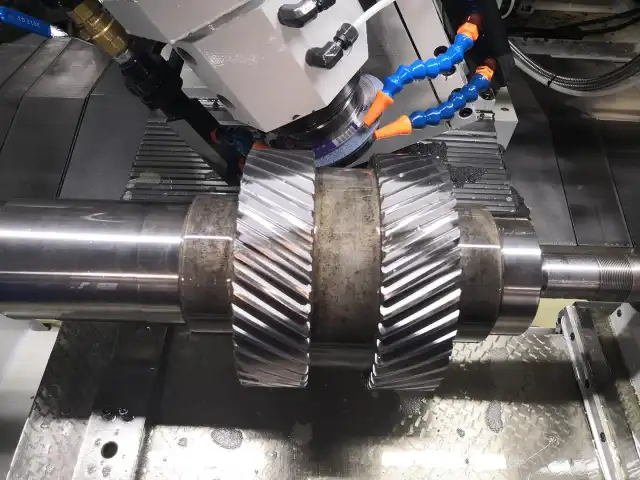
Gear Teeth Grinding has two implications in industry. In fabricating, it is the last accuracy handle where solidified adapt tooth surfaces are ground with vitrified or cubic boron nitride wheels to adjust heat-treatment twisting and accomplish ISO 5-6 precision. In operation, it alludes to destructive wear caused by grinding and mechanical deficiencies beneath stack. This issue commonly shows up in heavy-duty transmissions, transport frameworks, mining reducers, and airplane equip frameworks where gears work beneath tall push and persistent stack conditions.
Recognizing Early Warning Signs
Early detection of Gear Teeth Grinding prevents severe mechanical disappointment. Caution signs incorporate metallic scratching sounds, cadenced clicking connected to revolution speed, and high-pitched crying clamors caused by surface surrenders. Vibration investigation frequently uncovers unusual recurrence designs related to adapt work cycles. Visual assessments may appear scoring marks, grinding discoloration, setting close pitch lines, and metal flotsam and jetsam interior grease supplies. Other side effects incorporate rising working temperatures, higher vitality utilization to keep up speed, and expanded backfire between mating gears, all demonstrating declining transmission effectiveness and developing surface damage.
Root Causes Behind Grinding Problems
Misalignment, lubrication failure, material defects, design errors, and overloading mainly cause Gear Teeth Grinding. Misaligned gears make uneven stack dispersion that stresses tooth edges instep of the full tooth confront. Destitute oil, sullied oil, or inaccurate consistency clears out contact zones unprotected. Fabricating imperfections such as incorporations, uneven hardness, or leftover stretch diminish wear resistance. Erroneous adapt module determination, jumbled weight points, or destitute tip help plan too increment edge stacking. Ceaseless over-burdens, stun loads, and deferred support assessments quicken wear movement and abbreviate gearbox benefit life.
Risks and Effects of Gear Teeth Grinding on Machinery
Cascading Mechanical Damage
Ignoring Gear Teeth Grinding can trigger serious mechanical chain responses. Dynamic wear increments surface unpleasantness, driving to macropitting, weariness splits, and possible tooth break. Falling flat adapt networks produce unusual vibration that spreads through shafts and orientation, causing untimely bearing disappointment and shaft distortion. Misalignment at that point declines over the drivetrain, influencing encompassing components. Over the top vibration and temperature variances moreover harm seals, permitting grease spillage and contaminant section. These combined impacts quickly quicken wear rates and increment the probability of disastrous gearbox disappointment amid operation.
Operational and Financial Consequences
The financial impact of Gear Teeth Grinding extends far beyond replacement parts. Unforeseen downtime disturbs generation plans, particularly in businesses like mining, wind control, and aviation. Crisis repairs essentially increment upkeep costs, whereas deferred mediation can turn minor adapt repairs into total gearbox substitutions costing a few times more. Diminished transmission proficiency regularly powers generation speed decreases to dodge add up to disappointment. In basic businesses, gearbox flaws may indeed lead to armada establishing, months of misplaced efficiency, and major income misfortunes related with delayed hardware shutdowns and repair delays.
Real-World Impact Evidence
Industrial case studies show the serious consequences of delayed Gear Teeth Grinding maintenance. One mining company disregarded transport gearbox wear until disastrous disappointment crushed the gearbox lodging, coupling, and drive shaft, expanding repair costs from $15,000 to $180,000 and causing weeks of downtime. In differentiate, an car parts producer executed schedule vibration checking that recognized early pounding side effects. Arranged upkeep diminished gearbox disappointments by 73% over two a long time and brought down support costs by 41%, illustrating the esteem of prescient observing and preventative repair techniques in mechanical operations.
Prevention and Maintenance Strategies for Gear Teeth Grinding
Lubrication Best Practices
Proper lubrication is one of the most effective ways to prevent Gear Teeth Grinding. Oils must coordinate working conditions, counting temperature, speed, and stack necessities. Engineered oils give superior warm soundness and wear security beneath extraordinary conditions compared to mineral oils. Normal oil examination makes a difference screen consistency changes, oxidation levels, metal molecule defilement, and dampness substance. Programmed oil frameworks keep up steady stream rates and decrease human mistake. High-quality filtration frameworks too anticipate rough particles from entering adapt contact zones and causing quickened three-body wear damage.
Inspection and Monitoring Techniques
Comprehensive inspection methods help detect Gear Teeth Grinding before severe failure occurs. Manual reviews incorporate borescope examination of inner gears, contact design examination, and micrometer estimations to track tooth wear. Progressed checking frameworks ceaselessly analyze gearbox condition amid operation. Accelerometers recognize anomalous vibration frequencies connected to adapt work surrenders, whereas acoustic emanation sensors distinguish ultrasonic break movement. Warm imaging uncovers localized warming caused by grinding. Condition-based upkeep programs utilize this information to plan repairs as it were when quantifiable wear markers surpass secure working limits, progressing effectiveness and decreasing superfluous downtime.
Precision Installation and Alignment
Correct installation greatly affects gearbox life and reduces Gear Teeth Grinding risks. Shafts must remain accurately aligned within strict tolerances using laser alignment equipment instead of traditional dial indicators. Proper bearing preload is equally important because insufficient preload allows shaft movement while excessive preload accelerates bearing wear. Gear material selection also influences durability. Carburized, nitrided, or induction-hardened alloys improve strength and wear resistance under different operating conditions. Design modifications such as tip relief, root relief, and lead crowning help distribute loads evenly across tooth surfaces and minimize localized stress concentrations.
Systematic Maintenance Protocols
Routine maintenance programs are essential for controlling Gear Teeth Grinding and extending gearbox service life. Inspection intervals should match operating severity, with heavily loaded equipment checked more frequently than lightly loaded systems. Cleaning procedures remove sludge, contaminants, and abrasive debris from gear surfaces and housings to prevent accelerated wear. Precision manufacturers such as YIZHI MACHINERY use CNC grinding technology capable of achieving ISO 5-6 precision and surface roughness below Ra 0.4 µm. Accurate manufacturing, proper heat treatment, and optimized gear geometry significantly reduce stress concentrations and long-term grinding problems.
Comparing Gear Grinding Solutions and Technologies
Manufacturing Process Options
Traditional gear grinding relied heavily on manual wheel dressing and operator skill, limiting consistency and production volume. Modern CNC grinding systems greatly improve accuracy and efficiency. Continuous generating grinding uses worm-shaped wheels for high-volume production of helical and spur gears, while profile grinding offers flexibility for large-module or internal gears. Grinding wheel material also affects performance. Vitrified aluminum oxide wheels are economical for standard steels, whereas cubic boron nitride wheels maintain geometry longer and handle hardened materials above 60 HRC more effectively while reducing grinding burn risks.
Evaluating Suppliers and Equipment
Selecting suitable grinding equipment requires balancing machine stability, accuracy, spindle power, and CNC capability with application needs. Heavy cast-iron structures with vibration damping improve precision compared to welded steel frames. Advanced five-axis CNC systems allow complex gear modifications that basic three-axis systems cannot achieve. Supplier evaluation should also consider certifications such as ISO 9001 or AS9100, production capacity, technical support, and industry experience. Total ownership costs include machine lifespan, maintenance requirements, spare part availability, and long-term productivity rather than only initial purchase price considerations.
Sourcing Strategies for Precision Gears
Companies sourcing precision gears often compare custom manufacturing with standard catalog components. Custom gears provide optimized geometry, specialized materials, and exact transmission ratios for unique applications, although lead times are typically longer due to engineering, prototyping, and testing. Standard gears offer faster availability and lower prices but may compromise performance when forced into nonstandard systems. Buyers also evaluate domestic and international suppliers based on cost, production expertise, communication efficiency, and manufacturing capability. International suppliers frequently provide broader precision grinding options and lower production costs for complex gear geometries.
Case Studies and Industry Best Practices
Success Through Proactive Maintenance
A major mining equipment manufacturer implemented vibration monitoring across conveyor drive systems to detect Gear Teeth Grinding at an early stage. Baseline vibration signatures were recorded during installation, and quarterly trend analysis identified abnormal sideband frequencies indicating developing tooth wear. Planned component replacement during scheduled shutdowns prevented in-service failures. Over three years, unexpected downtime decreased by 68%, while maintenance costs per operating hour fell by 34%. The results demonstrated how predictive monitoring programs improve reliability, reduce emergency repairs, and prevent secondary damage to connected drivetrain components.
Technological Innovations Driving Improvements
Modern technologies continue improving Gear Teeth Grinding prevention and detection. Aerospace gear manufacturers now use automated optical inspection systems with laser scanning to verify tooth geometry, profile accuracy, and surface finish. Parts exceeding tolerance limits are rejected before assembly, reducing vibration-related failures. IoT-enabled monitoring systems combine wireless vibration sensors, cloud analytics, and machine learning algorithms to predict failures months in advance. Smart lubrication systems automatically monitor flow rate, temperature, and contamination levels while adjusting lubricant delivery according to operating loads. These innovations enable highly effective condition-based maintenance and lower long-term operating costs.
Conclusion
To solve problems with gear grinding, you need strategies that cover the planning, production, installation, and upkeep steps all at the same time. Learning how to recognize symptoms lets you take action early, before small wear and tear turns into major problems that delay output and hurt your bottom line. Putting in place strong prevention programs, such as proper lubrication methods, structured inspection routines, precise alignment practices, and advanced tracking technologies, greatly increases the service life of gears while lowering the total cost of ownership. The difference between practical grinding, which destroys gears, and precision Gear Teeth Grinding, which creates a very smooth surface, shows how important it is to make sure that the gears are well-made. Companies that use proactive strategies, as shown in industry case studies, regularly get higher uptime, lower repair costs, and more reliable equipment in areas like mining, aerospace, and industrial machines.
FAQ
1. What Lubricant Should I Use for Different Gear Applications?
The working temperature, load strength, and speed all affect the choice of lubricant. Mineral-based ISO VG 220-320 oils with high pressure additives work well in industrial reducers that work below 90°C. For uses above 120°C, manufactured polyalphaolefins or ester-based formulas that keep the viscosity stable are needed. For open gears, sticky compounds that stop rotational throw-off work best, while for sealed precision gearboxes, low-viscosity synthetics that stop churning losses are needed. Talking to lubricant makers about specific working conditions will help you make the best choice for your equipment.
2. How Can I Identify Gear Grinding Problems Early?
Using more than one way of detection gives you more knowledge. During operation, listen for strange sounds. Grinding, clicking, or whining sounds mean that the surface is damaged. During regular checks, use portable testers to keep an eye on vibration levels. Compare readings to baseline measures to find rises that are becoming more common. Check the grease for metal bits that could mean active wear, and look at the temperatures for hotspots that could mean localized friction. Regular borescope checks show the state of the tooth surfaces in between major overhauls. Layered tracking finds problems at different steps of the failure progression.
3. Where Should I Source Reliable Grinding Equipment and Services?
Check out providers based on their technical skills, knowledge in the field, and support systems. Manufacturers who have ISO licenses and other industry-specific credentials show that they care about quality. Check the equipment's specs to make sure it has the right fine grades, can work with the materials you want to use, and can produce enough. Ask for examples from similar projects and, if you can, visit the sites to get a better idea of their manufacturing skills. Think about total support packages that include help with installation, training for operators, repair programs, and access to extra parts for the life of the equipment.
Partner with YIZHI MACHINERY for Expert Precision Gear Solutions
YIZHI MACHINERY has been making specialized machines for 15 years and has a lot of experience in Gear Teeth Grinding for the mining, aerospace, and industrial gear industries around the world. Forging, cutting, hobbing, milling, and precise grinding are just a few of the advanced production steps we can take to make gears. We use world-class CNC tools and automatic grinding machines that can achieve ISO 5-6 grade tolerances. We make unique gears out of high-quality materials like 45# steel, 20CrMnTi, 40CrNiMo, SAE4340, 42CrMo, and AISI4140. Depending on the climate, we can blacken, phosphate, or hard chrome plate the outside of the gears.
As a reliable gear maker and provider, we can work on projects ranging from single prototypes to large-scale production runs. Our 35–60 day delivery times and unique packaging ensure damage-free shipping around the world. Our technical team offers design advice before the sale, reports on production that happen at the same time, thorough quality checks, a one-year guarantee with fast problem resolution, and more. Our full range of services ensures that you get reliable results that meet all of your needs, whether you need double helical gears for heavy-load transmissions, precision internal gears for aerospace uses, or custom solutions for specific needs. Contact us at sales@yizmachinery.com to talk about how our precision grinding services and custom gear solutions can help your equipment work better and be more reliable.
References
1. Dudley, D.W. (1994). Handbook of Practical Gear Design and Manufacture. CRC Press, Boca Raton, Florida.
2. American Gear Manufacturers Association. (2015). AGMA 2015-1-A01: Accuracy Classification System - Tangential Measurements for Cylindrical Gears. Alexandria, Virginia.
3. Stadtfeld, H.J. (2014). Gleason Bevel Gear Technology: Manufacturing, Inspection and Optimization. The Gleason Works, Rochester, New York.
4. International Organization for Standardization. (2013). ISO 1328-1:2013 Cylindrical Gears - ISO System of Flank Tolerance Classification. Geneva, Switzerland.
5. Klocke, F. and Brecher, C. (2016). Gear Grinding: State of the Art and Future Potential. RWTH Aachen University Institute for Machine Tools and Production Engineering, Aachen, Germany.
6. Radzevich, S.P. (2018). Theory of Gearing: Kinematics, Geometry, and Synthesis. CRC Press, Boca Raton, Florida.

USER EVALUATE
Here is the customer's evaluation of us