


Review of Girth Gear and Pinion in Cement Industry
When cement mills run all the time under heavy loads and difficult conditions, the dependability of their drive systems is very important. The Girth Gear and Pinion assembly is the most vital transmission component. It's made to handle colossal control at low rotational speeds, more often than not between 3 and 15 RPM, so pivoting ovens and ball plants can keep turning easily. This survey looks at how these specialized parts illuminate a few of the most critical working issues in cement production, such as warm development in oven shells and shock loads amid pounding forms. It gives acquisition specialists valuable data for choosing what devices to buy.
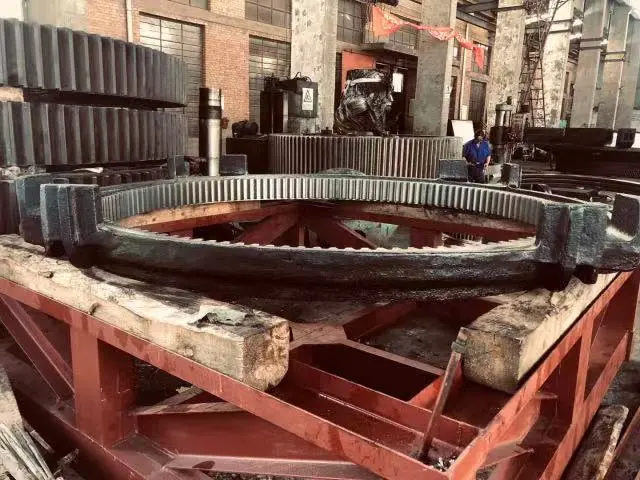
Understanding Girth Gear and Pinion: Design, Function, and Materials
The Fundamental Mechanical Role in Cement Production
Cement plants utilize a circumference equip mounted around the process shell and one or more pinion gears associated with the engine through decrease drives. This course of action changes over high-speed engine yield into low-speed, high-torque revolution required for pounding operations. The framework must handle shell avoidance, warm development, and loads surpassing 100 tons whereas keeping up arrangement. Split-gear plans rearrange the establishment on existing plants, whereas profile adjustments and tooth delegated progress stack conveyance, decrease edge stacking, and amplify the working life of the Girth Gear and Pinion system.
Material Selection and Heat Treatment Standards
Strict metallurgical standards are required to produce durable Girth Gear and Pinion components for cement plants. Materials such as 42CrMo, AISI4140, and 18CrNiMo7 are chosen for their high quality and wear resistance under grating and high-temperature conditions. Warm treatment strategies, including carburizing, extinguishing, treating, and acceptance solidifying, improve surface hardness whereas keeping up center strength. Surface medicines like phosphating and difficult chrome plating increase erosion resistance. Standard hardness contrasts between pinions and size gears guarantee unsurprising wear designs, permitting the littler pinion to retain most operational wear.
Precision Manufacturing and Quality Standards
Reliable execution depends on fabricating exactness that meets ISO 5–6 guidelines. Generation incorporates fashioning, hobbing, machining, pounding, and review forms planned to keep up dimensional accuracy. Hobbing shapes the introductory tooth profile, whereas pounding remedies mutilations caused by warm treatment and moves forward surface wrap up. Weight points of 14.5° or 20° are chosen based on application necessities. Surface hardness by and large ranges from 45–62 HRC. Standard support utilizing high-viscosity greases, visual assessments, and backfire observing makes a difference avoid wear, decrease spontaneous downtime, and keep up long-term process quality in cement generation environments.
Comparing Girth Gear and Pinion with Other Gear Types in Cement Industry Applications
Performance Distinctions in Heavy-Duty Transmission
The Girth Gear and Pinion system is broadly utilized in cement plants since it can withstand overwhelming loads, warm development, and nonstop operation superior than numerous elective equip sorts. Incline gears cannot handle the extraordinary loads required for crushing applications, whereas worm gears endure from moo proficiency and tall warm era. Standard goad gears make over the top vibration and commotion beneath expansive loads. Helical and double-helical plans give smoother tooth engagement, calmer operation, and way better stack conveyance. Different teeth stay locked in at the same time, progressing quality, unwavering quality, and operational security amid requesting process operations.
Selecting Appropriate Specifications for Mill Applications
Selecting the correct gear ratio balances motor speed, mill rotation, and torque requirements. Larger ratio differences may require multiple pinion drives or larger gear diameters. Module selection directly affects tooth strength and load capacity, with cement mills commonly using modules between 16 and 40 for optimal performance. Properly designed Girth Gear and Pinion systems achieve efficiencies of 96–98%, minimizing energy loss during operation. Tooth profile modifications reduce friction and improve contact under thermal expansion, helping lower electricity consumption per ton of material processed in energy-intensive cement production facilities.
Benchmarking Suppliers and Quality Considerations
Procurement groups assess providers based on quality, building back, customization capacity, and long-term unwavering quality or maybe than cost alone. Built up producers such as SKF, Timken, and FLSmidth give demonstrated arrangements and broad field encounter in cement applications. Customization capabilities, counting uncommon materials, adjusted tooth profiles, and non-standard mounting plans, are profitable for one of a kind working conditions. ISO certifications, fabric traceability, and third-party assessment reports confirm fabricating quality. These quality measures offer assistance avoid untimely disappointments, decrease downtime dangers, and ensure cement plants from exorbitant crisis support and generation interruptions.
Procurement Insights: How to Choose and Source Girth Gear and Pinion for Your Cement Mill
Key Selection Criteria for Reliable Suppliers
Selecting reliable suppliers requires evaluating manufacturing quality, technical expertise, and long-term service capability. Suppliers with advanced CNC gear machining, precision grinding systems, and controlled heat treatment facilities are better equipped to produce accurate components consistently. Engineering teams capable of customizing Girth Gear and Pinion designs for specific mounting arrangements or operational conditions add significant value. Lead times generally range from 35 to 60 days, making production planning important. Suppliers that maintain inventory or offer emergency manufacturing support help reduce downtime risks and improve spare parts management strategies.
Market Pricing and Budget Planning
The cost of Girth Gear and Pinion systems reflects costly amalgam materials, warm treatment forms, and accuracy machining prerequisites. Rising steel and vitality costs proceed to influence showcase estimating universally. Obtainment choices ought to center on add up to possession fetched or maybe than buy cost alone since higher-quality components regularly give longer benefit life and lower upkeep costs. Bulk acquiring and standardized substitution arranging can progress estimating effectiveness over different plants. Contract transactions ought to too address conveyance terms, cargo costs, purport obligations, and money dangers that impact the last venture budget.
Best Practices for Order Management and Lifecycle Handling
Successful obtainment starts with precise specialized documentation, counting process estimate, adapt proportion, engine control, working hours, and upkeep history. Sharing nitty gritty drawings, photos, and operational information permits providers to prescribe optimized arrangements or maybe than bland substitutions. Amid generation, customary overhauls on fashioning, machining, warm treatment, and review stages move forward arranging and decrease vulnerability. Long-term lifecycle administration requires keeping up specialized records and building up provider organizations that back hardware operation for 15–20 a long time or more, guaranteeing future substitution accessibility and lower building costs amid afterward obtainment cycles.
Troubleshooting and Optimization for Girth Gear and Pinion in Cement Mills
Diagnosing Common Operational Challenges
Abnormal operating noise often indicates developing problems in Girth Gear and Pinion systems. Grinding or scraping sounds usually result from insufficient lubrication, while clicking noises may indicate damaged teeth or debris inside the mesh area. Uneven wear patterns often reveal alignment or load distribution issues. Cracks, loose bolts, or shell deformation can result from foundation settlement or excessive operational loads. Early inspections using visual checks or borescopes help identify problems before severe failures occur, allowing corrective action during planned maintenance instead of emergency shutdown situations.
Lubrication Selection and Maintenance Protocols
Proper lubrication directly affects gear life and operating reliability. Specialized open gear lubricants for cement mills contain high-pressure additives that maintain protective films under heavy loads and dusty conditions. Automatic spray systems provide more consistent lubrication than manual application methods and reduce maintenance labor. Contamination control is also essential because cement dust mixed with grease creates abrasive compounds that accelerate wear. Regular lubricant sampling and laboratory analysis identify contamination levels, additive depletion, and wear particles, allowing maintenance teams to address developing issues before major failures occur.
Condition Monitoring Technologies and Predictive Maintenance
Modern monitoring systems improve maintenance planning by continuously tracking equipment condition. Vibration sensors identify operational changes linked to developing faults, while temperature monitoring detects lubrication or bearing problems. Acoustic sensors can detect crack formation and lubrication breakdown at early stages. Data analytics and machine learning systems analyze sensor information to predict failures before they occur. These predictive maintenance technologies help plants schedule repairs efficiently, reduce unexpected downtime, extend component life, and improve production reliability while lowering overall maintenance costs in cement mill operations.
Future Trends and Technological Innovations in Girth Gear and Pinion Systems
Advanced Materials and Surface Engineering
Advances in material science are improving the durability and performance of Girth Gear and Pinion systems. Modern alloy steels containing vanadium and niobium offer greater strength, toughness, and fatigue resistance than conventional materials. Surface coating technologies such as titanium nitride and chromium nitride reduce friction, improve wear resistance, and protect tooth surfaces under poor lubrication conditions. Researchers are also exploring ceramic-reinforced materials for high-stress applications. Although still under development, these technologies show strong potential for improving reliability and efficiency in demanding cement mill environments.
Digital Integration and Smart Manufacturing
Digital technologies are transforming mechanical drive systems into intelligent monitoring platforms. Smart sensors installed on Girth Gear and Pinion assemblies continuously send operational data to cloud-based monitoring systems. Equipment manufacturers can remotely analyze performance and provide technical recommendations without on-site inspections. Artificial intelligence improves predictive maintenance by identifying patterns linked to future failures and optimizing repair timing. Digital twin technology creates virtual equipment models for performance simulation, troubleshooting, and maintenance planning, helping engineers improve operational efficiency and reduce risk before physical modifications are implemented.
Sustainability and Energy Efficiency Initiatives
Energy-efficient gear systems support sustainability goals by reducing electricity consumption and lowering carbon emissions in cement production. Improved tooth designs, reduced friction losses, lighter structures, and higher manufacturing precision all contribute to better operating efficiency. Lifecycle assessment methods now evaluate environmental impact from raw material sourcing to final recycling. Suppliers that demonstrate sustainable manufacturing practices and responsible sourcing gain competitive advantages. As renewable energy use increases in cement plants, modern Girth Gear and Pinion systems are also being designed to handle variable power conditions and more flexible operating cycles reliably.
Conclusion
In conclusion, because Girth Gear and Pinions are so important to making cement, they need to be carefully thought out during the planning, buying, and upkeep stages. In tough conditions, these specialized parts have to transfer a lot of power. To do this, they need to be made with high-tech materials, carefully crafted, and regularly serviced. When procurement workers examine suppliers, they shouldn't just look at the initial price. They should also look at how well they can manufacture, how flexible they are with customization, and how well they can support the product throughout its lifecycle. As the cement industry moves toward more eco-friendly and efficient practices, drive system technologies get better by using better materials, incorporating digital technology, and making designs that work better. When buyers understand these technical and business factors, they can make choices that protect working continuity and equipment investments.
FAQ
1. What factors most significantly impact the service life of ring-and-pinion assemblies in cement mills?
The quality of the materials and the accuracy of the heat treatment are what make a part last. Wear rates are affected by how well the stiffness of the gears that fit together, how well the oil keeps the protective films in place under load, and how well the alignment stops edge loading. Longevity is also affected by operational factors like changing the load, being exposed to contamination, and regular upkeep. In normal cement production settings, well-specified parts that are kept in good shape can last for 8 to 12 years.
2. How do customized specifications compare to standard catalog offerings for cement mill applications?
Because cement mills come in different sizes, power capacities, and working conditions, standard parts don't always perfectly match what the mill needs. Custom engineering changes the gear ratio, module, tooth width, and material qualities to work best for a certain purpose. This makes the product last longer and work better. This customized method usually leads to 20–35% longer service life and better operational efficiency compared to standard components that have been modified. The slightly higher starting costs are more than made up for by lower lifecycle costs and downtime.
3. What is the role of a Girth Gear and Pinion in the cement industry?
A Girth Gear and Pinion device is used to send power to big rotating machines like dryers, cement kilns, and ball mills. The pinion turns the girth gear, which makes it possible for big machinery to run easily and keep up steady production.
Partner with YIZHI MACHINERY for Superior Girth Gear Solutions
With 15 years of experience, YIZHI MACHINERY has been making custom gear transmission parts for cement, mining, and industry machines all over the world. Our production plant is ISO-compliant and uses cutting-edge CNC machining centers, precise grinding tools, and a wide range of heat treatment options to make parts that meet the strictest requirements. We make ring gears and pinions from high-quality steels like 42CrMo, AISI4140, and 18CrNiMo7. You can choose the number of teeth, the size of the modules (0.5 to 50), and the surface hardness that meets your needs. As a reputable Girth Gear and Pinion maker, we offer full technical support from the initial design phase through production, quality control, and global shipping with real-time tracking of shipments. Our custom packaging solutions make sure that your packages arrive undamaged, and our flexible shipping choices, such as sea freight, air cargo, and rail connections, make sure that wait times work with your plan. Email our engineering team at sales@yizmachinery.com to talk about your unique needs and get full technical proposals backed by our one-year warranty and quick customer service after the sale.
References
1. American Gear Manufacturers Association (2019). ANSI/AGMA 6014-A06: Gear Power Rating for Cylindrical Shell and Trunnion Supported Equipment. Alexandria, VA: AGMA Publications.
2. International Organization for Standardization (2013). ISO 1328-1:2013 - Cylindrical Gears - ISO System of Flank Tolerance Classification. Geneva: ISO Standards.
3. Dudley, D.W. (2020). Handbook of Practical Gear Design and Manufacture, Third Edition. Boca Raton: CRC Press.
4. Cement Equipment Maintenance Institute (2021). Best Practices for Rotary Kiln and Mill Gear Systems. Technical Report Series, Volume 14.
5. Zhang, H., Liu, M., and Chen, X. (2022). Advanced Heat Treatment Techniques for Large-Module Gears in Heavy Industry. Journal of Materials Engineering and Performance, 31(8), 6234-6247.
6. FLSmidth Engineering (2023). Design Guidelines for Cement Mill Drive Systems: Optimizing Reliability and Efficiency. Copenhagen: FLSmidth Technical Documentation.

USER EVALUATE
Here is the customer's evaluation of us