


How does a kiln gear work?
A Kiln Gear is what makes a rotating kiln move. It turns motor power into controlled spinning force. An electric engine starts the system by turning a reduction gearbox. The power is sent through a hardened pinion gear. This pinion connects to the big ring gear (girth gear) on the kiln shell, which makes it possible to turn at 0.5 to 5 RPM. In constant use, the Kiln Gear has to deal with temperature expansion, radial runout, and abrasive contamination all while keeping the mesh shape exact. In cement, mining, and chemical plants, where even small problems can cause catastrophic downtime that costs over $100,000 an hour, this strong system makes sure that work keeps going.
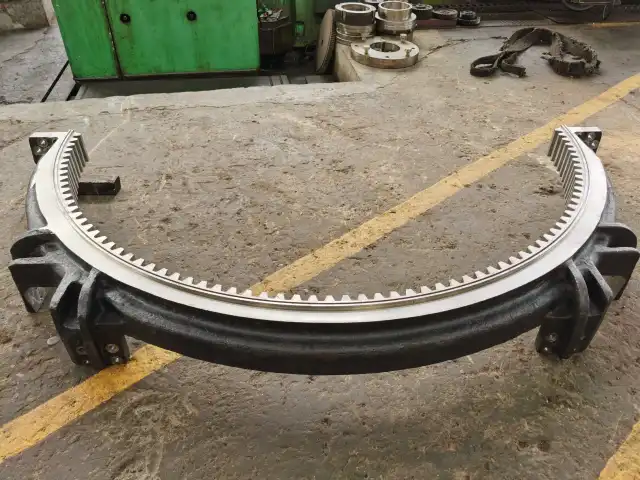
Understanding Kiln Gear – Basics and Functionality
The only thing that keeps rotary kilns producing at a steady rate is their drive systems. The gear assembly is at the center of this transmission chain. Its job is to change the high-speed spinning of the motor into the slow, powerful movement that huge circular vessels weighing hundreds of tons need.
What Is a Kiln Gear and How Does It Function?
A Kiln Gear refers specifically to large-diameter ring gears and the pinion sets that go with them that are designed for open-gear drive uses. However, unlike sealed gears found in most machines, these parts work in harsh environments. The girth gear is attached directly to the spinning kiln shell by plates on springs that can handle changes in temperature. The pinion connects with the ring gear teeth, turning the reducer's output torque—which is often more than 500,000 Nm—into the slow spin that is needed for the material to tumble and for heat to move around inside the kiln.
Key Components and Their Mechanical Roles
By understanding the sections, you can see how each part affects the performance as a whole. The reducer sends power to the pinion shaft, which is usually made of cast metal and has teeth that have been induction-hardened to a surface hardness of 58 to 62 HRC. The difference in hardness covers the 45–50 HRC girth gear, which is bigger and costs more. The ring gear is connected to the shell by spring plate units that let the shell float in both radial and axial directions. This keeps stress from building up as the kiln shell grows during heating cycles. Even though they're not part of the transmission line, kiln wheels support the weight of the shell and change the way the gears are aligned all the time.
Types of Gearing Systems in Rotary Kilns
Different working needs call for different gear combinations. Because they are simple and don't cost as much to make, spur gear types are good for kilns that are less than 3 meters in diameter. For medium-sized cement production lines, single-helical setups work better because they have a smoother contact and can hold more weight. When kilns are bigger than 5 meters in diameter and side loads could damage bearings, double-helical (herringbone) designs are needed because they completely get rid of axial thrust forces. For ring gears, you can choose from cast steel alloys like AISI 4140, and for pinions, you can choose from forged 17CrNiMo6, which strikes a balance between cost and resistance to wear. In chemical processing kilns that are exposed to acidic gases, ceramic coats can sometimes make them less likely to rust.
Kiln Gear vs. Kiln Roller: Performance Impact Comparison
People who work in procurement often get these two different parts mixed up. Rollers support bearings and keep the kiln's axis in place by taking radial and axial loads through the contact between the tire and the roller. Gears are the only parts that can transfer power and control the speed of spinning. When rollers aren't lined up right, they spread the load unevenly across the gear teeth, which speeds up pitting and spalling wear. When foundation movement causes rollers to get flat spots or wobble, the shaking that happens then spreads through the gear mesh, making noise and leading to early fatigue cracks. For quality assurance, both systems must be inspected at the same time, since the state of the rollers directly affects the service life of the gears, even though they have different mechanical functions.
Common Kiln Gear Issues and Maintenance Tips
Kiln Gear common problems and upkeep advice are essential to understand because even the best gearing systems will wear out over time when they are used all the time. Recognizing early warning signs and following proactive maintenance practices can cut down on unexpected breakdowns and repair costs by a huge amount.
Typical Wear Patterns and Failure Modes
Operating conditions determine the type of damage that develops in Kiln Gear systems. Pitting forms as small surface depressions caused by repeated contact stress. Scuffing appears when lubrication films fail under high temperature or overload. Shock loads may crack or break teeth, while dust contamination causes abrasive wear that reduces tooth width. Fretting corrosion also develops at gear-shell connections because of repeated micro-movements during operation.
Root Causes Behind Gear Failures
Several connected factors accelerate Kiln Gear failure. Misalignment between the pinion and ring gear concentrates stress on tooth edges instead of distributing it evenly. Thermal cycling can create shell ovality that changes mesh conditions during rotation. Poor lubrication increases friction and heat, while contaminated grease introduces abrasive particles. Foundation settlement changes kiln geometry and creates unpredictable load spikes. Sudden startup or emergency stops also generate torque loads far above normal operating conditions.
Maintenance Strategies to Extend Service Life
Effective Kiln Gear maintenance combines proper lubrication, regular inspection, and condition monitoring. Automatic spray systems should maintain steady grease flow according to kiln speed. Monthly visual inspections, quarterly tooth-thickness measurements, and semiannual laser alignment checks help detect wear early. Vibration analysis identifies gear mesh faults, bearing damage, or structural resonance. Baseline operating data such as temperature, vibration, and lubricant consumption should also be recorded to support long-term diagnostics and maintenance planning.
Kiln Gear Design Principles and Performance Optimization
Kiln Gear design principles and how to get the best performance involve balancing a lot of different needs: you have to make sure that the systems can handle the most weight while still being strong; the surfaces have to be hard without breaking easily; and the meshes have to be able to handle heat distortion without losing their accuracy.
Fundamental Engineering Considerations
Kiln Gear tooth geometry follows ISO 53 involute standards to ensure smooth velocity transfer and balanced stress distribution. Module size affects bending strength and contact area, with larger modules supporting greater torque but increasing weight and manufacturing complexity. Pressure angles such as 20° improve load capacity while increasing radial forces on bearings. Face width must also accommodate thermal expansion while maintaining stable tooth contact under possible misalignment conditions.
Material Selection and Heat Treatment Impact
Material composition strongly influences Kiln Gear strength and durability. Medium-carbon steels like 42CrMo and SAE4340 provide excellent through-hardening properties, while low-carbon alloys such as AISI8620 support carburized surfaces with tough cores. Heat treatment balances hardness and toughness to reduce cracking risks. Surface treatments improve corrosion resistance and lubricant retention. Precision manufacturing at ISO 5-6 grades also ensures accurate tooth spacing and smooth, reliable gear meshing during operation.
Load Distribution Optimization Techniques
Correct alignment is critical for optimizing Kiln Gear load distribution and reducing edge stress. Proper center distance and axial positioning ensure full tooth-face contact even when shell runout occurs. Spring mounting systems allow controlled radial movement during thermal expansion, while hydraulic adjustment systems support real-time alignment correction. Finite element analysis verifies that contact stresses remain below material endurance limits, and shot peening improves fatigue resistance by adding beneficial compressive surface stress.
Selecting High-Torque vs. Standard Configurations
Kiln Gear configuration selection depends on operating severity and production requirements. Standard designs suit applications with stable loads and moderate utilization, while high-torque versions use larger modules, wider faces, and stronger alloy steels for heavy-duty conditions. Custom manufacturing may be necessary when standard products cannot meet dimensional or performance requirements. However, specialized forging, hobbing, grinding, and machining processes typically increase manufacturing complexity and production lead times.
How to Choose and Procure the Right Kiln Gear
How to pick out and get the right Kiln Gear involves matching technical requirements with practical realities, and performance must be balanced with budget limits. To find the best options, procurement managers have to look at a lot of factors at once.
Material Suitability for Different Operating Environments
Steel alloys are commonly used in Kiln Gear manufacturing because of their strength and wear resistance. Grades such as 40CrNiMo and 18CrNiMo7 perform well in high-temperature cement applications. Cast iron options are suitable for lighter-duty operations where cost is more important than maximum strength. Specialty alloys improve corrosion resistance in chemical environments. Material certification documents are also important for verifying chemical composition and preventing the use of lower-quality substitutes.
Aligning Gear Types to Operational Profiles
Kiln Gear configuration should match production conditions and operating cycles. Continuous cement production often requires durable double-helical gears with reduced maintenance demands. Batch-process operations may use simpler spur gears to lower investment costs. Mining and ore-drying applications require stronger structures and larger safety margins to resist abrasive contamination. Customization of tooth count, module size, and bore dimensions also improves compatibility with existing kiln systems and infrastructure.
Cost-Performance Tradeoffs and Budget Planning
Kiln Gear purchasing decisions should consider lifecycle cost rather than only initial price. Lower-cost gears with looser tolerances often require more maintenance, alignment correction, and replacement, increasing downtime expenses over time. Precision products usually provide longer operating life and more stable performance. Evaluating cost per operating hour offers a more accurate measure of value. Bulk purchasing and phased replacement programs may also reduce procurement and logistics expenses.
Evaluating Supplier Credibility and Support
Supplier capability has a major influence on Kiln Gear project success. Manufacturers with ISO-certified quality systems demonstrate reliable production control and material traceability. Buyers should review references from similar installations and verify operating performance records. Technical support services such as installation guidance, troubleshooting, and engineering consultation also add value. Clear warranty policies, spare-part availability, and emergency response capability are important factors when evaluating long-term supplier reliability and after-sales support.
Installation and Handling Best Practices
Kiln Gear installation and handling best practices ensure that even parts that were perfectly made will break early if they are put incorrectly. Gear systems are guaranteed to last as long as they are supposed to by strict processes and quality verification standards.
Step-by-Step Installation Procedures
Kiln Gear installation begins with cleaning mounting surfaces and checking for corrosion or damage. The girth gear assembly must be positioned carefully so spring plates allow the specified radial and axial movement. Mounting bolts should be tightened evenly using calibrated tools. Pinion assembly installation requires accurate backlash and center-distance adjustment. Laser alignment systems confirm parallel positioning, while manual rotation tests and marking compound checks verify full tooth-face contact across the gear mesh.
Preventing Common Installation Errors
Misalignment is one of the most common Kiln Gear installation problems and often causes rapid edge wear and tooth failure. Incorrect bolt torque may loosen assemblies or crack support plates. Ignoring thermal expansion can lead to binding and severe seizure during heating. Dirt or metal particles trapped during assembly may initiate pitting damage, while unsuitable lubricants weaken protective oil films and increase the risk of scuffing and surface wear during operation.
Post-Installation Verification Testing
Post-installation testing confirms that the Kiln Gear system is ready for operation. No-load rotation tests should gradually increase speed while monitoring noise and bearing temperature. Lubrication spray systems must distribute grease evenly across the tooth width. Controlled load tests should increase operating power step by step while observing vibration and contact temperature. Recording initial operating data creates performance baselines that support future maintenance analysis and early fault detection.
Conclusion
Procurement professionals can make choices that affect production efficiency and upkeep costs by fully understanding how rotary kiln gearing systems work. By understanding the mechanical principles behind torque transfer, spotting wear trends, and putting in place preventative maintenance plans, this information changes buying gear from just buying things to managing assets strategically. Choosing the right materials, following the right heat treatment instructions, and making sure that parts are manufactured precisely all affect how long they last and whether they need to be replaced early or not. Industrial operations can get the reliable performance they need for continuous processing settings where unplanned downtime can cost a lot of money by working with experienced providers who offer full technical support and tried-and-true quality systems.
FAQ
1. How Often Should Kiln Gears Receive Maintenance Inspections?
Kiln Gears should receive visual checks once a week during regular plant tours to look for strange noises, vibrations, or oil leaks. Monthly exams that are very thorough include measuring tooth wear, looking at contact patterns, and making sure the teeth are in the right place. Full evaluations every three months include checking for vibrations, using thermal imaging to find hot spots, and taking samples of grease for testing for contamination. Every year, the plant is shut down for a whole month so that all of the parts can be taken apart, nondestructively tested for cracks below the surface, and old parts can be replaced before they break.
2. What Lubrication Methods Prove Most Effective?
Automatic spray systems that give semi-fluid greases offer better safety than applying them by hand. These days, programmable controls change the spray amount and timing based on the temperature and speed of the kiln. High-performance synthetic greases can work at temperatures above 80°C and still keep their film strength. Important factors include the penetration grade (NLGI 0-00 for spray systems), high pressure chemicals that stop scuffing, and the ability to work with seal materials.
3. When Should You Repair vs. Replace Worn Gears?
When pitting is limited to less than 10% of the tooth area, the procedure can usually go on with more close monitoring. Precision grinding can sometimes be used to dress up areas of spalling and make the features smooth again. Cracked teeth need to be replaced right away because cracks spread quickly when the tooth is loaded and unloaded. When uniform wear goes over 20% of the original tooth thickness, load capacity is lost, which means the teeth need to be replaced. The best choice is made by using economic analysis to compare the costs of fixing to the costs of buying new gear, taking into account the gear's remaining useful life and the risk of it breaking down.
Partner with YIZHI MACHINERY for Reliable Kiln Gear Solutions
If you don't choose the right Kiln Gear provider, your rotary kiln might not work at all or might have to pay a lot for repairs. YIZHI MACHINERY has been making precision gears that meet ISO 5-6 grades for industrial machinery, mining, and aircraft uses for 15 years and can be customized in a wide range of ways. Our high-tech production tools, like high-precision CNC machining centers and automatic grinding systems, can handle complicated specs from module 0.5 to 50, and the surface hardness can be adjusted to meet your needs. We have low minimum order amounts and can even make just one unit, so you can get high-quality parts without having to keep extra inventory. Every Kiln Gear goes through strict heat treatments like carburizing and induction hardening. We also offer a one-year guarantee and quick technical help. Our custom packing and real-time tracking of shipments keep damage rates during transport to less than 0.1%, so your investment will arrive safely in 35 to 60 days. As a reliable Kiln Gear maker, we offer full design advice, real-time production reports, and help with fixing problems after delivery. Contact us at sales@yizmachinery.com to talk about your unique needs and get suggestions that will help you get the best performance and value for your money. You can look through our full product list at yizhimachinery.com and learn how precision-engineered transmission parts improve operational efficiency.
References
1. American Gear Manufacturers Association. (2006). AGMA 6014-A06: Gear Power Rating for Cylindrical Shell and Trunnion Supported Equipment. Alexandria, VA: AGMA Technical Publications.
2. International Organization for Standardization. (2019). ISO 6336: Calculation of Load Capacity of Spur and Helical Gears. Geneva, Switzerland: ISO Standards Catalogue.
3. Neale, M.J. (1995). The Tribology Handbook, Second Edition. Oxford, UK: Butterworth-Heinemann Professional Engineering Publishing.
4. Townsend, D.P. (1991). Dudley's Gear Handbook: The Design, Manufacture, and Application of Gears, Second Edition. New York, NY: McGraw-Hill Professional.
5. Zhang, Y., Liu, H., & Zhu, C. (2018). Failure analysis of large module girth gears for rotary kilns. Engineering Failure Analysis, 93, 350-364.
6. Cement Industry Technical Conference. (2020). Best Practices in Rotary Kiln Drive Systems Maintenance and Reliability. IEEE-IAS/PCA Conference Proceedings, St. Louis, MO.

USER EVALUATE
Here is the customer's evaluation of us