


Master Precision Gear Shafts: The Ultimate Expert Roadmap
To master the selection and use of Precision Gear Shafts, you need to know how to combine high-quality engineering with the needs of operations. A Precision Gear Shaft combines the functions of a moving shaft with gear teeth that are machined to ISO Grade 6 or smaller standards. This eliminates traditional coupling-related gaps and results in gearbox with no backlash. In aircraft actuators, robotic joints, and CNC machine tool spindles, where angular accuracy has a direct effect on product quality, this combined design is the backbone. We will go over design principles, purchase strategies, and maintenance routines in this plan that will help expert decision-makers make the best use of gearbox systems.
Understanding Precision Gear Shafts: Design, Functionality, and Advantages
Core Design Principles and Operational Mechanics
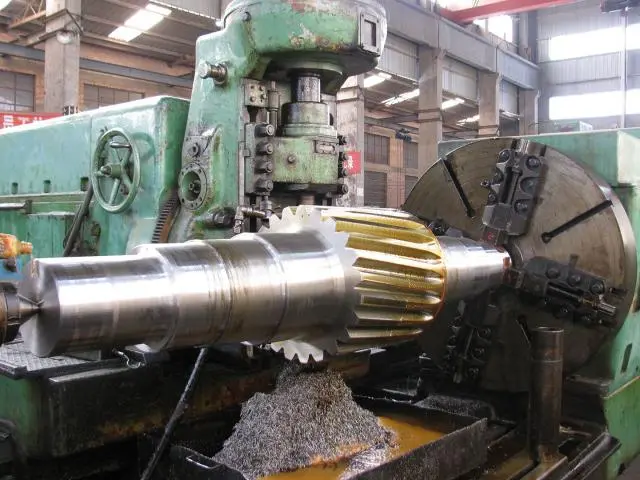
The main thing that makes a Precision Gear Shaft different is that it is made of a single piece that can both handle rotating and mesh power. This monolithic approach gets rid of mechanical play, unlike assemblies that need keyways or shrink fits. The shaft spins on bearing supports while torque is sent through precisely shaped teeth. High stiffness stops bending displacement under radial loads, keeping the tooth contact patterns that are necessary for smooth motion. Material continuity through the gear-shaft contact stops stress concentration spots that happen in pressed systems. This directly addresses the risk of fatigue failure in high-cycle applications.
The limits of performance are set by the manufacturing process. After forging, annealing is used to ease internal pressures. Forging lines up grain flow with stress paths. Before hobbing cuts the tooth shape, CNC turning makes reference surfaces. The microstructure is then changed by heat treatment. For example, carburising spreads carbon into the top layers, making a case that is strengthened (58–62 HRC) over a tough core (28–34 HRC). This dual-hardness profile protects against wear and absorbs shock. Final grinding gets rid of the distortion caused by heat treatment, allowing tooth spacing errors of less than 8 microns. This means that the angular transmission accuracy is within 15 arc-seconds per revolution.
Material Selection Impact on Service Life
How the Precision Gear Shaft reacts to thermal and mechanical stresses depends on the chemistry of the material. Nickel-chromium-molybdenum grades, such as 18CrNiMo7, can be deep hardened for big diameters. This makes sure that the strength of the whole piece is maintained in aircraft gearboxes that work at temperatures ranging from -55°C to 150°C. SAE4340 has the right amount of toughness for uses that are hit hard, like artificial joint reducers that are slowing down quickly. For moderate-duty industrial drives where cost is important, lower-alloy choices like 42CrMo work well. We've seen that matching the right alloy to the right part increases its life by 200–350% compared to choosing any steel, especially in places where temperatures change quickly or where the lubrication is dirty.
Specialised processes make longevity even better. Induction hardening hardens only the sides of teeth, keeping the root areas flexible. This makes the teeth more resistant to bending stress. Nitriding makes surfaces very hard without distorting them, which is useful for projects that need to be maintained regularly. The surface finish is also important. Grinding to Ra 0.4 microns lowers the start of micropitting by lowering the stress at the asperity contact points. These things are put into a technical grid that uses application loads, speed ranges, and weather factors to decide what kind of material to use.
Structural Advantages Driving Industrial Adoption
When compared to separate gear-and-shaft designs, the compact layout cuts the assembly size by 30–40%. Less inventory confusion and easier installation processes come from having fewer parts. Getting rid of coupling elements stops backlash from building up, which is very important for servo systems that need to be able to repeat positions within microns. Transmission efficiency usually ranges from 97 to 98% because the tooth geometry is optimised and the number of bearings is kept to a minimum. Less assembly work is needed when there are fewer parts, which is a big deal in high-mix production settings. Because of these benefits, it is widely used in precision instrument communication systems, which need to be accurate and have limited room.
Precision Gear Shaft Comparison and Selection Guide for B2B Buyers
Technical Performance Versus Standard Alternatives
Standard commercial shafts usually get AGMA Q7–Q8 quality grades, which are fine for general industrial machinery but not good enough for applications that can't handle vibrations or errors in positioning. Noise levels show the difference: precision-ground parts are 8–12 dB quieter at the same speeds because they have less meshing effect. Different types of Precision Gear Shafts can handle 40% more power in the same space because their tooth geometry and case depth are better built. Engineers should look at the Total Cost of Ownership (TCO) instead of the original price when comparing options. Longer replacement cycles and less frequent upkeep often make up for the 25–35% price increase for precision grades.
Worm gear shafts have high reduction ratios in small sizes, but they lose efficiency (usually 50–70% efficiency) and make a lot of heat. They work well for low-duty positioning tasks but not for tasks that need constant power. With helical gear shafts, engagement is smooth, and they can work at higher speeds. Angles between 15° and 35° are good for balancing axial thrust against contact ratio benefits. The selection grid is based on the duty cycle features. For example, spur profiles work best when there is occasional high torque, but helical configurations with balanced axial loads are needed when the motor is running continuously at 3,000 RPM or higher.
Customization Pathways for Application-Specific Needs
Modules ranging from 0.5 to 50 can be used in modern Precision Gear Shaft production, which supports a wide range of applications, from micro-instrument drives to heavy mine gears. Customising the tooth count lets you match ratios exactly, so there is no compromise in the motion chains. Helix angles that can be changed from 5° to 45° let you fine-tune the way the two parts meet. Steeper angles make the engagement smoother, but they need to be able to handle force. Surface hardness requirements vary from 45 to 50 HRC for medium-duty machines to 58 to 62 HRC for rough settings. These can be met by controlling the parameters of the heat treatment process.
Application load analysis is the first step in the customisation process. Under normal use, the engineering teams of suppliers figure out the bending stress, contact pressure, and deflection. Before the Precision Gear Shaft is made, finite element analysis is used to find stress peaks in CAD models. Thermal stability and noise characteristics are confirmed by dynamometer testing of the prototype. This collaborative workflow, which usually takes 5–7 weeks from the time the specifications are locked down to the time the sample is delivered, makes sure that the final part fits perfectly into the customer's assembly. Buyers should work with suppliers early on in the planning process to get manufacturing ideas that improve both performance and ease of production.
Procurement Roadmap: How to Source and Buy Precision Gear Shafts Effectively
Supplier Qualification and Verification Protocols
The challenge for procurement professionals is to look at skills before making a commitment. ISO 9001 certification is a good start for making sure a quality system works, but to really test it, you need to look at heat treatment certifications and metrology calibration records. Laboratories that are CNAS-accredited show that they are putting a lot of money into measurement tracking, which is very important when margins reach a few microns. Ask for material certifications that can be linked to steel mill heat numbers to make sure the chemistry meets the requirements. During visits to suppliers, Precision Gear Shaft grinding tools should be checked out. Machines from reputable brands like Gleason or Klingelnberg should be able to do precise work.
Assessing production ability keeps deliveries from being late. During busy times, it may be hard for a supplier to keep track of more than 200 jobs at once. Find out if precision parts have their own work cells or if they share resources with commercial-grade products. Lead times of 35 to 60 days are based on actual processes that include buying the casting, heat treating it in multiple stages, and precise grinding while inspections are held in-process. Schedules that are too tight often hurt quality by not giving people enough time to relax or by cutting short their adjusting processes.
Navigating Pricing Structures and Order Economics
Quantity, material grade, and complexity all affect the price of a Precision Gear Shaft. Because the metal is more expensive and the heat treatment processes are longer, a 20CrMnTi shaft that has been carburised costs 40–55% more than a 45# steel shaft that has been induction hardened. Module size affects the amount of money spent on tools; for modules over 10, special hobs have setup costs that are spread out over the number of orders. Buyers should make deals that balance the unit price against the cost of keeping inventory. For price advantages and better cash flow management, blanket orders with scheduled releases are a good choice.
Minimum order quantities depend on the business model and capabilities of the manufacturer. Facilities that focus on making a lot of cars might turn down orders for just one piece, but OEM-focused suppliers can meet prototype and small-batch needs. We keep the option to make separate parts when R&D schedules require testing before committing to production. This method works well in fields like aerospace and robotics where design changes are made before large-scale production. Knowing how a supplier runs their business helps make sure that the procurement strategy matches the operational capabilities.
Logistics and After-Sales Considerations
When you use global sources, wait times can change outside of manufacturing windows. Ocean freight takes 18–25 days longer, but it's cheaper for shipping large amounts of goods. Air freight shortens the travel time to three to five days, which is acceptable for urgent replacements or high-value parts where the costs of downtime are higher than the premium rates. China-Europe train service is a good middle ground because it takes 12–16 days and is more reliable than sea lines when it comes to schedules. Damage during transit can be avoided with the right packaging. For example, custom wooden pallets with shock-absorbing liners protect the Precision Gear Shaft surfaces, lowering the damage rate in our logistics operations to less than 0.1%.
Structures of warranties show how confident a seller is. The standard in the industry is one year of coverage against material defects and manufacturing flaws, but scope is important. Find out if premature wear from bad lubrication voids the warranty or if measuring the item at receipt activates the warranty. After the sale, responsive customer service is what sets partnership-oriented suppliers apart from transactional ones. Real-time tracking of shipments and proactive issue resolution turn buying from a battle of wills into a team effort to solve problems. This is especially helpful when problems arise with integrating production lines.
Maintenance and Troubleshooting of Precision Gear Shafts for Long-Term Reliability
Preventive Maintenance Protocols
Managing lubrication is the most important part of Precision Gear Shaft maintenance. Synthetic gear oils with EP additives make hydrodynamic films that separate tooth surfaces. This keeps metal from touching metal, which is what causes micropitting. Oil study every 500 hours finds ferrous waste that shows abnormal wear, so it's possible to fix the problem before it becomes too big to fix. Temperature monitoring shows when lubrication is breaking down—oil temperatures above 90°C speed up oxidation and create varnish deposits that weaken the film. Magnetic holes catch wear particles, which shows how fast things are breaking down between inspections.
Verification of dimensions through regular inspections picks up on Precision Gear Shaft decline trends. Measurements of tooth thickness show wear that happens slowly over time; losses of more than 5% of the original size mean that a replacement needs to be planned. Runout checks with gear markers show that the bearings are wearing out, which shows up as shaft eccentricity. Vibration spectrum analysis finds specific problem frequencies. For example, gear mesh harmonics show that teeth are damaged, and bearing flaw frequencies show that the race is pitted. Setting up standard signatures during installation makes condition-based maintenance possible. Instead of time-based plans, real wear-state estimates that maximise component utilisation are used.
Diagnostic Approaches for Common Failure Modes
Noise increase means that problems are getting worse. Grinding or screeching sounds mean that the Precision Gear Shaft bearings are not properly oiled or are contaminated with abrasive particles. Changing the oil and flushing the system right away will stop the wear from getting worse faster. When the shaft rotates and knocks in a rhythmic way, it means that damage is limited to a few teeth. A borescope inspection shows fractures or spalling. If the temperature goes up without the load going up, it means that the bearings are under- or overloaded, which causes friction losses. Systematic diagnosis starts with comparing patterns of symptoms to the history of the application.
Misalignment is still a common startup mistake. Angular error greater than 0.02° causes edge loading, which concentrates stress and causes Precision Gear Shaft teeth to break. Vibration analysis can pick up on cyclic loading changes caused by parallel offset. Using laser alignment tools during installation stops these problems and makes sure that the load is spread evenly across the whole face width. When wear starts to happen too soon, metallurgical analysis finds out why. For example, a shallow case depth could mean that the heat treatment wasn't done correctly, and underground cracking could mean that the load conditions were too high and exceeded the design limits. This investigative method helps with fixing problems and stopping them from happening again.
Future Trends and Innovations in Precision Gear Shafts
Advanced Materials and Manufacturing Technologies
With additive printing, designers can do things that they couldn't do before. Using selective laser melting to make cooling lines inside Precision Gear Shafts helps handle high-speed heat loads. Topology optimisation lowers mass while keeping stiffness, which is very important for robotic arms that can't move quickly because of inertia. When AM is used to process maraging steels, they become stronger than traditional alloys. However, surface finishing is still needed for precise tooth geometry. New ways of making things include hybrid methods that combine additive manufacturing for complicated shapes with traditional grinding for useful surfaces.
Integrating Industry 4.0 changes how consistent production is. In-process measurement systems check the Precision Gear Shaft dimensions while the machine is working, which lets tool wear be adjusted in real time. Statistical process control programs look at streams of measurement data to figure out when processes are moving toward tolerance limits before they cause errors. Digital twins model practical loads, which speeds up development cycles and makes sure that designs work by testing them virtually. These technologies cut down on the number of prototype changes, speed up time-to-market, and raise first-pass return rates.
Sustainability and Efficiency Developments
In mobile uses, Precision Gear Shaft designs that are lighter use less energy. For example, taking one kilogram off of a robotic joint lowers its movement power and increases its battery life. Diamond-like carbon and other advanced coatings lower friction coefficients, which raises efficiency by 2 to 3 percentage points and saves a lot of energy over the life of the product. Remanufacturing programs take old parts and make them work like new again by regrinding the tooth surfaces and using salvage heat treatments. This costs 60% of the cost of a new part. These circular economy approaches help the economy and are in line with what companies are supposed to do to be environmentally friendly.
Conclusion
To master Precision Gear Shaft technology, you need to find a balance between basic technical knowledge and useful methods for buying parts and keeping them in good shape. The integrated shaft-gear design has measurable benefits in accuracy, compactness, and efficiency, which is why it's important to choose a supplier carefully and make changes based on the application. The right choice of material, the right way to do the heat treatment, and the accuracy of the grinding all affect whether the parts work as planned or break too soon. For procurement to go well, suppliers need to be carefully screened, wait times need to be reasonable, and warranty terms need to be clear. Maintenance plans that focus on managing lubrication and keeping an eye on condition levels keep things running smoothly and extend the life of equipment. As digitalisation and advances in material science make manufacturing technologies better, early adopters gain competitive advantages through better performance and sustainability.
FAQ
1.What tolerances define a true precision gear shaft?
To be called precise, a Precision Gear Shaft usually has to be ISO Grade 6 or higher, which means that the total pitch error is less than 10 microns and the profile deviation is less than 5 microns. These requirements make sure that rotational transmission mistakes stay below 20 arc-seconds, which is very important for CNC machine tool spindles and robotic positioning systems that need to be accurate to the micron level.
2.How does heat treatment affect operational capabilities?
When you carburise a Precision Gear Shaft, you make a hard layer (58–62 HRC) on top of a soft core. This makes the fatigue life 300% longer than with through-hardened parts. The tough core can handle shocks, and the hard case doesn't wear down easily. The quenching and hardening processes need to be carefully managed; if the cooling rates aren't right, the metal will warp and need a lot of grinding to fix.
3.Can existing designs be reverse-engineered for replacement sourcing?
Reverse engineering of a Precision Gear Shaft is done by experienced makers who use coordinate measuring machines to record the shape of the teeth and then use CAD reconstruction to put everything back together. This is helpful when the original suppliers stop making the products or when paperwork is lost. The process adds one to two weeks to normal wait times, but it keeps the supply line going for old equipment.
Partner with YIZHI MACHINERY for Precision Gear Shaft Excellence
YIZHI MACHINERY has been making Precision Gear Shafts for 15 years, and they work with industries like aerospace, robots, and advanced machine tools. Our ISO-certified factory has CNC gear cutting centers and smart heat treatment lines that make sure every part meets strict physical and metallurgical requirements. We can handle both large-scale production and one-of-a-kind prototypes. Our customisation workflows will help you from the initial requirements to the final delivery. Real-time tracking of shipments and full one-year warranties show that we are committed to working with you after the transaction is over. Contact us at sales@yizmachinery.com about what you need for your gearbox system. Our technical advice services help you get the best component specs before production starts, so they can fit perfectly into your assemblies within the 35–60 day production window.
References
1. American Gear Manufacturers Association. (2019). AGMA 2015-1: Accuracy Classification System for Cylindrical Gears. Alexandria: AGMA Publications.
2. Dudley, D.W. (2018). Handbook of Practical Gear Design and Manufacture (3rd ed.). Boca Raton: CRC Press.
3. International Organization for Standardization. (2020). ISO 1328-1: Cylindrical Gears — ISO System of Flank Tolerance Classification. Geneva: ISO Standards.
4. Stadtfeld, H.J. (2021). Advanced Gear Manufacturing and Finishing: Classical and Modern Processes. Rochester: Gleason Works Technical Publications.
5. Yan, H. & Zhang, W. (2022). Influence of Carburizing Parameters on Contact Fatigue Performance of Gear Steels. Journal of Materials Engineering and Performance, 31(4), 2847-2859.
6. Zhou, C., Wang, H. & Liu, G. (2023). Digital Twin Technology in Precision Gear Manufacturing: Implementation and Validation. International Journal of Advanced Manufacturing Technology, 126(7-8), 3312-3328.

USER EVALUATE
Here is the customer's evaluation of us