


Internal Gear Grinding for Planetary Gearboxes: Improving Load Capacity and Stability
Internal Gear Grinding is a revolutionary finishing method that greatly increases the load capacity and operating safety of planetary gearboxes that are used in mining, aerospace, and industrial machines. This precise cutting method fixes distortions caused by heat treatment, gets rid of geometrical errors, and creates surface finishes that are necessary to lower friction and noise while increasing torque transfer efficiency. Internal Gear Grinding fixes tiny profile errors and improves tooth contact patterns, which boosts the performance of planetary gearboxes to levels that can't be reached with traditional manufacturing alone. This directly supports equipment reliability in mission-critical settings.
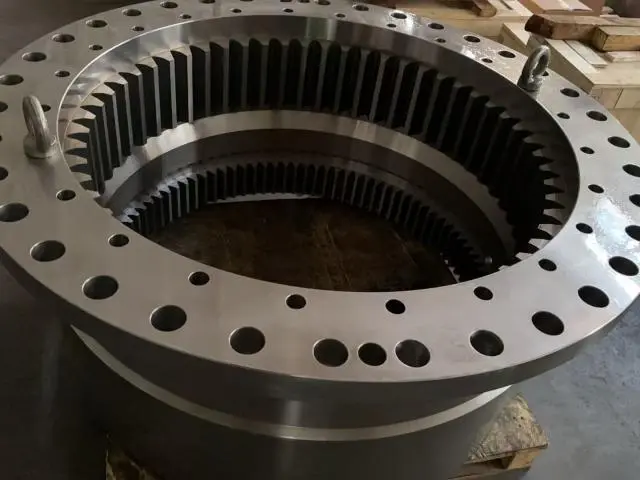
Understanding Internal Gear Grinding and Its Role in Planetary Gearboxes
What Is Internal Gear Grinding?
Internal Gear Grinding is a roughing up method used on gears that have teeth cut into the inside edge, like ring gears inside planetary gearboxes. In contrast to external gear grinding, this method has its own mechanical problems because the teeth are shaped in a curved way and there isn't much room for the grinding wheel to move. The process gets rid of distortions caused by heat treatment like cooling and tempering, carburizing, or induction hardening. It also achieves geometric standards that are often better than ISO quality grade 7-8. We've seen how this accuracy directly fixes problems in the industry, like too much noise in electric car powertrains, uneven load distribution that leads to early breakdowns, and surface wear from bad contact patterns.
The Grinding Process for Planetary Internal Gears
Internal gear grinding uses CBN wheels for hardened steel (58-62 HRC) and corundum for softer metals, removing 0.15-0.30mm per side to fix heat-treatment distortion. High-pressure coolant prevents grinding burns on internal surfaces. Fanuc/Makino CNC systems coordinate multiple axes for tip relief and crowning modifications, ensuring even stress distribution across tooth faces for planetary gearbox applications.
Critical Parameters Affecting Gear Quality
In Internal Gear Grinding, wheel selection affects removal rate and surface quality—CBN improves heat dissipation over conventional abrasives. Surface roughness from internal gear grinding typically reaches Ra 0.2-0.4 µm for hydrodynamic lubrication. Profile deviation (f±), helix deviation (f²), and total runout (Fr) must meet ISO 1328 standards verified by CMMs. Concentricity between pitch circle and reference bore eliminates shaking in epicyclic trains, ensuring stable operation and longer service life for internal gear grinding applications.
Challenges in Internal Gear Grinding and Solutions for Optimal Performance
Common Defects and Root Causes
Grinding burns occur when heat lowers surface hardness below 58-62 HRC, creating early failure points—detectable via nital etch (ISO 14104) or Barkhausen analysis. Chatter marks from vibrations raise planetary gearbox noise by 3-5 dB. Profile inaccuracies stem from dressing errors, insufficient machine stiffness, or thermal growth. Each defect requires specific corrective actions for aerospace actuators, mining gears, and industrial transmissions.
Advanced Technology Solutions
Adaptive control systems monitor grinding forces in real-time, automatically adjusting feed rates to prevent burns. Klingelnberg and Gleason machines feature rigid designs and advanced spindles for internal geometry. Digital twin technology enables virtual testing of wheel specs, feed strategies, and dressing parameters—reducing trial-and-error and accelerating custom planetary gearbox project time-to-market through integrated software modeling.
Real-World Case Study
A mining equipment company faced ring gear failures at 60% of expected service life due to grinding burns. Process changes—CBN wheels, 80-bar coolant pressure, and simulation-optimized feed rates—delivered consistent hardness, Ra 0.3 µm finish, and profile variations within 8 µm. Field testing confirmed 40% longer component life, proving grinding quality directly impacts load capacity and durability.
Comparing Internal Gear Grinding with Other Gear Manufacturing Methods
Precision and Surface Quality Comparison
Hobbing/shaping achieve ISO 10-11 grades—insufficient for low-backlash or quiet operation. Grinding corrects profile errors to Ra 0.6-0.8 µm. Honing cannot fix heat-treatment distortion or complex micro-geometry. Shaving cannot process hardened materials (45-50 HRC or 58-62 HRC). Lapping provides Ra<0.2 µm finish but cannot correct geometric errors. Only Internal Gear Grinding combines distortion correction, precision tolerances, and surface improvement simultaneously.
Cost and Efficiency Considerations
Grinding requires significant investment in machines handling modules 0.5-50 and helix angles 5°-45°, plus skilled operators, expensive CBN wheels, and longer cycle times. However, lifecycle costs favor grinding for medium-to-high-end uses—eliminating early failures and warranty claims offsets initial expenses. Large volumes justify dedicated in-house capacity; small runs or prototypes suit specialized service providers.
Application-Based Decision Criteria
Industrial planetary reducers can use hobbing/honing combinations. Mining gears require grinding for superior surface finish and load capacity under shock loads. Aerospace demands zero defects with full traceability—grinding is mandatory. Decision models consider load cycles, torque needs, noise limits, and service environment severity to help procurement professionals select cost-effective manufacturing approaches for planetary gearbox projects.
Procurement Considerations and In-House vs. Outsourcing for Internal Gear Grinding
Procurement Considerations
Equipment prices range from $200,000-$400,000 for manual small-batch units to over $2 million for fully automated lights-out systems. Supplier reliability is critical—machines last 15-25 years, requiring stable manufacturers, available spare parts, and responsive support. We maintain relationships with suppliers offering thorough training programs. After-sales support includes preventive maintenance, emergency repair, and process improvement advice. Leading providers offer online diagnostics. Warranties typically cover 12-24 months on mechanical parts and control systems.
In-House Capability vs. Outsourcing
In-house Internal Gear Grinding offers maximum quality control, lead time management, and process understanding—ideal for companies where internal gear grinding provides competitive advantage. Outsourcing avoids capital expenditure, focuses resources on core activities, and provides expertise that takes years to build in internal gear grinding. Our services accommodate both models: finished ground internal gears or contract grinding of customer-provided blanks, offering flexibility to meet changing business needs and production requirements for internal gear grinding applications.
Optimizing Internal Gear Grinding for Enhanced Planetary Gearbox Performance
Identifying Process Bottlenecks
Even grinding operations that have been around for a long time run into problems that slow them down or lower the quality of their work. Wheel cleaning frequency is often a bottleneck that takes up 15 to 25 percent of the machine's time. By keeping an eye on grinding forces and surface finish trends and adjusting cleaning intervals as needed, predictive monitoring can make grinding last longer without lowering the quality of the work.
Another common limitation is having to change the setup between different types of gear. When making a custom planetary gearbox, modules ranging from 0.5 to 50 are common. This means that fastener changes, wheel selection, and program changes are often needed. Using standard program files and quick-change tooling systems cuts the time it takes to change tools from hours to minutes, making the equipment much more useful overall.
In high-mix settings, moving materials can be hard. Internal gears can be as small as a few kilograms for aircraft actuator parts or as big as several tons for mining equipment rings. Automated filling systems that are made to fit your size range get rid of the risks of human handling and allow unmanned operation during off-shifts, which makes huge use of capacity.
Continuous Improvement Strategies
Manufacturing excellence in gear grinding stems from systematic process refinement guided by objective data. Here are proven strategies that enhance both productivity and quality:
- Precision Tool Management: Using RFID to track grinding wheels makes sure that the right wheel is chosen, that the history of use is kept track of, and that wheels are replaced when they need to be before they start to lose their quality. This methodical approach keeps expensive scrap from coming from old tools and keeps costs for consumables as low as possible.
- Lean Manufacturing Principles: Value stream mapping finds tasks in the grinding process that don't add value. Cutting down on unnecessary checks, combining the flow of materials, and streamlining paperwork can cut cycle times by 20 to 35 percent without lowering the level of quality assurance.
- Automation Integration: Cellular production settings with grinding machines that are always running are made possible by robotic loading systems, automatic measurement stations, and the integration of conveyors. When there is a lot of business, these efforts pay off because they lower the cost per unit and make things more consistent.
- Statistical Process Control: Checking important factors like grinding force, wheel speed, and coolant temperature in real time lets you find process drift early. Control charts show patterns before they lead to parts that don't meet specifications. This keeps the tight limits needed for planetary gearbox performance and stops waste.
- Cross-Functional Collaboration: Including design engineers during the quote step helps find changes that are easier to make. Changing things like helix angles between 5° and 45° or standardizing modules when possible can make things simpler without losing functionality.
Emerging Technologies and Trends
Through smart manufacturing environments that are linked, Industry 4.0 digitalization promises to change Internal Gear Grinding in a big way. Machines with sensors create huge files that record every step of the grinding process. Advanced analytics get useful information, like figuring out what care is needed before something breaks and instantly finding the best settings based on changes in the material.
The digital twin technology makes virtual copies of actual grinding activities. This lets simulation-based process development happen, which cuts down on the need for lots of trial-and-error testing. Engineers can virtually try out different tactics and choose the best ones before committing production resources to them. This feature speeds up the release of new products while lowering the risk.
Additive manufacturing is changing how gears are made, especially for prototypes and low-volume uses. For final accuracy, internal gears still need to be machined and ground in the traditional way, but 3D-printed blocks can cut down on waste and lead times for complicated shapes. Combining additive rough forms with traditional finishing methods is a new area of research that we are currently studying.
Artificial intelligence and machine learning algorithms look at old grinding data to find small trends that affect quality. These systems suggest changes to parameters that human users might miss, making processes better and better until they reach their theoretical performance limits. As these technologies improve, they will be used as common tools in advanced factory settings.
Conclusion
Internal Gear Grinding is the best way to finish planetary gearboxes that need to be able to handle a lot of weight and work reliably in mining, aircraft, and industrial machines. This precise method fixes flaws caused by heat treatment, produces a better surface finish, and makes complex micro-geometry changes that aren't possible with other methods. Implementing this technology requires a lot of money and specialized knowledge, but the performance benefits—longer service life, less noise, and higher reliability—make it worth it for mid- to high-end applications where component failure has big effects. As digital technologies keep improving cutting skills, companies that adopt these new ideas will stay ahead of the competition in global markets that are becoming more demanding.
FAQ
1. Why is internal gear grinding more expensive than external grinding?
For the process to work, the machine needs to have special mechanics that can work with its limited internal geometry. Smaller grinding wheels have to fit inside the gear while staying rigid so that it doesn't bend. Getting coolant to the right place is hard because of interference, and wheel dressing processes are harder because the teeth aren't flat. Because of these complex requirements, equipment costs more and run times are longer.
2. Can grinding correct significant heat treatment distortion?
The ability to fix distortion relies on how much stock space is left over after heat treatment. Usually, we need 0.15mm to 0.30mm per side to get rid of warping without lowering the case hardening depth. The right blank design takes into account the expected patterns of distortion, making sure that there is enough material left for the final grinding while keeping the goal case depth between 0.8 and 1.2 mm.
3. How does grinding affect planetary gearbox noise levels?
It has been found that grinding is the best way to reduce noise in precise gears. Fixing pitch errors and profile waviness lowers the triggering of transmission errors, which can lower operational noise by 3 to 5 decibels. This change is very important for electric vehicles because noise from the drivetrain has a direct effect on how good something sounds.
Partner With YIZHI MACHINERY for Superior Internal Gear Grinding Solutions
To improve the quality of your planetary gearbox making, you need a provider that can offer both advanced processing and reliable execution. With 15 years of production experience and quality systems that are in line with ISO standards, YIZHI MACHINERY specializes in precise Internal Gear Grinding for use in mining, aircraft, and industrial machinery. Our full service includes figuring out what you need by looking at design drawings, making the parts using cutting-edge CNC grinding machines, checking the quality to ISO 7-8 Grade standards, and making sure they get to you safely around the world in custom-made packaging that keeps damage to less than 0.1%.
We can work with modules ranging from 0.5 to 50, helix angles of 5° to 45°, and surface hardness requirements of 58–62 HRC for a wide range of materials, such as 20CrMnTi, SAE4340, and AISI4140. Custom manufacturing can take orders for just one item, which is useful for making prototypes and producing small amounts of goods. Our shipping guarantees of 35 to 60 days, along with real-time shipment tracking, make sure that you can still finish your job on time. As a provider with a lot of experience in Internal Gear Grinding, we don't just sell parts; we also build relationships based on our technical knowledge and high-quality manufacturing.
Contact us at sales@yizmachinery.com to discuss your planetary gearbox requirements. We'll provide technical consultation, design support, and competitive quotations tailored to your specific load capacity and stability objectives. Discover why leading mechanical engineering enterprises trust YIZHI MACHINERY for their most demanding gear transmission challenges.
References
1. Klocke, F., & Gorgels, C. (2018). Gear Grinding Technology: State of the Art and Future Developments. CIRP Annals - Manufacturing Technology, 67(2), 735-758.
2. Stadtfeld, H. J. (2020). Advanced Gear Manufacturing and Finishing: Classical and Modern Processes. American Gear Manufacturers Association Technical Publications.
3. Brecher, C., Brumm, M., & Henser, J. (2017). Influence of Grinding Parameters on Surface Integrity in Internal Gear Grinding. Production Engineering Research and Development, 11(4), 489-497.
4. Rowe, W. B. (2019). Principles of Modern Grinding Technology (3rd Edition). Academic Press Engineering Tribology Series.
5. ISO 1328-1:2013. Cylindrical Gears - ISO System of Flank Tolerance Classification - Part 1: Definitions and Allowable Values of Deviations Relevant to Flanks of Gear Teeth. International Organization for Standardization.
6. Dudley, D. W., & Poritsky, H. (2021). Handbook of Practical Gear Design and Manufacture (Revised Edition). CRC Press Mechanical Engineering Series.

USER EVALUATE
Here is the customer's evaluation of us