


How to Find a Reliable Internal Gear Grinding Manufacturer for Industrial Applications
Finding the right partner for making accurate gears can make a huge difference in the quality of your work. When looking for planetary reducers, mining winches, or aircraft actuators internal gears, it is very important to choose a company with a history of grinding. Internal Gear Grinding is the last and most accurate step in the finishing process. It fixes any distortions caused by heat treatment and makes sure that the tolerances meet ISO 7-8 Grade standards. This process has a direct effect on the service life, noise performance, and load capacity in harsh settings. Working with a maker that has cutting-edge CNC equipment, metallurgical knowledge, and quick technical help will make sure that your transmission systems work well no matter what conditions are present.
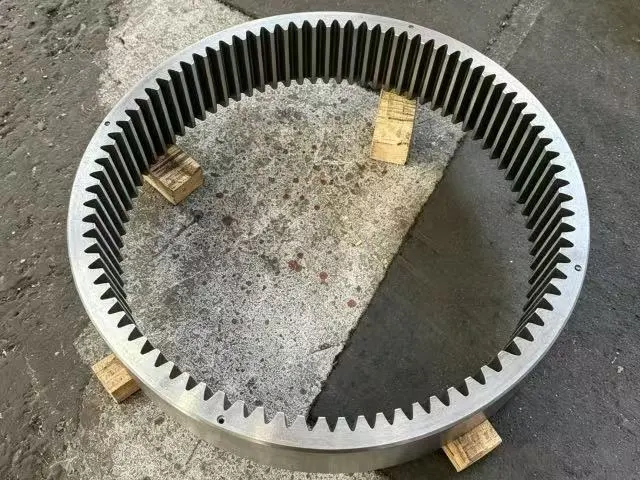
Understanding Internal Gear Grinding and Its Industrial Significance
What Defines Internal Gear Grinding?
Internal Gear Grinding is a special way to finish off gears that have teeth cut into the inside circle. These are called ring gears. Unlike external gear grinding, this method has its own mechanical problems because the teeth are shaped in a curved way and there isn't much room for the grinding wheels to move. The main job is to get rid of flaws that come from induction hardening, quenching and tempering, or carburizing, while maintaining geometrical limits that usually go beyond DIN quality class 5. This method fixes important problems like high-frequency noise in electric car powertrains, uneven load distribution in planetary stages, and surface wear from bad contact patterns that happen too soon.
Key Process Parameters and Machinery
To do Internal Gear Grinding well, you need to be able to precisely control the speed, feed rate, and amount of cut. Surface roughness between Ra 0.2 and 0.4 µm is achieved by modern CNC gear grinding centers using CBN (Cubic Boron Nitride) wheels. This is necessary to keep hydraulic lubrication films in place when heavy loads are applied. These tools can work with modules ranging from 0.5 to 50 and helix angles ranging from 5° to 45°. They can also handle modules with custom tooth numbers for different uses. High-pressure coolant nozzles lower the risk of grinding burns inside the ring shape, and automatic dressing processes make sure that the wheel profiles stay the same from one production run to the next.
Industrial Benefits Across Critical Sectors
Internal Gear Grinding has benefits that can be used in mining, aerospace, and industry gear. The gearbox is more stable with planetary gear reducers, and their structures are smaller. Mining tools that work in difficult conditions need to be able to hold a lot of weight. This can only be done by grinding materials like 20CrMnTi and 42CrMo very precisely. For aerospace actuators to work properly and accurately place themselves, the surface must be as hard as 58 to 62 HRC after grinding. By improving surface quality and accuracy, machine tool feed mechanisms and lifting equipment transfer systems can go longer between service visits and cost less to maintain.
Criteria for Choosing a Reliable Internal Gear Grinding Manufacturer
Defining Your Technical Requirements
Make a list of your operational needs before you look at possible makers. Think about the level of accuracy you need for your application and whether ISO 7-8 Grade is enough or if you need stricter requirements. The amount of work that needs to be done affects the choice of machinery. Large projects that need to be done quickly and accurately require fully automated CNC systems, while small jobs or prototypes may be better served by traditional grinding methods. Because of things like profile changes, topping, and tip relief that make gears more complicated, makers need to be able to program them in complex ways and have application engineers with a lot of experience who know how to distribute load when the system bends.
Evaluating Manufacturing Capabilities
Here are the main things that set top-tier makers apart:
1. Advanced CNC Machinery: Gear manufacturers should have fully automatic machines with multi-axis control that can handle the module range and tooth combinations you specify. Equipment from well-known brands makes sure that the process is stable and can be repeated.
2. Tight Tolerance Adherence: Check that the manufacturer regularly meets your specs for profile deviation (fα), helix deviation (fβ), and total runout (Fr). This should be shown in CMM inspection results that are in line with ISO 1328 standards.
3. Tooling Adaptability: Being able to fit special grinding wheels and cleaning tools shows that you have a lot of technical knowledge. When manufacturers work with different wheel materials like corundum, CBN, and diamond, they can find the best ways to use SAE4340, AISI4140, or 18CrNiMo7.
4. Heat Treatment Integration: Companies that offer combined heat treatment services (like carburizing and induction hardening) make sure that the right stock adjustments are made before grinding, which are usually 0.15mm to 0.30mm per flank. This keeps case depth from being compromised.
These skills work together to show if a maker can provide uniform quality throughout the entire production process. With 15 years of experience and ISO-compliant methods, manufacturers like YIZHI MACHINERY have the technical maturity needed to make mid- to high-end internal gears. Their wide range of high-precision CNC gear machining centers and automated Internal Gear Grinding tools cover all important steps of the process, from cutting and hobbing to finishing grinding.
Certifications and Industry Reputation
Quality approvals give industrial standards an objective seal of approval. Getting ISO 9001 certification shows that you are dedicated to quality management systems, and getting industry-specific certifications like CE marking shows that you meet safety and performance standards. Look at case studies and customer reviews from businesses in the same line of work as you. Long-term relationships with well-known mechanical engineering companies suggest that the company has done well in tough situations in the past. Manufacturers that work with the mining, aircraft, and industrial machinery industries have to meet very strict quality standards that smaller providers can't always satisfy.
After-Sales Support and Supply Chain Reliability
Strong help after the sale is what sets strategic partners apart from transactional providers. Check to see if the makers offer expert support during the design process. This could help you get the best tooth geometry for the way your machine is loaded. Synced progress reports and real-time tracking tools make production more open and reduce uncertainty during important projects. Warranty terms (at least one year is recommended) and quick response procedures for fixing problems show that you trust the quality of the product. Customized packing with shock-absorbing liners and wooden boxes lowers the rate of damage during travel to less than 0.1%. Flexible logistics choices include sea freight, air freight, and rail to meet your delivery deadlines.
Comparison and Evaluation of Manufacturing Solutions
Benchmarking Against Alternative Finishing Methods
Knowing how Internal Gear Grinding stacks up against other ways makes it clear when this method is the best value. Hobbing and shape are ways to make gear teeth, but they don't give you the accuracy you need after heat treatment. Gear honing makes the surface finish better, but it can't fix major mistakes or distortions in the shape. Shaving with a gear only works on soft materials before they harden. Internal Gear Grinding is the only way to get hardened ring gears to DIN quality class 5 or higher. This is done by fixing pitch errors and profile waviness, which have a direct effect on noise levels and transmission error excitement.
CNC Versus Conventional Grinding Systems
CNC grinding machines let you set the parameters that control the grinding process, which lets you make complex changes to the micro-geometry and make sure that each output batch is the same. When making a lot of parts, this kind of manufacturing works well because the setup time is spread out over a lot of parts. Conventional grinding machines can be adjusted by hand, but they need skilled workers. They are good for making prototypes and small amounts of special work. This choice should be based on the size and complexity of the products you need to make. Manufacturers who have both of these skills can adapt their processes to meet your changing needs.
Comprehensive Cost Evaluation
The total cost of ownership is more than just the price of the car. You might want to spend some money on machines and tools at the start, like grinding wheels, dressing tools, and fittings. Operational costs include how much power is used, how much water is managed, and how fast the wheels are used up. Maintenance plans and planned breaks affect how much of a factory's capacity is used. Manufacturers that offer predictive repair programs and training for operators keep unexpected outages to a minimum. Delivery speed also affects project timelines. Manufacturers that can achieve 35–60 day lead times through organized processes (discussion of requirements, design sketches, production machining, quality checking, packing, and transportation) have a competitive edge in markets that need things quickly.
How to Validate and Verify Manufacturers Before Purchase?
Conducting Effective Factory Audits
Factory checks, whether they are done in person or online, show more than just what is advertised about how the business works. Check the accuracy of the cutting by looking at the quality control methods used. For example, do they use coordinate measure machines for regular checks, or do they use less strict methods? The way they handle grinding wheel cleaning cycles and coolant control shows that their process is consistent. When production lines are well-organized and preventative repair plans are easy to see, it means that operations are disciplined, which leads to predictable delivery performance.
Requesting and Testing Sample Parts
Sample parts that are tried in the real world show that the production process is possible. Ask for samples that are made of the material you want, whether it's 45# steel, 40CrNiMo, or AISI8620, and that meet your heat treatment needs. To find grinding burn, which lowers surface hardness and speeds up fatigue failure, use Nital Etch tests or Barkhausen Noise Analysis. Check the Ra and Rz numbers to see if the surface finish claims are true. Load samples in the real setting where they will be used to test for noise levels, shaking patterns, and how smoothly they work. Manufacturers who are sure of their processes welcome this kind of review.
Reviewing Case Studies and References
Detailed case studies for Internal Gear Grinding demonstrate solutions to problems similar to yours. Look for cases addressing similar Internal Gear Grinding specifications, production volumes, and industry applications. Peer validation comes from references in mining, aerospace, or industrial machinery sectors using Internal Gear Grinding. Contact these references directly to assess on-time delivery performance, technical question response speed, and how the manufacturer handled issues during production ramp-up or specification changes for Internal Gear Grinding.
Assessing Technical Support Responsiveness
Check to see how quickly and completely possible makers answer technical questions. Send in specifics and keep track of the quality of the response—do they ask clarifying questions that show they understand, or do they give general answers? Manufacturers with experienced application engineers will find problems early on and offer design changes that make it easier to make the product without lowering its performance. This helpful method shows that the relationship is more like a partnership than a transactional one.
Maintaining and Troubleshooting Internal Gear Grinding Equipment
Recommended Maintenance Practices
To get the most out of your tools, you need to follow strict repair procedures. Grinding tools need to be calibrated on a regular basis to make sure that the dimensions stay accurate even as parts wear down naturally. Grinding wheel cleaning processes keep the geometry of the wheel in good shape, which directly affects the surface finish and stops grinding burn. Unplanned downtime is less likely to happen when lubrication systems, coolant filtering, and shaft bearings are checked and maintained regularly. Companies that offer programs for continuous improvement can help you make the best use of these plans based on how you make things and how much they wear out.
Addressing Common Grinding Defects
Most grinding flaws are caused by worn tools or wrong parameter choices. Tool wear shows up as a rough surface finish or bigger differences in the shape. If the settings are wrong, it could lead to grinding burn, which can be found through metallurgical tests or eye inspection. Manufacturers who offer full technical help can remotely figure out what's wrong by analyzing production data and suggesting changes to parameters or wheel cleaning. Help with fixing cuts down on methods that involve trying things out and seeing what works and what doesn't.
Long-Term Collaboration Benefits
The best ties in manufacturing go beyond one-time deals and turn into long-term agreements. Leading makers have training programs for operators that help build internal knowledge. This makes the company less dependent on outside help and improves understanding of the process. As production numbers change or new uses arise, proactive help includes reviewing the process on a regular basis to find ways to make it more efficient. These working relationships directly lead to improved gear quality and long-lasting production efficiency, giving you a competitive edge that lasts the entire lifecycle of your product.
Conclusion
To find a trustworthy company for precision Internal Gear Grinding, you need to carefully look at their technical skills, quality systems, and prospects for forming a relationship. The Internal Gear Grinding process itself needs special tools, understanding of metals, and process discipline, which sets good manufacturers apart from those who just give basic services. Procurement professionals can be sure they are working with reliable Internal Gear Grinding partners who can meet the needs of demanding uses in the mining, aircraft, and industrial machinery sectors by carefully checking equipment capabilities, certifications, sample parts, and support infrastructure. Spending time and money to carefully evaluate Internal Gear Grinding suppliers pays off in the long run by lowering guarantee claims, increasing component life, and improving the performance of the final product.
FAQ
1. Why does Internal Gear Grinding cost more than external grinding?
Because the spindles have to fit inside the gear shape, Internal Gear Grinding needs special machine mechanics and smaller grinding wheels. When cutting, stiffer quills keep the blade from bending, but cleaning cycles get more complicated because of the interference curves that come with concave tooth profiles. Because of these technology problems, the costs of tools and setting are higher.
2. Can grinding correct heat treatment distortion effectively?
When there is still enough stock space, grinding can fix a lot of heat treatment damage. Before heat treatment, manufacturers usually need 0.15mm to 0.30mm of stock per side to fix any distortions without affecting the case hardening depth. This keeps the surface consistency that is important for load-bearing uses.
3. How does this process reduce gearbox noise levels?
When it comes to planetary gears, Internal Gear Grinding is the most efficient way to cut down on noise. The process fixes pitch errors and profile waviness, which reduces transmission error excitation and often lowers gearbox noise by 3 to 5 decibels or more. This is especially important for electric car uses where gear whine can be heard without internal combustion engine masking.
Partner with YIZHI MACHINERY for Your Precision Grinding Needs
In addition to 15 years of manufacturing experience and full expert services, YIZHI MACHINERY specializes in making unique internal gears as an Internal Gear Grinding supplier. Our methods are in line with ISO standards, and they allow us to grind with great accuracy 42CrMo, AISI4140, and 20CrNiMo, with ISO 7-8 Grade tolerances across modules from 0.5 to 50. We offer open customization options and low minimum order amounts, so we can even make just one item. Our products are used in industrial tools, mining, and aerospace. Our full-service transportation, which includes custom packing and real-time tracking, makes sure that your parts get to you without any damage within 35 to 60 days. Get in touch with us at sales@yizmachinery.com to talk about your needs with application engineers who have worked with planetary gear reducers, winches, and precision transmission systems before.
References
1. American Gear Manufacturers Association. (2020). Precision Gear Grinding: Standards and Best Practices for Industrial Applications. Alexandria: AGMA Technical Publications.
2. Davis, J.R. (2018). Gear Materials, Properties, and Manufacture. Materials Park: ASM International.
3. Klocke, F., & Gorgels, C. (2019). Manufacturing Processes for Precision Gears: Grinding, Honing, and Finishing Technologies. Berlin: Springer-Verlag.
4. Radzevich, S.P. (2021). Theory of Gearing: Kinematics, Geometry, and Synthesis. Boca Raton: CRC Press.
5. Society of Manufacturing Engineers. (2019). Advanced Gear Manufacturing and Quality Control Methods. Dearborn: SME Press.
6. Townsend, D.P., & Dudley, D.W. (2022). Dudley's Handbook of Practical Gear Design and Manufacture. Boca Raton: CRC Press.

USER EVALUATE
Here is the customer's evaluation of us