


Industrial Bevel Gears in Mechanical Power Systems Explained
Industrial Bevel Gears are special kinds of mechanical transmission parts that are made to change the direction of spinning motion and force between shaft axes that cross each other. These precisely made gears have conical pitch surfaces that move power efficiently, usually at 90-degree angles. However, the shaft shapes can be changed to meet different engineering needs. When used in harsh industrial settings like mining, aerospace, and heavy machinery, these transmission elements solve important problems like making it possible to fit a lot of them into a small space, keeping transmission efficiency above 95%, and ensuring reliable performance under the heavy axial and radial loads that are common in modern mechanical power systems.
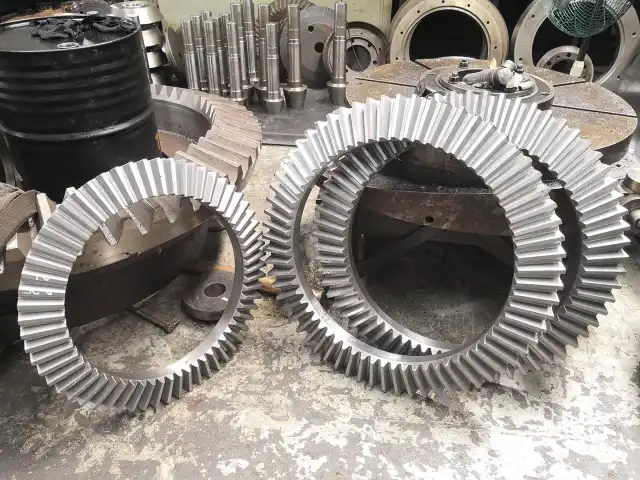
Understanding Industrial Bevel Gears: Basics and Key Concepts
What Defines Industrial Bevel Gears?
At their core, Industrial Bevel Gears change the direction of rotation in mechanical power transfer systems. In contrast to parallel-shaft spur or helical gears, these parts have teeth cut into cylindrical surfaces, which lets shafts that are at different angles work well together. This basic design solves an ongoing engineering problem: how to effectively change the flow of power without affecting torque delivery or adding too many mechanical losses. The shape of the conical tooth forms contact patterns that spread loads across the tooth face. This increases the tooth's ability to hold loads while reducing stress spots that could cause it to break early.
Primary Types and Their Distinctive Characteristics
Straight Bevel Gears: Cheapest. Teeth taper straight to the tip. Easy to make, they may be used at low speeds and with less noise. Their use in high-speed or precision applications requiring minimal vibration is limited by impact loading from fast tooth contact.
Better-linking spiral bevel gears have Gleason-cut, longer, curved teeth. Slow tooth contact lowers shock and noise, enabling speeds beyond 3,000 RPM. High-tech grinding and heat treatment are needed to produce 58–62 HRC surface hardness and core toughness in these gears. This combination lets spiral designs handle far higher power loads than straight ones.
Hypoid bevel gears pack well with offset shaft axes. Offset designs improve load distribution and enable bigger reduction ratios in fewer locations by increasing contact ratios. Room-constrained design situations benefit greatly from them.
When procurement teams understand these discrepancies, they can better match gear types to demand and compare performance to budget and manufacturing wait times.
Design Principles Governing Performance
Mesh, load distribution, and gear performance are determined by strict mathematical limitations in gear tooth design. Pressure angles in industry average 20 degrees. Bearing forces and load direction depend on angle. In unique designs, module parameters from 0.5 to 50 control tooth size and strength, affecting load capacity.
Material choice is critical. 20CrMnTi, 18CrNiMo7, and SAE4340 are high-quality alloy steels with proper internal toughness. Carburising distributes carbon into the top layers, and quenching increases hardness for long-term service life under strain.
ISO 8-9 Grade accuracy guarantees exact dimensions and reduces transfer mistakes throughout manufacturing. Tooth shape, lead, and spacing effect efficiency. The efficiency of precision-ground gears is 96-98%. Accuracy requires CNC gear machining centers and automated gear grinding equipment with micron-scale limits.
Comparison and Selection: Choosing the Right Industrial Bevel Gear for Your Needs
Performance Comparisons with Alternative Gear Types
Compare Industrial Bevel Gears to worm gears, helical gears, and other drive alternatives to make sensible selections. Worm gear systems may reduce ratios to 50–70% in a single step; however, their moving contact generates heat. Helical gears are silent and smooth when shafts are straight, but they can't handle cross-axes without adding complexity.
Industrial Bevel Gears are unique because they can change directions and are as efficient as helices. Friction losses and load capacity are balanced by rolling-sliding teeth. The ability to communicate angles with little power consumption makes them ideal. Different worm gears have different torque capacities per volume. In spiral designs, contact ratios distribute stresses over several teeth.
Consider speed ratio skills. Industrial Bevel Gear sets usually function well with 1:1 to 6:1 stage ratios, although bespoke designs may expand these ranges. Complex systems featuring Industrial Bevel Gears and parallel-shaft stages, optimised for each reduction step, may perform best for higher ratio applications.
Material Selection Strategies
Materials impact durability in severe industrial conditions. Chromium, nickel, and molybdenum alloy steels harden quicker, enabling through-hardening bigger areas without affecting core properties. For medium-duty use, AISI 4140 and 42CrMo have excellent strength-to-weight ratios. However, 18CrNiMo7 and AISI 9310 are used in heavy-duty mining and aeroplanes where failure would be catastrophic.
The heat treatment process considerably impacts performance. Carburising and chilling harden the case, preventing wear and pitting. The unhardened core absorbs force and avoids fractures. Induction hardening may harden specific tooth areas, making large gears less distorted while retaining surface quality.
Cost-effectiveness is matching a material's initial investment with its lifetime costs. Premium metals, made from more expensive materials, endure longer and need less maintenance. Even if higher-quality materials cost more, mining procurement specialists know that the total cost of ownership favours them.
Application-Specific Selection Guidance
Heavy equipment designs must prioritise load capacity and dependability above weight economy. Crusher and mill shock loads may be handled by large module gears with thick teeth. These systems commonly use spiral bevel layouts with safety factors that maintain operation within material fatigue limitations. Starting costs are higher to prevent catastrophic production-stopping failures.
Aerospace applications must reduce weight while maintaining dependability. SAE 4340, which can be ground to ISO Grade 5, is typically requested for these installations because to its strength-to-weight ratio. Industrial Bevel Gears are tiny, making it difficult for mechanical engineers to manufacture good clutches and actuator drives in a limited area.
Machine tool spinning drives must be accurate and low-backlash to maintain component precision. Positional errors are minimised by preloaded bearing systems and ground spiral bevel gears, enabling precise cutting. These applications justify the higher cost of precision-ground gear sets, which improve part quality.
Procurement Insights: How to Buy Industrial Bevel Gears Effectively
Identifying Reliable Supply Sources
Finding manufacturers with technical skills and quality procedures is key to buying. General vendors are less appreciated than custom gear manufacturers with technical assistance. These partners cooperate on requirements and use their knowledge to generate simpler, performance-driven solutions. Their expertise helps eliminate common specification mistakes that might harm operations.
Establishments with ISO-certified quality management systems follow output standards. These certificates show that the manufacturing process has established methods, inspection routines, and product tracking systems for safe delivery. When finding new suppliers or presenting their choices to stakeholders, third-party compliance audits comfort procurement teams.
Global mining, aerospace, and industrial equipment suppliers solve sector-specific problems. They specify faster, reduce engineering iterations, and finish projects faster by knowing working conditions, loading patterns, and regulatory requirements.
Understanding Pricing Structures and Lead Times
More than raw materials determine the price of handcrafted Industrial Bevel Gears. Special cutting and grinding equipment are essential for small orders that need a unique configuration. Flexible minimum order quantities, such as the capacity to create a single item, may aid with prototyping, procurement, and equipment repairs rapidly enough to justify higher pricing.
Production wait times for unique configurations are 35–60 days. This comprises design verification, material procurement, machining, heat treatment, and final grinding. Buy teams may expect to spend more for quicker delivery, but faster processing may fit urgent purchases into tight schedules. Buy around these dates to avoid production interruptions and allow manufacturers time to do quality control to satisfy standards.
Payment periods and currencies affect total purchasing expenses for Industrial Bevel Gears, particularly when conducting business overseas. Suppliers with explicit pricing in major currencies simplify planning and reduce foreign currency risk. Progressive payment schemes that match production targets preserve the manufacturer's finances and cash flow.
Quality Certifications and Support Services
Quality approvals, like ISO, DIN, and AGMA standards, give you measurable proof that a product is made correctly and meets standards. The ISO 8-9 Grade precision standards spell out the acceptable ranges for key factors that affect the quality of the meshing and the distribution of load. When suppliers give thorough inspection records that show their products meet certain grade requirements, they can be checked before they are installed, which lowers the risks of field commissioning.
Manufacturers' warranty plans show how confident they are in the quality and reliability of their products. Comprehensive coverage that covers material flaws and production mistakes for one year lowers the risk, but buying teams should carefully read through the restrictions that cover things like improper installation, inadequate lubrication, or operation that goes beyond what was intended. After-sales support, such as technical troubleshooting help, is very helpful when there are problems with starting or when operating problems need to be diagnosed by a professional.
Logistics Considerations for Timely Delivery
Custom packaging providers may assist in protecting precision gear items from harm. Custom hardwood boxes and shock-absorbing cushioning coverings protect tooth surfaces and mounting elements during transit, reducing rejections and replacement costs.
Ocean freight, air freight, and rail services let you balance speed and budget. Experienced suppliers leverage their carrier relationships to locate the optimal routes, reduce travel times, and estimate delivery timeframes. Real-time monitoring enables proactive exception control. Buying teams may address delays before they impair production planning.
Customs paperwork, duty labels, and import procedures must be followed when shipping internationally. Suppliers with worldwide trade experience can address these challenges and ensure shipments have the appropriate documentation to minimise clearance delays. Their expertise aids procurement teams and expedites delivery.
Industrial Bevel Gear Maintenance and Longevity Tips
Lubrication Practices Supporting Reliable Operation
Proper lubrication is essential for the long life of Industrial Bevel Gears because it forms protection films between the tooth surfaces when they contact. Extreme pressure gear oils with additives don't break down when the gears connect, which is caused by Hertzian contact strains. The choice of oil viscosity relies on the speed of operation and the temperature of the environment. At lower speeds, heavier grades can support the load, while at higher speeds, lighter oils limit churning losses.
Lubrication times need to be changed based on the working conditions. For example, in dirty settings, changes need to be made more often to get rid of abrasive particles that could damage the surface. Monitoring wear metal levels, viscosity loss, and additive reduction through oil analysis tools lets you know about problems early on, before they become catastrophic. Automated lubrication systems that deliver exactly timed amounts at set times remove human error and ensure a steady supply even in tough working conditions.
Critical Inspection Points Detecting Early Wear
Routine checking helps you identify and fix problems before they affect operations. Teeth have pitting, which is produced by surface wear and appears like small holes where material breaks away. Progressive cracking signals near the end of life; replace before a major failure. Scuffing is due to lubricating film disintegration. Overloading, poor viscosity, and contamination alter oil quality.
Vibration analysis used for acoustic tracking can find changes in meshing patterns that show problems are starting to happen. Frequency spectrum analysis separates gear mesh frequencies from bearing issues and structural resonances to focus assessments. Trend analysis calculates degradation rates using current data and norms. Predictive maintenance optimises part use and avoids failures.
Measurement of backlash shows wear numerically. More space between teeth that fit signals surface wear or mesh moving due to fastening changes. Manufacturers often allow 0.1 to 0.30 mm backlash in industrial sizes. Measurements at the upper limit suggest changing bearings. When mounting arrangements allow axial displacement, adjustment may restore clearance, increasing service life without replacing the device.
Fixing Common Operational Issues
Early failure is mostly caused by gear misalignment. Uneven load distribution stresses tooth edges. Poor fitting, bearing wear, heat expansion, and housing distortion may cause misalignment. Chemicals may indicate contact patterns to show load concentration and shimming tooth surface pressures. Precision installation alignment using laser tools or dials prevents problems.
Extreme noise often indicates meshing issues. Deformation of the shaft due to bearing wear prevents teeth engagement and increases sound speed. Even with high load capacity, gritty pollution makes surfaces rough and noisy. Systematic noise analysis using chosen component testing identifies underlying causes for particular repairs.
Temperature monitoring identifies component-damaging operating conditions. At high temperatures, poor lubrication, crowding, or meshing cause excessive contact. Thermal imaging reveals problem regions, and trend analysis tells whether they are worsening or temporary. Checking the cooling system's heat removal may fix thermal problems without replacing equipment.
Storage and Handling Best Practices
Proper storage during long periods of downtime keeps equipment in good shape for use again. In clean, dry places, rust can't damage surfaces that have been carefully cleaned. Using protection oils with corrosion inhibitors guards against moisture in the air, especially in seaside or high-humidity areas. Rotation on a regular basis moves the lubricant films that cover all surfaces around, stopping wear and tear in places where oils drain from tooth faces.
Handling methods lower the chance of damage during installation or removal. Lifting points built into the bodies of the gears spread the forces safely, stopping stress build-ups that could cause cracks. When padded supports touch non-functional surfaces, they protect important tooth shapes and fastening features from being hit or worn down. Training programs that make sure repair workers know the right way to do things cut down on mistakes made by people, which can damage expensive precision parts.
Leading Industrial Bevel Gear Brands and Supplier Spotlight
Established Global Manufacturers
Many Industrial Bevel Gear manufacturers are regarded for their quality and durability. Timken makes combination gear-bearing sets that improve systems using its years of bearing knowledge. They use accurate cutting and unique surface techniques to make spiral bevel gears more durable. Products from Rexnord are for heavy-duty applications. Strong designs help mining and gravel processing, where stress loading may shorten component life.
YIZHI MACHINERY makes transmission parts that are precisely designed to work in mission-critical situations in the mining, aircraft, and industrial machinery industries around the world. As a maker of Industrial Bevel Gears, we offer full personalisation options, cutting-edge production technology, and quick response times for customer service, which sets us apart in the highly competitive global markets. We offer reliable solutions that meet your unique operating needs with quality systems that are ISO-compliant, flexible order amounts, and Industrial Bevel Gears expertise.
Consider regional experts for affordable, personalised service and easy modifications. Compared to global companies, these makers make decisions and communicate faster. Procurement teams in dynamic industries enjoy these advantages.
Evaluating Supplier Capabilities
You need to search beyond product supply to find dependable distributors and manufacturers. Supplier manufacturing ability shows whether they can fulfil quotas and deadlines. Companies with many manufacturing facilities or savvy inventories can withstand delays that might derail project plans.
Technical abilities like engineering design, material selection, and process optimisation distinguish value-added partners from basic suppliers. Purchases of high-precision CNC machining centres, automated grinding machines, and intelligent heat treatment systems provide a technical foundation for quality. Comprehensive testing devices verify dimensions and material properties to assure specification compliance.
Customer service responsiveness affects purchasing circumstances. Technical support teams at suppliers may aid with application-specific issues, material substitutions, and performance-enhancing design adjustments. Communicating output status, identifying issues early, and solving them jointly develop trust and long-term partnerships.
YIZHI MACHINERY: Customised Solutions with Reliable Performance
In 2016, YIZHI Equipment started developing new mining, aerospace, and industrial gears globally.
Our factories employ world-class instrumentation for critical manufacturing steps. Fully automated grinding machines can achieve ISO 8-9 Grade surface polishes and dimensional accuracy, and CNC gear machining centres can make complex tooth shapes to tight tolerances. Intelligent heat treatment production lines harden, cool, and temper to 58–62 HRC and excellent wear resistance.
Customising our method for each client makes it distinctive. During specification development, engineering teams balance performance and manufacturing simplicity to meet operational expectations. Module ranges of 0.5 to 50, pressure angles of 14.5 and 20 degrees, and Gleason profile types are compatible with new and current equipment.
Single-piece production with flexible minimum order quantities allows prototypes, spare parts, and equipment upgrades that volume vendors can't do. 35–60-day manufacturing and accessibility allow adaptable project concepts without sacrificing quality.
Our international shipping logistics eliminates problems. Shock-absorbing padding and hardwood crates reduce transportation damage to less than 0.1% on tooth surfaces. Sea, air and rail freight provide speed and economy. To avoid exceptions, real-time monitoring tools track fulfilment progress.
Full service help is provided during buying. Plan drawings and technical specifications are developed during pre-sales engineering consultancy to fulfil product needs. Smart choices are made using clear production data, synchronised quality testing, and transportation tracking. A one-year warranty and speedy performance resolution are provided after delivery. These guidelines protect client investments and simplify processes.
Standardised OEM customising processes provide rapid and precise order fulfilment from requirement discussion to delivery. This reduces administrator burden and maintains quality.
Conclusion
Industrial Bevel Gears are complex mechanical solutions that make it possible to transfer angular power efficiently in a wide range of industry settings. Professionals in purchasing can choose the best parts for a system by knowing how they work, how their designs can vary, and what materials they are made of. To make an acquisition work, you have to carefully look at each provider, weighing their technical skills, quality certifications, service support, and delivery and price options. Proactive maintenance methods, such as using the right lubricants, inspecting things in a planned way, and fixing problems as soon as they happen, make parts last longer and avoid costly operating interruptions. When you work with experienced makers that offer custom solutions, full engineering support, and reliable shipping, you can be sure that mechanical power systems will work as designed for a long time.
FAQ
1. What determines the operational difference between straight and spiral bevel gears?
Straight bevel gears have teeth that engage quickly across their whole width. This creates impact loading, which makes noise and limits high-speed use. Spiral bevel gears have bent teeth that make engagement slower, spreading loads more evenly across contact zones. Because of this basic difference, spiral designs can work easily at speeds higher than 3,000 RPM and handle much higher torque loads with less noise and shaking.
2. How should procurement teams calculate required gear ratios?
To find the gear ratio, divide the number of teeth on the driven gear by the number of teeth on the driving pinion. A 40-tooth gear connected to a 10-tooth pinion makes a 4:1 ratio, which means that the output speed is cut in half and the input speed is increased by four times, assuming that no efficiency losses happen. System needs determine the output speed and torque guide ratio that need to be chosen, and custom tooth numbers allow for exact matching to application needs.
3. What maintenance differences exist between bevel gear types?
Because spiral bevel gears have moving parts that come with curved tooth contact, they need more thorough greasing. Because their surface speeds and contact pressures are higher, they need extreme pressure agents to keep the film from breaking. Straight bevel gears can handle a little less advanced oils, but they are still sensitive to contamination that hurts the tooth surfaces. Regularly checking for backlash is good for both types, but spiral designs usually have better wear resistance, which means they last longer between service times when the load is the same.
Partner with YIZHI MACHINERY for Your Custom Industrial Bevel Gear Solutions
YIZHI MACHINERY makes transmission parts that are precisely designed to work in mission-critical situations in the mining, aircraft, and industrial machinery industries around the world. As a maker of Industrial Bevel Gears, we offer full personalisation options, cutting-edge production technology, and quick response times for customer service, which sets us apart in the highly competitive global markets. We offer reliable solutions that meet your unique operating needs with quality systems that are ISO-compliant, flexible order amounts, and Industrial Bevel Gears expertise. Production timelines of 35 to 60 days. Our engineering teams are ready to work together on design optimisation, choosing the right materials, and solving application issues to make sure that requirements are translated into parts that perform well over time. Contact us at sales@yizmachinery.com to talk about your project needs and find out how our personalised approach, reasonable pricing, and shipping knowledge can help you meet your buying goals while reducing operational risks.
References
1. Dudley, Darle W. Handbook of Practical Gear Design and Manufacture. 2nd ed. CRC Press, 2012.
2. Stadtfeld, Hermann J. Gleason Bevel Gear Technology: Manufacturing, Inspection and Optimisation. The Gleason Works, 2014.
3. American Gear Manufacturers Association. AGMA 2003-C10: Rating the Pitting Resistance and Bending Strength of Generated Straight Bevel, Zerol Bevel, and Spiral Bevel Gear Teeth. Alexandria: AGMA, 2010.
4. International Organization for Standardization. ISO 23509:2016 Bevel and Hypoid Gear Geometry. Geneva: ISO, 2016.
5. Litvin, Faydor L., and Alfonso Fuentes. Gear Geometry and Applied Theory. 2nd ed. Cambridge University Press, 2004.
6. Townsend, Dennis P. Dudley's Gear Handbook: The Design, Manufacture, and Application of Gears. 2nd ed. McGraw-Hill Professional, 1992.

USER EVALUATE
Here is the customer's evaluation of us