


Can Planet Gear Carrier Improve Automated Equipment Accuracy?
Absolutely, yes. A precisely engineered Planet Gear Carrier significantly improves automated equipment accuracy by controlling backlash, maintaining gear alignment, and distributing torque evenly across planet gears. This structural component directly influences positional repeatability and motion control precision—critical factors in robotic joints, CNC machine tool spindles, and precision instrument transmission systems. When manufactured to ISO 5-6 grade tolerance and paired with advanced materials like 42CrMo or AISI4140, the Planet Gear Carrier minimizes deflection under load, reduces vibration, and ensures consistent performance across millions of operational cycles.
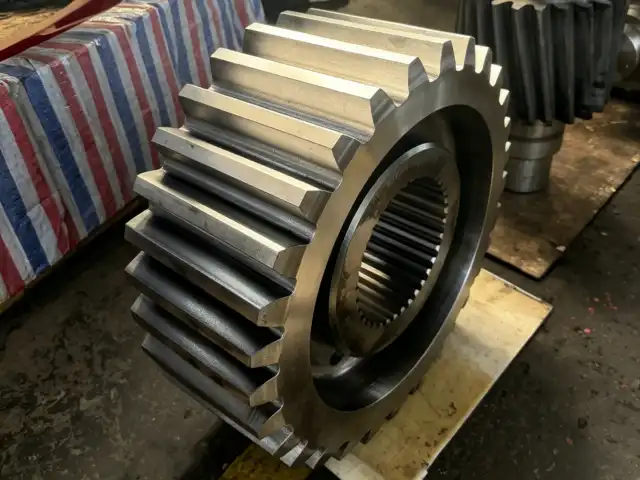
Understanding Planet Gear Carriers and Their Role in Automated Equipment Accuracy
The Fundamental Function of Planetary Gear Systems
Planetary gears work on a simple but elegant mechanical principle: power moves through three main parts. The sun gear is in the middle, and there are several planet gears that spin inside an outer ring gear. The Planet Gear Carrier keeps these planet gears in place, which lets them move around the sun gear and mesh with both the sun and ring gears at the same time. This setup makes a small, high-torque transmission system that can give reduction ratios ranging from 3:1 to over 100:1 when set up in multiple stages.
When using automated equipment, like robotic arms to move cargo, CNC spindles to make cuts at the micron level, or aircraft actuation systems, the accuracy of the output shaft is directly affected by how well the Planet Gear Carrier is built. Any shift, misalignment, or difference in size in the Planet Gear Carrier leads to mistakes in placement further down the line.
Load Distribution and Backlash Control
Load sharing between planet gears is an important feature that is often forgotten during procurement. A well-made Planet Gear Carrier makes sure that the force is spread evenly among all of its planets. Depending on the power needs, this is usually done with three to six gears. If the pin bore places are off by even 0.02 mm, one planet gear may have to take 60% of the total load while the others aren't being used, which speeds up wear and causes vibration.
Backlash control is another function that needs to be done accurately. Backlash, which is the angle difference between gear teeth that fit together, builds up along the whole gear train. This space is kept to a minimum in Planet Gear Carriers that are made with strict tolerance control and rigid structure design. This lets positioning systems achieve reliability within ±0.005mm. Precision grinding and coordinate measuring machine (CMM) checking are used in the manufacturing process to make sure that the alignment of the pin hole meets strict requirements. This stops mesh phasing mistakes that lower accuracy.
Maintaining Alignment and Rigidity in Precision Applications
Variable loads, changes in temperature, and dynamic accelerations can all affect automated equipment. To keep the gear mesh shape, the Planet Gear Carrier must stay dimension-stable under these situations. Using heat to treat metals in ways like carburizing, cooling and tempering, and induction hardening makes the surface harder (58–62 HRC) while keeping the core tougher (280–320 HB). This mix keeps the contacts from wearing out and absorbs shock loads.
Surface finishing methods like hard chrome coating, phosphating, or blackening make things even more resistant to rust and lower friction, which help keep their accuracy over time. When Planet Gear Carriers stay stiff at high torque levels, they stop pin deflection and the edge loading that happens as a result, which wears down gear teeth too quickly.
Design and Material Factors Affecting Accuracy of Planet Gear Carriers
Critical Design Parameters for Precision Performance
There are several ways that Planet Gear Carrier shape affects accuracy that are all linked to each other. The most important measurement is the positioning of the pin holes; these holes must stay in the right place in relation to the center line within 0.01-0.03mm. When pin bores and mounting sides are perpendicular to each other, gears don't skew, and when they're circular, they stay balanced while they're rotating.
During the planning phase, advanced makers use finite element method (FEM) research to find stress concentration spots and improve the distribution of materials. This way of building reduces the amount of deformation caused by elastic loads, which is important in high-speed situations like electric car transmissions where input speeds are higher than 15,000 RPM. Planet Gear Carriers made for these kinds of uses often have lubricant channels built in. These channels use centrifugal force to send oil straight to the planet needle bearings, which helps cool them down and reduce friction.
Comparing Materials: Steel Alloys Versus Advanced Composites
1. High-Grade Steel Alloys: Materials like 42CrMo, AISI4140, 40CrNiMo, and SAE4340 are some of the most common alloys used in mining, aircraft, and industry. After being heated, these metals have tensile strengths of more than 900 MPa, which means they are very resistant to shock loads and cyclic wear. The material's thermal expansion rate stays the same across a wide range of temperatures. This keeps the dimensions from changing, which would cause backlash. Forging aligns the grain structure along stress lines, which increases torsional stiffness. Torsional rigidity is what keeps the pin hole from deflecting when it's loaded.
2. Case-Hardening Steel Grades: Alloys like 20CrMnTi, 18CrNiMo7, AISI8620, and 20CrNi2Mo can be heated and carburized. This process makes surfaces that are very hard (58–62 HRC) and don't wear down while keeping the core tough and flexible, which is especially important for the Planet Gear Carrier. The gradient toughness profile keeps the material from breaking easily and gives it a long life in rough conditions. This is especially important for mining and building equipment that is likely to get dirty.
3. Nodular Cast Iron (GGG60/70): This type of cast iron isn't used as much in precision uses, but it's better at reducing vibrations and can be made into complex shapes through casting methods. The material works well for medium-duty industrial gears where some accuracy loss is okay in return for low cost and ease of production.
Fixed Versus Floating Carrier Configurations
How the Planet Gear Carrier is mounted affects how the load is distributed and how well it can center itself. Fixed Planet Gear Carriers are firmly attached to bearings that are in a certain place. They can be used with single-stage gearboxes in controlled settings. Their advantage is that their shape is known and they are easy to put together.
Floating Planet Gear Carriers are connected by splines that let them move slightly in a circle. This design lets the Planet Gear Carrier center itself when it's loaded, making up for manufacturing flaws and shaft deflections. Floating designs are very helpful for multi-stage planetary systems, which are popular in wind turbine yaw drives and big excavator final drives. Self-centering makes sure that all planet gears share the same amount of load, even if tower sway or track stopping forces cause them to be out of line.
Performance Optimization: How Planet Gear Carriers Enhance Automated Equipment Precision
Identifying Common Mechanical Inaccuracies
The most common problem with precision in planetary systems is too much backlash. When Planet Gear Carriers aren't stiff enough or have pin holes that aren't in the right place, gaps build up throughout the gear train. In a 10:1 reduction gearbox, a 0.05 mm backlash causes a 0.5 mm positioning mistake at the output, which is not acceptable in machine tool frames or transmission systems for precision instruments.
Runout, or the wobble or error that happens when the part turns, is caused by the Planet Gear Carrier mounting surfaces and pin hole locations not being perfectly centered. Runout effects are amplified in high-speed uses, which cause shaking and noise and speed up bearing wear. This problem can be fixed by dynamic balance to ISO 1940-1 G2.5 or G6.3 standards. This is especially useful for electric car drivetrains that need to be quiet for passenger comfort.
Selection Principles for Maximizing Precision
Matching Planet Gear Carrier load capacity to application demands prevents failures and enhances accuracy. Engineering teams should calculate transmitted torque while accounting for shock factors, which are 1.5 to 2.5 times for mining and construction purposes, to ensure safety. They should also ensure the Planet Gear Carrier construction exceeds maximum criteria. Small frames flex too much, while large parts contribute spinning inertia that reduces system sensitivity. Robotic joints that accelerate and decelerate swiftly must consider this.
Optimizing the material and shape of the gear train to reduce its movement improves its dynamic performance. When Planet Gear Carriers are made by forging instead of casting, the grain structure is better and the wear limits are higher. When the forging process is paired with precise grinding of mounting surfaces and pin bores, a part is made that can keep its shape over millions of load cycles.
Assembly, Alignment Techniques, and Maintenance Best Practices
If mistakes are made during the building process, even the best Planet Gear Carrier won't work as planned. Controlled press fits within certain interference ranges are needed for pin placement. Too much interference causes leftover pressures that distort the Planet Gear Carrier body, while not enough interference lets the pin rotate, which wears down the bore surfaces.
Adjusting the bearing preload during the final assembly process changes where the Planet Gear Carrier is placed and how much slack there is. To reach the goal preload, engineers use precise shims and gauge blocks, which are checked by measuring the resistance torque. When you use the right preload, you get rid of internal gaps without overloading the rolling elements. This keeps the accuracy and extends the life of the bearings.
Comparing Planet Gear Carriers: Selecting the Best Option for Your Automated Equipment
Carrier Influence Relative to Other Gearbox Components
The sun and ring gears do the actual slowing down and multiplying of torque, but the Planet Gear Carrier decides how well these functions translate to motion. Sun gears usually work at high speeds with low power, which makes them sensitive to imbalance and needs to be mounted precisely. Since ring gears are the biggest part, they have a lot of spinning motion and need to stay round so that the mesh doesn't change over time.
The Planet Gear Carrier has a special role as the structural link that connects all the parts. Its design affects load share efficiency, which is the amount of theoretical capability that is actually used. A bad Planet Gear Carrier design might only share 60–70% of the load, which means that two planet gears in a three-planet system have to handle loads that aren't balanced. High-quality Planet Gear Carriers with tight pin bore tolerances can share the load 90–95% of the time, making the most of the system's capacity and increasing the life of each component in a comparable way.
Evaluating Global Suppliers and Manufacturer Capabilities
Leading providers such as Timken, Rexnord, Dana, Bonfiglioli, Siemens, Moventas, and Flender have built their names over many years of engineering experience and delivering high-quality products. Most of the time, these companies have large catalogs of products with basic styles that can be used in a wide range of situations. Some of their benefits are that extra parts are easy to find, they come with a lot of technical information, and they already have established delivery networks.
Manufacturers that focus on making personalized gear can be very helpful, especially for one-of-a-kind uses or retrofit situations that need non-standard specs. You should look at how precise the Planet Gear Carrier offers are (whether suppliers can regularly give ISO 5-6 grade or tighter) and how flexible the materials are across different steel alloys and surface treatments. Complexity of the manufacturing process is very important. For example, providers who use forging, precise hobbing, milling, and grinding make parts that are better in terms of size than those who only use basic machining operations.
Material Selection and Cost Considerations
A big problem in buying is finding the right balance between upfront investment and long-term dependability. Premium materials, such as 40CrNiMo or AISI8620, are 20–30% more expensive than regular 45# steel, but they last 2-3 times longer in tough situations. When you figure out the total cost of ownership, you have to include the labor costs for installation, the costs of downtime during repair, and the damage that could happen when something fails suddenly.
Surface treatments add incremental cost but provide measurable benefits. Hard chrome coating raises the price of the component by about 15% at first, but it also lowers friction and corrosion-related wear, extends the time between lubrication, and stops breakdowns caused by moisture in naval or outdoor settings. Phosphating is a cheaper option for sealed industrial gears where there isn't much chance of corrosion.
Maintenance and Troubleshooting: Ensuring Long-Term Accuracy with Planet Gear Carriers
Recognizing Common Wear Symptoms
Noise levels rising are often the first sign that something is wrong. A planetary gearbox usually makes a low-frequency hum. If you hear grinding sounds, clicking sounds that happen at regular intervals, or high-frequency whines, it means that the mesh is wearing out. When gear teeth break or pin bores wear out, letting the planet gear move too much, clicking usually happens. Grinding means that there are foreign objects stuck in the mesh zones, and whine means that there isn't enough oil or that the bearings are in bad shape.
Analyzing the intensity and frequency of vibrations shows specific failure causes. Attached accelerometers to the housings of gearboxes record shaking patterns that are compared to initial readings. Increases in vibration at the frequency of the Planet Gear Carrier rotation point indicate unbalance or pin hole wear. On the other hand, high amplitudes at the frequency of the gear mesh point indicate tooth damage or imbalance. By tracking these factors over time, condition-based maintenance can be used instead of reactive fixes.
Preventive Maintenance Strategies
Protocols for lubrication are what make Planet Gear Carrier retention possible. To find the best change times, oil analysis tools keep an eye on levels of contamination, changes in viscosity, and the loss of additives. When synthetic oils are made for strong pressure uses, they last longer under heavy loads and keep their viscosity at the right level across a wide range of temperatures. Over-lubrication leads to spinning losses and high temperatures, while under-lubrication speeds up wear. It is important to follow the manufacturer's instructions.
Inspection plans should match the level of activity in the business. Systems that are only used sometimes need to be checked more often than systems that are used all the time. Visual exams check the amount and state of the oil, listen for strange sounds, and keep an eye on the working temperature. During planned shutdowns, detailed checks include measuring backlash, checking for shaking, and, if possible, looking at internal parts with an endoscope.
Conclusion
It has been shown that precision-engineered Planet Gear Carriers improve the accuracy of automatic equipment by controlling backlash, keeping the equipment in line, and distributing the load more evenly. The part affects the whole system's performance, including how repeatable it is, how much shaking it causes, and how long it lasts. The difference between good carriers and great ones is the choice of materials, the accuracy of the production process, and the complexity of the design. Systematic maintenance that keeps the integrity of the Planet Gear Carrier saves investments in accuracy over longer working periods, giving measured returns through less downtime and consistent output quality.
FAQ
1. How does carrier stiffness specifically influence automated equipment accuracy?
Positioning accuracy is directly linked to Planet Gear Carrier stiffness. When there isn't enough structural stiffness, planet gear pins can bend when they're loaded. This causes edge loading, which means that force is concentrated on the corners of the teeth instead of spreading across the whole face width. This deflection causes varying backlash, which means clearances that change depending on the load, which makes positioning less reliable. Forged metals are used to make high-stiffness Planet Gear Carriers that keep their shape. This keeps backlash constant across the working range and allows positioning accuracy within ±0.005mm.
2. What differentiates fixed carriers from floating carrier designs?
Fixed Planet Gear Carriers are attached firmly to bearings that are exactly placed. This provides a predictable shape that is perfect for single-stage reductions in controlled settings. Floating Planet Gear Carriers join to each other through splined connectors that allow for small circular movement. This lets the load center itself. This fixes issues with manufacturing flaws and shaft deflections. This is especially helpful in systems with more than one stage, where mistakes would add up and stop planet gears from sharing the load evenly. Heavy machinery uses floating designs most of the time when the structure needs to be flexible and handle shock loads.
3. Why do pin bore position tolerances matter so much?
How well planet gears share the load depends on how accurately the pin bores are placed. If pin bores are off by 0.02 mm from their true position, the time of the gear mesh becomes asynchronous, which means that one planet gear engages before the others, carrying an uneven load. This situation lowers the system's power capacity, speeds up the wear on the overloaded gear, and causes vibrations. Keeping the pin bore position within 0.015mm guarantees identical mesh contact, which spreads loads evenly and improves accuracy and component life.
Partner with YIZHI MACHINERY for Precision-Engineered Carriers
Since 2016, YIZHI MACHINERY has been a renowned Planet Gear Carrier maker. They make custom transmission parts that meet the strict needs of mining, aerospace, and industrial machines. Our production methods are ISO-compliant and include advanced CNC machining, precise grinding, and a wide range of heat treatment options. These allow us to make Planet Gear Carriers from high-quality materials like 42CrMo, AISI 4140, and SAE 4340 metals. No matter if you need a single sample or a lot of them, our method is flexible enough to meet your needs while still meeting ISO 5-6 Grade precision standards. We offer full technical support from the first design plans to quality control and global logistics. Our services are backed by a one-year guarantee and quick after-sales service. With production wait times of 35 to 60 days and real-time order tracking, we make sure that your important parts get to you exactly when they're needed. Contact us at sales@yizmachinery.com to talk about your Planet Gear Carrier needs and find out how unique solutions can make your equipment more reliable and effective.
References
1. Müller, H. W. (1982). Epicyclic Drive Trains: Analysis, Synthesis, and Applications. Detroit: Wayne State University Press.
2. Lynwander, P. (1983). Gear Drive Systems: Design and Application. New York: Marcel Dekker.
3. Stadtfeld, H. J. (2014). Advanced Bevel Gear Technology. Gleason Works.
4. Dudley, D. W. (1994). Handbook of Practical Gear Design and Manufacture. Lancaster: Technomic Publishing.
5. Radzevich, S. P. (2012). Dudley's Handbook of Practical Gear Design and Manufacture (2nd ed.). Boca Raton: CRC Press.
6. ISO 1328-1:2013. Cylindrical Gears — ISO System of Flank Tolerance Classification — Part 1: Definitions and Allowable Values of Deviations Relevant to Flanks of Gear Teeth. Geneva: International Organization for Standardization.

USER EVALUATE
Here is the customer's evaluation of us